T. Binyon - Pushkin
Здесь есть возможность читать онлайн «T. Binyon - Pushkin» — ознакомительный отрывок электронной книги совершенно бесплатно, а после прочтения отрывка купить полную версию. В некоторых случаях можно слушать аудио, скачать через торрент в формате fb2 и присутствует краткое содержание. Жанр: unrecognised, на английском языке. Описание произведения, (предисловие) а так же отзывы посетителей доступны на портале библиотеки ЛибКат.
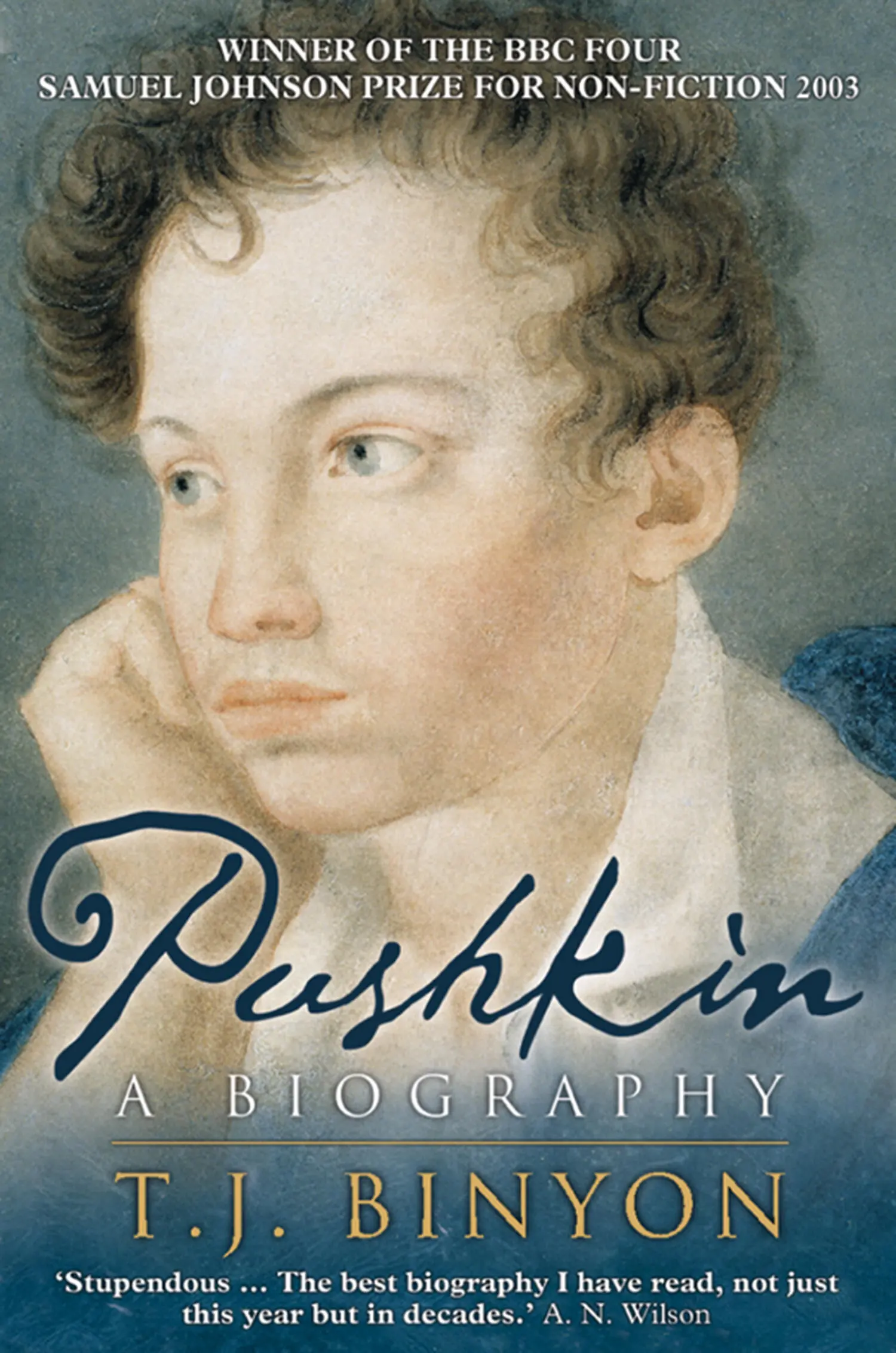
- Название:Pushkin
- Автор:
- Жанр:
- Год:неизвестен
- ISBN:нет данных
- Рейтинг книги:4 / 5. Голосов: 1
-
Избранное:Добавить в избранное
- Отзывы:
-
Ваша оценка:
Pushkin: краткое содержание, описание и аннотация
Предлагаем к чтению аннотацию, описание, краткое содержание или предисловие (зависит от того, что написал сам автор книги «Pushkin»). Если вы не нашли необходимую информацию о книге — напишите в комментариях, мы постараемся отыскать её.
Pushkin — читать онлайн ознакомительный отрывок
Ниже представлен текст книги, разбитый по страницам. Система сохранения места последней прочитанной страницы, позволяет с удобством читать онлайн бесплатно книгу «Pushkin», без необходимости каждый раз заново искать на чём Вы остановились. Поставьте закладку, и сможете в любой момент перейти на страницу, на которой закончили чтение.
Интервал:
Закладка:
*Pushkin later added a manuscript note to this line: âAn inaccuracy. Chevalier Guards officers, like other guests, appeared at balls in undress and low shoes. A just remark, but there is something poetic about the spursâ (VI, 528).
*Pythia was the priestess of Apollo at Delphi, who âdelivered the answer of the god to such as came to consult the oracle, and was supposed to be suddenly inspired by the sulphureous vapours which issued from the hole of a subterranean cavity within the temple, over which she sat bare on a three-legged stool, called a tripodâ ( Lemprièreâs Classical Dictionary , 3rd ed. London, 1984, 539).
5 ST PETERSBURG 1817â20
III: Triumph and Disaster
Thus, an unconcerned dweller in the world,
On the lap of idle quiet,
I celebrated with obedient lyre
The legends of dark antiquity.
I sang â and forgot the insults
Of blind fate and of my enemies,
Flighty Doridaâs treacheries,
And the loud slanders of fools.
Borne on the wings of invention,
My spirit soared beyond the earthâs confine;
But meanwhile an invisible thunder-stormâs
Cloud gathered over me! â¦
Ruslan and Lyudmila , Epilogue
AT THE LYCÃE Pushkin had begun his first long poem, the mock-heroic epic Ruslan and Lyudmila. He continued to work on it â slowly and spasmodically, most productively when confined to his bed â in St Petersburg, reading excerpts to his friends as he progressed. âPushkin is writing a charming poem and is maturing,â Batyushkov told Vyazemsky in May 1818; 1 and in autumn wrote to Bludov in London: âThe Cricket is beginning the third canto of his poem. What a marvellous, rare talent! Taste, wit, invention and gaiety. Ariosto at nineteen could not have done better. I see with grief that he is letting himself be distracted, harming himself and us, lovers of beautiful verse.â 2 In December Vyazemsky heard of further progress from Turgenev: â[Pushkin], despite his whole dissolute way of life, is finishing the fourth canto of his poem. If he were to have three or four more doses of clap, it would be in the bag. His first dose of venereal disease was also the first wet-nurse of his poem.â 3 The fifth canto was written in the summer of 1819 at Mikhailovskoe; in August Fedor Glinka, the fellow-member of the Green Lamp , read the first two in manuscript. âO Pushkin, Pushkin! Who/Taught you to captivate with miraculous verse?â he exclaimed. 4 In February 1820 Pushkin, ill again, revised the fifth and worked on the sixth and final canto while convalescing. He completed this a month later, and immediately read it to Zhukovsky, who in admiration presented his young rival with his portrait, bearing the inscription: âTo the pupil-conqueror from the conquered teacher on that most solemn day when he completed Ruslan and Lyudmila. Good Friday, 26 March 1820.â 5 It was a generous gesture, acknowledging Pushkinâs graceful and affectionate parody of Zhukovskyâs own work, âThe Twelve Sleeping Maidensâ, within the poem. Pushkin later regretted the imitation: âIt was unforgivable (especially at my age) to parody, for the amusement of the mob, a virginal, poetic creation,â he wrote. 6
Ruslan and Lyudmila opens in Kiev, at the feast given by Prince Vladimir to celebrate the marriage of his daughter, Lyudmila, to Ruslan. The couple repair to the bridal chamber, but, before their union can be consummated, Lyudmila is carried away by the wizard Chernomor, a hunchbacked dwarf with a magic nightcap. After many adventures Ruslan vanquishes Chernomor and brings his bride back to Kiev, routing an army of Pechenegs that is besieging the city.
Portions of the first and third cantos of the poem appeared in periodicals â the Neva Spectator and Son of the Fatherland â in 1820, and the whole poem was published as a separate edition at the end of July, after Pushkinâs departure for the south: a paperback of 142 pages, selling for ten roubles (fifteen if printed on vellum). It was Pushkinâs first published book. Earlier, in 1818 and 1819, he had tried to raise interest in a subscription edition of his poems, employing his brother Lev and Sergey Sobolevsky to sell tickets. Some had been sold (Zhukovsky had taken a hundred), but the enterprise had collapsed after the loss of the manuscript at cards to Vsevolozhsky. Before leaving St Petersburg he entrusted the manuscript of Ruslan and Lyudmila to Zhukovsky, Lev and Sobolevsky, who prepared it for publication: a difficult task in the case of canto six, since Pushkin had not had time to produce a fair copy. Gnedich took charge of the bookâs production: he was experienced in these matters, having already acted as publisher for a number of authors. He was, however, a sharp operator. In 1817 he agreed to publish a work by Batyushkov, but insisted that the poet be responsible for any loss the book might make, and, when it proved surprisingly popular, passed on to him only two thousand roubles out of the fifteen thousand the book made. He was to be similarly sharp in dealing with Pushkin and, even by publishersâ standards, dilatory: Pushkin first saw a copy of Ruslan and Lyudmila on 20 March 1821, some eight months after its publication. The entire print-run of the work was bought by Ivan Slenin, one of the largest book-sellers in St Petersburg. Gnedichâs production costs were therefore immediately covered; it has been calculated that his profit was in the region of six thousand roubles, of which Pushkin received only fifteen hundred. The poem proved extraordinarily popular; the edition soon sold out, after which copies changed hands for the unheard-of price of twenty-five roubles. And in December 1821 the imperial theatre in Moscow put on Ruslan and Lyudmila, or the Downfall of Chernomor, the evil magician , a âheroico-magical pantomine balletâ in five acts, adapted by A. Glushkovsky, with music by F. Scholz: in order to help the audience in the comprehension of the plot, placards were exhibited on stage with inscriptions such as: âTremble, Chernomor! Ruslan approaches.â 7
In July 1820, in the south, Pushkin wrote an epilogue to the poem, and for the second edition in 1828 added the famous and extraordinary prologue (written at Mikhailovskoe in 1824), one of his finest poems, the first line of which â âOn the sea-shore stands a green oakâ 8 â haunts Masha Prozorova in Chekhovâs Three Sisters. For this edition he also, perhaps mistakenly â but no doubt sensibly, in view of his situation at the time â toned down some of the more risqué passages of the first version. The loss of Chernomorâs attempted seduction of Lyudmila at the end of the fourth canto is particularly to be regretted: a scene which has been claimed to represent Pushkinâs view of the marital relations between an ill-matched St Petersburg couple â the seventy-one-year-old Count Stroinovsky and his eighteen-year-old wife, Ekaterina Butkevich.
In October 1820 A.A. Bestuzhev, a lieutenant in the Life Guards Dragoons, later an extremely popular short-story writer under the pseudonym Marlinsky, another habitué of Shakhovskoyâs garret, wrote to his sister Elena: âOn account of Pushkinâs poem Ruslan and Lyudmila a terrible ink war has started up here â idiocy upon idiocy â but the poem itself is good.â 9 The war had begun in June with an article in the Herald of Europe , directed chiefly against Zhukovsky, but deploring en passant the intrusion into literature of such coarse material as the published extracts from Pushkinâs poem. âLet me ask you: what if somehow [â¦] a guest with a beard, in a peasant coat and bast shoes were to worm his way into the Moscow Noble Assembly, and were to cry in a loud voice: Greetings, folk! Would one admire such a rascal?â 10 In August and September Voeikov, a member of Arzamas , who hence might have been expected to be on Pushkinâs side, devoted four long and tedious articles to the poem in Son of the Fatherland , in the last of which he accused Pushkin of using âpeasantâ rhymes, and âlowâ language, and of one expression remarked âhere the young poet pays tribute to the Germanicized taste of our timesâ, a dig at romanticism and Zhukovsky. 11 The Neva Spectator now chimed in, complaining of the âinsignificant subjectâ, taking particular exception to the intrusion of a contemporary narrator into the narrative, and deploring the presence of âscenes, before which it is impossible not to blush and lower oneâs gazeâ; these possibly encouraged revolution, and were certainly unsuited to poetry. 12 In September an article signed N.N. â thought then to be by Pushkinâs friend Katenin, but now known to have been written, under Kateninâs influence, by a fellow-officer in the Preobrazhensky Life Guards, Dmitry Zykov â in Son of the Fatherland concentrated on what the author saw as the implausibilities of the poem: âWhy does Ruslan whistle when he sets off? Does this indicate a man in despair? [â¦] Why does Chernomor, having got the magic sword, hide it on the steppe, under his brotherâs head? Would it not be better to take it home with him?â In October Aleksey Perovsky came to the poemâs defence with two witty articles in Son of the Fatherland , in which he took issue both with Voeikov and Zykov: âUnfortunate poet! Hardly had he time to recover from the severe attacks of Mr V., when Mr N.N. appeared with a pack full of questions, each more subtle than the other! [â¦] Anyone would think that at issue was not a Poem, but a criminal offence.â 13
Читать дальшеИнтервал:
Закладка:
Похожие книги на «Pushkin»
Представляем Вашему вниманию похожие книги на «Pushkin» списком для выбора. Мы отобрали схожую по названию и смыслу литературу в надежде предоставить читателям больше вариантов отыскать новые, интересные, ещё непрочитанные произведения.









Обсуждение, отзывы о книге «Pushkin» и просто собственные мнения читателей. Оставьте ваши комментарии, напишите, что Вы думаете о произведении, его смысле или главных героях. Укажите что конкретно понравилось, а что нет, и почему Вы так считаете.