T. Binyon - Pushkin
Здесь есть возможность читать онлайн «T. Binyon - Pushkin» — ознакомительный отрывок электронной книги совершенно бесплатно, а после прочтения отрывка купить полную версию. В некоторых случаях можно слушать аудио, скачать через торрент в формате fb2 и присутствует краткое содержание. Жанр: unrecognised, на английском языке. Описание произведения, (предисловие) а так же отзывы посетителей доступны на портале библиотеки ЛибКат.
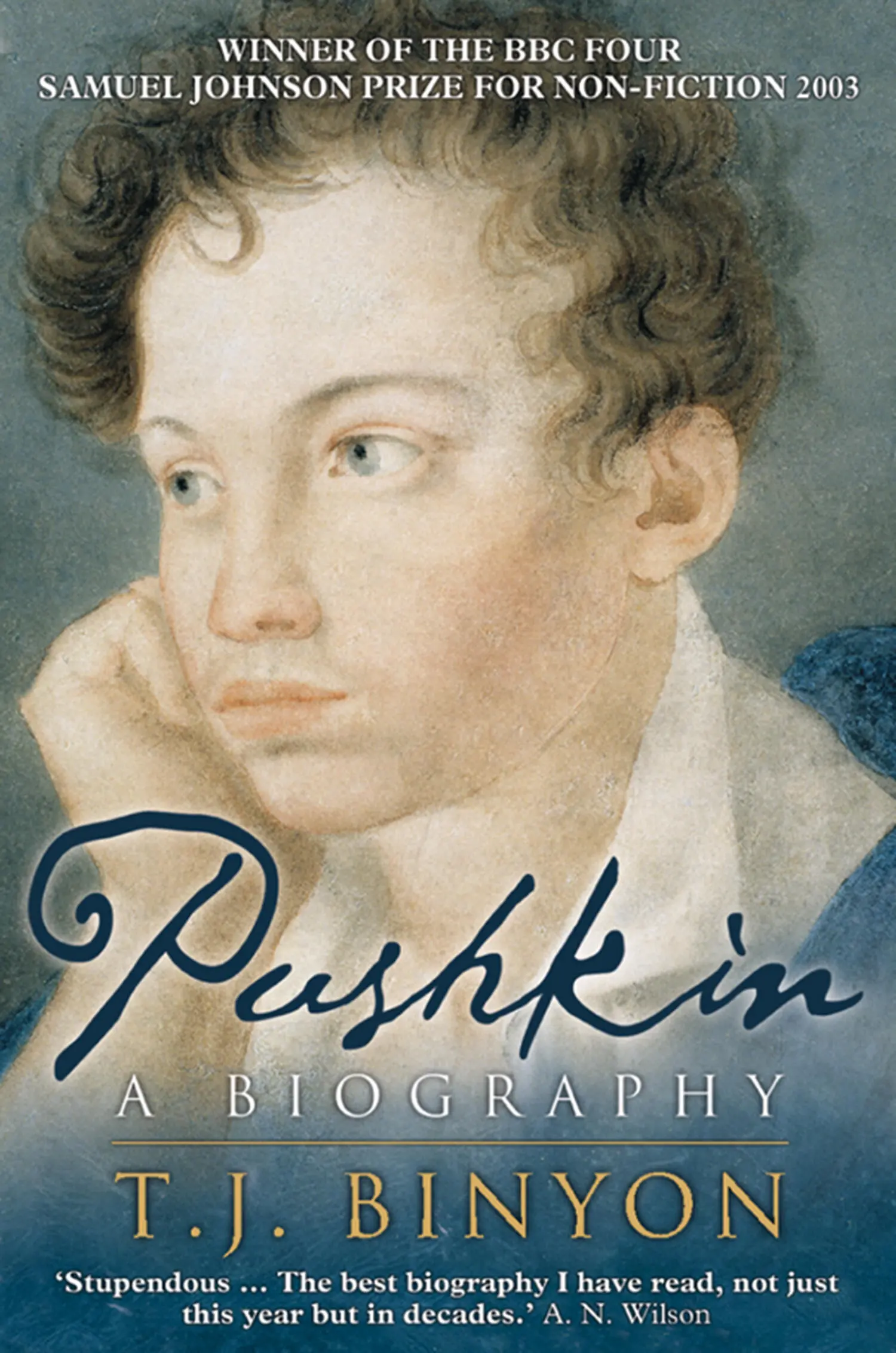
- Название:Pushkin
- Автор:
- Жанр:
- Год:неизвестен
- ISBN:нет данных
- Рейтинг книги:4 / 5. Голосов: 1
-
Избранное:Добавить в избранное
- Отзывы:
-
Ваша оценка:
Pushkin: краткое содержание, описание и аннотация
Предлагаем к чтению аннотацию, описание, краткое содержание или предисловие (зависит от того, что написал сам автор книги «Pushkin»). Если вы не нашли необходимую информацию о книге — напишите в комментариях, мы постараемся отыскать её.
Pushkin — читать онлайн ознакомительный отрывок
Ниже представлен текст книги, разбитый по страницам. Система сохранения места последней прочитанной страницы, позволяет с удобством читать онлайн бесплатно книгу «Pushkin», без необходимости каждый раз заново искать на чём Вы остановились. Поставьте закладку, и сможете в любой момент перейти на страницу, на которой закончили чтение.
Интервал:
Закладка:
However Messrs Karamzin and Zhukovsky, realizing the dangers to which the young poet was exposing himself, hastened to offer him their advice, made him recognize the error of his ways and brought him to give a solemn promise that he would abjure it for ever. Mr Pushkin appears to be cured â if, that is, his tears and protestations are to be believed. However, his guardians think his repentance to be sincere, and that, by banishing him for a time from St Petersburg, by putting him to work, and by surrounding him with good examples, he can be turned into an excellent servant of the state, or at least a man of letters of the first distinction. In response to their wishes the Emperor has authorized me to give the young Pushkin leave and recommend him to you. He will be attached to your person, General, and will work as a supernumerary in your chancellery. His fate will depend on your good advice. 41
Alexander approved the letter, writing âSo be itâ at the foot. On 4 May the accounts department at the Foreign Office handed out a thousand roubles in assignats to Pushkin for travel expenses; on the fifth he received a podorozhnaya , an official pass entitling him to use post-horses on state business. On 6 or 7 May, accompanied by his servant Nikita Kozlov, he left St Petersburg. Delvig and Pavel Yakovlev travelled with him as far as Tsarskoe Selo. On 9 May he set out for the south. 42
*An adaptation of a line from Alexis Pironâs comedy, Le Métromanie (1738), where the author, striving to expunge the memory of his earlier Ode to Priapus , wrote, â[in my works] I wish that virtue more than wit should shine/A mother will prescribe them to her daughter.â
*In its final form Ruslan and Lyudmila has 2,761 lines; Orlando Furioso 38,736 and La Pucelle 8,234.
*Tolstoy described his relative as âan unusual, criminal and attractive manâ (Chereisky, 438).
*Not to be confused with the similarly named Private Society of Amateurs of Literature, Sciences and the Arts.
â The society was, of course, much larger than the unofficial Green Lamp : in 1824 it had 82 full, 24 associate, 34 corresponding and 96 honorary members.
*Karazin is confusing âLiberty. An Odeâ and âFairy Talesâ.
6 THE CAUCASUS AND CRIMEA 1820
Forgotten by society and by gossip,
Far from the Nevaâs banks,
I see before me now
The proud Caucasian peaks.
Ruslan and Lyudmila , Epilogue
PUSHKINâS ROUTE TO EKATERINOSLAV took him initially along the well-known road towards Mikhailovskoe. At Porkhov, however, he turned off and, entering lands unknown to him, hurried on south through Velikie Luki, Vitebsk, Orsha, Mogilev and Chernigov towards Kiev. The monotonous scenery of the White Russian post-road offered no temptation to linger; in any case he could not, for the Foreign Ministry, under whose aegis Inzovâs command lay, seizing an opportunity to avoid expense, had made him an official courier. Besides the letter from Capo dâIstrias to Inzov concerning himself, he bore other documents for the general, including the latterâs appointment as plenipotentiary governor of Bessarabia.
At a post-house somewhere between Chernigov and Mogilev his Lycée companion Pushchin, who was returning to St Petersburg after four months in Bessarabia with his sister, and thus knew nothing of recent events in the capital, scanning the list of travellers, noticed the name of Pushkin among them. âI asked the postmaster who this Pushkin was. I had no idea that it could be Aleksandr. The postmaster answered that it was the poet Aleksandr Sergeevich, apparently travelling on official business, in a post-chaise, wearing a red Russian shirt with a belt and a felt hat.â 1
Just over a week after leaving St Petersburg, on 14 or 15 May, Pushkin arrived in Kiev. Here he found a friend, Nikolay Raevsky, an officer in the Life Guards Hussars. On leave, he was staying with his father, General Raevsky. The latter had had a distinguished military career: he had served under Suvorov in the Turkish war of 1787â90, becoming a major at eighteen; had been wounded when commanding Bagrationâs avant-garde in 1805; and in 1812, in the battle for Smolensk, had held off with ten thousand troops a much larger French force under Marshal Davout. It was said that during this encounter he had taken his sons, Aleksandr and Nikolay, by the hand and led the advance, calling out, âForward, men, for the tsar and the fatherland! I and my sons will show you the way!â 2 The episode was commemorated in popular prints, and earned him a mention in Zhukovskyâs âA Bard in the Camp of Russian Warriorsâ. It was, however, apocryphal. âIt is true that I was in front,â Raevsky later told Batyushkov. âBut my sons were not there at that time. My youngest child was gathering berries in a wood (he was then a mere child, and a bullet made a hole in his breeches); that was all, the entire anecdote was made up in St Petersburg.â 3 Nikolay â long grown out of his perforated breeches, he was now a Herculean giant who could bend an iron poker in his hands â like Chaadaev had supported and consoled Pushkin when, distressed by Tolstoyâs insinuations, he had harboured thoughts of suicide. Writing to his brother, Pushkin mentions Nikolayâs âimportant services, eternally unforgettable for meâ; 4 he would later dedicate The Prisoner of the Caucasus to him.
The meeting in Kiev had been arranged before Pushkin left St Petersburg. General Raevsky was planning to travel with Nikolay and his two younger daughters, Mariya and Sofya, to the Caucasus, where his elder son, Aleksandr, was taking the waters. They would then go on to the Crimea and join the generalâs wife, Sofya Alekseevna, and the two elder daughters, Ekaterina and Elena. The partyâs route to the Caucasus would pass through Ekaterinoslav; here General Raevsky would seek to persuade Inzov to give Pushkin permission to accompany them. Pushkin dined with the Raevskys and Lev Davydov, * stayed the night, and set out for Ekaterinoslav the following morning. His route took him down the bank of the Dnieper, passing through Zolotonosha and Kremenchug; three days later he arrived in Ekaterinoslav (now Dnepropetrovsk), presented himself to General Inzov, and handed over the letters he was carrying.
Ekaterinoslav had been founded in 1778 by Potemkin, then Viceroy of New Russia â the steppe area north of the Black Sea and the Sea of Azov. The city, named after the empress, was intended as the capital of New Russia, and was planned on a grandiose scale, with a circumference of thirty-three miles, main streets seventy yards wide and a cathedral â the first stone of which was laid by Catherine â which was to compete with St Peterâs in Rome in splendour and size. However, after Potemkinâs death a decline set in; the city lost its administrative status; its magnificent buildings were never completed or fell into decay. Pushkin took lodgings in the suburb of Mandrykovka, renting a wretched little shack from a Jewish merchant, Krakonini. Behind ran the Dnieper, and he spent much of his time bathing, or watching the traffic on the river, where he witnessed the most exciting event of his stay in Ekaterinoslav: two convicts, who had escaped from the prison nearby, though shackled together and pursued by guards, swam across the river to freedom â an incident incorporated in his unfinished narrative poem The Robber Brothers (1821â2).
He made a favourable impression on Inzov, who wrote to Capo dâIstrias: âI have not yet got to know Pushkin well; but I see, however, that the cause of his sins is not depravity of heart, but youthful ardour of spirit, unrestrained by morality.â 5 Inzov had, however, been thrown into great agitation by his appointment as governor of Bessarabia, being particularly perturbed by the thought of the expenses he would have to incur in the post. Consumed by these worries, and preoccupied by the administrative problems of transferring his chancellery to Kishinev, he had little or no time for Pushkin, who, during the weeks he spent in Ekaterinoslav, found himself very much at a loose end. Local society offered none of the attractions which had been so numerous in St Petersburg, and he made no effort to form new acquaintances. Indeed, he went out of his way to gratuitously offend or shock those whom he met. Learning that the poet was in Ekaterinoslav, two young enthusiastic amateurs of literature, Andrey Ponyatovsky, a teacher at the seminary, and Sergey Klevtsov, a local landowner, hurried round to see him. He met them in the door of his hut, chewing a roll spread with caviare and holding a glass of red wine. âWhat do you want?â he asked. The honour of seeing him, the famous poet, they replied. âWell, have you seen him now? Then good-bye!â 6 He displayed an equal disregard for propriety at a dinner given by the townâs civil governor, Vikenty Shemiot. * Andrey Fadeev, who later knew Pushkin well in Kishinev, describes the occasion:
Читать дальшеИнтервал:
Закладка:
Похожие книги на «Pushkin»
Представляем Вашему вниманию похожие книги на «Pushkin» списком для выбора. Мы отобрали схожую по названию и смыслу литературу в надежде предоставить читателям больше вариантов отыскать новые, интересные, ещё непрочитанные произведения.









Обсуждение, отзывы о книге «Pushkin» и просто собственные мнения читателей. Оставьте ваши комментарии, напишите, что Вы думаете о произведении, его смысле или главных героях. Укажите что конкретно понравилось, а что нет, и почему Вы так считаете.