T. Binyon - Pushkin
Здесь есть возможность читать онлайн «T. Binyon - Pushkin» — ознакомительный отрывок электронной книги совершенно бесплатно, а после прочтения отрывка купить полную версию. В некоторых случаях можно слушать аудио, скачать через торрент в формате fb2 и присутствует краткое содержание. Жанр: unrecognised, на английском языке. Описание произведения, (предисловие) а так же отзывы посетителей доступны на портале библиотеки ЛибКат.
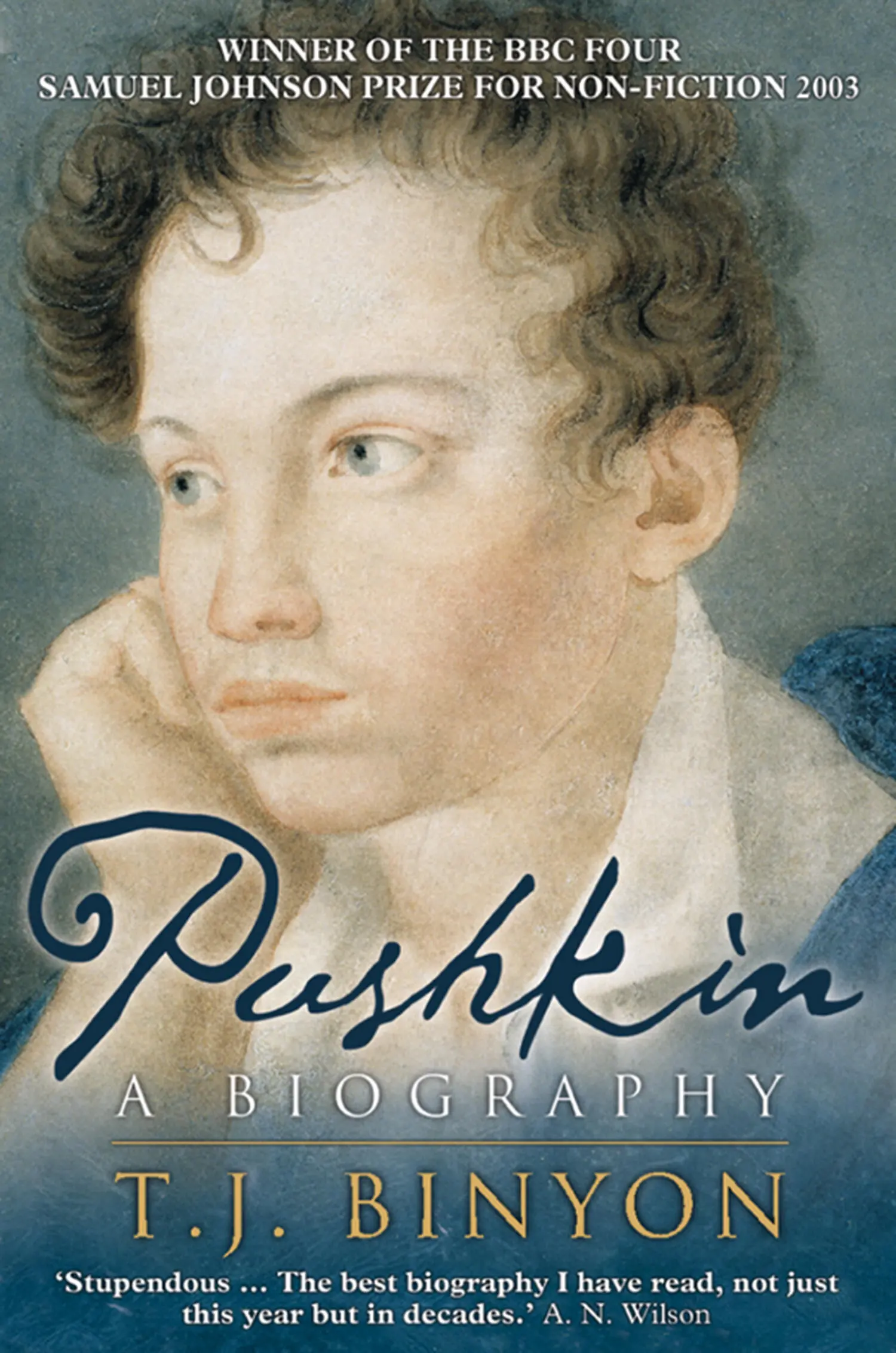
- Название:Pushkin
- Автор:
- Жанр:
- Год:неизвестен
- ISBN:нет данных
- Рейтинг книги:4 / 5. Голосов: 1
-
Избранное:Добавить в избранное
- Отзывы:
-
Ваша оценка:
Pushkin: краткое содержание, описание и аннотация
Предлагаем к чтению аннотацию, описание, краткое содержание или предисловие (зависит от того, что написал сам автор книги «Pushkin»). Если вы не нашли необходимую информацию о книге — напишите в комментариях, мы постараемся отыскать её.
Pushkin — читать онлайн ознакомительный отрывок
Ниже представлен текст книги, разбитый по страницам. Система сохранения места последней прочитанной страницы, позволяет с удобством читать онлайн бесплатно книгу «Pushkin», без необходимости каждый раз заново искать на чём Вы остановились. Поставьте закладку, и сможете в любой момент перейти на страницу, на которой закончили чтение.
Интервал:
Закладка:
The party also visited the other spas at Zheleznovodsk, Kislovodsk and Konstantinogorsk. In the last Pushkin, sitting on a pile of logs, compiled a list of the generalâs suite for the local commandantâs book of arrivals, in which he described Rudykovsky as âphysician-in-ordinaryâ and himself as âPushkin, a minorâ. The general berated him soundly for his facetiousness. 14 In the evenings the company would play boston, a form of whist; once a lottery was organized: it was won by Mariya; and, in Pyatigorsk on 29 June, they watched a small firework display celebrating the Orthodox feast of SS Peter and Paul. Among the other visitors Pushkin discovered two former acquaintances: Grigory Rzhevsky, the father of a former lycéen, Nikolay, who had died in 1817, and Apollon Marin, an amateur poet and former guards officer, who had been stationed in Tsarskoe Selo in 1816. Marin introduced Pushkin to his brother, Nikolay, and also to another visitor to the region, Gavriil Gerakov, tutor to young Prince Kurakin, whom he was accompanying on a tour of Russia. âPushkin, Marin and I wagged our tongues together for an hour and then parted,â Gerakov noted in his diary, adding: â[Pushkin] is ready to attract general attention of a laudatory kind; as he may with his gifts; I wish him all the best from the bottom of my heart.â 15
In Pyatigorsk Pushkin also met an English officer, Captain George Willock, who was attached to the British mission in Persia â his brother, Henry, was the British Resident in Teheran â and had been granted permission to travel in the Caucasus. However, General Velyaminov, Ermolovâs second-in-command, suspecting the visit to be a pretext for âspying on our military affairs in Chechnya and Dagestanâ, had given orders to âobserve all his activities and watch with whom he consorts and how oftenâ. 16 Willock, accompanied by an interpreter, arrived in Pyatigorsk on 20 June at two in the afternoon, Velyaminovâs agents informed him. âHere,â their report continued, âhe put up in the house of the provincial secretaryâs widow Anna Petrova Makeeva, paying for this three roubles in copper a day. On the same date he was in the old baths, [â¦] listened to the band playing outside the guard-room of the main guard, and afterwards visited His Excellency, General of Cavalry and Chevalier Raevsky, drank tea and stayed some time with him, whence he returned to his lodgings at night and slept.â The following day he was visited in his lodgings by âLieutenant of the Life Guard Grenadiers Prince Sergey Ivanovich Meshchersky the first, Captain of the Life Guards Nikolay Nikolaevich Raevsky, and a minor, a member of the suite of His Excellency Raevsky, Aleksandr Sergeev Pushkinâ. 17 Pushkinâs little joke had rebounded on him: the military authorities had taken his facetious self-description at face value. They were less gullible with respect to Willock. A month after he had left Pyatigorsk he was caught trying to persuade soldiers of the 4th Jäger Regiment to desert to Persia; his interpreter turned out to be an Armenian employed by the Persian army. Griboedov, now secretary to the Russian diplomatic mission in Persia, wrote two sharp notes to the British Resident about his brotherâs activities.
For Pushkin by far the most significant experience of the sojourn in the Caucasus was his acquaintance with Aleksandr Raevsky. â[General Raevskyâs] elder son will be more than well-known,â he wrote to his brother. 18 During the next few years Raevsky was to exert an influence on Pushkin perhaps greater â and certainly less beneficial â than that of his earlier mentor, Chaadaev. Born in 1795, Raevsky had entered the army at fifteen, fought in the Russo â Turkish war of 1810, and took part in the war of 1812 and the following campaigns. Promotion was rapid: at twenty-three he was a colonel commanding the Rzhevsk infantry regiment. In 1819 he was attached to Ermolovâs forces in the Caucasus, but, taking leave, had come to Pyatigorsk in an attempt to cure a long-standing affliction of his legs â possibly the result of a war-wound, or possibly, in Ermolovâs words, âthe bitter fruits of the sweetest of memoriesâ. 19 Tall, but emaciated â âphysical and mental ailments had desiccated him and lined his browâ 20 â he had a wide mouth whose thin lips were usually curled in a sarcastic smile, and, behind his spectacles, small brown eyes with whites of a jaundiced yellow; his voice, however, was exceedingly charming. In character he was very different from the open-hearted, generous and straightforward Nikolay. His father, not long after their reunion, wrote despondently to his eldest daughter: âI live at peace with Aleksandr, but how cold he is! I seek in him manifestations of love, of tenderness and do not find them. He does not reason, but argues, and the wronger he is, the more unpleasant his tone becomes, even coarse. We have agreed not to enter into any arguments, or abstract discussions. It is not that I am dissatisfied with him, but I see no cordial relationship on his side. What can one do? Such is his character, and one cannot hold it against him. His mind is turned inside out: he philosophizes about things which he does not understand, and subtilizes in such a way that any sense evaporates. It is the same with his feelings [â¦] I think that he does not believe in love, since he himself neither experiences it, nor tries to inspire it.â 21 âHis character was a mixture of excessive self-esteem, indolence, cunning and envy,â commented Wiegel, adding, âlike a cat, he loved to soil only all that was pure, all that was elevated.â 22
Pushkin and he spent long hours together, reading and discussing Byron: they had to hand the first four volumes of Pichotâs and de Salleâs translation of the poet into French prose, which had appeared in 1819. * These contained, among other works, The Corsair, Manfred and the first two cantos of Childe Haroldâs Pilgrimage. Or they would sit at night on the bank of the Podkumok River, listening to the sound of its waters, while Raevsky expounded his philosophy of life to an eager listener. Clever, mocking, sceptical, cynical and manipulative, Raevsky played Mephistopheles to an innocent Faust. Later, in October or November 1823, when Pushkin was beginning to escape Raevskyâs influence, he described him in âThe Demonâ:
His smile, his wondrous gaze,
His caustic speech
Poured cold poison into my soul.
With inexhaustible slander
He tempted providence;
He called the beautiful an illusion;
He despised inspiration;
He did not believe in love, in freedom:
Looked mockingly at life â
And nothing in all of nature
Did he wish to bless. 23
For Pushkin these few weeks had an influence disproportionate to their length. They coincidentally brought together three elements â the wild, exotic scenery of the Caucasus with its fierce native tribes, the poetry of Byron, and the demonic teachings of Aleksandr Raevsky â which were to determine the next stage in his development as a poet. He was all the more receptive in that he felt himself, like some Byronic hero, to be a doomed outcast: had he not, during his last months in St Petersburg, experienced the treachery of friends, the deceit of women and the perfidy of society?
In the first week of August, leaving Aleksandr behind in Pyatigorsk, General Raevsky and his party set out for the Crimea. They retraced their route to Stavropol, but then turned west. Since the region they were to traverse could be dangerous for travellers, a military escort accompanied the party. âI travelled in sight of the hostile lands of the free mountain peoples,â Pushkin wrote. âAround us rode sixty cossacks, behind us was drawn a loaded cannon, its match lit. Although the Circassians nowadays are relatively peaceful, one cannot rely on them; in the hope of a large ransom they are ready to fall upon a well-known Russian general. And there, where a poor officer safely gallops along in a post-chaise, his excellency may easily fall prey to some Circassianâs lasso. You will understand how pleasing this shadow of danger is to the fanciful imagination.â 24
Читать дальшеИнтервал:
Закладка:
Похожие книги на «Pushkin»
Представляем Вашему вниманию похожие книги на «Pushkin» списком для выбора. Мы отобрали схожую по названию и смыслу литературу в надежде предоставить читателям больше вариантов отыскать новые, интересные, ещё непрочитанные произведения.











Обсуждение, отзывы о книге «Pushkin» и просто собственные мнения читателей. Оставьте ваши комментарии, напишите, что Вы думаете о произведении, его смысле или главных героях. Укажите что конкретно понравилось, а что нет, и почему Вы так считаете.