T. Binyon - Pushkin
Здесь есть возможность читать онлайн «T. Binyon - Pushkin» — ознакомительный отрывок электронной книги совершенно бесплатно, а после прочтения отрывка купить полную версию. В некоторых случаях можно слушать аудио, скачать через торрент в формате fb2 и присутствует краткое содержание. Жанр: unrecognised, на английском языке. Описание произведения, (предисловие) а так же отзывы посетителей доступны на портале библиотеки ЛибКат.
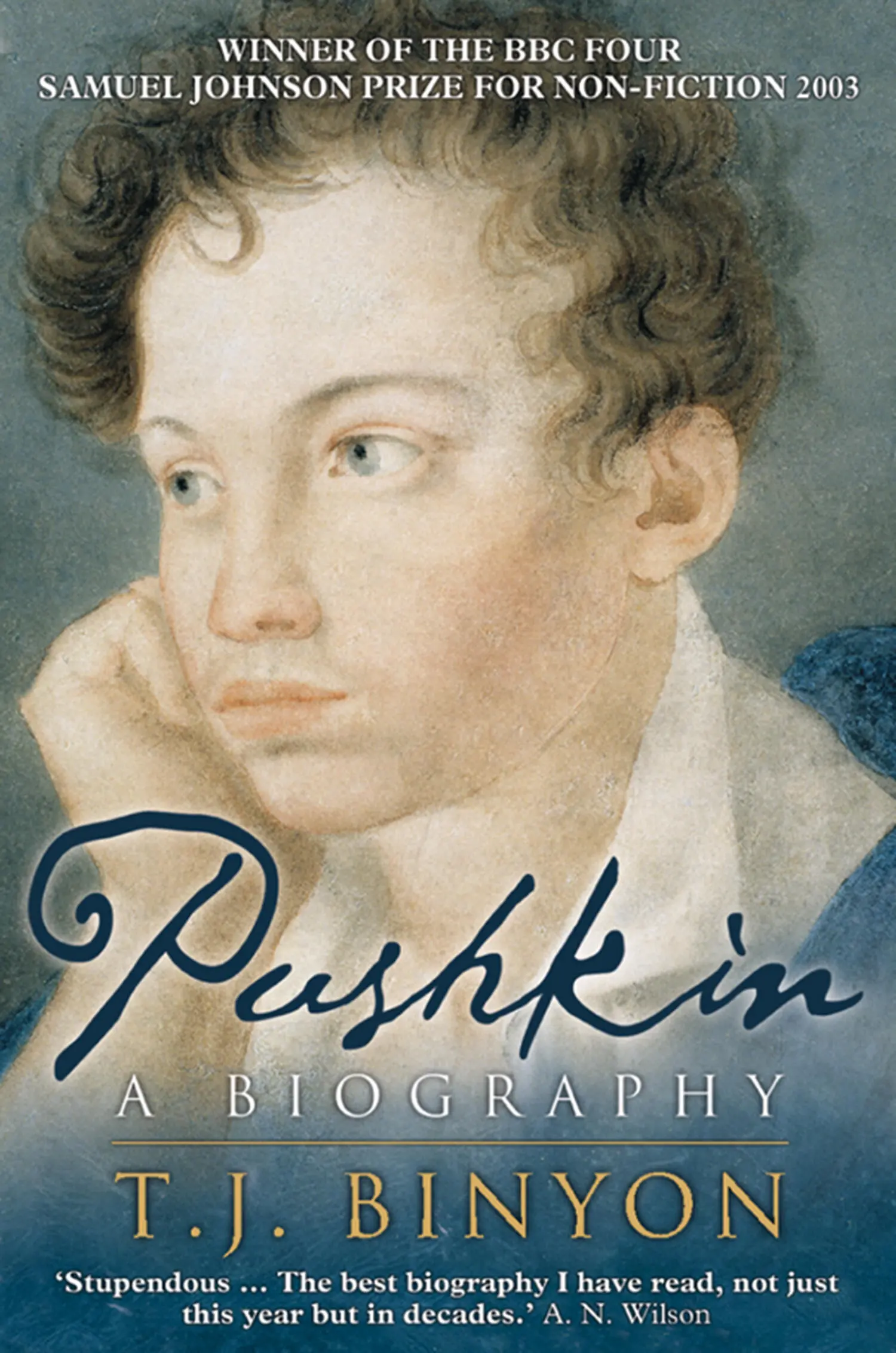
- Название:Pushkin
- Автор:
- Жанр:
- Год:неизвестен
- ISBN:нет данных
- Рейтинг книги:4 / 5. Голосов: 1
-
Избранное:Добавить в избранное
- Отзывы:
-
Ваша оценка:
Pushkin: краткое содержание, описание и аннотация
Предлагаем к чтению аннотацию, описание, краткое содержание или предисловие (зависит от того, что написал сам автор книги «Pushkin»). Если вы не нашли необходимую информацию о книге — напишите в комментариях, мы постараемся отыскать её.
Pushkin — читать онлайн ознакомительный отрывок
Ниже представлен текст книги, разбитый по страницам. Система сохранения места последней прочитанной страницы, позволяет с удобством читать онлайн бесплатно книгу «Pushkin», без необходимости каждый раз заново искать на чём Вы остановились. Поставьте закладку, и сможете в любой момент перейти на страницу, на которой закончили чтение.
Интервал:
Закладка:
Initially Pushkin put up in a small inn in the old town. At the beginning of October, however, he moved into a house rented by Inzov: a large, stone building in an isolated position near the old town, on a hill above the Byk. Inzov and several officials lived on the upper floors; Pushkin and his servant Nikita inhabited two rooms on the ground floor, through whose barred windows he looked out over an orchard and vineyard to the open country and mountains beyond. The walls were painted blue; one was soon disfigured with blobs of wax: Pushkin, sitting naked on his bed, would practise his marksmanship by â like Sherlock Holmes at 221B Baker Street â picking out initials on the wall with wax bullets from his pistols. Another of Inzovâs officials, Andrey Fadeev, was obliged to share this room on his visits to Kishinev. âThis was extremely inconvenient, for I had come on business, had work to do, got up and went to bed early; but some nights he did not sleep at all, wrote, moved about noisily, declaimed, and recited his verse in a loud voice. In summer he would disrobe completely and perform in the room all his nocturnal evolutions in the full nudity of his natural form.â 2 On 14 July and 5 November 1821 earthquakes struck Kishinev. The second, more severe, damaged the house. Inzov and the civil servants moved out immediately, but Pushkin, either through indolence or affection for his quarters â the first independent lodging he had had â stayed put, living there by himself for several months.
The day after his arrival Pushkin presented himself to Inzov, who introduced him to some members of his staff: Major Sergey Malevinsky, the illegitimate son of General Ermolov, then commanding the Russian armies in the Caucasus; and Nikolay Alekseev, who was to become a close friend. Ten years older than Pushkin, he knew many of the latterâs friends in St Petersburg, and, with a taste for literature, âwas the only one among the civil servants in whose person Pushkin could see in Kishinev a likeness to that cultured society of the capital to which he was usedâ. 3 That evening Malevinsky took him to the casino in the municipal gardens, which also served as a club for officers, civil servants and local gentry. A rudimentary restaurant was attached to the club, run by Joseph, the former maître dâhôtel of General Bakhmetev, Inzovâs predecessor. It became a regular port of call for Pushkin, who heard from a waitress, Mariola, the Moldavian song on which he based his poem âThe Black Shawlâ. *
The following day Pushkin dined with his old friend and fellow-member of Arzamas , General Mikhail Orlov, recently appointed to the command of the 16th Infantry Division, whose headquarters were in Kishinev. Here he met Orlovâs younger brother, Fedor, a colonel in the Life Guards Uhlans, who had lost a leg at the battle of Bautzen, together with several of Orlovâs officers: Major-General Pushchin, who commanded a brigade in the division; Captain Okhotnikov, Orlovâs aide-de-camp; and Ivan Liprandi, a lieutenant-colonel in the Kamchatka regiment, and one of Orlovâs staff officers. Liprandi was an interesting, somewhat mysterious character, who soon became another of Pushkinâs intimates.
Born in 1790, the son of an Italian émigré and a Russian baroness, he had made a name for himself in military intelligence during the Napoleonic wars. He was promoted lieutenant-colonel at twenty-four, and seemed on the verge of a brilliant career, but after a duel â one of several â which resulted in the death of his opponent, was transferred from the guards to an army regiment and posted to Kishinev. Pushkin, who would describe him as âuniting genuine scholarship with the excellent qualities of a military manâ, 4 was immediately attracted to him, pestered him with questions about his duels, and borrowed books from his library. The day after meeting Pushkin, Liprandi dined with Prince George Cantacuzen and his wife Elena, the addressee of Pushkinâs Lycée poem, âTo a Beauty Who Took Snuff.â They asked Liprandi to bring Pushkin round to see them; though protesting that his acquaintance with the poet was very short, the next day he, Fedor Orlov, and Pushkin called on the Cantacuzens, stayed for dinner, and remained drinking until well after midnight.
Pushkin soon had a wide circle of acquaintances and friends among the civilians and officers in the town. Some he had known, or heard of, earlier: a Lycée friend, Konstantin Danzas, now an officer in the engineers, was stationed here, as were the cousins Mikhail and Aleksey Poltoratsky, both cousins of Anna Kern, whose beauty had so impressed Pushkin at the Olenins in St Petersburg. They were attached to a unit of the general staff which was carrying out a military topographical survey of Bessarabia. Another member was Aleksandr Veltman. Later a well-known novelist, at this time he dabbled in poetry, and, cherishing a profound admiration for Pushkinâs work, initially held himself timidly aloof from him, fearing a comparison between their achievements. Chance, however, brought them together; Pushkin learnt of his verse and, calling at Veltmanâs lodgings, asked him to read the work on which he was then engaged: an imitation Moldavian folk-tale in verse, entitled âYanko the Shepherdâ, some episodes of which caused him to laugh uproariously.
Among the local inhabitants he frequently visited the civil governor, Konstantin Katakazi: âHaving yawned my way through mass,/I go to Katakaziâs,/What Greek rubbish!/What Greek bedlam!â he wrote. 5 Most evenings a company gathered to play cards at the home of the vice-governor, Matvey Krupensky; here Pushkin could satisfy his addiction to faro. Krupenskyâs large mansion housed not only the provinceâs revenue department, but also, in a columned hall decorated with a frieze emblematic of Russian military achievement, the townâs small theatre. At the beginning of November, a twenty-year-old ensign, Vladimir Gorchakov, who had just arrived in Kishinev and was attached to Orlovâs staff, attended a performance given by a travelling troupe of German actors. âMy attention was particularly caught,â he wrote in his diary, âby the entrance of a young man of small stature, but quite strong and broad-shouldered, with a quick and observant gaze, extraordinarily lively in his movements, often laughing in a surfeit of unconstrained gaiety and then suddenly turning meditative, which awoke oneâs sympathy. His features were irregular and ugly, but the expression of thought was so fascinating that involuntarily one wanted to ask: what is the matter? What grief darkens your soul? The unknownâs clothing consisted of a closely buttoned black frock-coat and wide trousers of the same colour.â 6 This was Pushkin; during the interval Alekseev introduced Gorchakov to him, and the two were soon deep in reminiscences of the St Petersburg theatre and of their favourite actresses, Semenova and Kolosova.
Another prominent member of Kishinev society was Egor Varfolomey, a wealthy tax-farmer and member of the supreme council of Bessarabia. He was extremely hospitable: it was very difficult to visit him and not stay to dinner; but for the young officers and civil servants the main attractions of the house were the informal dances in his ballroom and his eighteen-year-old daughter, Pulkheriya. She was a pretty, plump, healthy, empty-headed girl, with few powers of conversation, whose invariable reply to advances, compliments or witticisms was âWho do you think you are! What are you about!â â Veltman, in a flight of fancy, surmised that she might be an automaton. 7 Nevertheless, Pushkin, for want of a better object for his affections, fell in love with her during his stay in Kishinev. It was hardly a passionate affair, and did not prevent him from languishing, during the next three years, after many others: Mariya Schreiber, the shy seventeen-year-old daughter of the president of the medical board, for example; or Viktoriya Vakar, a colonelâs wife with whom he often danced; or the playful, dark-complexioned Anika Sandulaki. He sighed from afar after pretty Elena Solovkina, who was married to the commander of the Okhotsk infantry regiment and occasionally visited Kishinev, and made a determined assault on the virtue of Ekaterina Stamo, whose husband Apostol, a counsellor of the Bessarabian civil court, was some thirty years older than her. âPushkin was a great rake, and in addition I, unfortunately, was considered a beauty in my youth,â Ekaterina remarked in her recollections. âI had great difficulty in restraining a young man of his age. I always had the most strict principles, â such was the upbringing we all had been given, â but, you know, Aleksandr Sergeevichâs views on women were somewhat lax, and then one must take into account that our society was strange to him, as a Russian. Thanks to my personal tact [â¦] I managed finally to arrange things with Aleksandr Sergeevich in such a way that he did not repeat the declaration which he had made to me, a married woman.â 8 She was one of the seven children of Zamfir Ralli, a rich Moldavian landowner with estates to the west of Kishinev. Pushkin got to know the family very well during his stay in Kishinev: they were his closest friends among the Moldavian nobility, and he was especially intimate with Ivan, Ekaterinaâs brother, a year younger than himself, who shared his literary tastes. Another Kishinev beauty was Mariya Eichfeldt, âwhose pretty little face became famous for its attractiveness from Bessarabia to the Caucasusâ. 9 She had a much older husband: Pushkin christened the couple âZémire and Azorâ, after the French opéra comique with that name on the theme of Beauty and the Beast. He flirted with her in society, but refrained from pressing his advances further, as she was Alekseevâs mistress: âMy dear chap, how unjust/Are your jealous dreams,â he wrote. 10
Читать дальшеИнтервал:
Закладка:
Похожие книги на «Pushkin»
Представляем Вашему вниманию похожие книги на «Pushkin» списком для выбора. Мы отобрали схожую по названию и смыслу литературу в надежде предоставить читателям больше вариантов отыскать новые, интересные, ещё непрочитанные произведения.









Обсуждение, отзывы о книге «Pushkin» и просто собственные мнения читателей. Оставьте ваши комментарии, напишите, что Вы думаете о произведении, его смысле или главных героях. Укажите что конкретно понравилось, а что нет, и почему Вы так считаете.