T. Binyon - Pushkin
Здесь есть возможность читать онлайн «T. Binyon - Pushkin» — ознакомительный отрывок электронной книги совершенно бесплатно, а после прочтения отрывка купить полную версию. В некоторых случаях можно слушать аудио, скачать через торрент в формате fb2 и присутствует краткое содержание. Жанр: unrecognised, на английском языке. Описание произведения, (предисловие) а так же отзывы посетителей доступны на портале библиотеки ЛибКат.
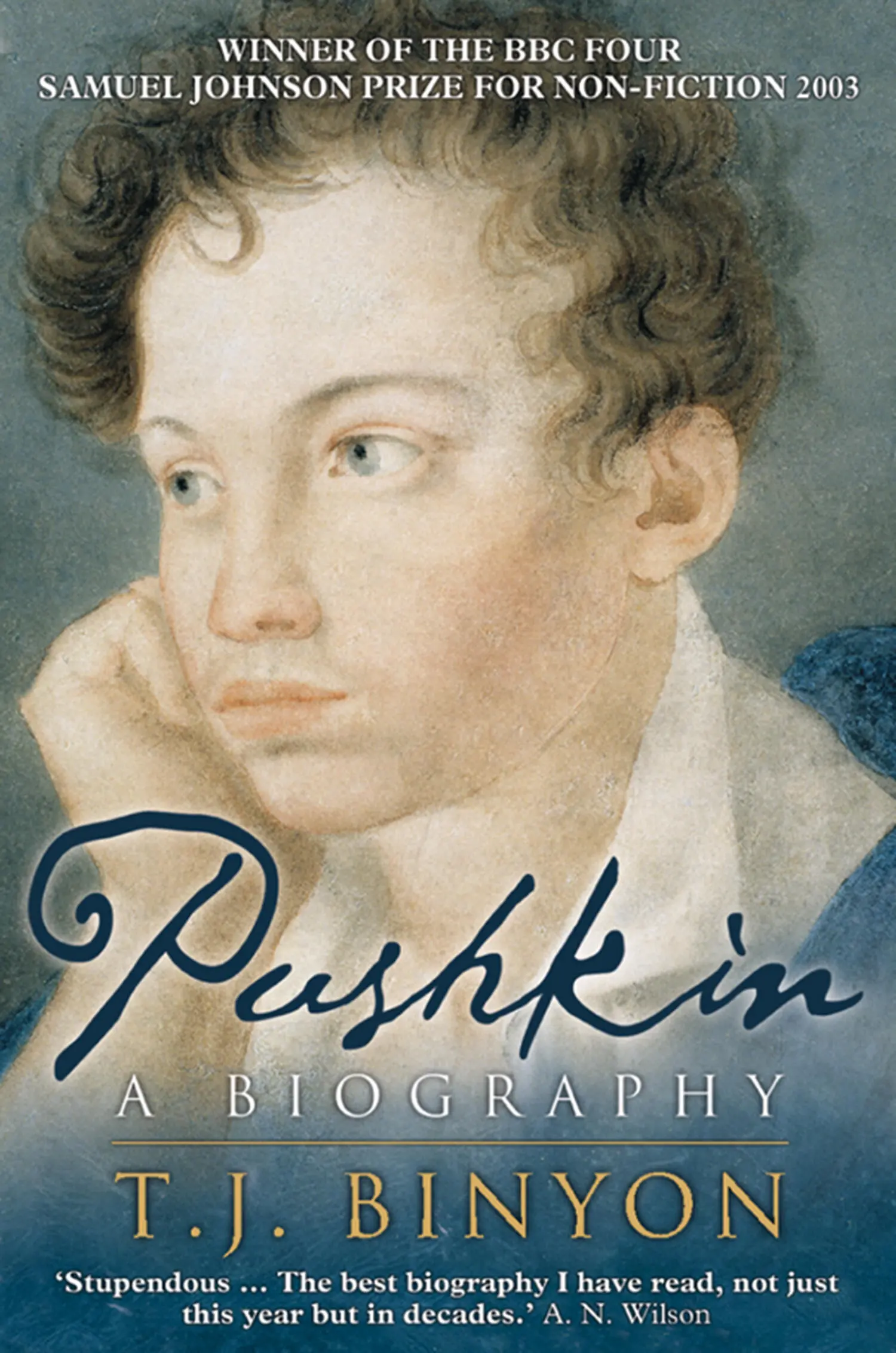
- Название:Pushkin
- Автор:
- Жанр:
- Год:неизвестен
- ISBN:нет данных
- Рейтинг книги:4 / 5. Голосов: 1
-
Избранное:Добавить в избранное
- Отзывы:
-
Ваша оценка:
Pushkin: краткое содержание, описание и аннотация
Предлагаем к чтению аннотацию, описание, краткое содержание или предисловие (зависит от того, что написал сам автор книги «Pushkin»). Если вы не нашли необходимую информацию о книге — напишите в комментариях, мы постараемся отыскать её.
Pushkin — читать онлайн ознакомительный отрывок
Ниже представлен текст книги, разбитый по страницам. Система сохранения места последней прочитанной страницы, позволяет с удобством читать онлайн бесплатно книгу «Pushkin», без необходимости каждый раз заново искать на чём Вы остановились. Поставьте закладку, и сможете в любой момент перейти на страницу, на которой закончили чтение.
Интервал:
Закладка:
At the beginning of November General Raevskyâs two half-brothers, Aleksandr and Vasily Davydov, came to stay with Orlov. âAleksandr Lvovich,â Gorchakov noted, âwas distinguished by the refinement of a marquis, Vasily flaunted a kind of manner peculiar to the common man [â¦] They were both very friendly towards Pushkin, but Aleksandr Lvovichâs friendliness was inclined to condescension, which, it seemed to me, was very much disliked by Pushkin.â 11 Orlov was about to visit the Davydov estate at Kamenka â some 160 miles to the south-east of Kiev, not far from the Dnieper â and the brothers also extended an invitation to Pushkin. He accepted with alacrity; Inzov gave his permission; and in the middle of November he left with the Davydovs. Passing through Dubossary, Balta, Olviopol and Novomirgorod, they arrived in Kamenka three days later. General Raevsky and his son Aleksandr were already there, having travelled down from Kiev; Mikhail Orlov and his aide-de-camp Okhotnikov soon followed, bringing with them Ivan Yakushkin, who âwas pleasantly surprised when A.S. Pushkin [â¦] ran out towards me with outstretched armsâ: they had been introduced to one another in St Petersburg by Chaadaev. 12
Kamenka was one of the centres of the Decembrist movement in the south; the other, more important, was Tulchin, the headquarters of the Second Army, where Pestel was stationed. The gathering here, ostensibly to celebrate the name-day, on 24 November, of Ekaterina Nikolaevna, the mother of General Raevsky and of the Davydov brothers, was in effect a meeting of a number of the conspirators: Orlov, Okhotnikov, Yakushkin and Vasily Davydov. The party dined luxuriously each evening with Ekaterina Nikolaevna, and then retired to Vasilyâs quarters for political discussions.
Orlov and Okhotnikov left at the beginning of December. Pushkin had intended to accompany them, but was prevented by illness. Aleksandr Davydov made his excuses to Inzov, writing that âhaving caught a severe cold, he is not yet in a condition to undertake the return journey [â¦] but if he feels soon some relief in his illness, will not delay in setting out for Kishinevâ. 13 Inzov replied sympathetically, thanking Davydov for allaying his anxiety, since, he wrote, âUp to now I was in fear for Mr Pushkin, lest he, regardless of the harsh frosts there have been with wind and snow, should have set out and somewhere, given the inconvenience of the steppe highways, should have met with an accident [but am] reassured and hope that your excellency will not allow him to undertake the journey until he has recovered his strength.â 14 He enclosed with his letter a copy of a demand for the repayment of 2,000 roubles, which Pushkin had borrowed from a money-lender in November 1819 to pay a debt at cards.
A few days later Pushkin wrote to Gnedich: âI am now in the Kiev province, in the village of the Davydovs, charming and intelligent recluses, brothers of General Raevsky. My time slips away between aristocratic dinners and demagogic arguments. Our company, now dispersed, was recently a varied and jolly mixture of original minds, people well-known in our Russia, interesting to an unfamiliar observer. Women are few, there is much champagne, many witty words, many books, a few verses.â 15 Though there may have been few women in Kamenka, Pushkin made the best of the situation and enjoyed an affair with Aglaë Davydova, Aleksandr Lvovichâs thirty-three-year-old wife. It was a short-lived liaison. The difference in age and social position between the two led Aglaë to treat him with a patronizing condescension that was as distasteful to Pushkin in his mistress as it had been in her husband. When Liprandi dined with Davydov and his wife in St Petersburg in March 1822 he noted that she âwas not very favourably disposed towards Aleksandr Sergeevich, and it was obviously unwelcome to her, when her husband asked after him with great interestâ, and added: âI had already heard a number of times of the kindness shown to Pushkin at Kamenka, and heard from him enthusiastic praise of the family society there, and Aglaë too had been mentioned. Then I learnt that there had been some kind of quarrel between her and Pushkin, and that the latter had rewarded her with some verses!â 16 The affair had indeed broken off acrimoniously, and Pushkin, hurt and insulted, gave vent to his feelings with four extraordinarily spiteful epigrams. One, commenting on her promiscuity, wonders what impelled her to marry Davydov; another, coarse and excessively indecent even by Pushkinâs standards, portrays her as sexually insatiable; the least offensive, and the wittiest, is in French:
To her lover without resistance Aglaë
Had ceded â he, pale and petrified,
Was making a great effort â at last, incapable of more,
Completely breathless, withdrew ⦠with a bow, â
âMonsieurâ, says Aglaë in an arrogant tone,
âSpeak, monsieur: why does my appearance
Intimidate you? Will you tell me the cause?
Is it disgust?â âGood heavens, itâs not that.â
âExcess of love?â âNo, of respect.â 17
Pushkin did not leave Kamenka until the end of January 1821, then travelling, in the company of the Davydov brothers, not to Kishinev but to Kiev, where he put up with General Raevsky, and met the âhussar-poetâ Denis Davydov, cousin both of the Davydovs and of General Raevsky, famous for his partisan activities during the French armyâs retreat in 1812 â the model for Denisov in War and Peace. âHussar-poet, youâve sung of bivouacs/Of the licence of devil-may-care carousals/Of the fearful charm of battle/And of the curls of your moustache,â he wrote. 18 In the second week of February he and the Davydovs set off for Tulchin, some 180 miles to the west. His St Petersburg acquaintance General Kiselev was now chief of staff of the Second Army here: he was to marry Sofya Potocka later that year. âI had the occasion to see [Pushkin] in Tulchin at Kiselevâs,â wrote Nikolay Basargin, a young ensign in the 31st Jägers. âI was not acquainted with him, but met him two or three times in company. I disliked him as a person. There was something of the bully about him, an element of vanity, and the desire to mock and wound others.â 19 After a week in Tulchin Pushkin, still avoiding his official duties, returned to Kamenka with the Davydovs, arriving on or about 18 February.
During his first stay on the estate he had begun a new notebook, copying into it fair versions of his Crimean poems âA Nereidâ and âSparser grows the flying range of cloudsâ, and continuing to work on The Prisoner of the Caucasus. Now, lying on the Davydovsâ billiard table surrounded by scraps of manuscript, so engrossed in composition as to ignore everything about him, he produced the first fair copy of the poem, adding at the end of the text the notation â23 February 1821, Kamenkaâ. 20 Despite this achievement, he was often in a bleak mood. âBeneath the storms of harsh fate/My flowering wreath has faded,â he had written the previous day. 21 He was isolated from his family and his closest friends, from the literary and social life of the capital; the best years of his poetic and personal life were being wasted in a provincial slough. Melancholy was to recur ever more frequently during his years of exile: âI am told he is fading away from depression, boredom and poverty,â Vyazemsky wrote to Turgenev in 1822. 22 Constantly deluding himself with hopes of an end to his exile, or at least of being granted leave to visit St Petersburg â âI shall try to be with you myself for a few days,â he wrote to his brother in January 1822 23 â he was as constantly brought to face the reality of his situation. When, a year later, he made a formal application to Nesselrode for permission to come to St Petersburg, âwhither,â he wrote, âI am called by the affairs of a family whom I have not seen for three yearsâ, 24 he found that Alexander had not forgotten his misdemeanours: Nesselrodeâs report was endorsed by the emperor with a single word: âRefusedâ. 25 He could not but compare himself to Ovid: their fates were strangely alike. Because of their verse (and, in Ovidâs case, also for some other, mysterious crime) both had been exiled by an emperor â Ovid by Augustus, the former Octavian, in AD 8 â to the region of the Black Sea. In Ovidâs works written in exile â Tristia and Black Sea Letters â Pushkin found reflections of an experience analogous to his own, and contrasted his emotions as an exile from St Petersburg with those of Ovid as an exile from Rome. âLike you, submitting to an inimical fate,/ I was your equal in destiny, if not in fame,â he wrote in âTo Ovidâ, completed on 26 December 1821. 26
Читать дальшеИнтервал:
Закладка:
Похожие книги на «Pushkin»
Представляем Вашему вниманию похожие книги на «Pushkin» списком для выбора. Мы отобрали схожую по названию и смыслу литературу в надежде предоставить читателям больше вариантов отыскать новые, интересные, ещё непрочитанные произведения.










Обсуждение, отзывы о книге «Pushkin» и просто собственные мнения читателей. Оставьте ваши комментарии, напишите, что Вы думаете о произведении, его смысле или главных героях. Укажите что конкретно понравилось, а что нет, и почему Вы так считаете.