T. Binyon - Pushkin
Здесь есть возможность читать онлайн «T. Binyon - Pushkin» — ознакомительный отрывок электронной книги совершенно бесплатно, а после прочтения отрывка купить полную версию. В некоторых случаях можно слушать аудио, скачать через торрент в формате fb2 и присутствует краткое содержание. Жанр: unrecognised, на английском языке. Описание произведения, (предисловие) а так же отзывы посетителей доступны на портале библиотеки ЛибКат.
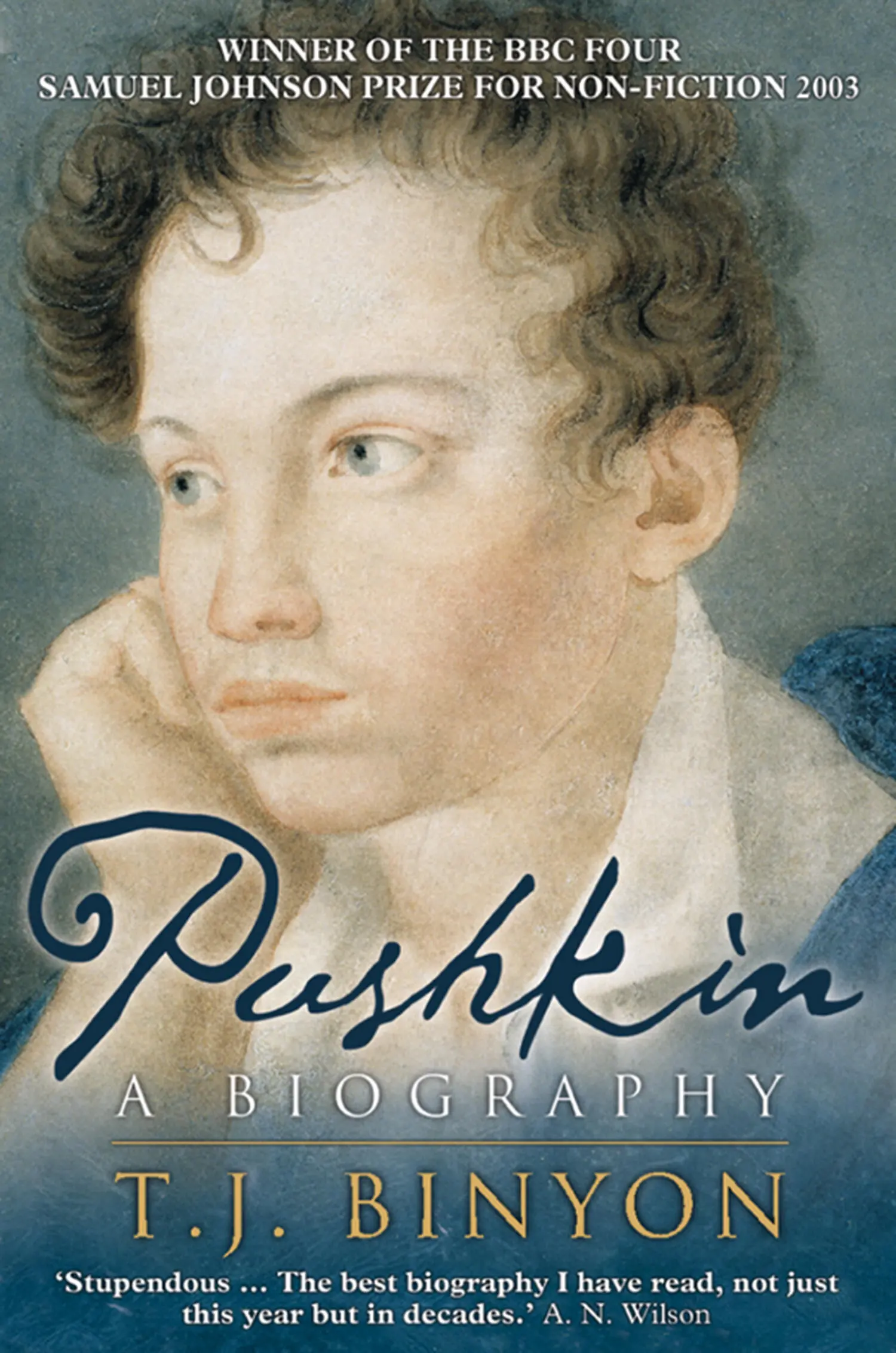
- Название:Pushkin
- Автор:
- Жанр:
- Год:неизвестен
- ISBN:нет данных
- Рейтинг книги:4 / 5. Голосов: 1
-
Избранное:Добавить в избранное
- Отзывы:
-
Ваша оценка:
Pushkin: краткое содержание, описание и аннотация
Предлагаем к чтению аннотацию, описание, краткое содержание или предисловие (зависит от того, что написал сам автор книги «Pushkin»). Если вы не нашли необходимую информацию о книге — напишите в комментариях, мы постараемся отыскать её.
Pushkin — читать онлайн ознакомительный отрывок
Ниже представлен текст книги, разбитый по страницам. Система сохранения места последней прочитанной страницы, позволяет с удобством читать онлайн бесплатно книгу «Pushkin», без необходимости каждый раз заново искать на чём Вы остановились. Поставьте закладку, и сможете в любой момент перейти на страницу, на которой закончили чтение.
Интервал:
Закладка:
Pushkinâs confidence in the success of the revolt soon proved unjustified â at least as far as Moldavia was concerned, where the uprising was quickly suppressed by the Turks. After a final, bloody engagement at Sculeni, on the west bank of the Prut, in June, the few survivors escaped by swimming the river. Gorchakov, who had been sent to observe events from the Russian side, gave Pushkin an account of this incident, which he later made use of in the short story âKirdzhaliâ. Though he remained constant in his support for Greek independence, he was disappointed by this âcrowd of cowardly beggars, thieves and vagabonds who could not even withstand the first fire of the worthless Turkish musketryâ. âAs for the officers, they are worse than the soldiers. We have seen these new Leonidases in the streets of Odessa and Kishinev â we are personally acquainted with a number of them, we can attest to their complete uselessness â they have discovered the art of being boring, even at the moment when their conversation ought to interest every European â no idea of the military art, no concept of honour, no enthusiasm â the French and Russians who are here show them a contempt of which they are only too worthy, they put up with anything, even blows of a cane, with a sangfroid worthy of Themistocles. I am neither a barbarian nor an apostle of the Koran, the cause of Greece interests me keenly, that is just why I become indignant when I see these wretches invested with the sacred office of defenders of liberty.â 38
As the failure of the insurrection became apparent, refugees began to flood into Bessarabia: Moldavian nobles, Phanariot Greeks from the Turkish territories and Constantinople, Albanians and others. Their presence certainly made Kishinev a more lively place, and Pushkinâs circle of acquaintances was widened by a number of the new arrivals. Among these was Todoraki Balsch, a Moldavian hatman â military commander â who had fled from IaÅi with his wife Mariya â âa woman in her late twenties, reasonably comely, extremely witty and loquaciousâ 39 â and daughter Anika. For some time Mariya was the sole object of Pushkinâs attentions; they held long, uninhibited conversations in French together, and she became convinced that he was in love with her. However, he suddenly transferred his allegiance to another refugee from IaÅi, Ekaterina Albrecht, âtwo years older than Balsch, but more attractive, with unconstrained European manners; she had read much, experienced much, and in civility consigned Balsch to the backgroundâ. 40 Ekaterina came from an old Moldavian noble family, the Basotas, and was separated from her third husband, the commander of the Life Guards Uhlans: qualities which attracted Pushkin â he remarked that she was âhistorical and of ardent passionsâ. 41 As a result, Mariyaâs feelings turned to virulent dislike, which the following year was to give rise to a notable scandal.
Another refugee was Calypso Polichroni, a Greek girl who had fled from Constantinople with her mother and taken a humble two-room lodging in Kishinev. She went little into society; indeed, would hardly have been welcomed there, for her morals were not above suspicion. âThere was not the slightest strictness about her conversation or her behaviour,â Wiegel noted, adding euphemistically: âif she had lived at the time of Pericles, history, no doubt, would have recorded her name together with those of Phryne and Laïsâ 42 â famous courtesans of the past. âExtremely small, with a scarcely noticeable bosom,â Calypso âhad a long, dry face, always rouged in the Turkish manner; a huge nose as it were divided her face from top to bottom; she had thick, long hair and huge fiery eyes made even more voluptuous by the use of kohlâ; 43 and âa tender, attractive voice, not only when she spoke, but also when she sang to the guitar terrible, gloomy Turkish songsâ. 44 But what excited Pushkinâs imagination âwas the thought that at about fifteen she was supposed to have first known passion in the arms of Lord Byron, who was then travelling in Greeceâ. 45 If Vyazemsky came to Kishinev, Pushkin wrote, he would introduce him to âa Greek girl, who has exchanged kisses with Lord Byronâ. 46 âYou were born to set on fire/The imagination of poets,â he told her. 47 A juxtaposition of Byronâs life with what is known of Calypsoâs shows they can never have met. But in inventing the story, Calypso revealed an acute perception of psychology: in dalliance with her there was an extra titillation to be derived from the feeling that one was following, metaphorically, in Byronâs footsteps. Bulwer-Lytton is supposed to have gained a peculiar satisfaction from an affair with a woman whom Byron had loved, while the Marquis de Boissy, who married Teresa Guiccioli, would, it was reported, introduce her as âMy wife, the Marquise de Boissy, Byronâs former mistressâ. 48 Pushkin was not immune to this thrill. *
Meanwhile Inzov had put him to work. Peter Manega, a Rumanian Greek who had studied law in Paris, had produced for Inzov a code of Moldavian law, written in French, and Pushkin was given the task of turning it into Russian. In his spare time he began to study Moldavian, taking lessons from one of Inzovâs servants. He learnt enough to be able to teach Inzovâs parrot to swear in Moldavian. Chuckling heartily, it repeated an indecency to the archbishop of Kishinev and Khotin when the latter was lunching at Inzovâs on Easter Sunday. Inzov did not hold the prank against Pushkin; indeed, when Capo dâIstrias wrote a few weeks later to enquire âwhether [Pushkin] was now obeying the suggestions of a naturally good heart or the impulses of an unbridled and harmful imaginationâ, he replied: âInspired, as are all residents of Parnassus, by a spirit of jealous emulation of certain writers, in his conversations with me he sometimes reveals poetic thoughts. But I am convinced that age and time will render him sensible in this respect and with experience he will come to recognize the unfoundedness of conclusions, inspired by the reading of harmful works and by the conventions accepted by the present age.â 49 Had he known what Pushkin was writing he might not have been so generous.
At this period in his life Pushkin was a professed, indeed a militant atheist, modelling himself on the eighteenth-century French rationalists he admired. Whether or not he was the author, while at St Petersburg, of the quatrain âWe will amuse the good citizens/And in the pillory/With the guts of the last priest/Will strangle the last tsarâ, â 50 an adaptation of a famous remark by Diderot, his view of religion emerges clearly from much of his Kishinev work. When Inzov, a pious man, made it clear that he expected his staff to attend church, Pushkin, in a humorous epistle to Davydov, explained that his compliance was due to hypocrisy, not piety, and complained about the communion fare:
my impious stomach
âFor pityâs sake, old chap,â remarks,
âIf only Christâs blood
Were, letâs say, Lafite â¦
Or Clos de Vougeot, then not a word,
But this â itâs just ridiculous â
Is Moldavian wine and water.â 51
He greeted Easter with the irreverent poem âChrist is risenâ, addressed to the daughter of a Kishinev inn-keeper. Today he would exchange kisses with her in the Christian manner, but tomorrow, for another kiss, would be willing to adhere to âthe faith of Mosesâ, and even put into her hand âThat by which one can distinguish/A genuine Hebrew from the Orthodoxâ. 52
At the beginning of May, in a letter to Aleksandr Turgenev, he jokingly suggested that the latter might use his influence to obtain a few daysâ leave for his exiled friend, adding: âI would bring you in reward a composition in the taste of the Apocalypse, and would dedicate it to you, Christ-loving pastor of our poetic flock.â * 53 The description of Turgenev alluded to the fact that he was the head of the Department of Foreign Creeds; the work Pushkin was proposing to dedicate to him was, however, hardly appropriate: it was The Gabrieliad , a blasphemous parody of the Annunciation. 54
Читать дальшеИнтервал:
Закладка:
Похожие книги на «Pushkin»
Представляем Вашему вниманию похожие книги на «Pushkin» списком для выбора. Мы отобрали схожую по названию и смыслу литературу в надежде предоставить читателям больше вариантов отыскать новые, интересные, ещё непрочитанные произведения.











Обсуждение, отзывы о книге «Pushkin» и просто собственные мнения читателей. Оставьте ваши комментарии, напишите, что Вы думаете о произведении, его смысле или главных героях. Укажите что конкретно понравилось, а что нет, и почему Вы так считаете.