T. Binyon - Pushkin
Здесь есть возможность читать онлайн «T. Binyon - Pushkin» — ознакомительный отрывок электронной книги совершенно бесплатно, а после прочтения отрывка купить полную версию. В некоторых случаях можно слушать аудио, скачать через торрент в формате fb2 и присутствует краткое содержание. Жанр: unrecognised, на английском языке. Описание произведения, (предисловие) а так же отзывы посетителей доступны на портале библиотеки ЛибКат.
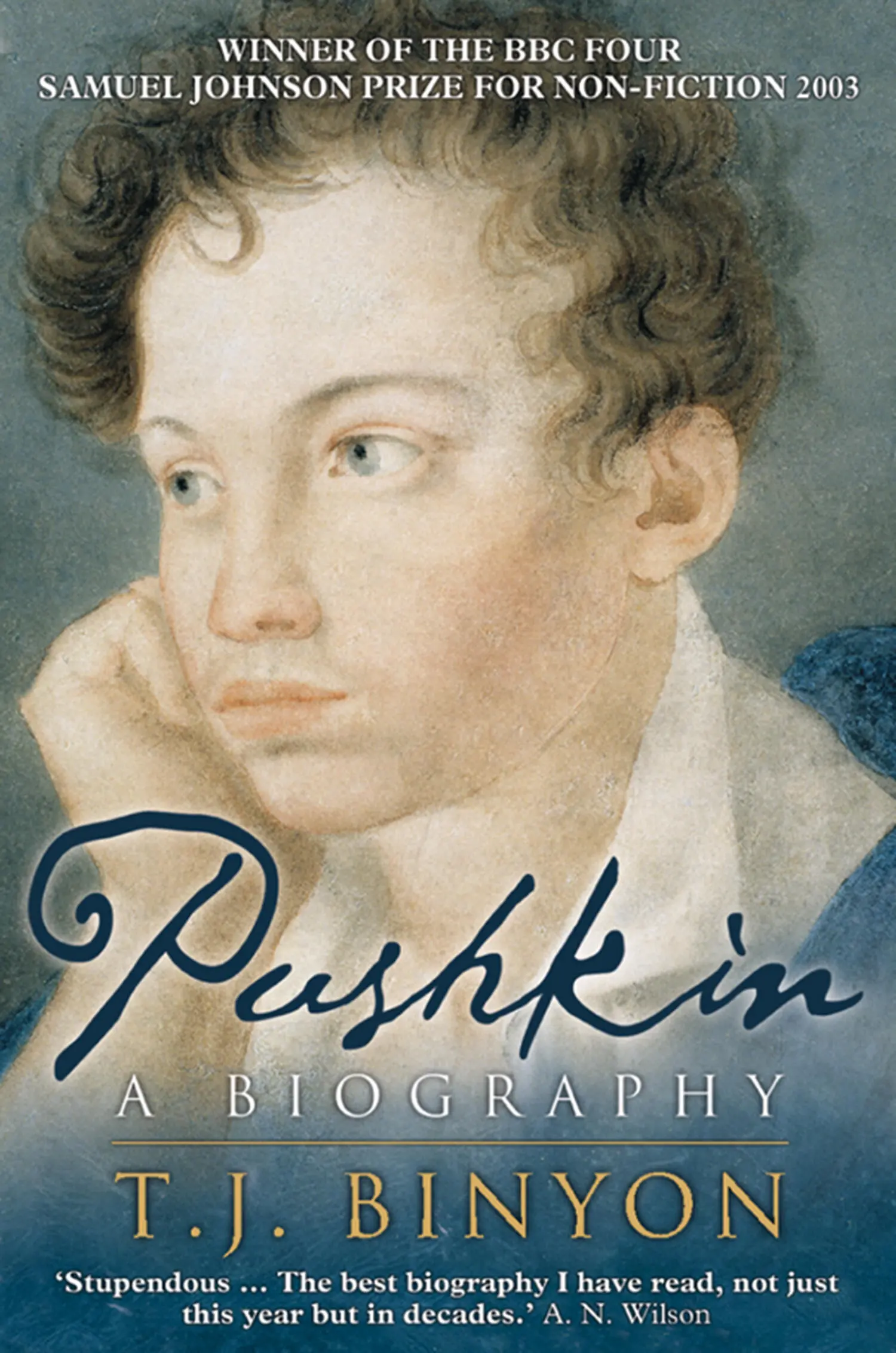
- Название:Pushkin
- Автор:
- Жанр:
- Год:неизвестен
- ISBN:нет данных
- Рейтинг книги:4 / 5. Голосов: 1
-
Избранное:Добавить в избранное
- Отзывы:
-
Ваша оценка:
Pushkin: краткое содержание, описание и аннотация
Предлагаем к чтению аннотацию, описание, краткое содержание или предисловие (зависит от того, что написал сам автор книги «Pushkin»). Если вы не нашли необходимую информацию о книге — напишите в комментариях, мы постараемся отыскать её.
Pushkin — читать онлайн ознакомительный отрывок
Ниже представлен текст книги, разбитый по страницам. Система сохранения места последней прочитанной страницы, позволяет с удобством читать онлайн бесплатно книгу «Pushkin», без необходимости каждый раз заново искать на чём Вы остановились. Поставьте закладку, и сможете в любой момент перейти на страницу, на которой закончили чтение.
Интервал:
Закладка:
In May Pushkin spent five days in the sickbay with a feverish cold; he was thirteen on the twenty-sixth of that month; on 9 June the Lycée was visited by the Metropolitan of Moldavia, Gabriel Banulescu-Bodoni; and on 12 June Napoleonâs army of half a million men crossed the Neman. The news was received in Tsarskoe Selo five days later. From that time on the lycéens followed, with growing anxiety and dismay, the progress of the invasion in the Russian and foreign newspapers in the reading-room, and in the bulletins which Nikolay Koshansky, who taught Latin and Russian literature, made it his business to compose and to read on Sundays in the school hall. Delvig earned instant popularity by his vivid account of the events he had witnessed as a nine-year-old during the campaign of 1807: a complete fantasy which, nevertheless, deceived the lycéens and even Malinovsky.
As the Grande Armée advanced, Barclay retreated before it. Napoleon was in Vilna on 16 June, Vitebsk on 16 July. After fierce fighting, Smolensk fell on 6 August, destroyed by fire. âThe spectacle Smolensk offered the French was like the spectacle an eruption of Mount Vesuvius offered the inhabitants of Naples,â wrote Napoleon. 33 Having given battle at Lubino, the Russian army then retreated again, towards Moscow, whose inhabitants had already begun to leave the city. Nadezhda Pushkina, taking her children and mother, Mariya Gannibal, left for Nizhny Novgorod.
The commander of a retreating, apparently beaten army, Barclay had lost Alexanderâs confidence and become widely unpopular. He had often urged on the emperor the necessity for a single commander-in-chief of all the Russian armies. Alexander belatedly took his advice and appointed Kutuzov. Barclay remained as commander of the First Army, but had to give up his post as Minister of War. Küchelbecker, in dismay at the taunts, even accusations of treason, that were being levelled at his relative, turned to his mother for consolation. He was not wholly comforted by the reassurances offered in her letters, and in October she had to dissuade the fourteen-year-old from joining the army as a volunteer in order to redeem the family honour. She mentioned the immorality of the young men in the volunteer army, protested against âthe slaughter of childrenâ, and pointed out that it would interrupt his education. Küchelbecker abandoned the idea. 34
Even under Kutuzov the Russian army continued to retreat. Abandoning a favourable position at Tsarevo-Zaimishche, he moved east to Gzhatsk and, fighting off the French under Murat with his rearguard, arrived near the village of Borodino on the Kolocha river, seventy-two miles from Moscow, on 22 August. Here he drew up his armies and waited for the French. On the twenty-fourth the French captured the Shevardino redoubt; on the twenty-sixth, after a dayâs lull, the battle of Borodino took place, lasting from six in the morning until dusk. Napoleonâs withdrawal across the Kolocha at the end of the day convinced Kutuzov that, despite the enormous Russian losses, the French had been beaten. He sent a short dispatch claiming victory to Alexander, and retreated to Mozhaisk. Meanwhile a letter from Napoleon was on its way to the Empress Marie-Louise in Paris: âI write to you from the battlefield of Borodino. Yesterday I beat the Russians [â¦] The battle was a hot one: victory was ours at two in the afternoon. I took several thousand prisoners and sixty cannons. Their losses can be estimated at 30,000 men. I lost many killed and wounded [â¦] My health is good, the weather a little freshâ. 35
Five days later the lycéens read Kutuzovâs dispatch from Borodino in the Northern Post. As they were cheering the news, the victorious Russian army was passing through Moscow and retreating to the southeast, towards Ryazan. Alexander learnt of this on 7 September. Rumour of the retreat quickly spread through St Petersburg, causing an abrupt change of mood. Napoleon now stood between the capital and the main Russian army. Only Wittgensteinâs weak First Corps protected the city; if Napoleon turned north, an evacuation would be necessary. Government archives and the pictures in the Hermitage were packed up; plans were made for removing the statues of Peter the Great and Suvorov; many of the books of the imperial public library were crated and sent up the Neva. * And Razumovsky wrote to Malinovsky, telling him that the Lycée, like the court, would be evacuated to à bo (Turku) in Finland, and asking him to supply a list of necessities for the move. When Malinovsky did so, the minister objected that tin plates and cups for travelling were not essential and that trunks for the pupilsâ clothes could be replaced by wooden crates. He added that the items should be bought only on the condition that a refund would be made, should they not be required.
Napoleon entered Moscow on 2 September. Fires broke out that night and the night after, apparently lit on the orders of the Governor-General of Moscow, Count Fedor Rostopchin. The city burned for four days. Pushkinâs uncle lost his house, his library and all his possessions, and â one of the last to leave â arrived in Nizhny Novgorod with no money and only the clothes he stood up in. The Grande Armée left Moscow on 7 October, and after a bloody battle at Maloyaroslavets, which both sides again claimed as a victory, was forced back on its old line of march, losing stragglers to cold, hunger, illness and Davydovâs partisans each day. News of Maloyaroslavets and of General Wintzingerodeâs entry into Moscow reached the Lycée simultaneously. The fear of evacuation was past, and with the French on the retreat normal life could be resumed. Pushkin called Gorchakov a âpromiscuous Polish madamâ; insulted Myasoedov with some unrepeatable verses about the Fourth Department, in which the latterâs father worked (since the Fourth Department of the Imperial Chancery administered the charitable foundations and girlsâ schools of the dowager empress, a guess can be made at the nature of the insult); and pushed Pushchin and Myasoedov, saying that if they complained they would get the blame, because he always managed to wriggle out of it. 36
On 4 January 1813 the Northern Post reported the reading in St Petersburgâs Kazan Cathedral of the imperial manifesto announcing the end of the Fatherland War: the last of Napoleonâs troops had recrossed the Neman. Napoleon, however, was not yet beaten. Fighting continued throughout that year, with Austria, Prussia and Russia in alliance. Alexander was determined to avenge the fall of Moscow with the surrender of Paris, but it was not until 31 March 1814 (NS) that he entered the city and was received by Talleyrand. The news reached St Petersburg three weeks later, and Koshansky immediately gave his pupils âThe Capitulation of Parisâ as a theme for prose and poetic composition.
If Pushkin produced a composition on this occasion, it has not survived. However, when in November 1815 Alexander returned from the peace negotiations in Paris that followed Waterloo, Pushkin was asked by I.I. Martynov, the director of the department of education, to compose a piece commemorating the occasion. He completed the poem by 28 November, and sent it to Martynov, writing, âIf the feelings of love and gratitude towards our great monarch, which I have described, are not too unworthy of my exalted subject, how happy I would be, if his excellency Count Aleksey Kirilovich [Razumovsky] were to deign to put before his majesty this feeble composition of an inexperienced poet!â 37 The poem, written in the high, solemn style that befits the subject, begins with an account of the French invasion and ensuing battles â in which, Pushkin laments, he was unable to participate, âgrasping a sword in my childish handâ â before describing the liberation of Europe and celebrating Alexanderâs return to Russia. It ends with a vision of the idyllic future, when
Читать дальшеИнтервал:
Закладка:
Похожие книги на «Pushkin»
Представляем Вашему вниманию похожие книги на «Pushkin» списком для выбора. Мы отобрали схожую по названию и смыслу литературу в надежде предоставить читателям больше вариантов отыскать новые, интересные, ещё непрочитанные произведения.









Обсуждение, отзывы о книге «Pushkin» и просто собственные мнения читателей. Оставьте ваши комментарии, напишите, что Вы думаете о произведении, его смысле или главных героях. Укажите что конкретно понравилось, а что нет, и почему Вы так считаете.