T. Binyon - Pushkin
Здесь есть возможность читать онлайн «T. Binyon - Pushkin» — ознакомительный отрывок электронной книги совершенно бесплатно, а после прочтения отрывка купить полную версию. В некоторых случаях можно слушать аудио, скачать через торрент в формате fb2 и присутствует краткое содержание. Жанр: unrecognised, на английском языке. Описание произведения, (предисловие) а так же отзывы посетителей доступны на портале библиотеки ЛибКат.
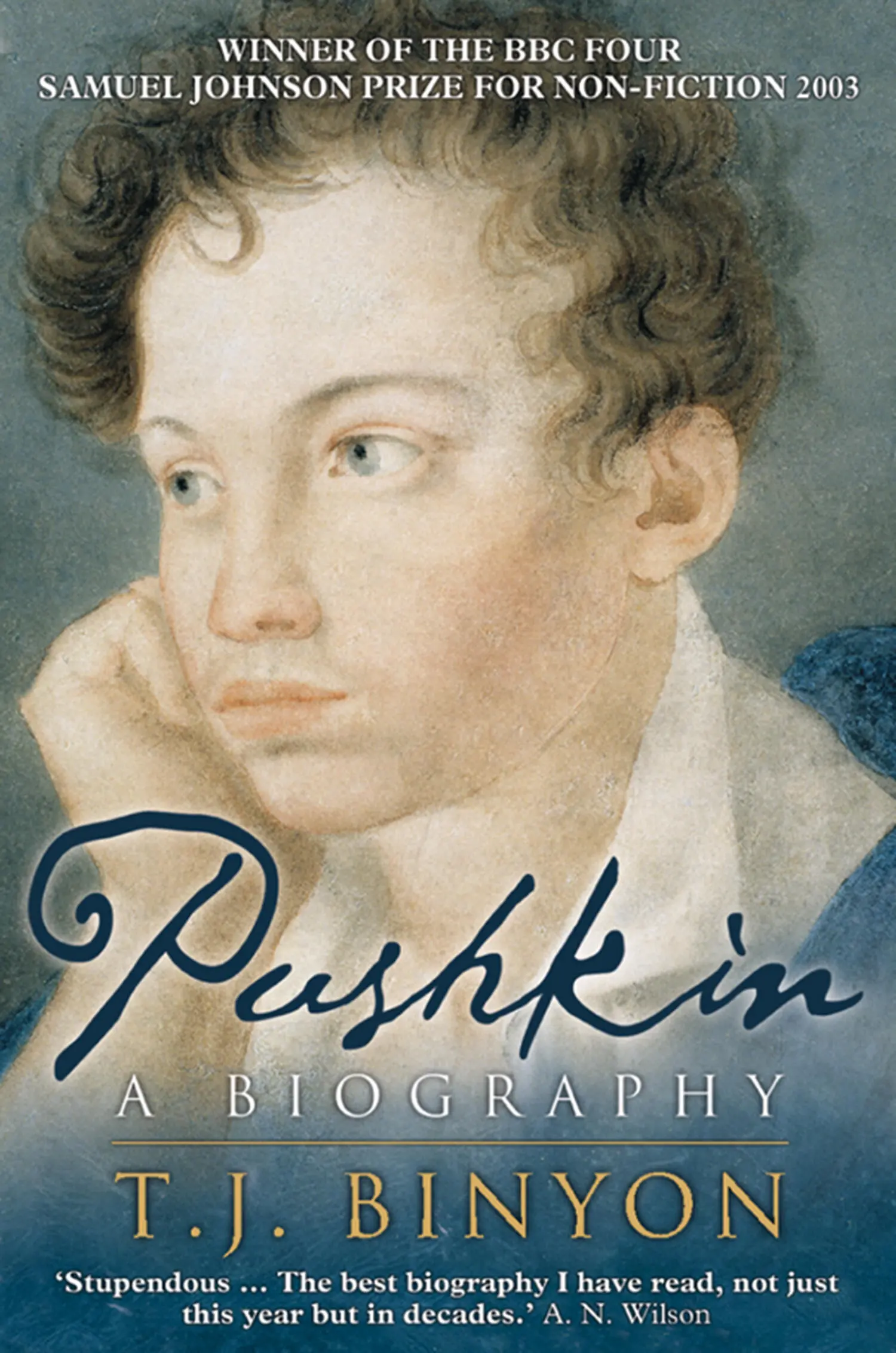
- Название:Pushkin
- Автор:
- Жанр:
- Год:неизвестен
- ISBN:нет данных
- Рейтинг книги:4 / 5. Голосов: 1
-
Избранное:Добавить в избранное
- Отзывы:
-
Ваша оценка:
Pushkin: краткое содержание, описание и аннотация
Предлагаем к чтению аннотацию, описание, краткое содержание или предисловие (зависит от того, что написал сам автор книги «Pushkin»). Если вы не нашли необходимую информацию о книге — напишите в комментариях, мы постараемся отыскать её.
Pushkin — читать онлайн ознакомительный отрывок
Ниже представлен текст книги, разбитый по страницам. Система сохранения места последней прочитанной страницы, позволяет с удобством читать онлайн бесплатно книгу «Pushkin», без необходимости каждый раз заново искать на чём Вы остановились. Поставьте закладку, и сможете в любой момент перейти на страницу, на которой закончили чтение.
Интервал:
Закладка:
Education reform in Russia had begun in 1803, and had had considerable success, both at secondary and university level. Alexander, influenced by Speransky, his principal adviser on internal administration and reform, now wished to establish a school to provide a cadre for the highest ranks of the civil service. His proposal, drawn up originally in 1808 by Speransky, was issued as an imperial decree on 12 August 1810, later ratified by the Senate. The schoolâs purpose was to be âthe education of youth especially predestined for important parts of government serviceâ. Among the subjects taught special stress was laid on âthe moral sciences, under which is to be understood all that knowledge relating to the moral position of man in society and, consequently, the concepts of the system of Civic societies, and of the rights and duties arising therefromâ. âBeginning with the most simple concepts of lawâ, the pupils should be brought to âa deep and firm understanding of differing rights and be instructed in the systems of public, private and Russian lawâ. Teachers were ânever to allow [pupils] to use words without clear ideasâ, and in all subjects were to encourage the âexercise of reasonâ. 4 Corporal punishment was forbidden, which made the Lycée probably unique in its time. There were to be two courses, junior and senior, each lasting for three years. * The first intake would consist of not less than twenty, and not more than fifty children of the nobility between the ages of ten and twelve; on graduation the students would be appointed, depending on achievement, to a civil service rank between the fourteenth class â the lowest â that of collegial registrar, and the ninth, that of titular councillor.
The St Petersburg Gazette of 11 July 1811 announced that children wishing to enter the Imperial Tsarskoe Selo Lycée should present themselves to the Minister of Education, A.K. Razumovsky, on 1 August together with a birth certificate, attestation of nobility, and testimonial of excellent behaviour. They would be medically examined, and there would be an examination conducted by the minister himself and the director of the Lycée. They would be expected to have: âa) some grammatical knowledge of the Russian and either the French or the German language, b) a knowledge of arithmetic, at least up to the rule of three, c) an understanding of the general properties of solids, d) some knowledge of the basic fundamentals of geography and e) be able to divide ancient history into its chief epochs and periods and have some knowledge of the most important peoples of antiquityâ. 5
Sergey Lvovich applied to the commissariat for a monthâs leave to take his son to the examination. Permission was slow in coming and, realizing he might be detained in St Petersburg for more than a month, he entrusted Pushkin to his brother, Vasily, who was himself travelling to the capital at that time. Together with Vasilyâs mistress, Anna Vorozheikina, they set off in the third week of July. Pushkinâs sister, Olga, gave him as a parting present a copy of La Fontaineâs Fables , which he left behind on the table. His great-aunt, Varvara Chicherina, and his aunt, Anna Pushkina, together gave him a hundred roubles âto buy nutsâ. 6 Vasily immediately borrowed the money and never returned it: behaviour that long rankled with Pushkin; he mentions it, albeit jokingly, in a letter of 1825.
Vasily had published his first verses in 1793, but since then he had produced little: only twenty poems over one five-year period, causing Batyushkov to remark that he had âa sluggish Museâ. 7 She was, however, eventually stirred into action by the heated contemporary debate on literary language and style, and inspired a number of poems in which Vasily enthusiastically ridiculed the conservative faction. Indeed, he was now journeying to St Petersburg to publish two epistles in reply to a veiled personal attack on him by the leader of the conservatives, Admiral A.S. Shishkov, who had recently written of his opponents that they had âlearnt their piety from Candide and their morality and erudition in the back streets of Parisâ. * 8 Though in childhood Pushkin had some respect for his uncle as a poet, his attitude towards him would soon settle into one of amused, if affectionate irony. Indeed, Vasilyâs verse scarcely reaches mediocrity, with the exception of A Dangerous Neighbour , a racy little epic only 154 lines in length, written in lively and colourful colloquial Russian. Though too risqué to be published â it did not appear in Russia until 1901 â it circulated widely in manuscript. Pushkin gave the poem a nod of acknowledgement in Eugene Onegin; among the guests at Tatyanaâs name-day party is Vasilyâs hero,
My first cousin, Buyanov
Covered in fluff, in a peaked cap
(As, of course, he is known to you).
(V, xxvi)
The second line is a quotation from Vasilyâs poem; Buyanov, his progeny, would of course be Pushkinâs cousin.
On arrival in St Petersburg the party put up at the Hotel Bordeaux, but Vasily complained that he was being âmercilessly fleecedâ, and they moved to an apartment âin the house of the merchant Kuvshinnikovâ on the bank of the Moika canal, near the Konyushenny Bridge. 9 Taking his nephew with him, Vasily made a round of visits to literary acquaintances. At I.I. Dmitrievâs, before reciting A Dangerous Neighbour , composed earlier that year, he told Pushkin to leave the room, only to receive the embarrassing retort: âWhy send me out? I know it all. Iâve heard it all already.â 10
The medical took place on 1 August; the examination, conducted by Count Razumovsky, the Minister of Education, I.I. Martynov, the director of the department of education, and Malinovsky, the headmaster of the Lycée, was held a week later in Razumovskyâs house on the Fontanka. While waiting to be called in, Pushkin met another candidate, Ivan Pushchin. âMy first friend, friend without price!â he wrote of him in 1825. 11 Both soon learnt that they had been accepted, though Malinovskyâs private note on Pushkin read: âEmpty-headed and thoughtless. Excellent at French and drawing, lazy and backward at arithmetic.â 12 The two met frequently while waiting for the beginning of term. Vasily occasionally took them boating; more often, however, they would go to the Summer Gardens â a short walk from the apartment on the Moika â with Anna Vorozheikina and play there, sometimes in the company of two other future lycéens, Konstantin Gurev and Sergey Lomonosov. They were measured for the school uniform, which was supplied free to the pupils: for ordinary wear blue frock-coats with red collars and red trousers; for Sundays, walking out, and ceremonial occasions a blue uniform coat with a red collar and silver (for the junior course) or gold (for the senior) tabs, white trousers, tie and waistcoat, high polished boots and a three-cornered hat. Later the boots were abandoned, the white waistcoat and trousers replaced by blue, and the hat by a peaked cap.
On 9 October Pushkin and four other pupils with their relatives travelled to Tsarskoe Selo and had lunch with Malinovsky. In the evening they parted from their families and went across to the Lycée where they were allocated rooms. Pushkinâs was number fourteen, on the palace side. Next to him, in thirteen, was Pushchin. In his room he had an iron bedstead with brass knobs, a mattress stuffed with horse-hair and covered in leather, a chest of drawers, a mirror, a wash-stand, a chair and a desk with inkwell, candlestick and snuffer. In the next few days the other pupils â thirty in all â joined them. â
Читать дальшеИнтервал:
Закладка:
Похожие книги на «Pushkin»
Представляем Вашему вниманию похожие книги на «Pushkin» списком для выбора. Мы отобрали схожую по названию и смыслу литературу в надежде предоставить читателям больше вариантов отыскать новые, интересные, ещё непрочитанные произведения.






Обсуждение, отзывы о книге «Pushkin» и просто собственные мнения читателей. Оставьте ваши комментарии, напишите, что Вы думаете о произведении, его смысле или главных героях. Укажите что конкретно понравилось, а что нет, и почему Вы так считаете.