Iain Finlayson - Browning
Здесь есть возможность читать онлайн «Iain Finlayson - Browning» — ознакомительный отрывок электронной книги совершенно бесплатно, а после прочтения отрывка купить полную версию. В некоторых случаях можно слушать аудио, скачать через торрент в формате fb2 и присутствует краткое содержание. Жанр: unrecognised, на английском языке. Описание произведения, (предисловие) а так же отзывы посетителей доступны на портале библиотеки ЛибКат.
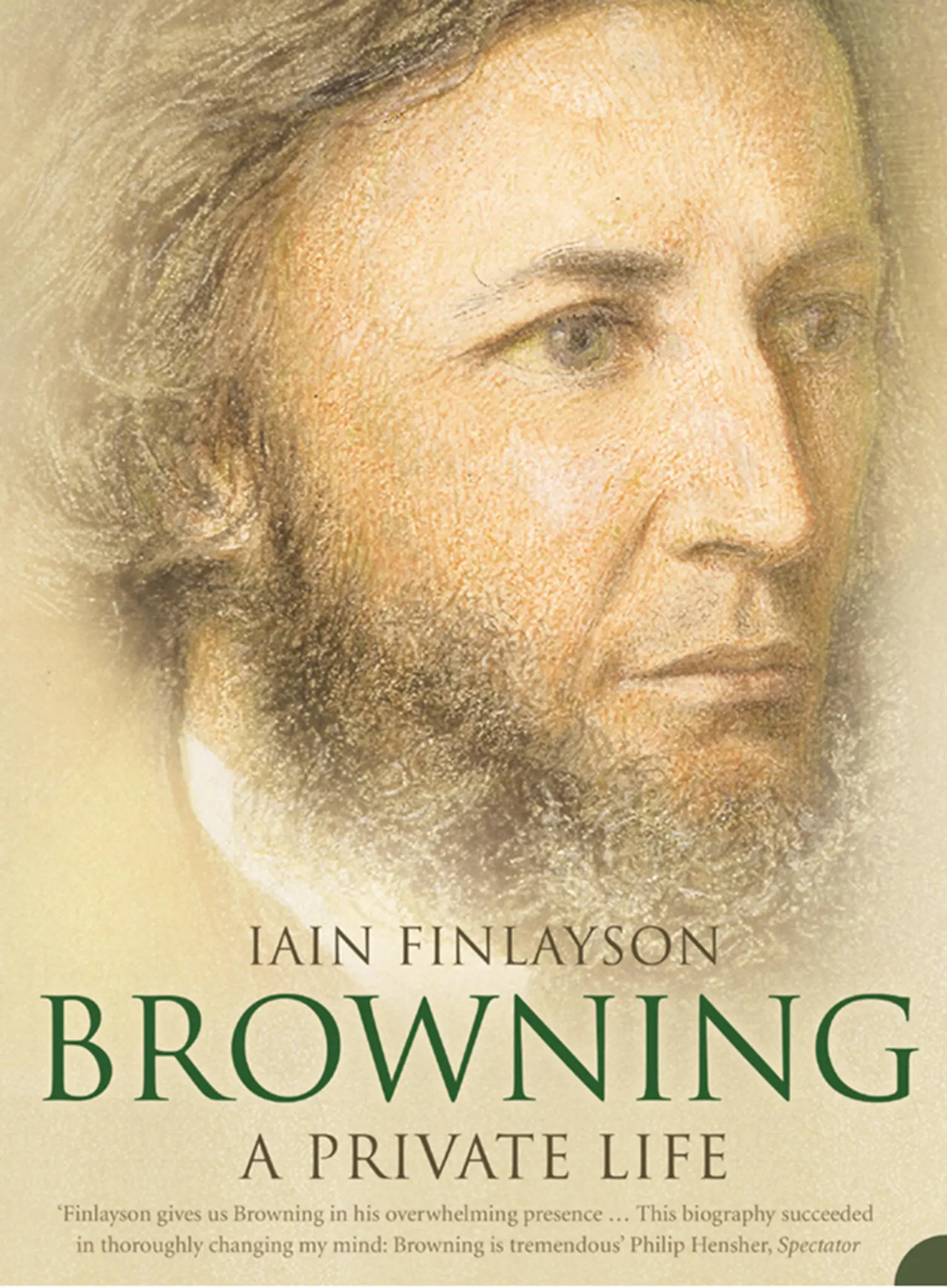
- Название:Browning
- Автор:
- Жанр:
- Год:неизвестен
- ISBN:нет данных
- Рейтинг книги:5 / 5. Голосов: 1
-
Избранное:Добавить в избранное
- Отзывы:
-
Ваша оценка:
Browning: краткое содержание, описание и аннотация
Предлагаем к чтению аннотацию, описание, краткое содержание или предисловие (зависит от того, что написал сам автор книги «Browning»). Если вы не нашли необходимую информацию о книге — напишите в комментариях, мы постараемся отыскать её.
Browning — читать онлайн ознакомительный отрывок
Ниже представлен текст книги, разбитый по страницам. Система сохранения места последней прочитанной страницы, позволяет с удобством читать онлайн бесплатно книгу «Browning», без необходимости каждый раз заново искать на чём Вы остановились. Поставьте закладку, и сможете в любой момент перейти на страницу, на которой закончили чтение.
Интервал:
Закладка:
The picture of an eccentric prophetess lurking at keyholes and singing the fortunes of the future poet is not conjured by any other biographer of Robert Browning. Cyrus Mason is not widely regarded as a reliable chronicler of Browning family history. He begins with his own self-aggrandizing agenda and sticks to it. His reputation is rather as a somewhat embittered relation who took the view that the poet Robert Browning and his admirers had paid inadequate attention and given insufficient credit to the more remote branches of the family. The contribution of the extended family to the poet’s early education, he considered, had been cruelly overlooked and positively belittled by wilful neglect.
However, since the reference to Margaret Browning does exist, and since Margaret has otherwise vanished from biographical ken, a possible—rather than probable—explanation for this single recorded peculiarity of the poet’s aunt is that she may have been simple-minded and thus kept in what her family may have regarded (not uncommonly at the time) as a decent, discreet seclusion. The extent to which they succeeded in containing any public embarrassment may—and it is no more than supposition—account for Margaret’s virtually complete obscurity in a family history that has been otherwise largely revealed.
Margaret Morris Tittle Browning died in Camberwell in 1789, when Robert (who can be referred to as Robert the Second), her only remaining son, was seven years old. When Robert was twelve, his father remarried in April 1794. This second wife, Jane Smith, by whom he fathered nine more children, three sons, and six daughters, was but twenty-three at the time of her marriage in Chelsea to the 45-year-old Robert Browning the First. The difference of twenty-two years between husband and wife is said, specifically by Mrs Sutherland Orr, Robert Browning’s official biographer, sister of the exotic Orientalist and painter Frederic Leighton, and a friend of the poet, to have resulted in the complete ascendancy of Jane Smith Browning over her husband. Besotted by, and doting upon, his young darling, he made no objection to Jane’s relegation of a portrait (attributed to Wright of Derby) of his first wife to a garret on the basis that a man did not need two wives. One—the living—in this case proved perfectly sufficient.
The hard man of business and urban battle, the doughty Englishman of Dorset stock, the soundly respectable man who annually read the Bible and Tom Jones (both, probably, with equal religious attention), the stout and severe man who lived more or less hale—despite the affliction of gout—to the age of eighty-four, was easily subverted by a woman whose gnawing jealousy of his first family extended from the dead to the quick. Browning family tradition, says Vivienne Browning, a family historian, also attributes a jealousy to Robert the First, naturally anxious to retain the love and loyalty of his young wife against any possible threat, actual or merely perceived in his imagination. Their nine children, a substantial though not unusual number, may have been conceived and borne as much in response to jealousy, doubt, and fear as in expression of any softer feelings.
Jane Browning’s alleged ill-will towards Robert the Second, Robert the First’s son by his previous marriage to Margaret Tittle, was not appeased by the young man’s independence, financial or intellectual. He had inherited a small income from an uncle, his mother’s brother, and proposed to apply it to a university education for himself. Jane, supposedly on the ground that there were insufficient funds to send her own sons to university, opposed her stepson’s ambition. Then, too, there was some irritation that Robert the Second wished to be an artist and showed some talent for the calling. Robert the First—says Mrs Orr—turned away disgustedly when Robert the Second showed his first completed picture to his father. The household was plainly a domestic arena of seething discontents, jealous insecurities, envious stratagems, entrenched positions on every front, and sniper fire from every corner of every room.
Margaret Tittle had left property in the West Indies, and it was Robert the First’s intention that their son should proceed, at the age of nineteen, to St Kitts to manage the family estates, which were worked by slave labour. He may have been glad enough to go, to remove himself as far as possible from his father and stepmother. In the event, he lasted only a year in the West Indies before returning to London, emotionally bruised by his experience of the degrading conditions under which slaves laboured on the sugar plantations. Robert the Second’s reasonable expectation was that he might inherit perhaps not all, but at least a substantial proportion of his mother’s property, had he not ‘conceived such a hatred of the slave system’.
Mrs Sutherland Orr states: ‘One of the experiences which disgusted him with St Kitts was the frustration by its authorities of an attempt he was making to teach a negro boy to read, and the understanding that all such educative action was prohibited.’ For a man who, from his earliest years, was wholly devoted to books, art, anything that nourished and encouraged inquiry and intellect, the spiritual repression of mind and soul as much—perhaps more than—physical repression of bodily freedom, must have seemed an act of institutionalized criminality and personal inhumanity by the properly constituted authorities. He could not morally consider himself party to, or representative of, such a system.
Certainly as a result of the apparent lily-livered liberalism of his son and his shocking, incomprehensible disregard for the propriety of profit, conjecturally also on account of a profound unease about maintaining the affection and loyalty of his young wife—there were only ten years between stepmother Jane and her stepson—Robert the First fell into a passionate and powerful rage that he sustained for many years. Robert Browning, the grandson and son of the protagonists of this quarrel, did not learn the details of the family rupture until 25 August 1846, when his mother finally confided the circumstances of nigh on half a century before.
‘If we are poor,’ wrote Robert Browning the Third the next day to Elizabeth Barrett, ‘it is to my father’s infinite glory, who, as my mother told me last night, as we sate alone, “conceived such a hatred to the slave-system in the West Indies,” (where his mother was born, who died in his infancy,) that he relinquished every prospect,—supported himself, while there, in some other capacity, and came back, while yet a boy, to his father’s profound astonishment and rage—one proof of which was, that when he heard that his son was a suitor to her, my mother—he benevolently waited on her Uncle to assure him that his niece “would be thrown away on a man so evidently born to be hanged”!—those were his very words. My father on his return, had the intention of devoting himself to art, for which he had many qualifications and abundant love—but the quarrel with his father,—who married again and continued to hate him till a few years before his death,—induced him to go at once and consume his life after a fashion he always detested. You may fancy, I am not ashamed of him.’
As soon as Robert the Second achieved his majority, he was dunned by his father for restitution in full of all the expenses that Robert the First had laid out on him, and he was stripped of any inheritance from his mother, Margaret, whose fortune, at the time of her marriage, had not been settled upon her and thus had fallen under the control of her husband. These reactions so intimidated Robert the Second that he agreed to enter the Bank of England, his father’s territory, as a clerk and to sublimate his love of books and sketching in ledgers and ink. In November 1803, four months after his twenty-first birthday, he began his long, complaisant, not necessarily unhappy servitude of fifty years as a bank clerk in Threadneedle Street.
Читать дальшеИнтервал:
Закладка:
Похожие книги на «Browning»
Представляем Вашему вниманию похожие книги на «Browning» списком для выбора. Мы отобрали схожую по названию и смыслу литературу в надежде предоставить читателям больше вариантов отыскать новые, интересные, ещё непрочитанные произведения.







Обсуждение, отзывы о книге «Browning» и просто собственные мнения читателей. Оставьте ваши комментарии, напишите, что Вы думаете о произведении, его смысле или главных героях. Укажите что конкретно понравилось, а что нет, и почему Вы так считаете.