Iain Finlayson - Browning
Здесь есть возможность читать онлайн «Iain Finlayson - Browning» — ознакомительный отрывок электронной книги совершенно бесплатно, а после прочтения отрывка купить полную версию. В некоторых случаях можно слушать аудио, скачать через торрент в формате fb2 и присутствует краткое содержание. Жанр: unrecognised, на английском языке. Описание произведения, (предисловие) а так же отзывы посетителей доступны на портале библиотеки ЛибКат.
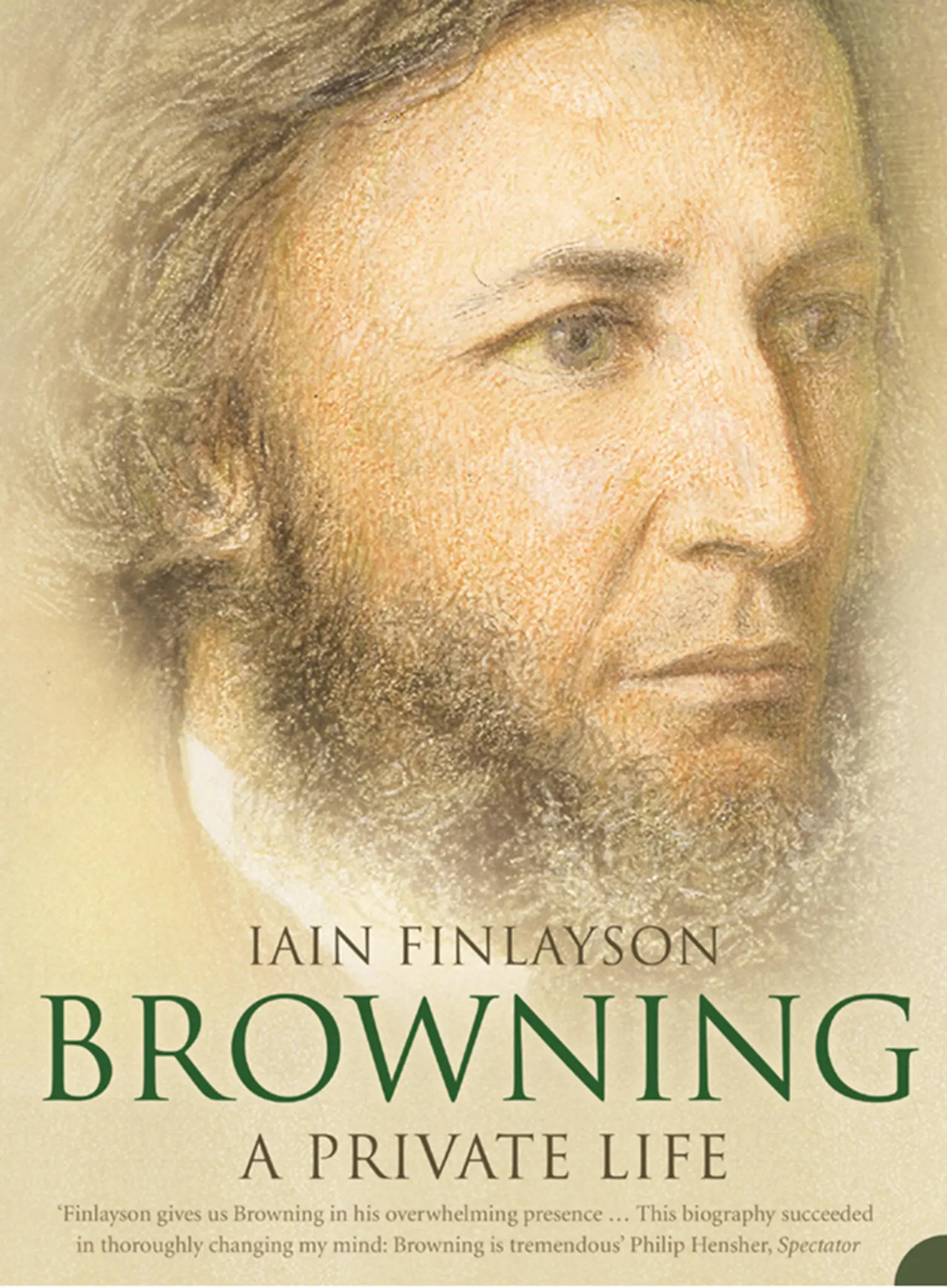
- Название:Browning
- Автор:
- Жанр:
- Год:неизвестен
- ISBN:нет данных
- Рейтинг книги:5 / 5. Голосов: 1
-
Избранное:Добавить в избранное
- Отзывы:
-
Ваша оценка:
Browning: краткое содержание, описание и аннотация
Предлагаем к чтению аннотацию, описание, краткое содержание или предисловие (зависит от того, что написал сам автор книги «Browning»). Если вы не нашли необходимую информацию о книге — напишите в комментариях, мы постараемся отыскать её.
Browning — читать онлайн ознакомительный отрывок
Ниже представлен текст книги, разбитый по страницам. Система сохранения места последней прочитанной страницы, позволяет с удобством читать онлайн бесплатно книгу «Browning», без необходимости каждый раз заново искать на чём Вы остановились. Поставьте закладку, и сможете в любой момент перейти на страницу, на которой закончили чтение.
Интервал:
Закладка:
A little over seven years later, at Camberwell on 19 February 1811, in the teeth of his father’s opposition, Robert the Second married Sarah Anna Wiedemann, whose uncle evidently disregarded Robert the First’s predictions. She was then thirty-nine, ten years older than her husband and only one year younger than his stepmother Jane. They settled at 6 Southampton Street, Camberwell, where, on 7 May 1812, Sarah Anna Browning was delivered of a son, the third in the direct Browning line to be named Robert. Twenty months later, on 7 January 1814, their second child, called Sarah Anna after her mother, but known as Sarianna by her family and friends, was born.
William Sharp, in his Life of Browning , published in 1897, refers briskly and offhandedly to a third child, Clara. Nothing is known of Clara: it is possible she may have been stillborn or died immediately after birth. Mrs Orr never mentions the birth of a third child, and not even Cyrus Mason, the family member one would expect to seize eagerly upon the suppression of any reference to a Browning, suggests that more than two children were born to the Brownings. However, William Clyde DeVane, discussing Browning’s ‘Lines to the Memory of his Parents’ in A Browning Handbook , states that ‘The “child that never knew” Mrs Browning was a stillborn child who was to have been named Clara.’ The poem containing this discreet reference was not printed until it appeared in F.G. Kenyon’s New Poems by Robert Browning , published in 1914, and in the February issue, that same year, of the Cornhill Magazine . Vivienne Browning, in My Browning Family Album , published in 1992, declares that her grandmother (Elizabeth, a daughter of Reuben Browning, son of Jane, Robert the First’s second wife) ‘included a third baby—a girl—in the family tree’, but Vivienne Browning ‘cannot now find any evidence to support this’.
It is known that Sarah Anna Browning miscarried at least once. In a letter to his son Pen, the poet Robert Browning wrote on 25 January 1888 to condole with him and his wife Fannie on her miscarriage: ‘Don’t be disappointed at this first failure of your natural hopes—it may soon be repaired. Your dearest Mother experienced the same misfortune, at much about the same time after marriage: and it happened also to my own mother, before I was born.’ Unless Sarah Anna’s miscarriage occurred in a very late stage of pregnancy, it seems improbable that a miscarried child should have been given a name and regarded, in whatever terms, as a first-born—but natural parental sentiment may have prompted the Brownings to give their first daughter, who never drew breath, miscarried or stillborn, at least the dignity and memorial of a name.
The small, close-knit family moved house in 1824, though merely from 6 Southampton Street to another house (the number is not known) in the same street, where they remained until December 1840. Bereaved of his mother at the age of seven, repressed from the age of twelve by his father and stepmother, denied further education and frustrated in his principles and ambitions in his late teens, all but disinherited for failure to make a success of business and to close a moral eye to the inhumanity of slavery, set on a high stool and loaded with ledgers in his early twenties, it is hardly surprising that Robert the Second sought a little peace and quiet for avocations that had moderated into hobbies. He settled for a happy—perhaps undemanding—marriage to a peacable, slightly older wife, and a tranquil bolt-hole in what was then, in the early nineteenth century, the semi-rural backwater of Camberwell.
His poverty, counted in monetary terms, was relative. His work in the Bank of England, never as elevated or responsible as Robert the First’s, was nevertheless adequately paid, the hours were short and overtime, particularly the lucrative night watch, was paid at a higher rate. There was little or no managerial or official concern about the amount of paper, the number of pens, or the quantity of sealing wax used by Bank officials, and these materials were naturally regarded as lucrative perquisites that substantially bumped up the regular salary. Though Mrs Orr admits this trade, she adds—somewhat severely—in a footnote: ‘I have been told that, far from becoming careless in the use of these things from his practically unbounded command of them, he developed for them an almost superstitious reverence. He could never endure to see a scrap of writing-paper wasted.’
He could count on a regular salary of a little more than £300 a year, supplemented by generous rates of remuneration for extra duties and appropriate perks of office. He may have been deprived of any interest in his mother’s estate, but his small income from his mother’s brother, even after deductions from it by his father, continued to be a reliable annual resource. Over the years, Robert the Second acquired valuable specialist knowledge of pictures and books, and certainly, though he was no calculating businessman and willingly gave away many items from his collection, he occasionally—perhaps regularly—traded acquisitions and profited from serendipitous discoveries.
In the end, though it was a long time coming, Robert the First softened towards his eldest son. That he was not wholly implacable is testified by his will, made in 1819, two years before his retirement from the Bank: he left Robert the Second and Margaret ten pounds each for a ring. This may seem a paltry inheritance, but he took into account the fact that Robert and Margaret had inherited from ‘their Uncle Tittle and Aunt Mill a much greater proportion than can be left to my other dear children’. He trusted ‘they will not think I am deficient in love and regard to them’. As a token of reconciliation, the legacy to buy rings was a substantial olive branch.
It may be assumed that the patriarch Browning’s temper had begun to abate before he made his will, and that the Brownings had resumed some form of comfortable, if cautious, communication until the old man’s death. There is certainly some indication that Robert the First saw something of his grandchildren—the old man is said by Mrs Orr to have ‘particularly dreaded’ his lively grandson’s ‘vicinity to his afflicted foot’, little boys and gout being clearly best kept far apart. After the death of Robert the First in 1833, stepmother Jane, then in her early sixties, moved south of the river from her house in Islington to Albert Terrace, just beyond the toll bar at New Cross. In the biography of Robert Browning published in 1910 by W. Hall Griffin and H.C. Minchin, it is said that the portrait of the first Mrs Browning, Margaret Tittle, had been retrieved from the Islington garret and was hung in her son’s dining room.
The most familiar photograph of Robert the Second, taken—it looks like—in late middle age (though it is difficult to tell, since he is said to have retained a youthful appearance until late in life) shows the profile of a rather worried-looking man. A deep line creases from the nostril to just below the side of the mouth, which itself appears thin and turns down at the corner. The hair is white, neatly combed back over the forehead and bushy around the base of the ears. It is the picture of a doubtful man who looks slightly downward rather than straight ahead, as though he has no expectation of seeing, like The Lost Leader, ‘Never glad confident morning again!’. He still bled, perhaps, from the wounds inflicted upon him as a child and young man: but if he did, he suffered in silence.
As some men for the rest of their lives do not care to talk about their experiences in war, so Robert the Second could never bring himself to talk about his bitter experiences in the West Indies: ‘My father is tenderhearted to a fault,’ wrote his son to Elizabeth Barrett on 27 August 1846. The poet’s mother had confided some particulars to him three days before, but from his father he had got never a word: ‘I have never known much more of those circumstances in his youth than I told you, in consequence of his invincible repugnance to allude to the matter—and I have a fancy to account for some peculiarities in him, which connects them with some abominable early experience. Thus,—if you question him about it, he shuts his eyes involuntarily and shows exactly the same marks of loathing that may be noticed if a piece of cruelty is mentioned … and the word “blood,” even makes him change colour.’
Читать дальшеИнтервал:
Закладка:
Похожие книги на «Browning»
Представляем Вашему вниманию похожие книги на «Browning» списком для выбора. Мы отобрали схожую по названию и смыслу литературу в надежде предоставить читателям больше вариантов отыскать новые, интересные, ещё непрочитанные произведения.





Обсуждение, отзывы о книге «Browning» и просто собственные мнения читателей. Оставьте ваши комментарии, напишите, что Вы думаете о произведении, его смысле или главных героях. Укажите что конкретно понравилось, а что нет, и почему Вы так считаете.