Iain Finlayson - Browning
Здесь есть возможность читать онлайн «Iain Finlayson - Browning» — ознакомительный отрывок электронной книги совершенно бесплатно, а после прочтения отрывка купить полную версию. В некоторых случаях можно слушать аудио, скачать через торрент в формате fb2 и присутствует краткое содержание. Жанр: unrecognised, на английском языке. Описание произведения, (предисловие) а так же отзывы посетителей доступны на портале библиотеки ЛибКат.
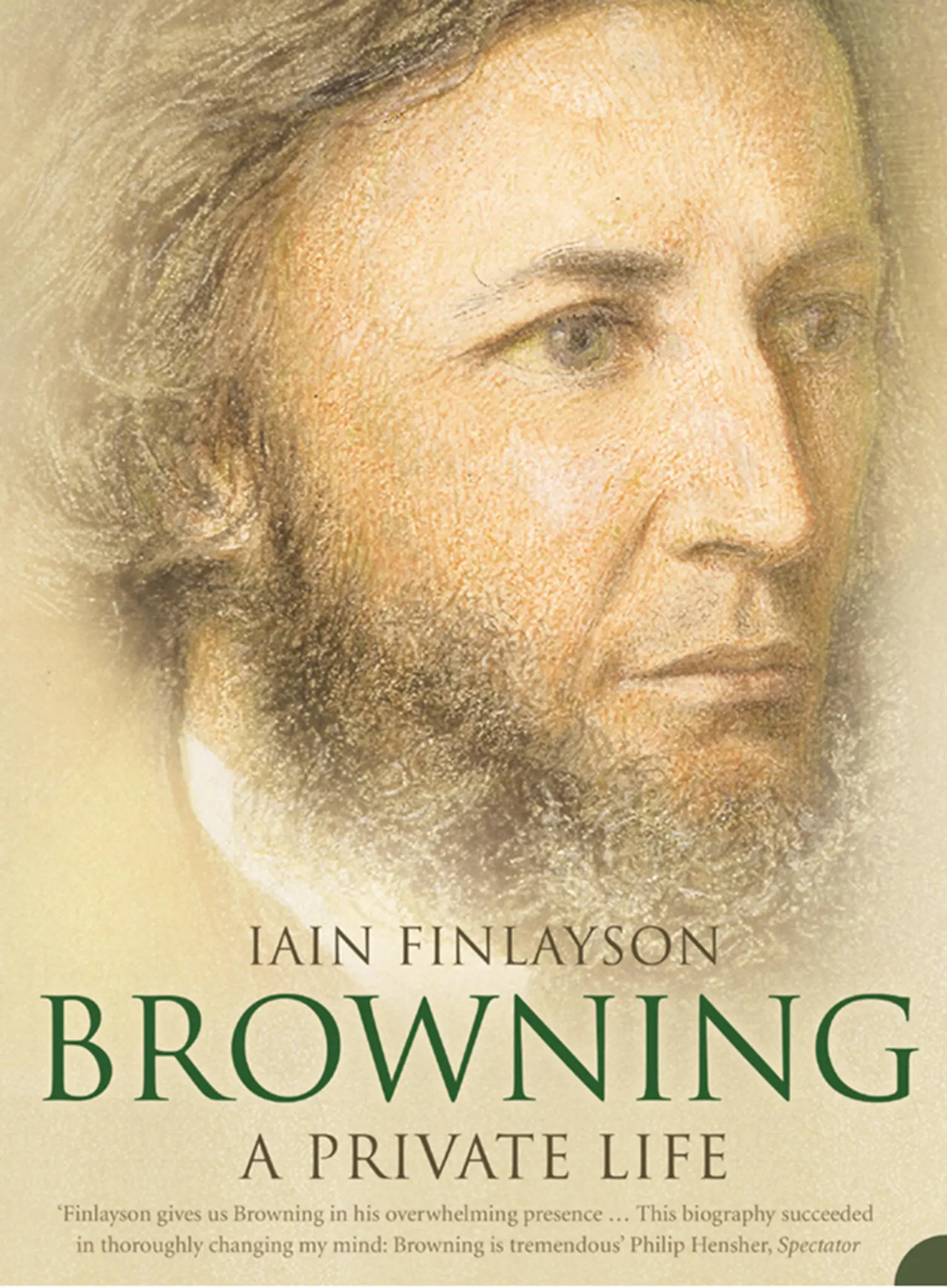
- Название:Browning
- Автор:
- Жанр:
- Год:неизвестен
- ISBN:нет данных
- Рейтинг книги:5 / 5. Голосов: 1
-
Избранное:Добавить в избранное
- Отзывы:
-
Ваша оценка:
Browning: краткое содержание, описание и аннотация
Предлагаем к чтению аннотацию, описание, краткое содержание или предисловие (зависит от того, что написал сам автор книги «Browning»). Если вы не нашли необходимую информацию о книге — напишите в комментариях, мы постараемся отыскать её.
Browning — читать онлайн ознакомительный отрывок
Ниже представлен текст книги, разбитый по страницам. Система сохранения места последней прочитанной страницы, позволяет с удобством читать онлайн бесплатно книгу «Browning», без необходимости каждый раз заново искать на чём Вы остановились. Поставьте закладку, и сможете в любой момент перейти на страницу, на которой закончили чтение.
Интервал:
Закладка:
These ‘peculiarities’ observed in his father by the youngest Browning did not go unremarked by others who, with less fancy than his son to seek an origin for them, were content to observe and to wonder at this marvellous man. Cyrus Mason, as an amateur historian of the Browning family, speaks specifically of Robert the Second’s ‘imaginative and eccentric brain’. It seems likely that he is not only confessing his own bewilderment, which becomes ever more apparent as his memoir proceeds, but a general incomprehension within the wider Browning family. Inevitably, mild eccentricities of character become magnified by family and friends otherwise at a loss to account for the somewhat detached life of a man who is for all practical, day-to-day intents and purposes a conscientious banker and responsible family man, but whose domestic and inner life, so far as it is penetrable by others, exhibits a marked degree of abstraction and commitment to matters that harder, squarer heads would not regard as immediately profitable in the conduct of everyday life—‘Robert’s incessant study of subjects perfectly useless in Banking business’, to quote Cyrus Mason. Such minor aberrations are naturally inflated in the remembrance and the retelling, particularly when it becomes evident that such a man has become, indirectly, an object of interest and attention through efforts made by admirers or detractors to trace the early influences upon his remarkable son.
Mrs Orr tells us that Robert the Second, when he in turn became a grandfather, taught his grandson elementary anatomy, impressing upon young Pen Browning ‘the names and position of the principal bones of the human body’. Cyrus Mason adds considerably to this blameless, indeed worthy, anecdote by claiming that ‘Uncle Robert became so absorbed in his anatomical studies that he conveyed objects for dissection into the Bank of England; on one occasion a dead rat was kept for so long a time in his office desk, awaiting dissection, that his fellow clerks were compelled to apply to their chief to have it removed! The study of anatomy became so seductive that on the day Uncle Robert was married, he disappeared mysteriously after the ceremony and was discovered … busily engaged dissecting a duck, oblivious of the fact that a wife and wedding guests were reduced to a state of perplexity by his unexplained absence.’
This story has the air of invention by a fabulist—Mr Browning, being a little peckish, might merely have been carving a duck—and earlier echoes of preoccupied, enthusiastic amateur morbid anatomists recur to the mind (in the annals of Scottish eccentricity, there are several instances of notable absence of mind of more or less this nature at wedding feasts); there is even a faint, ludicrous hint of Francis Bacon fatally catching a cold while stuffing a chicken with snow by the roadside in an early endeavour to discover the principles of refrigeration. The patronizing tone is one of barely-tolerant amusement, of reminiscence dressed up with a dry chuckle, of family anecdote become fanciful.
‘Uncle Robert’, in short, was held—more or less exasperatedly—to be something of a whimsical character. His seeming inclination to desert the ceremonies and commonplace observances of ‘real life’, of family life, for abstruse, even esoteric researches—all those books!—may be exaggerated, but the metamorphosis of memory into myth is generally achieved through the medium of an actuality. The pearl of fiction accretes around a grain of actuality, and in this case the attitudes and behaviour of Robert Browning, father of the poet, achieve a relevance in respect of his attitude towards the education, intellectual liberty, and the vocation of his son.
Robert the Second, frustrated in his own creative ambitions, did not discourage his son from conducting his life along lines that he himself had been denied. Cyrus Mason declares that, from the beginning, the ‘arranged destiny’ of Robert and Sarah Anna’s son was to be a poet. His life and career, says Mason, were planned from the cot. The infant Robert’s ‘swaddling clothes were wrapped around his little body with a poetic consideration’, his father rocked his cradle rhythmically, his Aunt Margaret ‘prophecied [ sic ] in her dark mysterious manner his brilliant future’, and women lulled him to sleep with whispered words of poetry. Whether unconsciously or by design, Mason here introduces the fairy-story image of the good or bad fairy godmothers conferring gifts more or less useful.
Allowing for the Brothers Grimm or Perrault quality of these images conjured by Mason, and his patent intention in writing his memoir to arrogate a substantial proportion of the credit for the infant Robert’s development to a wider family circle of Brownings, there is a nub of truth in his assertion. There is some dispute as to how far it may be credited, of course. Mrs Orr merely states that the infant Robert showed a precocious aptitude for poetry: ‘It has often been told how he extemporised verse aloud while walking round and round the dining room table supporting himself by his hands, when he was still so small that his head was scarcely above it.’ Some children naturally sing, some dance, some draw little pictures and some declaim nonsense verse or nursery rhymes: Robert Browning invented his own childish verses. Doting family relations would naturally exclaim over his prospects as a great poet and genially encourage the conceit.
That he was raised from birth as—or specifically to become—a poet is improbable: more unlikely still is the assertion that he was raised ‘poetically’ by parents whose inclinations in the normal run of things were kindly and indulgent in terms of stimulating their son’s natural and lively intelligence, but not inherently fanciful: they were respectably pious, middle-class, somewhat matter-of-fact citizens of no more and no less distinction than others of their time, place, and type. They were distinctive enough to those who loved them or had cause to consider them, but they were not—in the usual meaning of the word—distinguished.
They were what G.K. Chesterton calls ‘simply a typical Camberwell family’ after he sensibly dismisses as largely irrelevant to immediate Browning biography all red herrings such as the alleged pied-noir origins of Margaret Tittle (which may have been true), a supposed Jewish strain in the Browning family (now discounted, but which would have been a matter of extreme interest to the poet), and the suggestion, from the fact that Browning and his father used a ring-seal with a coat of arms, of an aristocratic origin dating from the Middle Ages for the family name, if not for the family itself.
Nevertheless, in thrall to the romance of pedigree and the benefits that may be derived from a selective use of genealogy, Cyrus Mason’s memoir is motivated not only by a gnawing ambition to associate himself and his kinsfolk more closely with the poet Browning and to aggrandize himself by the connection, but also, vitally, to give the lie to the ‘monstrous fabrication’ by F.J. Furnivall, a devoted admirer and scholar of the poet Browning, that the Brownings descended from the servant class, very likely from a footman, later butler, to the Bankes family at Corfe Castle before becoming innkeepers. Cyrus Mason claims to trace the Browning lineage back unto the remotest generations—at least into the fourteenth century—to disprove any stigma of low birth. He even manages to infer, from some eighteenth-century holograph family documents, the high cost of binding some family books, the good quality of the ink used, and, from the evidence of ‘fine bold writing’, a prosperous, educated, literary ancestry. These elaborate researches were of the greatest possible interest to Cyrus Mason: they consumed his time, consoled his soul, confirmed his pride, and confounded cavilling critics.
Читать дальшеИнтервал:
Закладка:
Похожие книги на «Browning»
Представляем Вашему вниманию похожие книги на «Browning» списком для выбора. Мы отобрали схожую по названию и смыслу литературу в надежде предоставить читателям больше вариантов отыскать новые, интересные, ещё непрочитанные произведения.


Обсуждение, отзывы о книге «Browning» и просто собственные мнения читателей. Оставьте ваши комментарии, напишите, что Вы думаете о произведении, его смысле или главных героях. Укажите что конкретно понравилось, а что нет, и почему Вы так считаете.