Iain Finlayson - Browning
Здесь есть возможность читать онлайн «Iain Finlayson - Browning» — ознакомительный отрывок электронной книги совершенно бесплатно, а после прочтения отрывка купить полную версию. В некоторых случаях можно слушать аудио, скачать через торрент в формате fb2 и присутствует краткое содержание. Жанр: unrecognised, на английском языке. Описание произведения, (предисловие) а так же отзывы посетителей доступны на портале библиотеки ЛибКат.
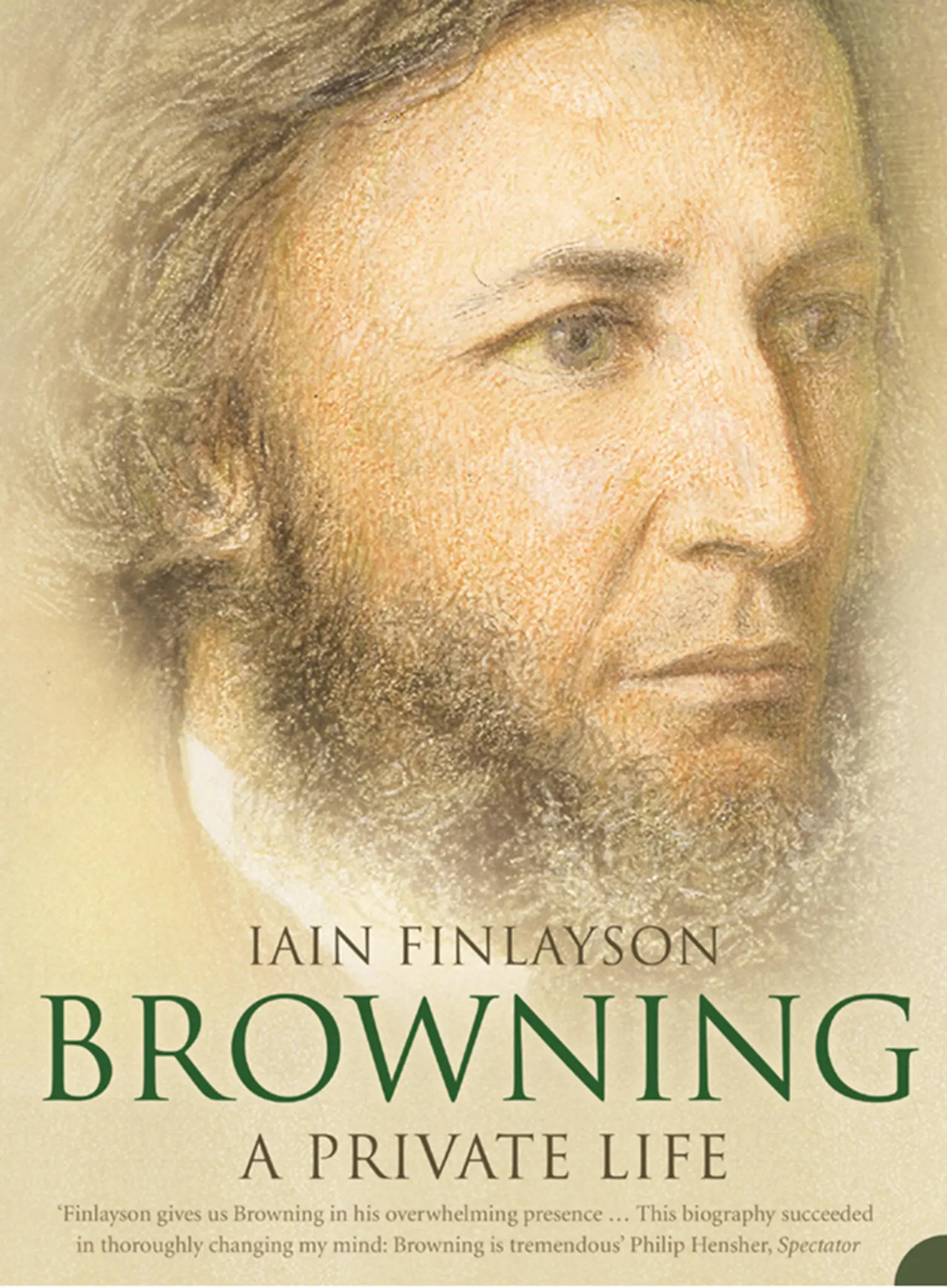
- Название:Browning
- Автор:
- Жанр:
- Год:неизвестен
- ISBN:нет данных
- Рейтинг книги:5 / 5. Голосов: 1
-
Избранное:Добавить в избранное
- Отзывы:
-
Ваша оценка:
Browning: краткое содержание, описание и аннотация
Предлагаем к чтению аннотацию, описание, краткое содержание или предисловие (зависит от того, что написал сам автор книги «Browning»). Если вы не нашли необходимую информацию о книге — напишите в комментариях, мы постараемся отыскать её.
Browning — читать онлайн ознакомительный отрывок
Ниже представлен текст книги, разбитый по страницам. Система сохранения места последней прочитанной страницы, позволяет с удобством читать онлайн бесплатно книгу «Browning», без необходимости каждый раз заново искать на чём Вы остановились. Поставьте закладку, и сможете в любой момент перейти на страницу, на которой закончили чтение.
Интервал:
Закладка:
Cyrus Mason was satisfied with his work, and it is to his modest credit that he has amply satisfied everyone else, most of whom are now content to acknowledge this monument to genealogical archaeology and pass more quickly than is entirely respectful to more immediate matters. We consult Mason’s book much as visitors to an exhibition browse speedily through the well-researched but earnest expository notes at the entrance and hurry inside to get to the interesting main exhibit. ‘For the great central and solid fact,’ declared G. K. Chesterton, ‘which these heraldic speculations tend inevitably to veil and confuse, is that Browning was a thoroughly typical Englishman of the middle class.’ Allowing, naturally, for his mother’s Scottish-German parentage and his grandmother’s Creole connection, Robert Browning was certainly brought up as a middle-class Englishman.
Chesterton’s argument, scything decisively through the tangled undergrowth of genealogy and the rank weeds of heterogeneous heredity, becomes a spirited, romantic peroration, grandly swelling as he praises Robert Browning’s genius to the heights, then dropping bathetically back as he regularly nails it to the ground by constantly reminding us that Browning was ‘an Englishman of the middle class’; until, finally, he sweeps to his breathtaking and irresistible conclusion that Browning ‘piled up the fantastic towers of his imagination until they eclipsed the planets; but the plan of the foundation on which he built was always the plan of an honest English house in Camberwell. He abandoned, with a ceaseless intellectual ambition, every one of the convictions of his class; but he carried its prejudices into eternity.’
Robert Browning’s mother was no bluestocking: she was not herself literary, nor was she inclined to draw or paint in water-colours. Her husband did enough book collecting and sketching already. Though she had a considerable taste for music and is said to have been an accomplished pianist (Beethoven’s sonatas, Avison’s marches, and Gaelic laments are cited as belonging to her repertoire), she was very likely no more than ordinarily competent on a piano, though her technique was evidently infused with fine romantic feeling. Sarah Anna Browning tended her flower garden (Cyrus Mason remarks upon ‘the garden, Aunt Robert’s roses, that wicket gate the Robert Browning family used by favor, opening for them a ready way to wander in the then beautiful meadows to reach the Dulwich woods, the College and gallery’) and otherwise occupied herself, day by day, with domestic matters relating to her largely self-contained, self-sufficient family. Other biographers beg to differ when Mrs Orr tells us that Mrs Browning ‘had nothing of the artist about her’. In contrast to her husband, she produced nothing artistic or creative, but partisans speak warmly of her tender interest in music and romantic poetry. She possessed at least an artistic sensibility.
Mrs Orr remarks, cursorily but not disparagingly: ‘Little need be said about the poet’s mother’, the implication—quite wrong—being that there was little to be said. Her son’s devotion to Sarah Anna was very marked: habitually, when he sat beside her, Robert would like to put his arm around her waist. When she died in early 1849, he beatified her by describing her as ‘a divine woman’. Most biographers and others interested in the poet Browning make a point of the empathetic feeling that developed between mother and son: when Sarah Anna Browning was laid low with headaches, her son dreadfully suffered sympathetic pains. ‘The circumstances of his death recalled that of his mother,’ says Mrs Orr, and adds, however ‘it might sound grotesque’, that ‘only a delicate woman could have been the mother of Robert Browning’.
She was certainly religious, and none doubted that her place in heaven had long been marked and secured by her narrow piety, commonsense good nature, and her stoical suffering of physical ailments. Sarah Anna Browning endured debilitating, painful headaches, severe as migraines (which indeed they may have been). In contrast to her vigorously hale husband, she is portrayed by Mrs Orr as ‘a delicate woman, very anaemic during her later years, and a martyr to neuralgia which was perhaps a symptom of this condition’.
Robert, her son, was not so delicate in health or attitude. He established an early reputation not only for mental precocity but vocal and physically boisterous expression of it. In modern times, his vigour and fearlessness, his restlessness and temper, might worry some as verging on hyperactivity. ‘He clamoured for occupation as soon as he could speak,’ says Mrs Orr and, though admitting that ‘his energies were of course destructive till they had found their proper outlet’, she discovers no inherent vice in the child: ‘we do not hear of his having destroyed anything for the mere sake of doing so’. A taste for lively spectacle rather than wilful incendiarism is adduced as the motive for Robert’s ‘putting a handsome Brussels lace veil of his mother’s into the fire’ and excusing himself with the words, ‘a pretty blaze, mamma’ (rendered as ‘a pitty baze’ by Mrs Orr, prefiguring the lisping baby-talk that so rejoiced the ears of the poet and his wife when their own son, Pen, first began to speak).
To quiet the boy, Sarah Anna Browning’s best resource was to sit him on her knees, holding him in a firm grip, and to engage his attention with stories—‘doubtless Bible stories’, says Mrs Orr, as a tribute not only to Mrs Browning’s natural piety, her vocation as a Sunday School teacher, and her subscription to the London Missionary Society but also, no doubt, to the improving effect of religion in general, Nonconformism in particular, and its associated morality. If, as Cyrus Mason suggests, Robert was raised to be a poet, quiet introspection was not a notable characteristic of his infancy—though music (he liked to listen to his mother play the piano and would beg her to keep up the performance) and religion (Sarah Anna Browning could curb her son’s arrogance until quite late in his life by pointing out the very real peril and lively retribution awaiting those who failed in Christian charity) could soothe the savage child and bind them together, mother and son, in a delicate balance of love and apprehension. Maternal indulgence, too, was a reliable ploy: Robert could be induced to swallow unpleasant medicine so long as he was given a toad which Mrs Browning, holding a parasol over her head, obligingly searched for in her strawberry bed—a memory of childhood that never faded in her son’s recollection.
A recollection of his mother’s garden very likely informs the idyllic first section—‘The Flower’s Name’—of the poem ‘Garden-Fancies’, a revised version of which was included in Dramatic Romances and Lyrics , published in 1845:
Here’s the garden she walked across,
Arm in my arm, such a short while since:
Hark, now I push its wicket, the moss
Hinders the hinges and makes them wince!
She must have reached this shrub ere she turned,
As back with that murmur the wicket swung;
For she laid the poor snail, my chance foot spurned,
To feed and forget it the leaves among. 9
As she walks with little Robert through her garden, talking to him, Sarah Anna Browning’s gown brushes against a bush or hedge of box. She stops, hushes her words, and points out ‘a moth on the milk-white phlox’. Here roses, there rock plants, elsewhere a particular flower with a ‘soft meandering Spanish name’ that inspires an ambition in the boy to learn Spanish ‘Only for that slow sweet name’s sake’. Above all, the roses ‘ranged in valiant row’ where Sarah Anna always pauses—
… for she lingers
There like sunshine over the ground
Читать дальшеИнтервал:
Закладка:
Похожие книги на «Browning»
Представляем Вашему вниманию похожие книги на «Browning» списком для выбора. Мы отобрали схожую по названию и смыслу литературу в надежде предоставить читателям больше вариантов отыскать новые, интересные, ещё непрочитанные произведения.







Обсуждение, отзывы о книге «Browning» и просто собственные мнения читателей. Оставьте ваши комментарии, напишите, что Вы думаете о произведении, его смысле или главных героях. Укажите что конкретно понравилось, а что нет, и почему Вы так считаете.