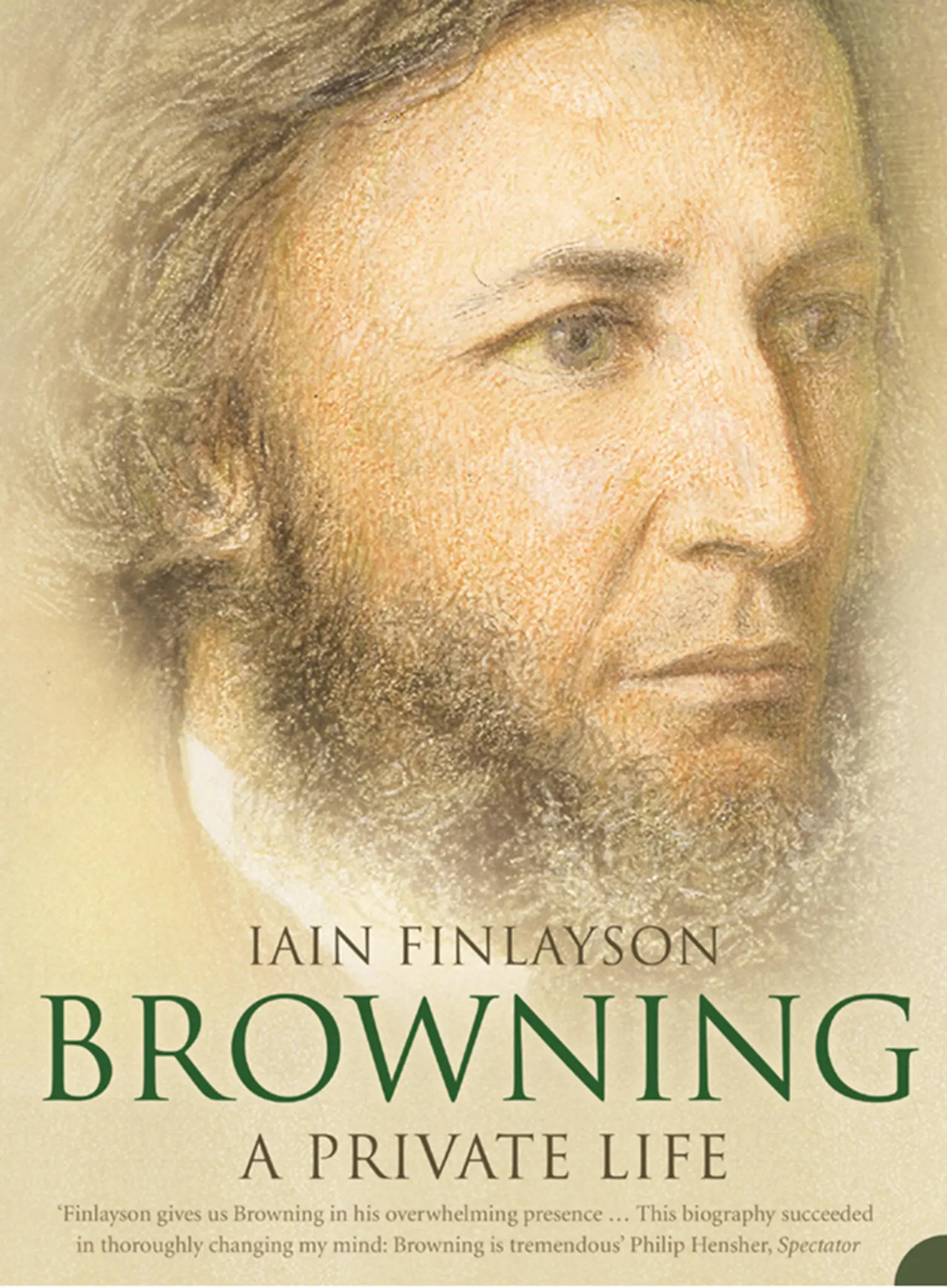
Iain Finlayson - Browning
Здесь есть возможность читать онлайн «Iain Finlayson - Browning» — ознакомительный отрывок электронной книги совершенно бесплатно, а после прочтения отрывка купить полную версию. В некоторых случаях можно слушать аудио, скачать через торрент в формате fb2 и присутствует краткое содержание. Жанр: unrecognised, на английском языке. Описание произведения, (предисловие) а так же отзывы посетителей доступны на портале библиотеки ЛибКат.
- Название:Browning
- Автор:
- Жанр:
- Год:неизвестен
- ISBN:нет данных
- Рейтинг книги:5 / 5. Голосов: 1
-
Избранное:Добавить в избранное
- Отзывы:
-
Ваша оценка:
Browning: краткое содержание, описание и аннотация
Предлагаем к чтению аннотацию, описание, краткое содержание или предисловие (зависит от того, что написал сам автор книги «Browning»). Если вы не нашли необходимую информацию о книге — напишите в комментариях, мы постараемся отыскать её.
Browning — читать онлайн ознакомительный отрывок
Ниже представлен текст книги, разбитый по страницам. Система сохранения места последней прочитанной страницы, позволяет с удобством читать онлайн бесплатно книгу «Browning», без необходимости каждый раз заново искать на чём Вы остановились. Поставьте закладку, и сможете в любой момент перейти на страницу, на которой закончили чтение.
Интервал:
Закладка:
This may be generally true, and not only of Dissenters; but it is too harsh when applied to the Brownings in particular. In this sense, as characterized by Hazlitt, it is difficult to believe that Robert the Second adhered quite as limpet-like as his wife to the rock of Nonconformism or that her son Robert’s self-confessed passionate attachment in childhood to religion would not wane in the light of opinions other than those sincerely expressed by Congregationalists and other Nonconformists who were drilled into dutiful observance and stilled into attention by the ‘stiffening and starching’ style of the Revd George Clayton and the hectoring manner of Joseph Irons, minister of the Grove Chapel, Camberwell. Alfred Domett was reminded, in conversation with Dr Irons (‘the clever but apparently bigoted High Churchman’), ‘how we used to go sometimes up Camberwell Grove of a Sunday evening, to try how far off we could hear his father (Mr Irons, an Independent Minister or Ranter) bawling out his sermon, well enough to distinguish the words; and how on one occasion, taking a friend with him, they stood outside at a little distance and clearly heard, “I am sorry to say it, beloved brethren, but it is an undoubted fact that Roman Catholicism and midnight assassin are synonymous terms!”.’ 17
The religion of the Brownings, the Congregationalism of the nineteenth century, was a moderate Calvinism, shading later to liberal Evangelicalism, that derived from the first Independents of the Elizabethan age. These spring-pure Puritans, persecuted in England, disclaimed any duty to the hierarchy of the Church over their duty to God and conscience. They sailed, some of them, into exile to found pilgrim colonies in New England, and others later came to power in the Cromwellian Commonwealth. The long history of Protestant dissent had been vividly, violently marked by persecution, fanaticism, exile, torture, death, and the blood of their martyrs persisted as a lively tang in the nostrils of zealous Nonconformists.
In the early years of the nineteenth century, dissenters from the established Church of England still suffered some remnants of political and social disability—legal penalties for attending their chapels were not abolished until 1812; they were subject to political disenfranchisement until 1832 and—fatefully for Robert Browning as the son of a Dissenter and not himself a communicant of the Anglican church—the ancient universities, including Oxford and Cambridge, until 1854 were open only to members of the Established Church of England. These were serious matters that inclined Nonconformists, most of whom belonged—in East Anglia, the South Midlands, the West country and South Wales—to the respectable working classes, to support the Liberal Party led later in the century by William Gladstone.
Nevertheless, there was a difference in practice between the proscriptive Puritanism bawled from the pulpit and the less rigid, more charitable observance of its dogma in the busy social life and generous-minded charitable organization of the Congregationalists who were as strong in the Lord as they were in the practical virtues of education, evangelism, care of the sick, fundraising bazaars, music, and self-improvement. Robert Browning was born in a period between the early, bleak, and joyless fervour of the seventeenth-century Puritans and the moral hypocrisy of the late Victorians, whose conformity to social conventions characterized virtually every deviation from the norms of Evangelical fundamentalism as either morally reprehensible or criminal, and probably both. In 1812, Mrs Grundy (who had been invented in 1800 by the playwright Thomas Morton as a character in Speed the Plough ) was still a laughing-stock and had not then become the all-powerful, repressive deity of respectable late Victorian middle-class society. The domestic tone of the Browning household was nicely moderated between the mother’s religious principles and the father’s cultural enlightenment. In any case, there is no liberty like an enquiring mind that recognizes no limits, and the young Browning’s mind was made aware of no obstacles, beyond the blockheads of school who temporarily impeded his progress, to the accumulation of knowledge.
The violent, at least turbulent, and colourful life of Browning’s mind was tempered—though, more likely, all the more stimulated—by vigorous physical activity: he learned to ride and was taught dancing, boxing, and fencing, 18 and he walked about the surrounding countryside. It was two miles, a ‘green half-hour’s walk over the fields’ 19 and stiles, past hedges and picturesque cottages, from Camberwell to Dulwich where, in 1814, the Dulwich Picture Gallery, attached to Dulwich College, had been opened. In that year, the two-year-old Robert was making his first picture of ‘a certain cottage and rocks in lead pencil and black currant juice—paint being rank poison, as they said when I sucked my brushes’. 20
London, as Griffin and Minchin take pains to describe, was by no means well furnished with public art galleries. Neither the National Gallery nor Trafalgar Square then existed. Dulwich Picture Gallery, designed by Sir John Soane, had been specially commissioned for the exhibition of some 350 European paintings—Dutch, Spanish, French, Italian, and English. Children under the age of fourteen were, according to regulations, denied entry, but somehow young Robert Browning was allowed to enter with his father, who, said Dante Gabriel Rossetti later in Paris, ‘had a real genius for drawing—but caring for nothing in the least except Dutch boors’. This was not quite fair: Mr Browning also had a distinct relish for Hogarth grotesques. But it was true that, according to his son, Mr Browning would ‘turn from the Sistine altarpiece’ in favour of the Dutch artists Brouwer, Ostade, and the Teniers (father and son), who were amply represented at Dulwich.
The Dutch School did not detain the interest of young Robert, whose love of Dulwich was suffused, as he wrote to Elizabeth Barrett on 3 March 1846, with ‘those two Guidos, the wonderful Rembrandt of Jacob’s vision, such a Watteau, the triumphant three Murillo pictures, a Giorgione music lesson group, all the Poussins with the “Armida” and “Jupiter’s nursing”—and—no end to “ands”—I have sate before one, some one of those pictures I had predetermined to see, a good hour and then gone away ….’ Enthusiasm for favourites did not mean an uncritical eye for failures. Familiarity bred contempt for works ‘execrable as sign-paintings even’. For a ‘whole collection, including “a divine painting by Murillo,” and Titian’s Daughter (hitherto supposed to be in the Louvre)’ he would ‘have cheerfully given a pound or two for the privilege of not possessing’.
In his letter of 27 February 1846 to Elizabeth Barrett, Robert had asked the pertinent question, ‘Are there worse poets in their way than painters?’ There is a subtle difference in the ‘melancholy business’; a poet at least possesses resources capable of being adapted to other things: ‘the bad poet goes out of his way, writes his verses in the language he learned in order to do a hundred other things with it, all of which he can go on and do afterwards—but the painter has spent the best of his life in learning even how to produce such monstrosities as these, and to what other good do his acquisitions go? This short minute of our life our one chance, an eternity on either side! and a man does not walk whistling and ruddy by the side of hawthorn hedges in spring, but shuts himself up and comes out after a dozen years with “Titian’s Daughter” and, there, gone is his life, let somebody else try!’
The point of this rushing reflection is only partly to do with art: it also makes a none-too-subtle reference to Robert Browning’s seizing the moment, ‘the short minute of our life, our one chance’, with his beloved Miss Barrett, as he finishes with the line:
Читать дальшеИнтервал:
Закладка:
Похожие книги на «Browning»
Представляем Вашему вниманию похожие книги на «Browning» списком для выбора. Мы отобрали схожую по названию и смыслу литературу в надежде предоставить читателям больше вариантов отыскать новые, интересные, ещё непрочитанные произведения.








Обсуждение, отзывы о книге «Browning» и просто собственные мнения читателей. Оставьте ваши комментарии, напишите, что Вы думаете о произведении, его смысле или главных героях. Укажите что конкретно понравилось, а что нет, и почему Вы так считаете.