Iain Finlayson - Browning
Здесь есть возможность читать онлайн «Iain Finlayson - Browning» — ознакомительный отрывок электронной книги совершенно бесплатно, а после прочтения отрывка купить полную версию. В некоторых случаях можно слушать аудио, скачать через торрент в формате fb2 и присутствует краткое содержание. Жанр: unrecognised, на английском языке. Описание произведения, (предисловие) а так же отзывы посетителей доступны на портале библиотеки ЛибКат.
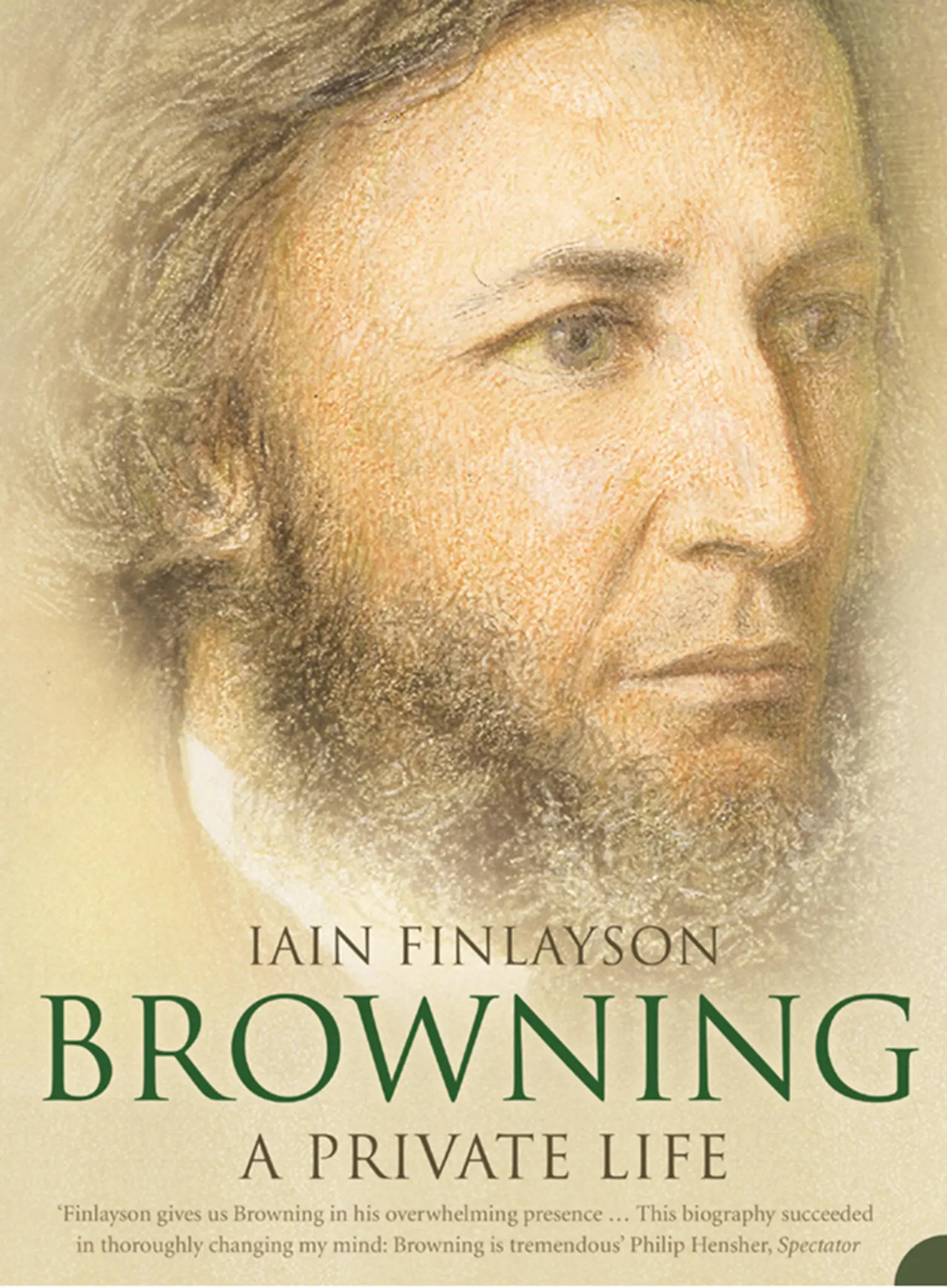
- Название:Browning
- Автор:
- Жанр:
- Год:неизвестен
- ISBN:нет данных
- Рейтинг книги:5 / 5. Голосов: 1
-
Избранное:Добавить в избранное
- Отзывы:
-
Ваша оценка:
Browning: краткое содержание, описание и аннотация
Предлагаем к чтению аннотацию, описание, краткое содержание или предисловие (зависит от того, что написал сам автор книги «Browning»). Если вы не нашли необходимую информацию о книге — напишите в комментариях, мы постараемся отыскать её.
Browning — читать онлайн ознакомительный отрывок
Ниже представлен текст книги, разбитый по страницам. Система сохранения места последней прочитанной страницы, позволяет с удобством читать онлайн бесплатно книгу «Browning», без необходимости каждый раз заново искать на чём Вы остановились. Поставьте закладку, и сможете в любой момент перейти на страницу, на которой закончили чтение.
Интервал:
Закладка:
Queen Mab is a lecture in poetic form to Ianthe, a disembodied spirit, on the sorry state of the temporal universe. Mab is a bluestocking fairy queen who takes intense issue with the various shortcomings of contemporary politics, conventional religion, and cankerous commerce, all of which are judged to be more or less hopelessly misguided when not actually corrupt. Queen Mab’s denunciation convinces less by rational argument than by the irresistible force of her—Shelley’s—convictions. She barely stops for breath (only now and then pauses for footnotes), fired by ideas and ideals that combine termagant intensity with tender sentiment, fiercely heretical in her inability to accept a creating Deity but spiritually softer in her recognition that there could be ‘a pervading spirit co-eternal with the universe’ which might or might not, according to religious belief, be identified with the supreme maker, sometimes called God.
In an aside, dealing with the matter in a footnote, Shelley argued abstinence from meat as a means whereby man might at a stroke eliminate the brutal pleasures of the chase and restore an agricultural paradise, improve himself physically and morally, and probably live forever in health and virtue. The spiritual and the corporeal were virtually synonymous. Shelley recommended himself and the pure system of his ideas to youth whose moral enthusiasm for truth and virtue was yet unvitiated by the contagion of the world. Queen Mab was pouring out a song which, if not of innocence, at least was addressing innocents. The force of Shelley’s expression rather more than the systematic reason of his argument is still powerfully appealing to idealists, and most of his vehement agitprop (as it might be called today) speaks to succeeding generations even unto our own times—so much so that the utterances of Queen Mab sound not unlike the conventional wisdom of modern environmentalists, new-agers, and bourgeois bohemians. It is difficult for us now to appreciate the thrilling horror with which Shelley’s words were received by his unnerved contemporaries who read not only blasphemy—bad enough—but revolution between, as much as upon, every irreverent line.
Vegetarianism worried Robert’s mother; atheism worried the Revd George Clayton. Robert stuck to his beliefs for a while, but forgave himself his youthful excesses, characterizing them later in his life as ‘Crude convictions of boyhood, conveyed in imperfect and unapt forms of speech,—for such things all boys have been pardoned. They are growing pains, accompanied by temporary distortion of soul also.’ 21 He regretted the anxiety caused to his mother, whose strong-minded inclination that her son should not compromise his physical health was resisted by Robert’s insistence that meat-eating was a symptom of spiritual disease and argued, presumably, ‘what should it profit a man if he feed his body but starve his soul’. Besides, the new diet was also a symptom of liberty, a badge of freedom, a symbol of release from dependence.
Atheism served much the same purpose. That his speculative beliefs were sincerely held and admitted of no counter-persuasion from those who expressed concern for his physical and spiritual welfare was perhaps secondary to their practical effect. Robert Browning had got out into the world, and he would deal with it on his own terms. He might still be living within the narrow propriety of his parents’ house, which increasingly rubbed at his heels and elbows, but he was his own man. Sarianna, his sympathetic sister, admitted to Mrs Orr that ‘The fact was, poor boy, he had outgrown his social surroundings. They were absolutely good, but they were narrow; it could not be otherwise; he chafed under them.’ 22
Robert had left the Ready school at the age of fourteen, and for two years thereafter he was educated privately at home, in the mornings by a tutor competent in the general syllabus; in the afternoons by a number of instructors in music, technical science, languages (French particularly), singing, dancing, exercise (riding, boxing, fencing), and probably art. 23 In the evenings, if his father did not entertainingly contribute to the educational process, Robert worked at his own pleasure, voraciously reading, assiduously writing, sometimes composing music. None of his musical compositions have survived the incinerating fire he so loved to feed. Robert ‘wrote music for songs which he himself sang’, states Mrs Orr, citing three: Donne’s ‘Go, and catch a falling star’, Hood’s ‘I will not have the mad Clytie’, and ‘The mountain sheep are sweeter’ by Peacock. These settings were characterized to Mrs Orr, by those who knew of them, as ‘very spirited’. 24
Robert also acquired a social life, associating with three Silverthorne cousins—James, John and George, the sons of Christiana Wiedemann, Sarah Anna Browning’s sister, who had married Silverthorne, a prosperous local brewer. All three were musically gifted and sometimes described as ‘wild youths’. 25 The Silverthornes lived in Portland Place, Peckham. James came to be Robert’s particular friend, and his name is written in the register of Marylebone Church as one of the two witnesses at the wedding in 1846 of Robert Browning and Elizabeth Barrett. James, who succeeded to the family brewery, died in 1852. To mark his passing, Robert wrote the poem ‘May and Death’ which lovingly commemorates the friendship between himself and James (called Charles in the poem).
In addition to association with cousins, Robert acquired improving acquaintance with, notably, Alfred Domett and Joseph Arnould (later to become Sir Joseph Arnould of the High Court bench of Bombay, but meanwhile something of a youthful radical and an admirer of Carlyle). Both were clever, ambitious young men of his own age, sons of established Camberwell families. He had, too, independent adventures. Stories are told—and credited by some—of his ramblings, following the tracks of gypsy caravans far across country. William Sharp, in his biography of Browning (1897), seems to think that Robert kept company with ‘any tramps, gypsies or other wayfarers’, though Mrs Orr in her more authoritative (less lyrical and very much less airily romantic) biography, published in 1891, quashes any suggestion that he caught them up or was detained in parleyings with them: ‘I do not know how the idea can have arisen that he willingly sought his experience in the society of “gipsies and tramps”.’
Both Sharp and Mrs Orr knew Robert Browning personally, and it must be admitted that the latter can lay claim to longer, more intimate and more extensive acquaintance with the poet. There is no doubting it from the tone of her book that Mrs Orr strives for a scrupulous fidelity to the facts—some of which, if deplorable, are omitted—but some caution is required when dealing with her inclination to polish the poet to his brightest lustre and to put the best and brightest face on failure. She can sometimes, in her emphases and suppressions, be inspired to what we now recognize as spin. However, Sharp invites comparison with Browning’s poem ‘The Flight of the Duchess’ and a song which Robert heard on a Guy Fawkes night, 5 November, with the refrain, ‘Following the Queen of the Gipsies oh!’ that rang in his head until it found appropriate poetic expression years later. Chesterton sufficiently credits or relishes Sharp’s literary association as to repeat it in his own biography. It seems likely that, whatever romantic fascination Robert may have had with the itinerant life of gypsies, they represented his then feelings of freedom as a desirable thing rather than as an actuality in his life or as an alternative to it. He had neither any incentive to run away with the ‘raggle-taggle gypsies-o!’, nor any inclination to inquire too closely into the reality of lives less privileged, in conventional terms, than his own.
Читать дальшеИнтервал:
Закладка:
Похожие книги на «Browning»
Представляем Вашему вниманию похожие книги на «Browning» списком для выбора. Мы отобрали схожую по названию и смыслу литературу в надежде предоставить читателям больше вариантов отыскать новые, интересные, ещё непрочитанные произведения.





Обсуждение, отзывы о книге «Browning» и просто собственные мнения читателей. Оставьте ваши комментарии, напишите, что Вы думаете о произведении, его смысле или главных героях. Укажите что конкретно понравилось, а что нет, и почему Вы так считаете.