Iain Finlayson - Browning
Здесь есть возможность читать онлайн «Iain Finlayson - Browning» — ознакомительный отрывок электронной книги совершенно бесплатно, а после прочтения отрывка купить полную версию. В некоторых случаях можно слушать аудио, скачать через торрент в формате fb2 и присутствует краткое содержание. Жанр: unrecognised, на английском языке. Описание произведения, (предисловие) а так же отзывы посетителей доступны на портале библиотеки ЛибКат.
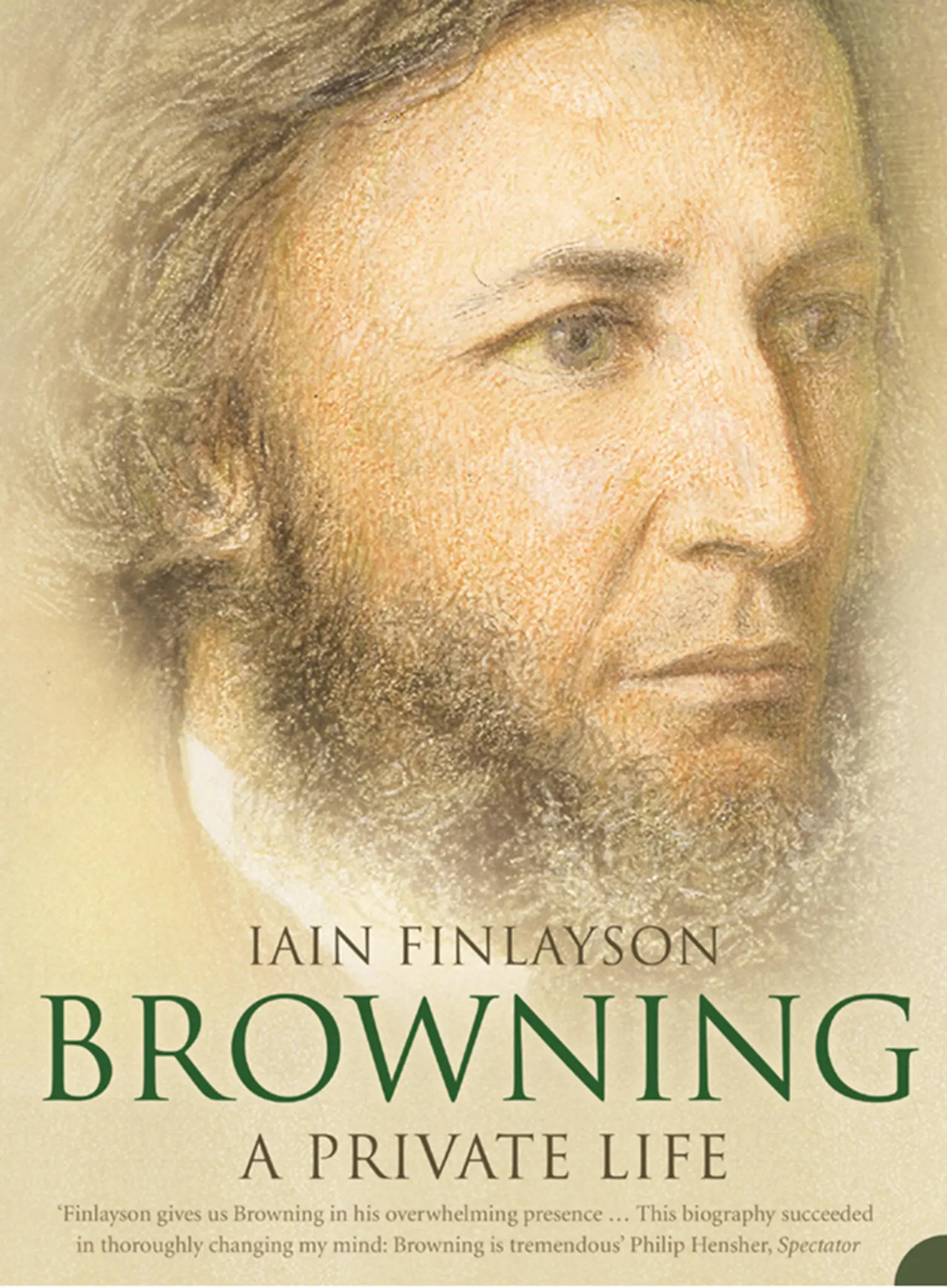
- Название:Browning
- Автор:
- Жанр:
- Год:неизвестен
- ISBN:нет данных
- Рейтинг книги:5 / 5. Голосов: 1
-
Избранное:Добавить в избранное
- Отзывы:
-
Ваша оценка:
Browning: краткое содержание, описание и аннотация
Предлагаем к чтению аннотацию, описание, краткое содержание или предисловие (зависит от того, что написал сам автор книги «Browning»). Если вы не нашли необходимую информацию о книге — напишите в комментариях, мы постараемся отыскать её.
Browning — читать онлайн ознакомительный отрывок
Ниже представлен текст книги, разбитый по страницам. Система сохранения места последней прочитанной страницы, позволяет с удобством читать онлайн бесплатно книгу «Browning», без необходимости каждый раз заново искать на чём Вы остановились. Поставьте закладку, и сможете в любой момент перейти на страницу, на которой закончили чтение.
Интервал:
Закладка:
This middle class was perceived by pre-Revolutionary enthusiasts as equipped with reason, sentiment, natural feeling, and purpose in contrast to the sterility, decrepitude, reactionary instincts, and corrupt clericalism of pre-Revolutionary society. The artificiality of the Court was in theory to be replaced by the spontaneity of the people—whereupon, of course, by the inevitable evolutionary law of society, the new society in practice naturally stiffened into a bureaucratic, bourgeois respectability, in its own time and triumphant style stifling fine romantic feeling with its own brand of philistinism. Revolutions, like romantic poets, die young. Byron astutely recognized that an early death would save him from a respectable old age.
G. K. Chesterton points to what is now known as the ‘percolation theory’ or the ‘trickle down effect’ that supposedly occurs when society is in some way shaken out from top to bottom or from bottom to top. Robert Browning, says Chesterton, was ‘born in the afterglow of the great Revolution’—the French Revolution of 1789, that is—the point of this observation being that the Jacobin dream of emancipation had begun ‘in the time of Keats and Shelley to creep down among the dullest professions and the most prosaic classes of society’. By the time of Robert’s boyhood, ‘a very subtle and profound change was beginning in the intellectual atmosphere of such homes as that of the Brownings … A spirit of revolt was growing among the young of the middle classes which had nothing at all in common with the complete and pessimistic revolt against all things in heaven or earth … On all sides there was the first beginning of the aesthetic stir in the middle classes which expressed itself in the combination of so many poetic lives with so many prosaic livelihoods. It was the age of inspired office-boys.’
With this famous portmanteau phrase, Chesterton sweeps together such marvellous boys as John Ruskin ‘solemnly visiting his solemn suburban aunts’, Charles Dickens toiling in a blacking factory, Thomas Carlyle ‘lingering on a poor farm in Dumfriesshire’, and John Keats, who ‘had not long become the assistant of the country surgeon’. Add to these Robert Browning, the son of a Bank of England clerk in Camberwell. These men, born to fame but not to wealth, were the inheritors of a new world that gave them a liberty that, in Robert Browning’s case, ‘exalted poetry above all earthly things’ and which he served ‘with single-hearted intensity’. Browning stands, observed Chesterton, ‘among the few poets who hardly wrote a line of anything else’.
The matter of poetry as Robert’s sole vocation was mostly decided by the revelation of Percy Bysshe Shelley, the atheistical poet. The effect was tremendous. It was like coming across a hitherto unknown brother who had thought everything, experienced everything, accomplished everything that Robert Browning, fourteen years old, living in Camberwell, had as yet only dimly felt and begun to put, somewhat derivatively of admired models, into words. Robert had read the cynical, atheistical Voltaire without obvious moral corruption; he had read of the world’s virtues and vices, irregularities and injustices, in the words of Wanley, Shakespeare, Milton, and in other works of dramatic historical fiction, without becoming contemptuous of virtue; he had read the sensational Byron without becoming mad or bad; he had read the waspish Horace Walpole without becoming overwhelmingly mannered. But the cumulative effect was bound, in some degree, to be unsettling. Shelley—who had, like young Robert, read Voltaire and encyclopedias, and who had consorted with Byron—ratcheted up the adolescent tension one notch too far.
Shelley’s musical verse hit every note. With exquisite Shelleyan technique, all the airs that had been vapouring in Robert’s head were given compositional form—delicate, forceful; and as the concert performance proceeded, Shelley’s genius, his creative spirit, played out the great work of the ideal world in which infamy was erased, God rebelled against Satan, and in which—as Chesterton remarks—‘every cloud and clump of grass shared his strict republican orthodoxy’. All things in heaven and on earth proclaimed the triumph of liberty. ‘O World, O Life, O Time,’ Robert in later life apostrophized with deliberate irony on the flyleaf of Shelley’s Miscellaneous Poems given to him by his cousin Jim Silverthorne, a book he vigorously annotated in his first enthusiasm and then thought better of in his maturity when he tried, on 2 June 1878, to erase ‘the foolish markings and still more foolish scribblings’ that ‘show the impression made on a boy by this first specimen of Shelley’s poetry’. What he could not vehemently blot out or rub at or scratch away or scribble over, he hacked at with a knife or finally—all these obliterating resources being inadequate—cut out with scissors. It seems an excessive reaction, some fifty years later, but the first enthusiasm had evidently come to seem itself embarrassingly excessive. Not only did Robert not wish to remember it, he was determined to efface it from memory—his own or posterity’s—absolutely, though without actually, as was his usual resort, burning the book to ashes. He could burn his own poetry, perhaps, but not another’s.
‘Between the year 1826, when Browning became acquainted with the work of Shelley, and 1832, when Pauline was written,’ says Betty Miller in Robert Browning: A Portrait , ‘there took place in the life of the poet a crisis so radical that everything that followed upon it, including his marriage with Elizabeth Barrett, was qualified in one way or another by the effects of that initial experience.’ This sums up the biographical consensus that began with Mrs Orr’s pronouncement that Robert held Shelley greatest in the poetic art because ‘in his case, beyond all others, he believed its exercise to have been prompted by the truest spiritual inspiration’.
The souls of Keats and Shelley were identified in Robert’s mind with two nightingales which sang harmoniously together on a night in May—perhaps his birthday, the 7th of May in 1826—one in a laburnum (‘heavy with its weight of gold’, as William Sharp says Browning told a friend) in the Brownings’ garden, the other in a large copper beech on adjoining ground. ‘Their utterance,’ says Mrs Orr, ‘was, to such a spirit as his, the last, as in a certain sense the first, word of what poetry can say.’ The image was no doubt prompted in Robert’s mind by Keats’ ‘Ode to a Nightingale’. At any rate, whether or not these birds were the transmigrated souls of Keats and Shelley, as Robert reverently convinced himself, they ‘had settled in a Camberwell garden’, says Chesterton less reverently, ‘in order to sing to the only young gentleman who really adored and understood them’.
The major impact on the tender sensibilities of young Robert Browning was made by Shelley’s Queen Mab , which later achieved a reputation, when issued in a new edition by the publisher Edward Moxon, for being that most horrid—indeed, criminal—thing, a blasphemous libel. ‘The Shelley whom Browning first loved,’ says Mrs Orr, ‘was the Shelley of Queen Mab , the Shelley who would have remodelled the whole system of religious belief, as of human duty and rights; and the earliest result of the new development was that he became a professing atheist and, for two years, a practising vegetarian. He returned to his natural diet when he found his eyesight becoming weak. The atheism cured itself; we do not exactly know when or how.’ In a letter to Elizabeth Barrett on 13 September 1845, Robert wrote of having lived for two years on bread and potatoes—a regime that, if strictly adhered to, would have tested the faith and asceticism even of the Desert Fathers.
Читать дальшеИнтервал:
Закладка:
Похожие книги на «Browning»
Представляем Вашему вниманию похожие книги на «Browning» списком для выбора. Мы отобрали схожую по названию и смыслу литературу в надежде предоставить читателям больше вариантов отыскать новые, интересные, ещё непрочитанные произведения.





Обсуждение, отзывы о книге «Browning» и просто собственные мнения читателей. Оставьте ваши комментарии, напишите, что Вы думаете о произведении, его смысле или главных героях. Укажите что конкретно понравилось, а что нет, и почему Вы так считаете.