Iain Finlayson - Browning
Здесь есть возможность читать онлайн «Iain Finlayson - Browning» — ознакомительный отрывок электронной книги совершенно бесплатно, а после прочтения отрывка купить полную версию. В некоторых случаях можно слушать аудио, скачать через торрент в формате fb2 и присутствует краткое содержание. Жанр: unrecognised, на английском языке. Описание произведения, (предисловие) а так же отзывы посетителей доступны на портале библиотеки ЛибКат.
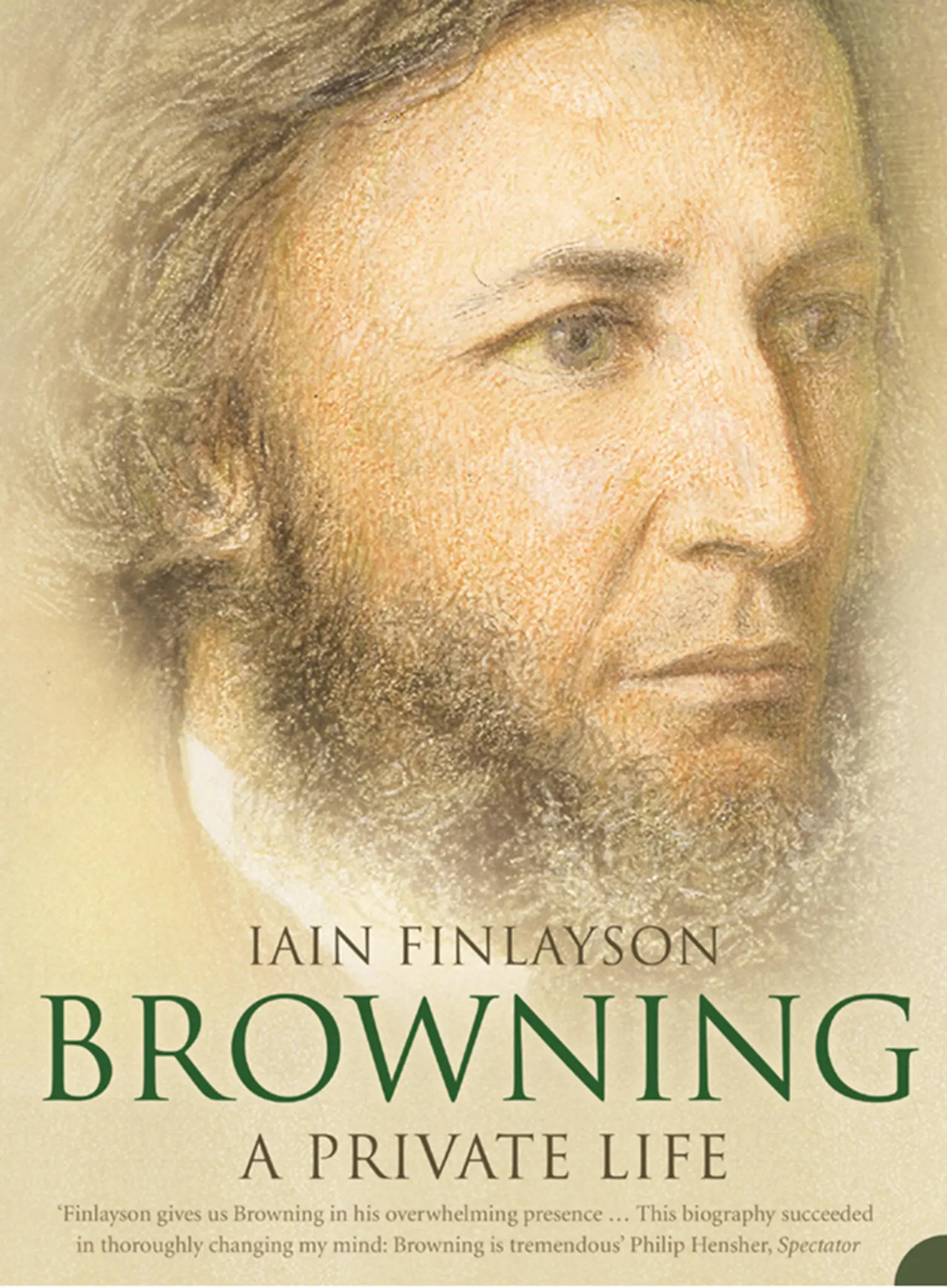
- Название:Browning
- Автор:
- Жанр:
- Год:неизвестен
- ISBN:нет данных
- Рейтинг книги:5 / 5. Голосов: 1
-
Избранное:Добавить в избранное
- Отзывы:
-
Ваша оценка:
Browning: краткое содержание, описание и аннотация
Предлагаем к чтению аннотацию, описание, краткое содержание или предисловие (зависит от того, что написал сам автор книги «Browning»). Если вы не нашли необходимую информацию о книге — напишите в комментариях, мы постараемся отыскать её.
Browning — читать онлайн ознакомительный отрывок
Ниже представлен текст книги, разбитый по страницам. Система сохранения места последней прочитанной страницы, позволяет с удобством читать онлайн бесплатно книгу «Browning», без необходимости каждый раз заново искать на чём Вы остановились. Поставьте закладку, и сможете в любой момент перейти на страницу, на которой закончили чтение.
Интервал:
Закладка:
Many people have square heads. There is little enough to be interpreted from this characteristic, though to some minds a square head may naturally imply sturdy common sense and a regular attitude to life. A good square head is commonly viewed as virtually a guarantee of correct behaviour and a restrained attitude towards vanity and frivolity. Lombroso’s forensic art of physiognomy being now just as discredited as palmistry or phrenology, we may turn with more confidence to Thomas Carlyle’s shrewd and succinct assessment of Mrs Browning as being ‘the type of a Scottish gentlewoman’. 2 The phrase is evocative enough for those who, like Carlyle, have enjoyed some personal experience and acquired some understanding at first hand of the culture that has bred and refined the Scottish gentlewoman over the generations. She is a woman to be reckoned with. Since we know nothing but bromides and pleasing praises of Sarah Anna’s temperament beyond what may be conjectured, particularly from Carlyle’s brief but telling phrase, we may take it that she was quieter and more phlegmatic than Jane Welsh, Carlyle’s own Scottish gentlewoman wife whose verbal flyting could generally be relied upon to rattle the teeth and teacups of visitors to Carlyle’s London house in Cheyne Walk.
Mrs Browning’s father was German. Her grandfather is said to have been a Hamburg merchant whose son William is generally agreed to have become, in a small way, a ship owner in Dundee and to have married a Scotswoman. She was born Sarah Anna Wiedemann in Scotland, in the early 1770s, and while still a girl came south with her sister Christiana to lodge with an uncle in Camberwell. Her history before marriage is not known to have been remarkable; after marriage it was not notably dramatic. There is only the amplest evidence that she was worthily devoted to her hearth, garden, husband, and children.
Mrs Browning’s head so fascinated Alfred Domett that he continued to refer to it in a domestic anecdote agreeably designed to emphasize the affection that existed between mother and son: ‘On one occasion, in the act of tossing a little roll of music from the table to the piano, he thought it had touched her head in passing her, and I remember how he ran to her to apologise and caress her, though I think she had not felt it.’ 3 Sarah Anna Browning’s head was at least tenderly regarded and respected by Robert, her son, who—since he has left no description of it to posterity in prose or poetry—either refrained from disobliging comment or regarded its shape as in no respect unusual.
Mrs Browning was a Dissenter; her creed was Nonconformist, a somewhat austere faith that partook of no sacraments and reprobated ritual. She—and, nine years into their marriage, her husband—adhered to the Congregational Church, the chapel in York Street, Walworth, which the Browning family attended regularly to hear the preaching of the incumbent, the Revd George Clayton, characterized in the British Weekly of 20 December 1889 as one who ‘combined the character of a saint, a dancing master, and an orthodox eighteenth-century theologian in about equal proportions’. 4 Before professing Congregationalism, she had been brought up—said Sarianna, her daughter, to Mrs Alexandra Sutherland Orr—in the Church of Scotland. One of the books that is recorded as a gift from Mrs Browning to her son is an anthology of sermons, inscribed by him on the flyleaf as a treasured possession and fond remembrance of his mother. As a token of maternal concern for her son’s spiritual welfare it was perfectly appropriate, and might perhaps have been intended as a modest counterweight to the large and eclectic library of books—six thousand volumes, more or less—that her husband had collected, continued to collect, and through which her precocious son was presently and diligently reading his way.
Sarah Anna Browning doubtless had cause to attempt to concentrate young Robert’s mind more narrowly. He had begun with a rather sensational anthology, Nathaniel Wanley’s Wonders of the Little World , published in 1678, and sooner rather than later would inevitably discover dictionaries and encyclopedias, those seemingly innocent repositories of dry definitions and sober facts but which are, in truth, a maze of conceits and confusions, of broad thoroughfares and frustrating cul-de-sacs from which the imaginative mind, once entered, will find no exit and never in a lifetime penetrate to the centre.
But Mrs Browning’s head, square with religion and good intentions, was very liable to be turned by kindly feeling towards her son and poetry. Robert, in 1826, had already come across Miscellaneous Poems , a copy of Shelley’s best works, published by William Benbow of High Holborn, unblushingly pirated from Mrs Shelley’s edition of her husband’s Posthumous Poems . This volume was presented to him by a cousin, James Silverthorne, and he was eager for a more reliable, authoritative edition. Having made inquiries of the Literary Gazette as to where they might be obtained, Robert requested the poems of Shelley as a birthday present. 5 Mrs Browning may be pictured putting on her gloves, setting her bonnet squarely on her head and proceeding to Vere Street. There, at the premises of C. & J. Ollier, booksellers, she purchased the complete works of the poet, including the Pisa edition of Adonais in a purple paper cover and Epipsychidion . None of them had exhausted their first editions save The Cenci , which had achieved a second edition.
On advice, as being in somewhat the same poetic spirit as the works of the late Percy Bysshe Shelley who had died tragically in a boating accident in Italy but three years before, Sarah Anna Browning added to her order three volumes of the poetry of the late John Keats, who had died, also tragically young, in Rome in 1821. Her arms encumbered with the books of these two neglected poets, her head quite innocent of the effect they would have, she returned home to present them to her son. There being not much call for the poetry of Shelley and Keats at this time, it had taken some effort to obtain their works. Bibliophiles, wrote Edmund Gosse in 1881 in the December issue of the Century Magazine , turn almost dazed at the thought of these prizes picked up by the unconscious lady.
The Browning family belonged, remarked G. K. Chesterton, ‘to the solid and educated middle-class which is interested in letters, but not ambitious in them, the class to which poetry is a luxury, but not a necessity’. 6 Robert Browning senior, husband to Sarah Anna Wiedemann, was certainly educated, undeniably middle-class, and interested in literature not so much for its own sake—though he was more literate and widely read, it may safely be said, than many of his colleagues at the Bank of England—but more from the point of view of bibliophily and learning. There was always another book to be sought and set on a shelf. The house in Camberwell was full of them.
Literature and learning are not precisely the same thing, and Mr Browning senior, according to the testimony of Mr Domett, was accustomed to speak of his son ‘“as beyond him”’—alluding to his Paracelsuses and Sordellos; though I fancy he altered his tone on this subject very much at a later period’. 7 Poetry safely clapped between purple paper covers is one thing, poets are quite another—and an experimental, modern poet within the confines of one’s own family is bound to be unsettling to a traditionalist, try as he may to comprehend, proud as he may be of completed and published effort. Mr Browning senior may initially have been more pleased with the fact of his son’s work being printed and bound and placed in its proper place on his bookshelves than with the perplexing contents of the books themselves.
Читать дальшеИнтервал:
Закладка:
Похожие книги на «Browning»
Представляем Вашему вниманию похожие книги на «Browning» списком для выбора. Мы отобрали схожую по названию и смыслу литературу в надежде предоставить читателям больше вариантов отыскать новые, интересные, ещё непрочитанные произведения.






Обсуждение, отзывы о книге «Browning» и просто собственные мнения читателей. Оставьте ваши комментарии, напишите, что Вы думаете о произведении, его смысле или главных героях. Укажите что конкретно понравилось, а что нет, и почему Вы так считаете.