Iain Finlayson - Browning
Здесь есть возможность читать онлайн «Iain Finlayson - Browning» — ознакомительный отрывок электронной книги совершенно бесплатно, а после прочтения отрывка купить полную версию. В некоторых случаях можно слушать аудио, скачать через торрент в формате fb2 и присутствует краткое содержание. Жанр: unrecognised, на английском языке. Описание произведения, (предисловие) а так же отзывы посетителей доступны на портале библиотеки ЛибКат.
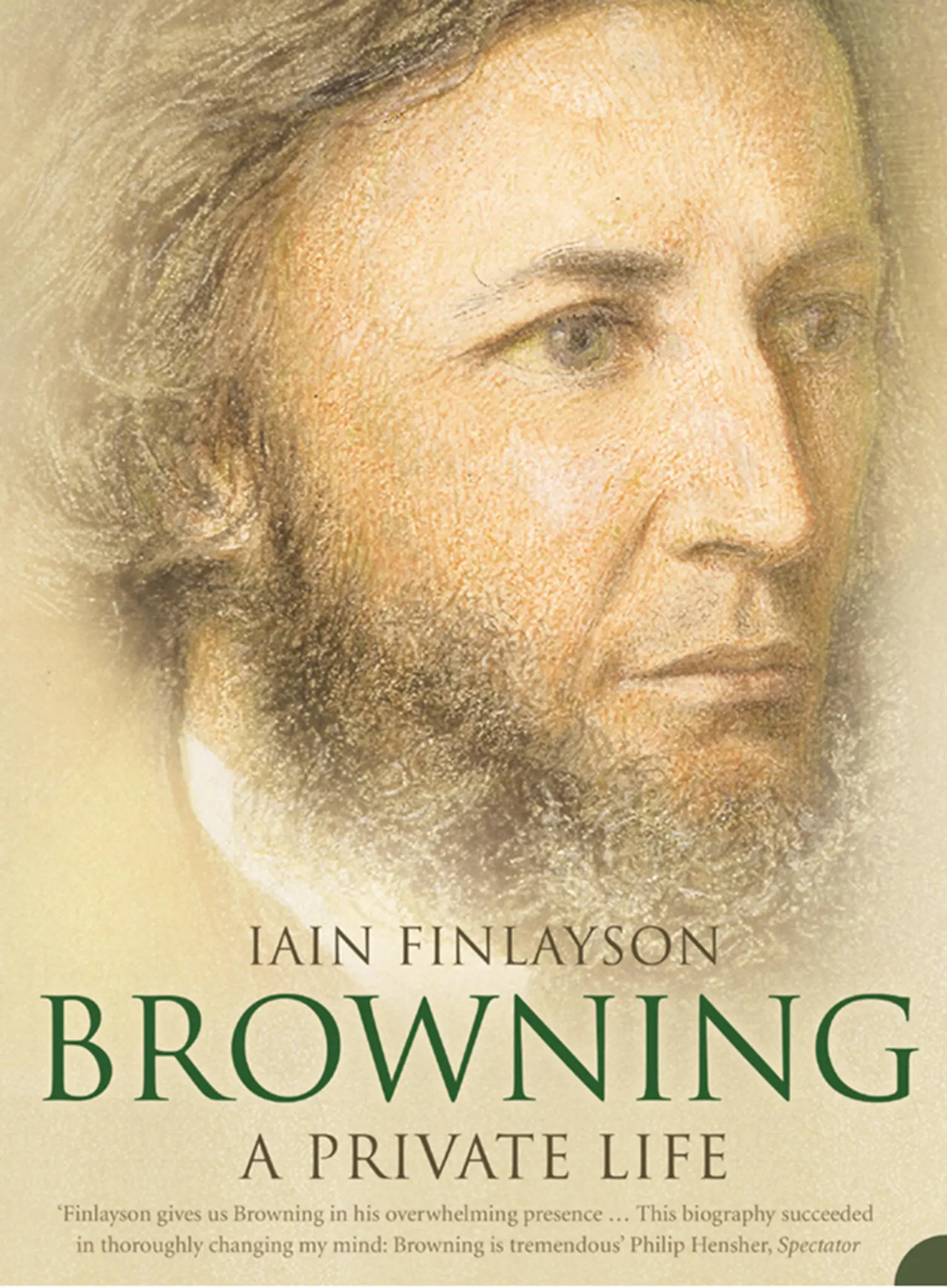
- Название:Browning
- Автор:
- Жанр:
- Год:неизвестен
- ISBN:нет данных
- Рейтинг книги:5 / 5. Голосов: 1
-
Избранное:Добавить в избранное
- Отзывы:
-
Ваша оценка:
Browning: краткое содержание, описание и аннотация
Предлагаем к чтению аннотацию, описание, краткое содержание или предисловие (зависит от того, что написал сам автор книги «Browning»). Если вы не нашли необходимую информацию о книге — напишите в комментариях, мы постараемся отыскать её.
Browning — читать онлайн ознакомительный отрывок
Ниже представлен текст книги, разбитый по страницам. Система сохранения места последней прочитанной страницы, позволяет с удобством читать онлайн бесплатно книгу «Browning», без необходимости каждый раз заново искать на чём Вы остановились. Поставьте закладку, и сможете в любой момент перейти на страницу, на которой закончили чтение.
Интервал:
Закладка:
And yet, as Chesterton concedes of Browning biography, ‘it is a great deal more difficult to speak finally about his life than his work. His work has the mystery which belongs to the complex; his life the much greater mystery which belongs to the simple.’ By and large, my biographical preference has been for a straightforward (I won’t say simple) chronological narrative rather than a series of thematic chapters. And so, this biography is divided into three major sections. These large sections deal successively with three subjects associated with three themes: adolescence and ambition, marriage and money, paternity and poetry.
I like, too, the unfashionable Victorian biographical convention of ‘Life and Letters’. Much of this book is based on the correspondence of Robert and Elizabeth Browning, from which I have quoted lengthily and freely. Where either of them have written personally, or their words have been otherwise recorded by others, I have often preferred to quote them directly rather than make my own paraphrase. Their own voices are important—the tone, the vocabulary, the tempo of the sentences, the entire texture of their poetry, letters, and recorded conversation: all contribute to our understanding of character. The Brownings’ letters are not referenced to the various collections in which they have appeared over the years, since chronological publication of their complete collected correspondence is currently in progress. All dated letters will finally be found there in their proper place.
My reliance on previous biographical materials is deliberate. Far from studiously avoiding them, I have sedulously pillaged them. Biographies are a legitimate secondary source just as much as the first-hand memoirs of those who once saw Shelley, Browning, or any other poet plain and formed an impression that they set down in words or pictures for posterity. It might be argued that a scrupulous biographer who is familiar with all the details of his or her subject’s life may indeed be better informed as to the subject’s character than those friends and enemies who knew him in his outward aspect but were less intimately acquainted with his private life. An enemy of Browning’s, Lady Ashburton, is a case in point. She formed a view of a Miss Gabriel that proved to be wrong. Lady Ashburton, to her credit, thereupon fell to wondering that two views of Miss Gabriel’s character could be so contrary. As a starting-point for biography, her surprised surmise could hardly be bettered. Her latterly-held opinion of Robert Browning could have benefited from some similar consideration of his contrarieties.
‘A Poet’, wrote John Keats, ‘is the most unpoetical of anything in existence; because he has no Identity—he is continually informing and filling some other Body.’ 2 This remark, though referring to poets in general, seems to justify the view of Henry James and others that Robert Browning the public personality and Robert Browning the private poet were two distinct personalities. When the biographer stops to point to an image or a word that is apparently autobiographical (or at least seems open to a subjective interpretation), it is because biography imposes a structure and perceives a coherence that the subject himself cannot fully be aware of. The literary biographer neither need be completely contre Sainte-Beuve, nor feel officiously obliged to seek biographical meaning in a text. And yet, of course, Robert Browning is one man, not a series of discrete doppelgängers inhabiting parallel universes. To quote Joseph Brodsky again, ‘every work of art, be it a poem or a cupola, is understandably a self-portrait of its author … a lyrical hero is invariably an author’s self-projection … The author … is a critic of his century; but he is a part of this century also. So his criticism of it nearly always is self-criticism as well, and this is what imparts to his voice … its lyrical poise. If you think that there are other recipes for successful poetic operation, you are in for oblivion.’ 3
I have avoided, so far as possible, attributing feelings to Browning or anyone else that they are not known to have felt. I have tried to suppose no emotions that are not supported by the statement of anyone who experienced them personally or observed them in others and interpreted their effects. I have stuck so far as possible to the facts insofar as they are known and can be supported, if not ideally by first-hand sources, at least credibly by reliable hearsay; and—where facts fail and supposition supersedes—by creditable biographical consensus and, in the last resort, my own fallible judgement.
Nevertheless, and despite all best intentions, biography is a form of fiction, and successive biographies create, rather like the monologuists in The Ring and the Book , a palimpsest of their subject. Like a Platonic symposium, all the guests at the feast will have their own ideas to propound. A biography, like a novel, tells a story. It contains a principal subject, subsidiary characters, a plot (in the form, normally, of a more or less chronological narrative), and subplots, and it unfolds over a certain period of time in various locations. It has a beginning, a middle, and an end, however much these elements may be creatively juggled. That the biographer is not his subject is the point at which the narrative takes on the aspect of fiction. The subject lived his or her life for, say, threescore years and ten, and—allowing for various forms of psychological self-defence—he or she may be regarded as the first authority for that life. Autobiography, however, is generally even more fiction than biography, even less trustworthy than biography. If we put not our faith in princes or poets, even less should we trust an apologist pro vita sua . As Jeanette Winterson puts it, ‘autobiography is art and lies’.
Poetry, of course, may be said to be art and truth. The poet, even if he lies in every other aspect of his life, cannot consistently lie in his work. Robert Browning’s poetry tells the truth not only about Robert Browning, but about the men and women he loved and the common humanity he shared with them and sought to understand. Says Chesterton, with an irresistible conviction and authority:
Every one on this earth should believe, amid whatever madness or moral failure, that his life and temperament have some object on the earth. Every one on this earth should believe that he has something to give to the world which cannot otherwise be given. Every one should, for the good of men and the saving of his own soul, believe that it is possible, even if we are the enemies of the human race, to be the friends of God … With Browning’s knaves we have always this eternal interest, that they are real somewhere, and may at any moment begin to speak poetry.
Lacking the vanity and hypocrisy of the age, Browning was blind to no one, and to the best and the worst of them in their inarticulacy he gave the voice of his own understanding, compassion, and love as few had done so sincerely since Chaucer, Shakespeare, and Burns.
PART 1 ROBERT AND THE BROWNINGS 1812–1846
ONLY ONE THING is known for certain about the appearance of Sarah Anna Browning, wife of Robert Browning and mother of Robert and Sarianna Browning: she had a notably square head. Which is to say, its uncommon squareness was noted by Alfred Domett, a young man sufficiently serious as to become briefly, in his maturity, Prime Minister of New Zealand and sometime epic poet. Mr Domett, getting on in years, conscientiously committed this observation to his journal on 30 April 1878: ‘I remembered their mother about 40 years before (say 1838), who had, I used to think, the squarest head and forehead I almost ever saw in a human being, putting me in mind, absurdly enough no doubt of a tea-chest or tea-caddy.’ 1
Читать дальшеИнтервал:
Закладка:
Похожие книги на «Browning»
Представляем Вашему вниманию похожие книги на «Browning» списком для выбора. Мы отобрали схожую по названию и смыслу литературу в надежде предоставить читателям больше вариантов отыскать новые, интересные, ещё непрочитанные произведения.


Обсуждение, отзывы о книге «Browning» и просто собственные мнения читателей. Оставьте ваши комментарии, напишите, что Вы думаете о произведении, его смысле или главных героях. Укажите что конкретно понравилось, а что нет, и почему Вы так считаете.