Iain Finlayson - Browning
Здесь есть возможность читать онлайн «Iain Finlayson - Browning» — ознакомительный отрывок электронной книги совершенно бесплатно, а после прочтения отрывка купить полную версию. В некоторых случаях можно слушать аудио, скачать через торрент в формате fb2 и присутствует краткое содержание. Жанр: unrecognised, на английском языке. Описание произведения, (предисловие) а так же отзывы посетителей доступны на портале библиотеки ЛибКат.
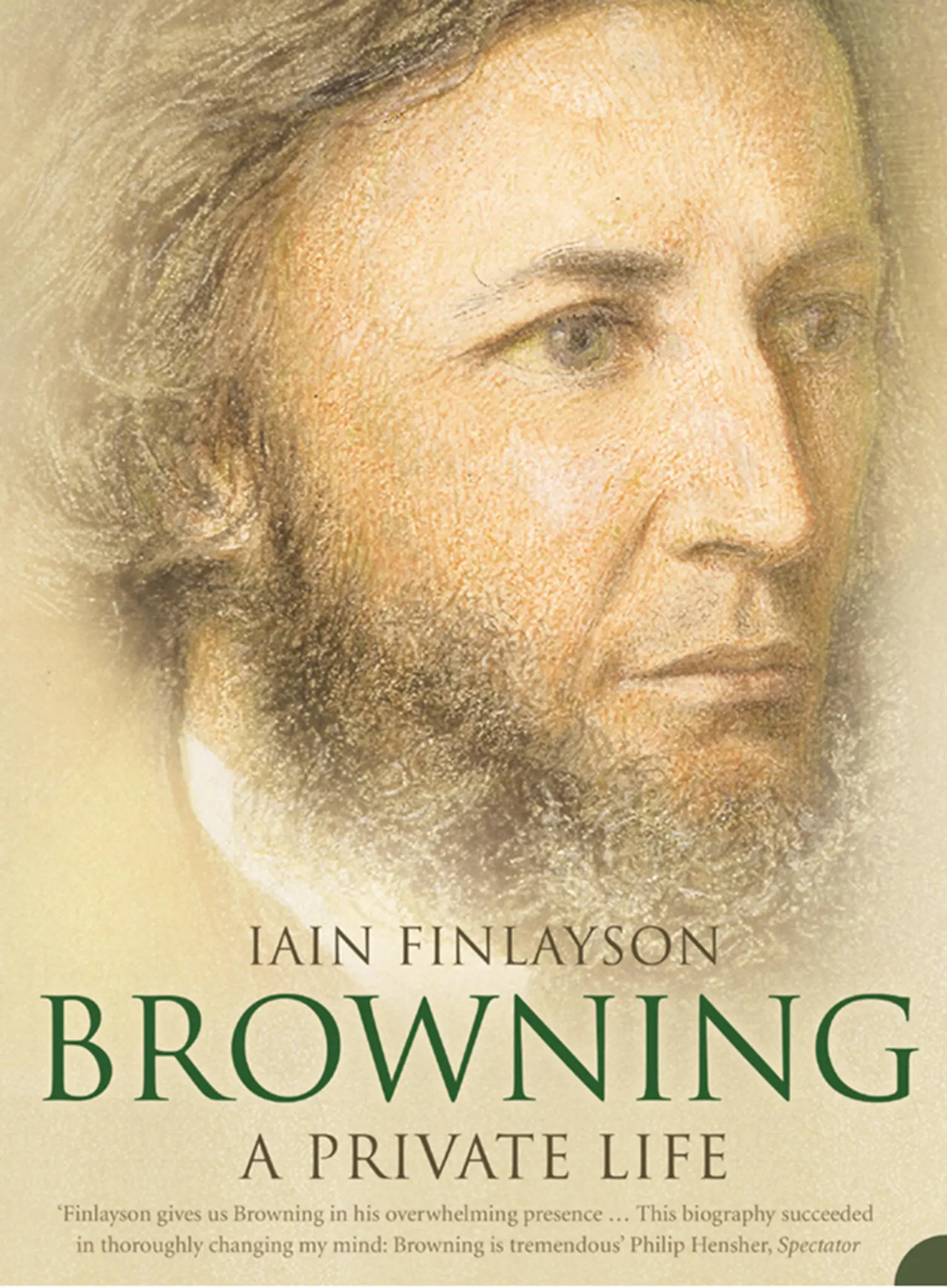
- Название:Browning
- Автор:
- Жанр:
- Год:неизвестен
- ISBN:нет данных
- Рейтинг книги:5 / 5. Голосов: 1
-
Избранное:Добавить в избранное
- Отзывы:
-
Ваша оценка:
Browning: краткое содержание, описание и аннотация
Предлагаем к чтению аннотацию, описание, краткое содержание или предисловие (зависит от того, что написал сам автор книги «Browning»). Если вы не нашли необходимую информацию о книге — напишите в комментариях, мы постараемся отыскать её.
Browning — читать онлайн ознакомительный отрывок
Ниже представлен текст книги, разбитый по страницам. Система сохранения места последней прочитанной страницы, позволяет с удобством читать онлайн бесплатно книгу «Browning», без необходимости каждый раз заново искать на чём Вы остановились. Поставьте закладку, и сможете в любой момент перейти на страницу, на которой закончили чтение.
Интервал:
Закладка:
Dramatists, even authors of books, will repress a grim smile when they hear of a celebratory mood in which congratulations are exchanged in circumstances such as these. Elation is excusable, euphoria is understandable—it is the very air that is breathed in a moment of head-spinning optimism and rare agreement: it’s like bouncing on a spring mattress before the bed frame gives way and the whole company is tumbled down, some coming off with worse bruises than others. Macready held fast to his first and subsequent doubts about the stage worthiness of the play that Osbaldistone’s enthusiasm had made all the more urgent to resolve. He went over the play laboriously with Robert himself, and even drafted in Forster to meddle with the text and structure in an attempt to relieve Strafford of what he perceived as its ‘heaviness’ and stiffen what he felt to be its ‘feebleness’. He had read it to his wife Catherine and his children, who were ‘oppressed by a want of action and lightness; I fear it will not do.’ 66
Quarrels were not unfamiliar to Macready. On 12 April there was positively a dust-up between Macready, Forster, and Browning: ‘There were mutual complaints—much temper—sullenness, I should say on the part of Forster, who was very much out of humour with Browning, who said and did all that man could to expiate any offence he might have given.’ Forster, at Macready’s behest, had been worrying for a while at the text of Strafford and—by Macready’s account—seemed to agree with the great actor’s cuts and alterations. ‘He thought my view of the work quite a clear one, and in the most earnest spirit of devotion, set off to find and communicate with Browning on the subject—a fearful rencontre.’ In fact, Macready seems to have been anxious to ‘furnish Browning with a decent excuse to withdraw the play’, to the extent of trying to find out if the actors who had been engaged were ‘restive about their parts’. But no luck there: Macready was ‘disappointed at their general acquiescence’. In his diary for 13 April, Macready acknowledged that, when Forster returned with Robert in tow, ‘Forster … showed an absence of sense and generosity in his behaviour which I grieved to see. There was a scene .’
Quite what the dispute was about is not entirely clear. Whatever offence had been taken by Forster, and whatever its cause, he blew up and—not for the first time—lost his considerable temper. This feature of Forster’s personality was well known, and it was a worry to Robert, who confided in Macready ‘how much injury he did himself by this temper’. The dispute ended when Robert ‘assented to all the proposed alterations, and expressed his wish, that coûte que coûte , the hazard should be made and the play proceeded with’. This seemed satisfactory.
Until the next day. Macready wrote a detailed report in his diary on 14 April of how he found Robert at Forster’s where the poet-dramatist ‘produced some scraps of paper with hints and unconnected lines—the full amount of his labour upon the alterations agreed on. It was too bad to trifle in this way, but it was useless to complain; he had wasted his time in striving to improve the fourth act scene, which was ejected from the play as impracticable for any good result. We went all over the play again (!) very carefully, and he resolved to bring the amendments suggested by eleven o’clock this evening. Met Browning at the gate of my chambers; he came upstairs and, after some subjects of general interest, proceeded to that of his tragedy. He had done nothing to it; had been oppressed and incapable of carrying his intentions into action. He wished to withdraw it .’ Macready sent Robert for Forster and they both came back. They turned over all the pros and cons, for acting the play, for not acting the play. Finally they all decided to go ahead with Strafford , though Robert asked for more time to complete his alterations. ‘It was fixed to be done. Heaven speed us all!’ wrote Macready at the end of a difficult day.
It was one thing to deal with writers and critics, but that was not the end of it for Macready or the fate of Strafford: hardly even the beginning. For as soon as it was decided to perform the play, the complications and intrigues of staging it took over. On 20 April, all Macready’s doubts about the play recurred. He read Strafford again. He groaned. He sweated. He strongly feared its failure: ‘it is not good .’ He had had five days for his fears to be fed by the fact that Osbaldistone was on the verge of bankruptcy and had imposed ‘parsimonious regulations’. That is to say, the production budget had been slashed to the bone. The actors were playing up. Miss Helen Faucit, a fine young actress, only twenty years old and already a popular favourite with audiences, complained to Macready that ‘her part in Browning’s play was very bad, and that she did not know if she should do it. She wanted me to ask her to do it. But I would not, for I wish she would refuse it, that even at his late point in time the play might be withdrawn— it will do no one good .’ 67
Even as he learned his own part, Macready’s spirits fell further: he felt a certain obligation to Robert Browning that compromised his better judgement that he should withdraw for his own benefit; but he could not help hoping for an accident that should prevent performance, relieve his own decision to proceed, avoid the play and—worse—his own performance in the leading role being grievously hissed by a disappointed house, bringing down his own reputation as much as that of Browning to damnation. Browning might recover some ground and rescue himself with Sordello , but in his worst moments the worried actor considered that the inevitable failure of Strafford would mean it would be all up for the great Macready. ‘It will strike me hard, I fear. God grant that it may not be a heavy blow.’ 68 The sole chance for the play, he thought, would be in the acting: his own, at least. He had his doubts about the performances of some of his co-players.
And sure enough, the notices of the première of Strafford in the newspapers of 2 May, the morning after the first night, were nothing like as bad as Macready had anticipated: he was gratified to find them ‘lenient and even kind to Browning. On myself—the “brutal and ruffianly” journal observed that I “acquitted myself exceedingly well”.’ When Macready called that day on Forster and found Robert with him, he told him candidly that ‘the play was a grand escape, and that he ought to regard it only as such, a mere step to that fame which his talents must procure him.’ It had been, in Macready’s estimation, a narrow squeak. Some small ill-feeling still rankled between the three of them: Forster had written up the play in the Examiner , judging it more poetic than dramatic, which was to Macready’s mind a ‘very kind and judicious criticism’, though the judiciousness thereof was evidently not to Robert’s liking. Robert suggested that if Forster wanted any future tragedies, he should write them himself. Forster expressed himself hurt by Robert’s ‘expressions of discontent at his criticism’ which Macready thought had, if anything, verged on indulgence ‘for such a play as Strafford ’ and he was cross at Robert’s ingratitude ‘after all that has been done for Browning’. 69
The first night, on 1 May, had been a triumph: a full house; the end of each act attended with the plaudits of an enthusiastic audience; calls of ‘Author! Author’ from a partisan claque to which Robert did not respond—it is not clear whether he was even in the house—so that the hubbub took some time to die down; the critics generally positive, despite some serious shortcomings in the staging and the general dilapidation of Covent Garden. William Sharp writes sadly that ‘the house was in ill repair: the seats dusty, the “scenery” commonplace and sometimes noticeably inappropriate, the costumes and accessories almost sordid’. 70 The less said about the acting and understanding of the actors, the better: though Robert himself had something to say in remarks he made to Eliza Flower, who communicated them eagerly in a letter to Sarah Fox: ‘he seems a good deal annoyed at the go of things behind the scenes, and declares he will never write a play again, as long as he lives. You have no idea of the ignorance and obstinacy of the whole set, with here and there an exception; think of his having to write out the meaning of the word impeachment , as some of them thought it meant poaching .’ 71
Читать дальшеИнтервал:
Закладка:
Похожие книги на «Browning»
Представляем Вашему вниманию похожие книги на «Browning» списком для выбора. Мы отобрали схожую по названию и смыслу литературу в надежде предоставить читателям больше вариантов отыскать новые, интересные, ещё непрочитанные произведения.







Обсуждение, отзывы о книге «Browning» и просто собственные мнения читателей. Оставьте ваши комментарии, напишите, что Вы думаете о произведении, его смысле или главных героях. Укажите что конкретно понравилось, а что нет, и почему Вы так считаете.