Iain Finlayson - Browning
Здесь есть возможность читать онлайн «Iain Finlayson - Browning» — ознакомительный отрывок электронной книги совершенно бесплатно, а после прочтения отрывка купить полную версию. В некоторых случаях можно слушать аудио, скачать через торрент в формате fb2 и присутствует краткое содержание. Жанр: unrecognised, на английском языке. Описание произведения, (предисловие) а так же отзывы посетителей доступны на портале библиотеки ЛибКат.
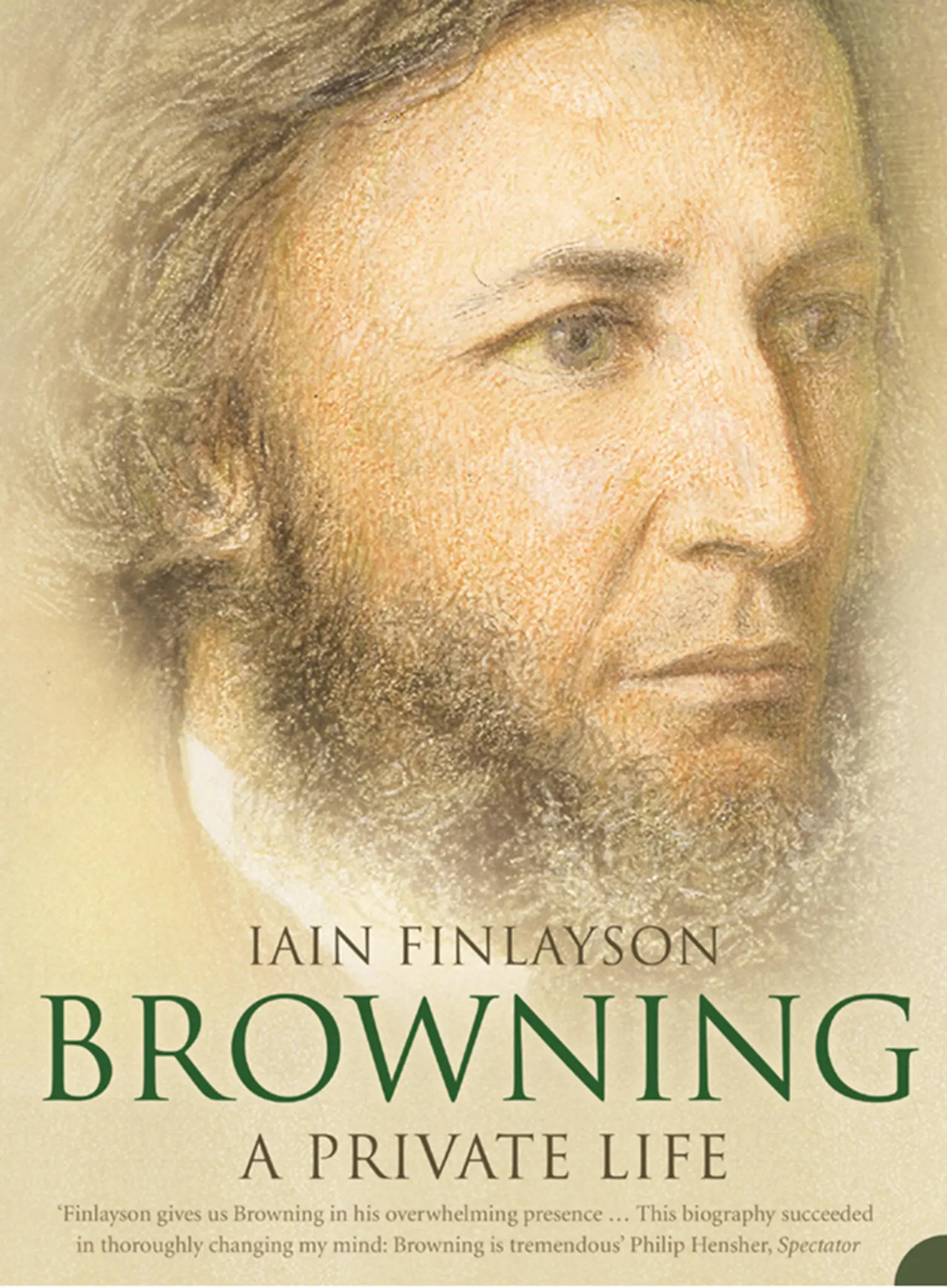
- Название:Browning
- Автор:
- Жанр:
- Год:неизвестен
- ISBN:нет данных
- Рейтинг книги:5 / 5. Голосов: 1
-
Избранное:Добавить в избранное
- Отзывы:
-
Ваша оценка:
Browning: краткое содержание, описание и аннотация
Предлагаем к чтению аннотацию, описание, краткое содержание или предисловие (зависит от того, что написал сам автор книги «Browning»). Если вы не нашли необходимую информацию о книге — напишите в комментариях, мы постараемся отыскать её.
Browning — читать онлайн ознакомительный отрывок
Ниже представлен текст книги, разбитый по страницам. Система сохранения места последней прочитанной страницы, позволяет с удобством читать онлайн бесплатно книгу «Browning», без необходимости каждый раз заново искать на чём Вы остановились. Поставьте закладку, и сможете в любой момент перейти на страницу, на которой закончили чтение.
Интервал:
Закладка:
This ideal represented Macready’s conventional middle-class Victorianism crossed with his passionate egalitarianism, which, much as it reprobated the vile standards of the stage, also snobbishly scorned the high disdain and low virtue of society. Unfortunately for Macready, the English stage and its audiences resisted his energetic idealism.
On 27 November, Macready presented himself for dinner at the house of William Johnson Fox in Bayswater. ‘I like Mr Fox very much,’ wrote Macready in his diary entry for that day; ‘he is an original and profound thinker, and most eloquent and ingenious in supporting the penetrating views he takes.’ From which encomium we may take it that Macready and Fox harmoniously agreed, or amiably agreed to disagree, on most political, religious, and artistic matters. The evening got better still. ‘Mr Robert Browning, the author of Paracelsus , came in after dinner; I was very much pleased to meet him. His face is full of intelligence. My time passed most agreeably. Mr Fox’s defence of the suggestion that Lady Macbeth should be a woman of delicate and fragile frame pleased me very much, though he opposed me, and of course triumphantly. I took Mr Browning on, and requested to be allowed to improve my acquaintance with him. He expressed himself warmly, as gratified by the proposal; wished to send me his book; we exchanged cards and parted.’ The acquaintance warmed to the degree that on 31 December, the last day of 1835, Browning and five other guests were regaled with a dinner at Macready’s house where ‘Mr Browning was very popular with the whole party; his simple and enthusiastic manner engaged attention and won opinions from all present; he looks and speaks more like a youthful poet than any man I ever saw.’ 58
Macready thought it noteworthy to write in his diary on 1 February 1836 that John Forster ‘was talking much of Browning, who is his present all-in-all ’. On 16 February, after one or two casual meetings, the acquaintance between Macready and Robert began to catch in earnest, to develop from personal friendship to professional association: ‘Forster and Browning called, and talked over the plot of a tragedy which Browning had begun to think of: the subject, Narses—a victorious general in the time of the Roman Emperor Justinian. He said that I had bit him by my performance of Othello, and I told him I hoped I should make the blood come. It would indeed be some recompense for the miseries, the humiliations, the heart-sickening disgusts which I have endured in my profession if, by its exercise, I had awakened a spirit of poetry whose influence would elevate, ennoble, and adorn our degraded drama. May it be!’
Robert was not only balm for Macready’s suffering professional soul; he found him personally soothing. Forster and the rest could be rumbustious and depressing: ‘My nerves and spirits were quite quelled by them all’; but Browning’s ‘gentle manners always make his presence acceptable’. 59 Paracelsus , on the evidence of Macready’s diary entry for 8 December 1835—the day he finished reading the poem and set himself to considering it with the same professional eye of a player that he had brought to Talfourd’s Ion —would not do as drama—(which Robert had never intended that it should). The ‘main design of the poem’, according to Macready, ‘is not made out with sufficient clearness, and obscurity is a fault in many passages’. That said, however, he admitted the poem’s ‘most subtle and penetrating search into the feelings and impulses of our nature, some exquisite points of character, the profoundest and the grandest thoughts and most musically uttered. The writer is one whom I think destined for very great things.’
John Forster had been invited as a guest to Macready’s New Year’s Eve dinner at Elm Place, his house in the rural village of Elstree, and so it was by no remote chance that both Forster and Robert happened to be waiting with other Macready invitees earlier in the day at the ‘Blue Posts’ in Holborn, a boarding stage, for the same rumbling and bumping Billing’s coach that Macready himself used almost daily in his journeys to his London chambers from his country home and back again. Mrs Orr says that the introduction between Forster and Robert took place at Macready’s house, whereupon Forster inquired, ‘Did you see a little notice of you I wrote in the Examiner ?’ From this point on, Forster and Robert seem to have been pretty constantly together. It was at Elm Place, too, that Robert first met Miss Euphrasia Fanny Haworth, a neighbour of Macready’s, a young woman some ten or eleven years older than Robert, interested in art and literature.
Narses was abandoned as a probable dramatic subject, and no more was heard of Forster’s and Browning’s interest in writing for the theatre, and for Macready in particular, until a few months later in 1826, when Macready acted in a production of Talfourd’s Ion at Covent Garden. The first night, dedicated as a benefit night for Macready (who, after thirteen years, had just abandoned Drury Lane and its abominable manager Alfred Bunn), was on 26 May. Macready, having taken the principal role before a starry audience of literary and legal luminaries, social celebrities, politicians, and peers, was ‘called for very enthusiastically by the audience and cheered on my appearance most heartily. I said: “It would be affectation to conceal the particular pleasure in receiving their congratulatory compliment on this occasion. It was indeed most gratifying to me; and only checked by the painful consideration that this might be perhaps the last new play I ever might have the honour of producing before them. (Loud cries of ‘No No!’) However that might be, the grateful recollection of their kindness would never leave me.”’
Macready repaired after the performance to Talfourd’s house in nearby Russell Square, where he ‘met Wordsworth, who pinned me; Walter Savage Landor, to whom I was introduced, and whom I very much liked; Stanfield, Browning, Price, Miss Mitford—I cannot remember them all.’ 60 There were some sixty people in all, crowding around one another in congratulatory mode. Macready was placed at the supper table between Landor and Wordsworth, with Browning opposite—which speaks well for Robert’s own status in the company. Macready perhaps forgot or omitted to give some detail in his diary for this tremendous day, but Mrs Orr supplies the information that when Talfourd proposed a toast to the poets of England, Robert was included in their number, named by his host as the author of Paracelsus , and he stayed put in his chair while glasses were raised to him; according to Griffin and Minchin, Wordsworth ‘leaned across the table and remarked, “I am proud to drink your health, Mr Browning!”’ 61 This story is rubbished by Betty Miller, who points out that Robert had never much liked Wordsworth’s poetry or his politics and would not have been particularly flattered by the grand old placeman’s compliment—even if Wordsworth had been there to make it: he had gone home before the toasts were offered. The story has survived even the firm evidence that contradicts it.
Years later, on 24 February 1875, Robert wrote to the Revd Alexander B. Grosart to explain, with some embarrassment, why he had attacked Wordsworth in ‘The Lost Leader’, a poem published in Dramatic Romances and Lyrics in 1845: ‘I did in my hasty youth presume to use the great and venerable personality of Wordsworth as a sort of painter’s model; one from which this or the other particular feature may be selected and turned to account: had I intended more, above all, such a boldness as portraying the entire man, I should not have talked about “handfuls of silver and bits of ribbon.” These never influenced the change of politics in the great poet; whose defection, nevertheless, accompanied as it was by a regular about-face of his special party, was to my juvenile apprehension, and even mature consideration, an event to deplore.’
Читать дальшеИнтервал:
Закладка:
Похожие книги на «Browning»
Представляем Вашему вниманию похожие книги на «Browning» списком для выбора. Мы отобрали схожую по названию и смыслу литературу в надежде предоставить читателям больше вариантов отыскать новые, интересные, ещё непрочитанные произведения.







Обсуждение, отзывы о книге «Browning» и просто собственные мнения читателей. Оставьте ваши комментарии, напишите, что Вы думаете о произведении, его смысле или главных героях. Укажите что конкретно понравилось, а что нет, и почему Вы так считаете.