Iain Finlayson - Browning
Здесь есть возможность читать онлайн «Iain Finlayson - Browning» — ознакомительный отрывок электронной книги совершенно бесплатно, а после прочтения отрывка купить полную версию. В некоторых случаях можно слушать аудио, скачать через торрент в формате fb2 и присутствует краткое содержание. Жанр: unrecognised, на английском языке. Описание произведения, (предисловие) а так же отзывы посетителей доступны на портале библиотеки ЛибКат.
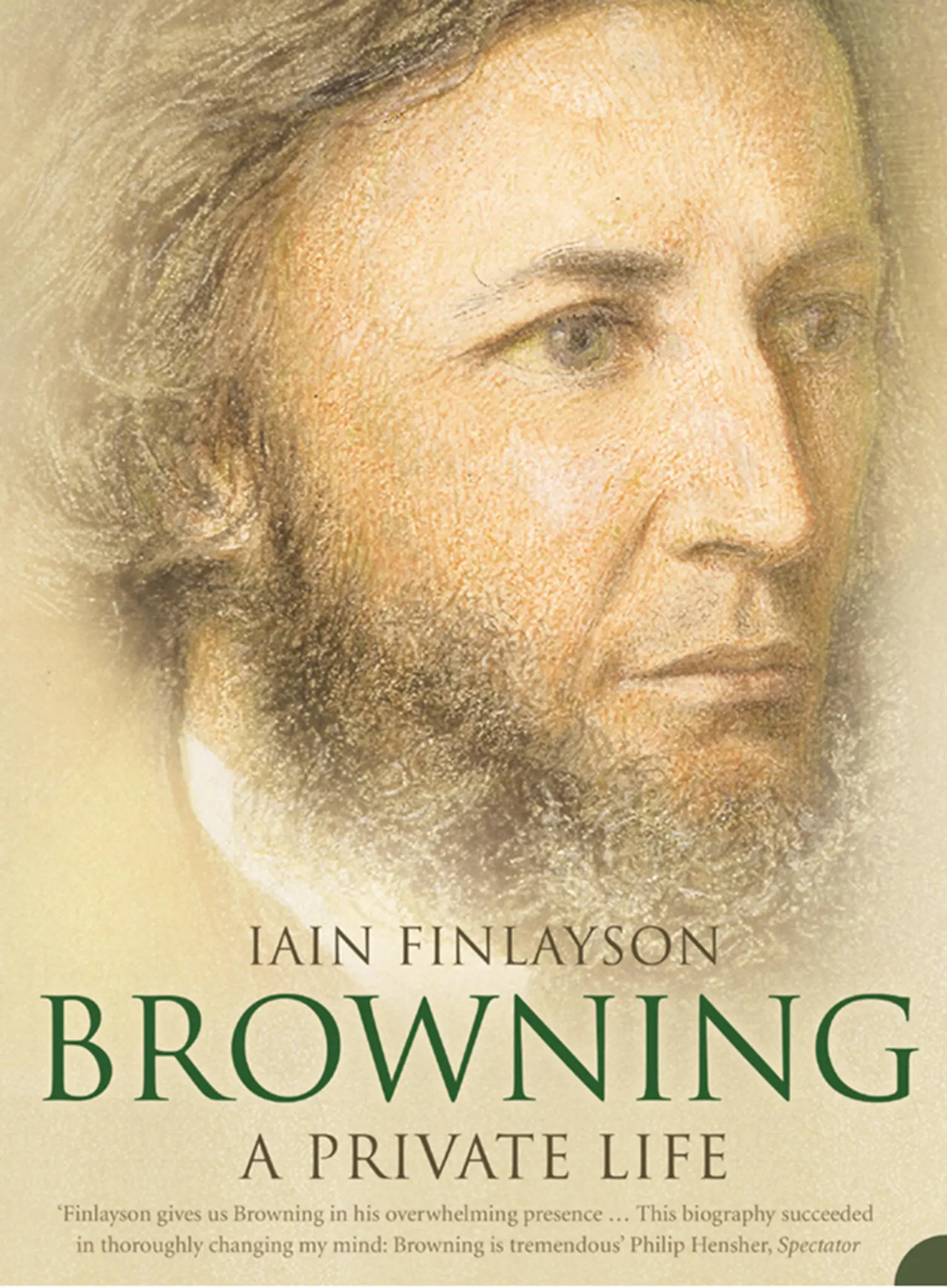
- Название:Browning
- Автор:
- Жанр:
- Год:неизвестен
- ISBN:нет данных
- Рейтинг книги:5 / 5. Голосов: 1
-
Избранное:Добавить в избранное
- Отзывы:
-
Ваша оценка:
Browning: краткое содержание, описание и аннотация
Предлагаем к чтению аннотацию, описание, краткое содержание или предисловие (зависит от того, что написал сам автор книги «Browning»). Если вы не нашли необходимую информацию о книге — напишите в комментариях, мы постараемся отыскать её.
Browning — читать онлайн ознакомительный отрывок
Ниже представлен текст книги, разбитый по страницам. Система сохранения места последней прочитанной страницы, позволяет с удобством читать онлайн бесплатно книгу «Browning», без необходимости каждый раз заново искать на чём Вы остановились. Поставьте закладку, и сможете в любой момент перейти на страницу, на которой закончили чтение.
Интервал:
Закладка:
Amédée and Robert struck up an immediate, intimate friendship: they talked no doubt of royalty and republicanism, though they probably discussed art and poetry more than politics; they would have talked of France, particularly of Paris, and Robert’s French—already reliable enough to have enabled him to write part of Pauline in good French—would have become even more polished. The young Frenchman introduced Robert to the works of Balzac and the new French realist writers, he sketched his new friend’s portrait, and at some point or other he suggested the life of Paracelsus, the Renaissance alchemist and physician, as the subject of Robert’s next major poem. He then thought better of the idea, ‘because it gave no room for the introduction of love about which every young man of their age thought he had something quite new to say’. 49 But too late, too late to withdraw the suggestion: besides, Robert had already dealt with love in Pauline , and there had been precious little profit in that. Better, perhaps, to steer clear for the time being, take another tack.
Though two or three months of preliminary research (‘in the holes and corners of history’, as Chesterton likes to put it) had been necessary, Paracelsus was already a familiar-enough character to Robert: there was the entry in the Biographie Universelle on his father’s shelves; there was the Frederick Bitiskius three-volume folio edition of Paracelsus’ works; there were relevant medical works to hand, including a little octavo of 1620, the Vitœ Germanorum Medicorum of Melchior Adam, with which he was already acquainted from his recent interest in medicine. By mid-March 1835, interrupting a work in progress called Sordello , which he had begun a couple of years earlier in March 1833, Robert had written a full manuscript entitled Paracelsus , a poem of 4,152 lines which was ‘Inscribed to Amédée de Ripert-Monclar by his affectionate friend R.B.’. This dedication was dated ‘London: 15 March 1835’. Paracelsus , divided into five scenes and featuring four characters, had taken Robert just over five months to complete. It was published at his father’s expense by Effingham Wilson, of the Royal Exchange, on 15 August 1835. Saunders and Otley had declined the privilege of publishing the poem, and it had taken some trouble and influence to induce even Effingham Wilson, a small publisher, to undertake the job. Wilson published Paracelsus , says Mrs Orr, more ‘on the ground of radical sympathies in Mr Fox and the author than on that of its intrinsic worth.’ 50
In a preliminary letter of 2 April 51 to William Johnson Fox, Robert requested an introduction to Fox’s neighbour, Edward Moxon, printer and publisher of Dover Street, Piccadilly, ‘on account of his good name and fame among author-folk, besides he has himself written—as the Americans say—“more poetry ’an you can shake a stick at”’. Moxon was a high-flying old bird to be expected to notice a fledgling fresh out of the nest and bumping near to the ground like Robert Browning. Thirty-four years of age in 1835, when he gave up writing his own poetry, Moxon was less distinguished as a poet than as a publisher and bookseller. Leigh Hunt wittily described him as ‘a bookseller among poets, and a poet among booksellers’. The remark has stuck to Moxon, who in 1830 had established his business which quickly acquired a reputation for publishing poetry of high quality by a remarkable list of poets including Shelley, Keats, Coleridge, Lamb (who introduced many of them to Moxon), Southey, Clare, Wordsworth, and Tennyson, who became Moxon’s close friend. Leigh Hunt remarked that ‘Moxon has no connection but with the select of the earth’, which was intended satirically but may have been true enough in literary terms, implying a discrimination that has proved itself in posterity and went far beyond the terms of mere business in Moxon’s defence of his poets against the famous attacks by Lockhart and the rest of the Scots critics of Blackwood’s , the Edinburgh and the Quarterly reviews.
On 16 April 1835 52 Robert again wrote to Fox to report on a visit to Moxon, whose ‘visage loured exceedingly’ and ‘the Moxonian accent grew dolorous’ on perusal of a recommendatory letter by Charles Cowden Clarke (who had been a close friend of Keats, and was now a friend of Fox) which Robert presented to him. This was not encouraging; even less encouraging was Moxon’s view of the poetry written by some of Robert’s tremendous contemporaries, far less a work by someone virtually unknown. Moxon gloomily revealed that Philip von Artevelde , a long dramatic poem by Sir Henry Taylor that had excited the Athenaeum , normally decorous, to rave enthusiastically in fifteen columns just the year before, had ‘not paid expenses by about thirty odd pounds’. Furthermore, ‘Tennyson’s poetry’, said Moxon, ‘is “popular at Cambridge” and yet of 800 copies which were printed of his last, some 300 only have gone off: Mr M[oxon] hardly knows whether he shall ever venture again, etc. etc., and in short begs to decline even inspecting, etc. etc.’ Poetry could no longer be relied upon as a paying proposition.
Robert offered to read his poem to Fox some morning, ‘though I am rather scared of a fresh eye going over its 4000 lines … yet on the whole I am not much afraid of the issue … I shall really need your notice on this account’; and finished off his letter with some heavy humorous flourishes that included a discreet swipe at John Stuart Mill advising him not to be an ‘idle spectator’ of Robert’s first appearance on a public stage (‘having previously only dabbled in private theatricals’). Paracelsus was to be Robert’s première, his big first night with the critics, who were invited to attend and advised to pay attention, ‘benignant or supercilious’ as Mill in particular should choose, but ‘he may depend that tho’ my “Now is the winter of our discontent” be rather awkward, yet there shall be occasional outbreaks of good stuff—that I shall warm as I get on, and finally wish “Richmond at the bottom of the seas,” etc. in the best style imaginable.’
Paracelsus received mixed reviews from those critics who did not pass it over in silence entirely. The reviewer for the Athenaeum gave the poem a brief, lukewarm notice in 73 words on 22 August 1835, reluctantly recognizing ‘talent in this dramatic poem’ but warning against facile imitation of Shelley’s ‘mysticism and vagueness’ in a work the reviewer found ‘dreamy and obscure’. There was worse from some other reviewers whose notices Robert, if he did not take them to heart as guides to future good poetic conduct, at least bore as scabs on his mind and as scars in his soul. He still scratched at them a decade later. On 17 September 1845, in a letter to Elizabeth Barrett, he recalled ‘more than one of the reviews and newspapers that laughed my “Paracelsus” to scorn ten years ago’ and contrasted, in a further letter to her of 9 December 1845, ‘that my own “Paracelsus”, printed a few months before, had been as dead a failure as “Ion” [by Thomas Noon Talfourd] a brilliant success … I know that until Forster’s notice in the Examiner appeared, every journal that thought it worth while to allude to the poem at all, treated it with entire contempt.’ Fox contributed a tardy review in the Monthly Repository in November: Robert had read Paracelsus aloud to him and they had discussed the poem, so he had had the benefit of the poet’s own industry, ideas and intentions to draw upon in his favourable notice, which declared the work to be ‘the result of thought, skill and toil’ and not—as the Athenaeum had judged it—a dreamy and obscure effusion. Paracelsus was not only a poem, declared Fox, but a poem with ideas.
Читать дальшеИнтервал:
Закладка:
Похожие книги на «Browning»
Представляем Вашему вниманию похожие книги на «Browning» списком для выбора. Мы отобрали схожую по названию и смыслу литературу в надежде предоставить читателям больше вариантов отыскать новые, интересные, ещё непрочитанные произведения.






Обсуждение, отзывы о книге «Browning» и просто собственные мнения читателей. Оставьте ваши комментарии, напишите, что Вы думаете о произведении, его смысле или главных героях. Укажите что конкретно понравилось, а что нет, и почему Вы так считаете.