Iain Finlayson - Browning
Здесь есть возможность читать онлайн «Iain Finlayson - Browning» — ознакомительный отрывок электронной книги совершенно бесплатно, а после прочтения отрывка купить полную версию. В некоторых случаях можно слушать аудио, скачать через торрент в формате fb2 и присутствует краткое содержание. Жанр: unrecognised, на английском языке. Описание произведения, (предисловие) а так же отзывы посетителей доступны на портале библиотеки ЛибКат.
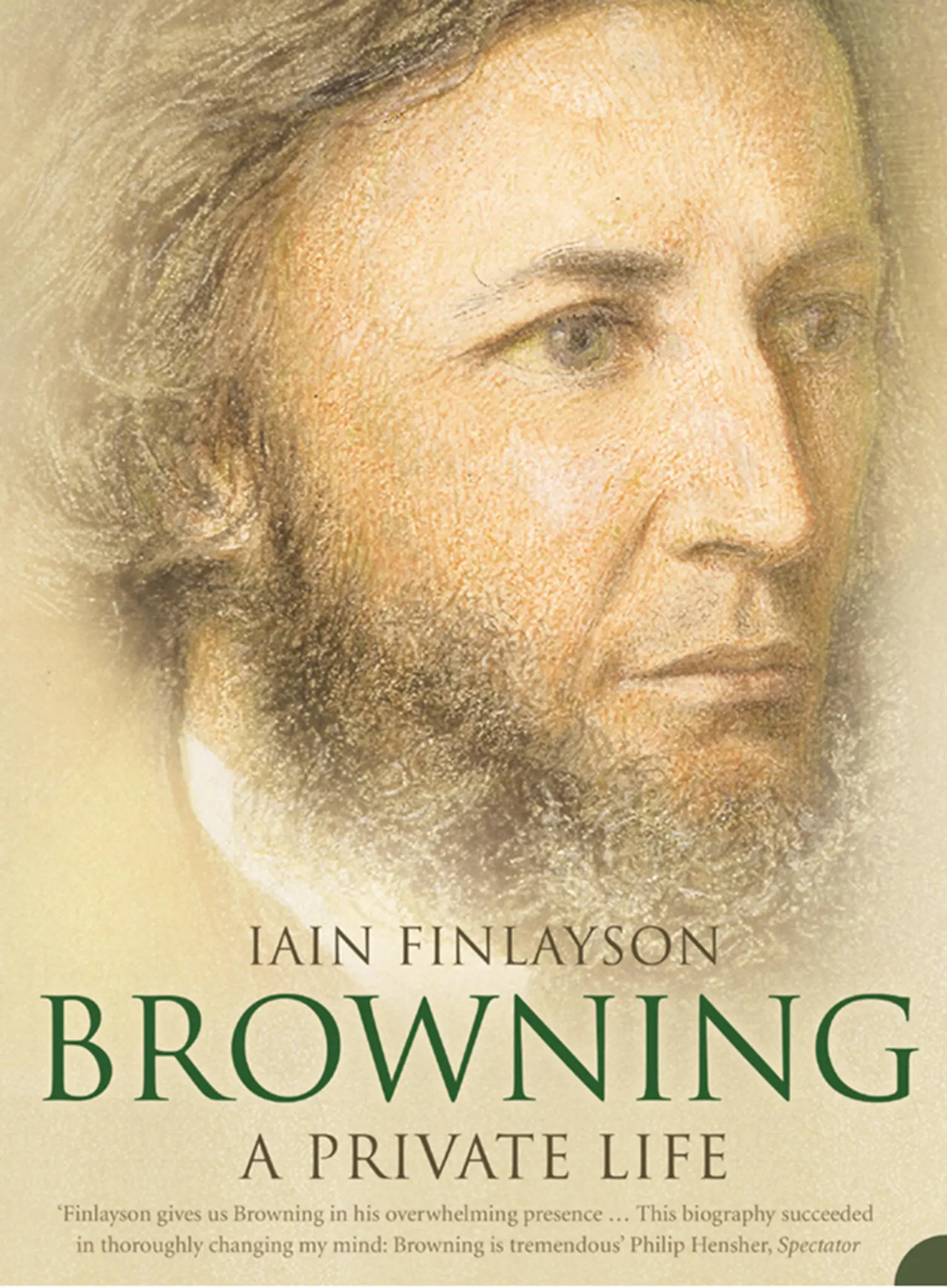
- Название:Browning
- Автор:
- Жанр:
- Год:неизвестен
- ISBN:нет данных
- Рейтинг книги:5 / 5. Голосов: 1
-
Избранное:Добавить в избранное
- Отзывы:
-
Ваша оценка:
Browning: краткое содержание, описание и аннотация
Предлагаем к чтению аннотацию, описание, краткое содержание или предисловие (зависит от того, что написал сам автор книги «Browning»). Если вы не нашли необходимую информацию о книге — напишите в комментариях, мы постараемся отыскать её.
Browning — читать онлайн ознакомительный отрывок
Ниже представлен текст книги, разбитый по страницам. Система сохранения места последней прочитанной страницы, позволяет с удобством читать онлайн бесплатно книгу «Browning», без необходимости каждый раз заново искать на чём Вы остановились. Поставьте закладку, и сможете в любой момент перейти на страницу, на которой закончили чтение.
Интервал:
Закладка:
Paracelsus partook of the times not only in the experimental nature of its form, for the first half of the nineteenth century was an age of experiments and advances: it positively incorporated new thinking and new ideas and conflated them with the occult wisdom of the Renaissance, another distinct period of new thinking, new art, new science, and new technology. In The Life of Robert Browning , Clyde de L. Ryals 54 points to Browning’s assimilation of late eighteenth-and early nineteenth-century scientific findings in biology, geology, and other sciences, to the extent that he was later to claim, very reasonably, that Paracelsus had anticipated Darwin’s On the Origin of Species (published in 1859) by some quarter of a century. Objecting to an assertion that he had ever been ‘strongly against Darwin, rejecting the truths of science and regretting its advance’, Robert only had to look back to find ‘all that seemed proved in Darwin’s scheme was a conception familiar to me from the beginning: see in Paracelsus the progressive development from senseless matter to organized, until man’s appearance.’ 55
Since all things are in nature, and Paracelsus was a natural philosopher and scientist, inexhaustibly desirous to plumb the secrets of nature (in Renaissance terms, an alchemist), it is hardly surprising that he appealed to Robert Browning as a bridge between science as it had been understood by the ancients and the perception of science by savants in his own age. Science itself was appropriate as a convenient vehicle for comment upon the facts of life that have always been known in one way or another, in one philosophy or another, but have been variously interpreted, when not entirely lost or forgotten or ignored, from generation to generation.
When Paracelsus died in 1541, he disappeared from the ken of all but the most esoteric scholars. Chesterton comments, wonderingly, on Browning’s choice of poetic protagonists—‘the common characteristic of all these persons is not so much that they were of importance in their day as that they are of no importance in ours’. In his choice of Paracelsus, Browning’s ‘supreme type of the human intellect is neither the academic nor the positivist, but the alchemist. It is difficult to imagine a turn of mind constituting a more complete challenge to the ordinary modern point of view. To the intellect of our time the wild investigators of the school of Paracelsus seem to be the very crown and flower of futility, they are collectors of straws and careful misers of dust. But for all that’, says Chesterton, ‘Browning was right.’ There could have been no better choice than Paracelsus, claims Chesterton, for Browning’s study of intellectual egotism and, he says, the choice equally refutes any charge against Browning himself that he was a frigid believer in logic and a cold adherent of the intellect—the proof being that at the age of twenty-three Browning wrote a poem designed to destroy the whole of this intellectualist fallacy.
The entire poem is daringly experimental in form and philosophy: in both respects, it attempts to strip away the phenomenal world to reveal the noumenal world; to strip man of his physical integuments and reveal his psychical nakedness; to bare nature and reveal the natural. In the process, Robert Browning somewhat stripped himself psychologically bare: Paracelsus , for all his resolution after the personal revelations in Pauline , could not help but import some of his own state of mind and being into his work. Authors almost invariably write out of their own state of mind and being—there’s no help for it except rigorous self-awareness which is difficult consciously to attain, improbable to try to impose, and almost impossible thereafter to maintain.
The last thing Paracelsus was intended to be was confessional, but as Betty Miller acutely points out, two of the characters in the poem—Michal (M for Mother) and Festus (F for Father)—can be interpreted as Mr and Mrs Browning. They speak ‘out of the social and domestic environment of Robert Browning himself’. They ‘reveal, and with a singular candour on the part of their creator, the attitude of Browning’s own father and mother towards their brilliant, if ill-comprehended son’. In the discussions between the sober Festus, the gentle Michal, and the impatient, aspiring student Paracelsus, she says, ‘we catch an echo of the family conflict that preceded … the renunciation of a practical for a poetic career’.
Anyone familiar even with the barest biographical details of Robert’s life at this time, and beginning to read Paracelsus , will immediately grant the truth of Betty Miller’s astute psychological insight. It is perfectly plain, the entire difficult crisis; there it is, unmistakably recognizable in the pages, more harrowingly true to the turbulent family emotions and Browning’s own deepest feelings than any second-hand biographical fact and fancy can conjure. But then, too, as Ryals suggests, Paracelsus moves ‘back and forth between enthusiastic creation of a construct or fiction and sceptical de-creation of it when as “truth” or mimesis it is subjected to scrutiny’. 56 With a poet as self-conscious at this time as Robert Browning, it should not easily be assumed that he would be unaware of using, even in disguise, his own life, its events and emotions; that he was not capable of a conjuror’s sleight-of-hand with a pack of cards, or an alchemist’s trick of turning lead into gold; that he would not make and unmake even these materials—now you see them, now you don’t; now lead, now gold—with as much ruthless facility as any others.
There is no real dispute, either, about Betty Miller’s judgement that, ‘In form, Paracelsus lies between the confessional of Pauline and the theatrical on which Browning wasted so many years. It is the closest of his early works to the dramatic monologues of his best period.’ Paracelsus did not make money for Browning, but it profited his reputation mightily. Future works would be styled and recommended as being ‘By the author of Paracelsus ’. At the age of twenty-three, Robert Browning was a candidate for fame within London literary and theatrical circles. Paracelsus did not entitle him to a named and reserved seat in the Academy, far less the Siege Perilous at the literary round table; but he went confidently out and about, elegant and accomplished, affable and amusing, loquacious and learned, marked by those who mattered in the contemporary court of the London literati.
On 6 May 1835, the great actor-manager William Charles Macready was catching up with the most improving new books, reading ‘the pleasing poem of Van Artevelde ’ that had so distressed Edward Moxon by its failure to recoup its costs. Reaching his London chambers, he found ‘Talfourd’s play of Ion in the preface to which is a most kind mention of myself’. Later in the day he called on the famously provocative young dramatic and literary critic John Forster, who was agitatedly considering a duel in Devonshire before thinking better of it. 57 Macready was forty-two years old, and had succeeded to the place vacated on the English stage by the death of the actor Edmund Kean, whose grotesque, pathetic last performance of Richard III at Richmond had so much impressed and inspired Robert.
Macready was less barnstorming than Kean, who had acted vividly in the best Romantic manner, and he was certainly more seriously, in terms of intellect and artistry, attentive to the texts he produced and performed. He was ambitious, not only personally but for the English stage as a whole. Kean’s behaviour and attitudes, Macready considered, had brought the business of acting (‘my pariah profession’) into disrepute—though the low reputation of the English stage had never been higher than the sensational moral history of its best-known reprobates and its lowest hangers-on. It was Macready’s duty, as a rectitudinous Victorian—and, as he privately admitted, a reprehensibly envious rival of the disgraceful Kean—to raise the cultural level of the theatre to the virtue attained by the finest of the fine arts, to the most salubrious literary heights; in short, to purge the theatre of its most vicious elements and inspire it to the highest moral and artistic standards.
Читать дальшеИнтервал:
Закладка:
Похожие книги на «Browning»
Представляем Вашему вниманию похожие книги на «Browning» списком для выбора. Мы отобрали схожую по названию и смыслу литературу в надежде предоставить читателям больше вариантов отыскать новые, интересные, ещё непрочитанные произведения.





Обсуждение, отзывы о книге «Browning» и просто собственные мнения читателей. Оставьте ваши комментарии, напишите, что Вы думаете о произведении, его смысле или главных героях. Укажите что конкретно понравилось, а что нет, и почему Вы так считаете.