Iain Finlayson - Browning
Здесь есть возможность читать онлайн «Iain Finlayson - Browning» — ознакомительный отрывок электронной книги совершенно бесплатно, а после прочтения отрывка купить полную версию. В некоторых случаях можно слушать аудио, скачать через торрент в формате fb2 и присутствует краткое содержание. Жанр: unrecognised, на английском языке. Описание произведения, (предисловие) а так же отзывы посетителей доступны на портале библиотеки ЛибКат.
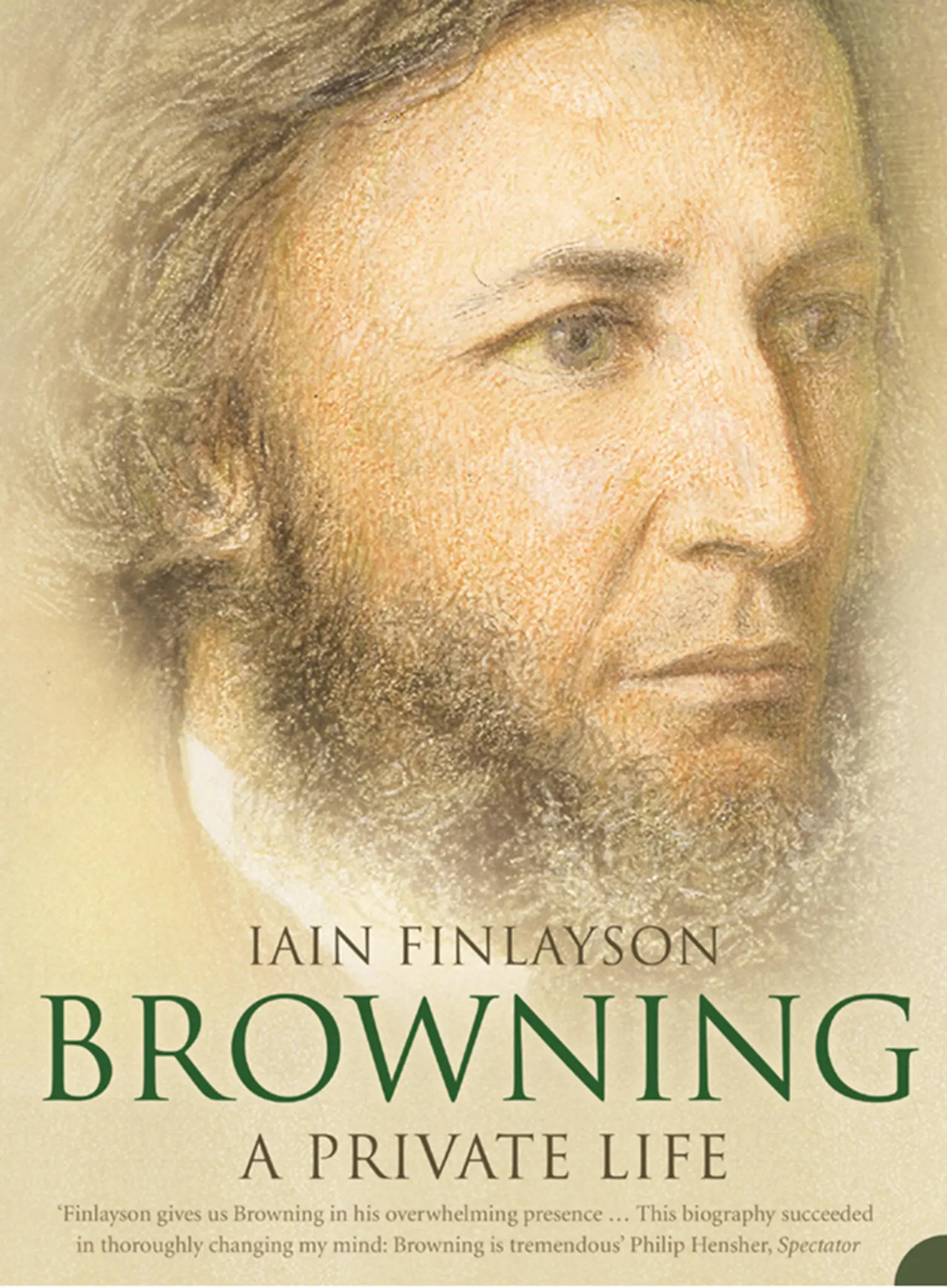
- Название:Browning
- Автор:
- Жанр:
- Год:неизвестен
- ISBN:нет данных
- Рейтинг книги:5 / 5. Голосов: 1
-
Избранное:Добавить в избранное
- Отзывы:
-
Ваша оценка:
Browning: краткое содержание, описание и аннотация
Предлагаем к чтению аннотацию, описание, краткое содержание или предисловие (зависит от того, что написал сам автор книги «Browning»). Если вы не нашли необходимую информацию о книге — напишите в комментариях, мы постараемся отыскать её.
Browning — читать онлайн ознакомительный отрывок
Ниже представлен текст книги, разбитый по страницам. Система сохранения места последней прочитанной страницы, позволяет с удобством читать онлайн бесплатно книгу «Browning», без необходимости каждый раз заново искать на чём Вы остановились. Поставьте закладку, и сможете в любой момент перейти на страницу, на которой закончили чтение.
Интервал:
Закладка:
Wordsworth had abandoned liberalism, Robert’s preferred political position, and by so doing he had proved himself, in Robert’s estimation, that most disgraceful and detestable thing—a traitor. Throughout Robert’s poetical canon there are hissing references to the turpitudinous characters of turncoats. Unpleasant revenges, as unsparing as in Dante’s Inferno, are invented for them.
Just for a handful of silver he left us,
Just for a riband to stick in his coat—
Found the one gift of which fortune bereft us,
Lost all the others she lets us devote … 62
There will be further occasions on which we will recognize that Robert Browning could be a good hater for the sake of conscience; this is one of the first and most significant. Wordsworth, heaped with honours, eulogized by friends and literary partisans such as Harriet Martineau, had become Poet Laureate in 1843. He had become, too, an object of absolute disgust for Robert, whose poem pulled no punches. This was not satire, this was not an elegant swipe: ‘The Lost Leader’ was a seriously-intended piece of lethal invective that found its mark not only through Robert’s authentic outrage but through his authentic poetic voice. His counterblast has stood as long as Wordsworth’s poetic reputation, and its venomous sting still poisons the old man in posterity.
There are other contradictions and misapprehensions concerning Talfourd’s famous party, none of them too surprising. It was a party celebrating a significant occasion; it was a party boiling and roiling with writers, actors, quantities of poets, lawyers, and journalists; and if it wasn’t an occasion for binding up old wounds and gouging open new ones, settling old scores and setting new grudges, for giving gossip and getting things wrong, then it can’t have been much of a party. But in fact it was all those things and more—it was a wonderful party. The more it is recalled, the more legends it accretes. The Ion supper is a sort of early Victorian charabanc, standing room only, for every notable of the period bundled and bumped together and bowled along, fired by their own fissiparous energies. Robert was noticed by one of the guests, Miss Mitford, who never forgot how he looked that night. Ten years or more later, in a letter of 1847, 63 she wrote, ‘I saw Mr Browning once and remember thinking how exactly he resembled a girl drest in boy’s clothes—and as to his poetry I have just your opinion of it—It is one heap of obscurity, confusion and weakness … I met him once as I told you when he had long ringlets and no neckcloth—and when he seemed to me about the height and size of a boy of twelve years old—Femmelette—is a word made for him. A strange sort of person to carry such a woman as Elizabeth Barrett off her feet.’
‘Femmelette’, applied to a man or a woman, means a feeble creature, lacking force and energy, a languishing, listless person, in distinct contrast to Miss Mary Russell Mitford herself, who tended to be pert. In 1836, she was a successful, middle-aged dramatist associated with Macready (who had taken roles in her plays); essayist; sometime poet (set on that path by the encouragement of Coleridge), and famous as the author of the sketches and stories that were published in 1832 as Our Village . Her nature was generally sunny, though she was as capable as anyone—and possibly more than some—of asperity and decided views. Perhaps Robert merely struck Miss Mitford as a little insipid, as at least modestly reserved: it was not his manner then to be full-voiced or conspicuously hearty. He would stand up for himself when necessary, but his mode was essentially placatory, as would be evident later to Macready when he noted Robert’s moderating, calming reaction to the impetuosity and hot-headedness of Forster.
The talk tended towards the literary and theatrical, and Macready ‘overtook Mr Browning as they were leaving the house and said, “Write a play, Browning, and keep me from going to America.” The reply was, “Shall it be historical and English: what do you say to a drama on Strafford?”’ 64 The Earl of Strafford had been in Robert’s mind, and even more to the fore in Forster’s mind since he happened to be writing the lives of Strafford and other statesmen of the period of Charles I, the Civil War, and the Commonwealth. Forster had temporarily stalled on his biographies, due partly to some personal difficulties with the fascinating Laetitia Landon, and Robert had been assisting him with some of the literary work on Strafford. Forster’s Lives of the Statesmen of the Commonwealth was published in parts between 1836 and 1839 and his Life of Strafford had been published just a few weeks before the Ion party. Strafford was very much dans le vent .
Robert, seized by the idea of a great play for a great contemporary actor, delivered a full text some ten months later in March 1837. It might have been sooner—he was a fast writer once he had settled on his subject and theme—had he not been simultaneously working on the poem Sordello , which he had begun shortly after writing Pauline and which had already been displaced, to an extent, by the intervention of Paracelsus. 65 Macready was willing to credit that Strafford , the play, would be his own salvation from some personal professional difficulties and rescue the English stage from the wretched condition into which it had sunk. Any play by Browning, for that matter, might do the trick, for he had surely seen John Forster’s imaginative, puffing article in March, in the New Monthly Magazine , entitled ‘Evidences of a new genius for Dramatic Poetry’, which declared, among other emphatic assertions, that ‘Mr Browning has the powers of a great dramatic poet’ and that his genius ‘waits only the proper opportunity to redeem the drama and elevate the literary repute of England’.
Macready, with his actor’s head sunk into his hands, might have felt his spirits rise a little. On 3 August 1836 Forster told Macready that ‘Browning had fixed on Strafford for the subject of a tragedy’. On 1 November, when Forster reported to Macready on the progress of Browning’s play, he praised it highly, but Macready feared that the young critic and would-be biographer of Strafford might be ‘misled as to its dramatic power; characters to him having the interest of action’. However, ‘Nous verrons! Heaven speed it! Amen!’ Despite pious sentiments, Macready began to feel faintly uneasy.
On 23 November, Macready confided to his diary that he ‘Began very attentively to read over the tragedy of Strafford , in which I find more grounds for exception than I had anticipated. I had been too carried away by the truth of character to observe the meanness of plot, and occasional obscurity.’ On 21 March 1837, when Macready and Robert read through Strafford together, he felt his heart fail. He is frank in his diary entry for that day: ‘I must confess my disappointment at the management of the story. I doubt its interest.’ Familiarity did not improve it. ‘I am by no means sanguine, I lament to say, on its success.’
On 30 March, Macready read the play to Osbaldistone, manager of Covent Garden, ‘who caught at it with avidity, agreed to produce it without delay on his part, and to give the author £12 per night for twenty-five nights, and £10 per night for ten nights beyond … Browning and Forster came in;’ records Macready in his diary for 30 March, ‘I had the pleasure of narrating what had passed between Mr Osbaldiston [ sic ] and myself, and of making Browning very happy.’ Macready suggested some further revisions that Robert ‘was quite enraptured with.’ Forster said he was trying to induce Longman to publish the text of the play. Robert asked if he could dedicate the play to Macready, who said ‘how much I should value such an honour, which I had not anticipated or looked for’. All of them, thoroughly pleased and in the highest good humour with one another and their prospects, looked forward to the production of Strafford , that most interesting new play by that great new dramatic poet Mr Robert Browning, and a stage success on the scale of, or surpassing, Talfourd’s Ion .
Читать дальшеИнтервал:
Закладка:
Похожие книги на «Browning»
Представляем Вашему вниманию похожие книги на «Browning» списком для выбора. Мы отобрали схожую по названию и смыслу литературу в надежде предоставить читателям больше вариантов отыскать новые, интересные, ещё непрочитанные произведения.






Обсуждение, отзывы о книге «Browning» и просто собственные мнения читателей. Оставьте ваши комментарии, напишите, что Вы думаете о произведении, его смысле или главных героях. Укажите что конкретно понравилось, а что нет, и почему Вы так считаете.