Charles S. Cockell - Astrobiology
Здесь есть возможность читать онлайн «Charles S. Cockell - Astrobiology» — ознакомительный отрывок электронной книги совершенно бесплатно, а после прочтения отрывка купить полную версию. В некоторых случаях можно слушать аудио, скачать через торрент в формате fb2 и присутствует краткое содержание. Жанр: unrecognised, на английском языке. Описание произведения, (предисловие) а так же отзывы посетителей доступны на портале библиотеки ЛибКат.
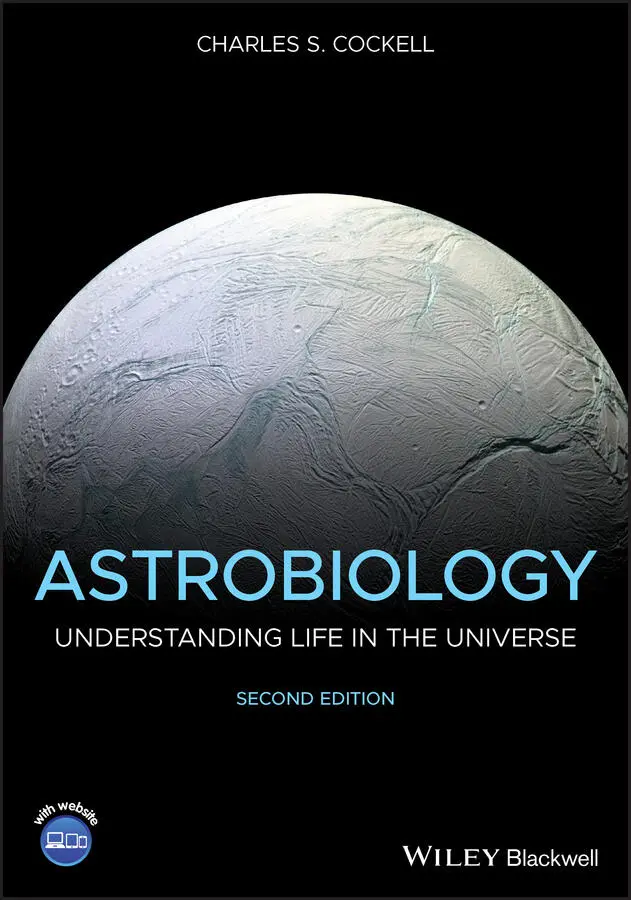
- Название:Astrobiology
- Автор:
- Жанр:
- Год:неизвестен
- ISBN:нет данных
- Рейтинг книги:3 / 5. Голосов: 1
-
Избранное:Добавить в избранное
- Отзывы:
-
Ваша оценка:
Astrobiology: краткое содержание, описание и аннотация
Предлагаем к чтению аннотацию, описание, краткое содержание или предисловие (зависит от того, что написал сам автор книги «Astrobiology»). Если вы не нашли необходимую информацию о книге — напишите в комментариях, мы постараемся отыскать её.
offers an introductory text that explores the structure of living things, the formation of the elements required for life in the Universe, the biological and geological history of the Earth, and the habitability of other planets. Written by a noted expert on the topic, the book examines many of the major conceptual foundations in astrobiology, which cover a diversity of traditional fields including chemistry, biology, geosciences, physics, and astronomy.
The book explores many profound questions such as: How did life originate on Earth? How has life persisted on Earth for over three billion years? Is there life elsewhere in the Universe? What is the future of life on Earth?
is centered on investigating the past and future of life on Earth by looking beyond Earth to get the answers. Astrobiology links the diverse scientific fields needed to understand life on our own planet and, potentially, life beyond. This new second edition:
Expands on information about the nature of astrobiology and why it is useful Contains a new chapter “What is Life?” that explores the history of attempts to understand life Contains 20% more material on the astrobiology of Mars, icy moons, the structure of life, and the habitability of planets New ‘Discussion Boxes’ to stimulate debate and thought about key questions in astrobiology New review and reflection questions for each chapter to aid learning New boxes describing the careers of astrobiologists and how they got into the subject Offers revised and updated information throughout to reflect the latest advances in the field Written for students of life sciences, physics, astronomy and related disciplines, the updated edition of
is an essential introductory text that includes recent advances to this dynamic field.
Astrobiology — читать онлайн ознакомительный отрывок
Ниже представлен текст книги, разбитый по страницам. Система сохранения места последней прочитанной страницы, позволяет с удобством читать онлайн бесплатно книгу «Astrobiology», без необходимости каждый раз заново искать на чём Вы остановились. Поставьте закладку, и сможете в любой момент перейти на страницу, на которой закончили чтение.
Интервал:
Закладка:
The term “natural kind” applies to a substance such as gold, whose characteristics can be exactly defined in terms of its physical properties (Figure 2.13). We can state the molecular mass, melting point, and a range of other definitive physical properties of gold that allow for an exact definition of what it is. The reason that it is a natural kind is that the word gold is used to denote a very specific type of atom. It is limited by something that can be described in very specific physical terms.
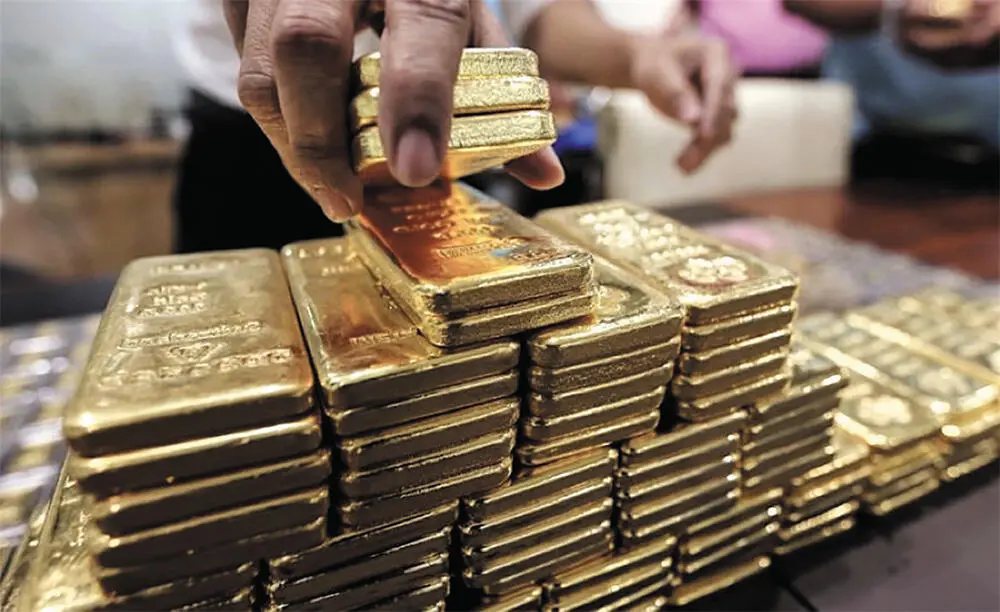
Figure 2.13 Gold can be uniquely defined using physical characteristics such as its melting temperature and atomic mass number. Is life in the same category of object?
A good example of a “non-natural kind” is a “chair” (Figure 2.14). If we define it as “something we can sit on,” then does that make my coffee table a chair? You might reply that a coffee table is not a chair because it has no vertical back on it. I might then show you a stool and claim that it too can therefore not be a chair and is more like a table. Thus, we launch into an endless circular discussion about what a chair is. The conversation is rather pointless because ultimately a chair is simply what we define it to be. If that includes coffee tables then so be it.
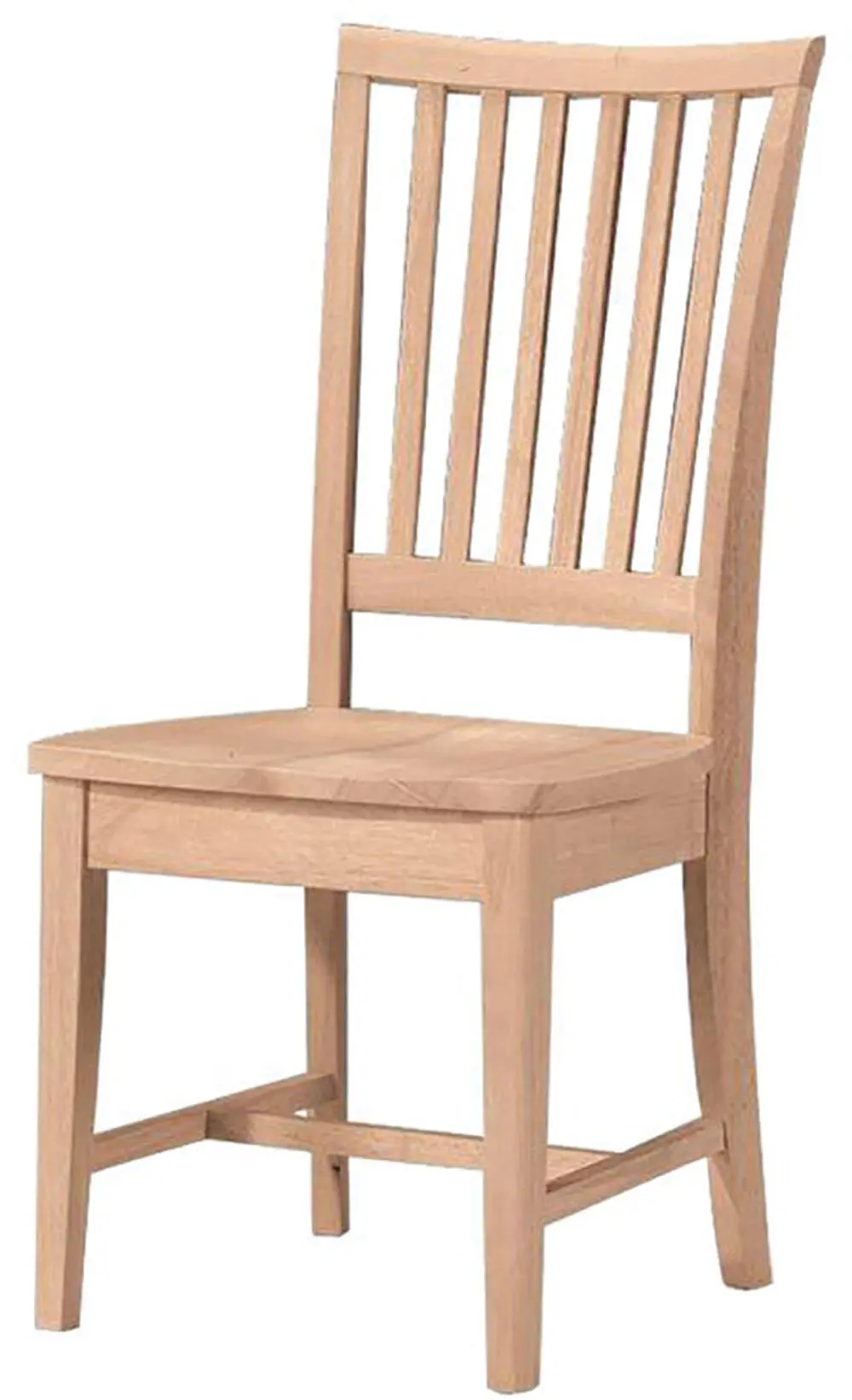
Figure 2.14 Perhaps life is more like a chair? Something whose definition depends more on human categorizations, rather than any fundamental physically derivable difference with other materials.
Similarly, maybe life is just a definition that encompasses an interesting segment of all organic chemistry that happens to do certain things, such as reproducing and growing. If we want to include viruses, then so be it; if not, then so be it. Perhaps the crucial point is that we all attempt to agree on a definition that we are going to use that includes all chemistry we are going to call “life.”
The notion that life might be a human definition and not rooted in physically separable characteristics might make some intuitive sense. Organic chemistry runs along a continuum from simple gases, such as methane, through to more complex organic molecules, through molecules that can replicate, such as certain ribonucleic acids, past molecules wrapped in protein that can replicate if given the correct environment (viruses) through to cellular materials and on to single-celled organisms and multicellular organisms. Perhaps life is a division we place somewhere along this continuum that will inevitably have certain materials whose inclusion on either side of the line will always be a matter of debate.
2.8 Does It Matter Anyway?
There is no doubt that studying the matter that we broadly refer to as “life” is enormously interesting. That is not just because we belong to this subset of matter (although that is certainly one motivation), but because life does do things and exhibits emergent properties that make it interesting as a form of material behavior. In that sense, attempting to refine our understanding of what constitutes and underpins many of these behaviors is an important task in advancing our understanding of this type of matter. However, it may not be possible, or even necessary, to attempt to encapsulate life in definitive single sentences that have no exceptions. Instead, one approach is to formulate operational definitions that broadly capture the type of material we are interested in studying under the term “life.” Joyce's definition, described earlier, is one such approach.
Operational definitions can also circumscribe the type of material we might look for elsewhere in the Universe. For example, to state that one objective of astrobiology is to discover if there are “self-sustaining chemical systems capable of undergoing Darwinian evolution” elsewhere seems like a sound starting point and a reasonable way to agree about the sorts of matter that interest most astrobiologists. Indeed, this definition is a satisfactory basis for the type of material that the rest of this book considers as “life.”
The concept of using working definitions of life may help us resolve some existing problems. For example, the argument about whether viruses are alive is a pervasive one. However, clearly if astrobiologists found virus-like entities on another planet, it would be of enormous interest. Although these entities cannot replicate on their own, and provided they could be shown not to be terrestrial contaminants inadvertently transported to the planet, then their presence would suggest the existence of other perhaps cellular entities, within which they can replicate. From an operational standpoint, the discovery of viruses on another planet would be highly significant. Thus, although we might argue about their place within a definition of life, in terms of the search for life elsewhere, they clearly would fall into the purview of living matter of interest to an astrobiologist. Consequently, from an operational point of view, it seems sensible to include them, and similar sorts of entities, in our quest for “life.”
A working definition of life should not stop us continuing the debate about defining what sort of matter should fall under our category of “life.” Quite apart from refining our understanding of biology, it would be a travesty to destroy some sort of entity elsewhere (if we ever find it) simply because it failed to fit within a narrow definition of life that we have constructed.
2.9 Conclusions
In this chapter, we discussed ideas about “life.” The definition of astrobiology's subject matter – life – has proven to be extremely intractable, but has been a quest for over 2000 years. Ultimately, “life” may be a human-defined term used to encompass a set of organic material of special interest. It may not be possible to reduce it to some simple physically identifiable and definitive sets of characteristics. However, in the absence of a definitive statement on what life is, we can produce working definitions of life that identify the types of matter that interest us and fit within the broad concept of “life.” This allows us to advance our efforts to understand the origin, evolution, and distribution of “life” in the Universe.
Questions for Review and Reflection
1 Write a short essay explaining why providing a single agreed definition of life is difficult.
2 Describe at least two features of things that are generally agreed to be alive. Discuss whether similar or identical features can be found in any other matter that is generally agreed to be non-living.
3 Life does not violate the Second Law of Thermodynamics. Provide at least two lines of evidence for this statement.
4 Discuss and describe one experiment that has been used to disprove spontaneous generation. What are the controls in this experiment?
5 Explain why attempting to derive an agreed upon operational definition of life might be important in searching for life elsewhere.
6 Describe at least one idea held by the ancients about the nature of life and discuss whether you think this idea was completely wrong or whether it had elements of truth in our efforts to understand the nature of living things.
7 What is a “dissipative structure?” Explain the relevance of this concept for understanding life.
8 “A virus is not alive.” Discuss this statement.
Bibliography
Books
Интервал:
Закладка:
Похожие книги на «Astrobiology»
Представляем Вашему вниманию похожие книги на «Astrobiology» списком для выбора. Мы отобрали схожую по названию и смыслу литературу в надежде предоставить читателям больше вариантов отыскать новые, интересные, ещё непрочитанные произведения.






Обсуждение, отзывы о книге «Astrobiology» и просто собственные мнения читателей. Оставьте ваши комментарии, напишите, что Вы думаете о произведении, его смысле или главных героях. Укажите что конкретно понравилось, а что нет, и почему Вы так считаете.