Charles S. Cockell - Astrobiology
Здесь есть возможность читать онлайн «Charles S. Cockell - Astrobiology» — ознакомительный отрывок электронной книги совершенно бесплатно, а после прочтения отрывка купить полную версию. В некоторых случаях можно слушать аудио, скачать через торрент в формате fb2 и присутствует краткое содержание. Жанр: unrecognised, на английском языке. Описание произведения, (предисловие) а так же отзывы посетителей доступны на портале библиотеки ЛибКат.
- Название:Astrobiology
- Автор:
- Жанр:
- Год:неизвестен
- ISBN:нет данных
- Рейтинг книги:3 / 5. Голосов: 1
-
Избранное:Добавить в избранное
- Отзывы:
-
Ваша оценка:
Astrobiology: краткое содержание, описание и аннотация
Предлагаем к чтению аннотацию, описание, краткое содержание или предисловие (зависит от того, что написал сам автор книги «Astrobiology»). Если вы не нашли необходимую информацию о книге — напишите в комментариях, мы постараемся отыскать её.
offers an introductory text that explores the structure of living things, the formation of the elements required for life in the Universe, the biological and geological history of the Earth, and the habitability of other planets. Written by a noted expert on the topic, the book examines many of the major conceptual foundations in astrobiology, which cover a diversity of traditional fields including chemistry, biology, geosciences, physics, and astronomy.
The book explores many profound questions such as: How did life originate on Earth? How has life persisted on Earth for over three billion years? Is there life elsewhere in the Universe? What is the future of life on Earth?
is centered on investigating the past and future of life on Earth by looking beyond Earth to get the answers. Astrobiology links the diverse scientific fields needed to understand life on our own planet and, potentially, life beyond. This new second edition:
Expands on information about the nature of astrobiology and why it is useful Contains a new chapter “What is Life?” that explores the history of attempts to understand life Contains 20% more material on the astrobiology of Mars, icy moons, the structure of life, and the habitability of planets New ‘Discussion Boxes’ to stimulate debate and thought about key questions in astrobiology New review and reflection questions for each chapter to aid learning New boxes describing the careers of astrobiologists and how they got into the subject Offers revised and updated information throughout to reflect the latest advances in the field Written for students of life sciences, physics, astronomy and related disciplines, the updated edition of
is an essential introductory text that includes recent advances to this dynamic field.
Astrobiology — читать онлайн ознакомительный отрывок
Ниже представлен текст книги, разбитый по страницам. Система сохранения места последней прочитанной страницы, позволяет с удобством читать онлайн бесплатно книгу «Astrobiology», без необходимости каждый раз заново искать на чём Вы остановились. Поставьте закладку, и сможете в любой момент перейти на страницу, на которой закончили чтение.
Интервал:
Закладка:
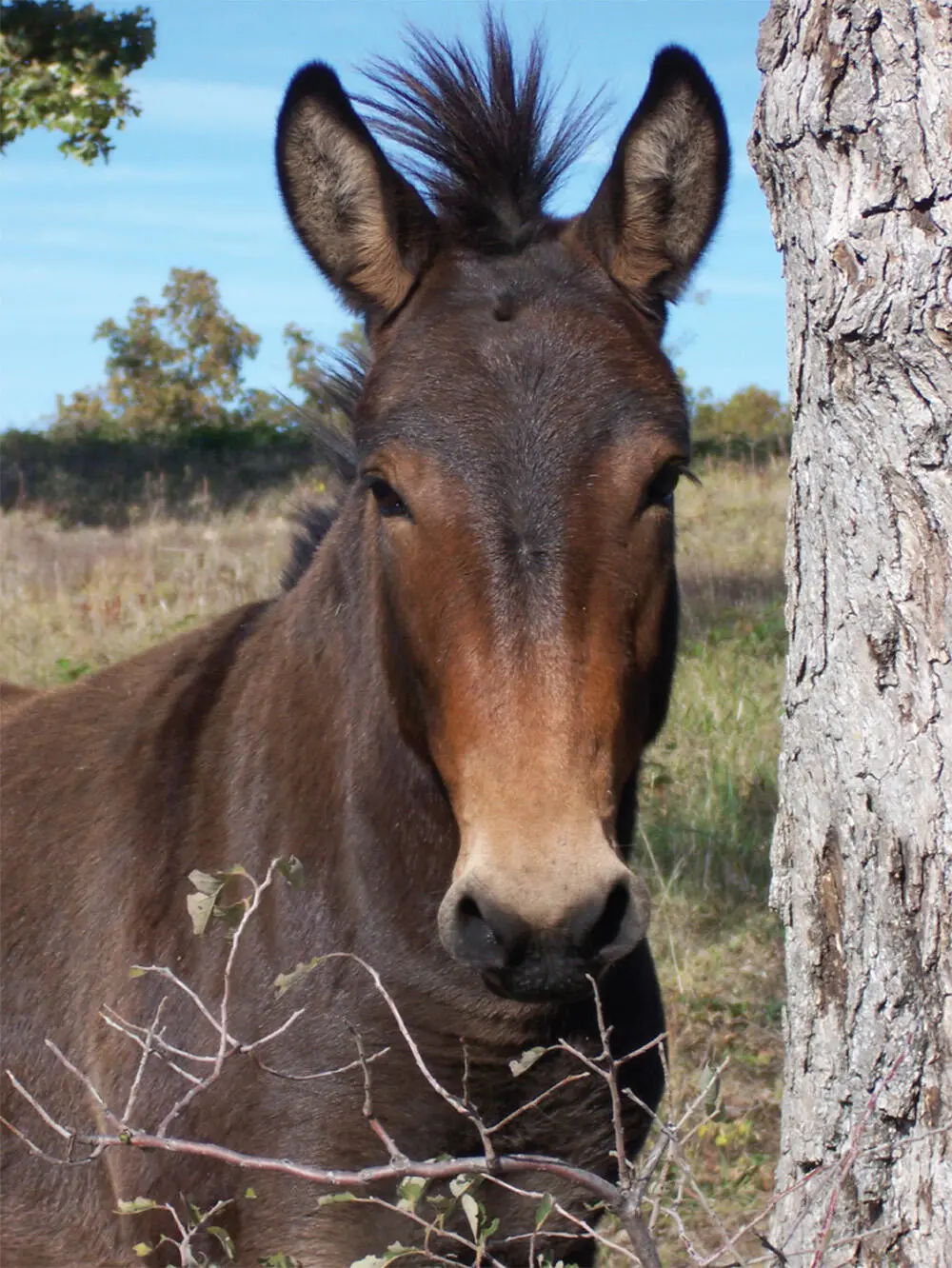
Figure 2.10 A mule is a sterile creature, which means that it cannot reproduce. If that puts it outside a definition of life that includes reproduction as a defining characteristic of life, does that mean that a mule is not life?
Source: Reproduced with permission of Sogospelman, https://commons.wikimedia.org/wiki/File:Mule_(1).jpg.
These types of deliberations can be applied to many of the other characteristics of living entities. Even with respect to evolution, we might find exceptions. If we were to show that a deep subsurface microbe did not evolve, but rather remained as an isolated population in a pocket of rock underground with no selection pressure to evolve over million-year timescales, would we therefore say that these organisms were not alive? Clearly, evolution is necessary for life to emerge on a planet or to produce a biosphere containing diverse species, but once that evolutionary experiment is underway, we could conceive of organisms that evolved very little or not at all over given periods of time.
These considerations suggest that we can find characteristics that are broadly useful for defining the sorts of entities we might consider as “life,” but that they do not provide an unambiguous description of living things.
2.5 Schrödinger and Life
Physicist Erwin Schrödinger (1887–1961; Figure 2.11) famously attempted to describe life in his seminal book, What is Life? , published in 1944 following a series of lectures given at Trinity College, Dublin, in 1943. Quite apart from some fascinating predictions about the nature of genetic material (that it was an “aperiodic” crystal – a crystal that lacks long-range order – for which he attempted to estimate the size), he also attempted to get at the nature of life.
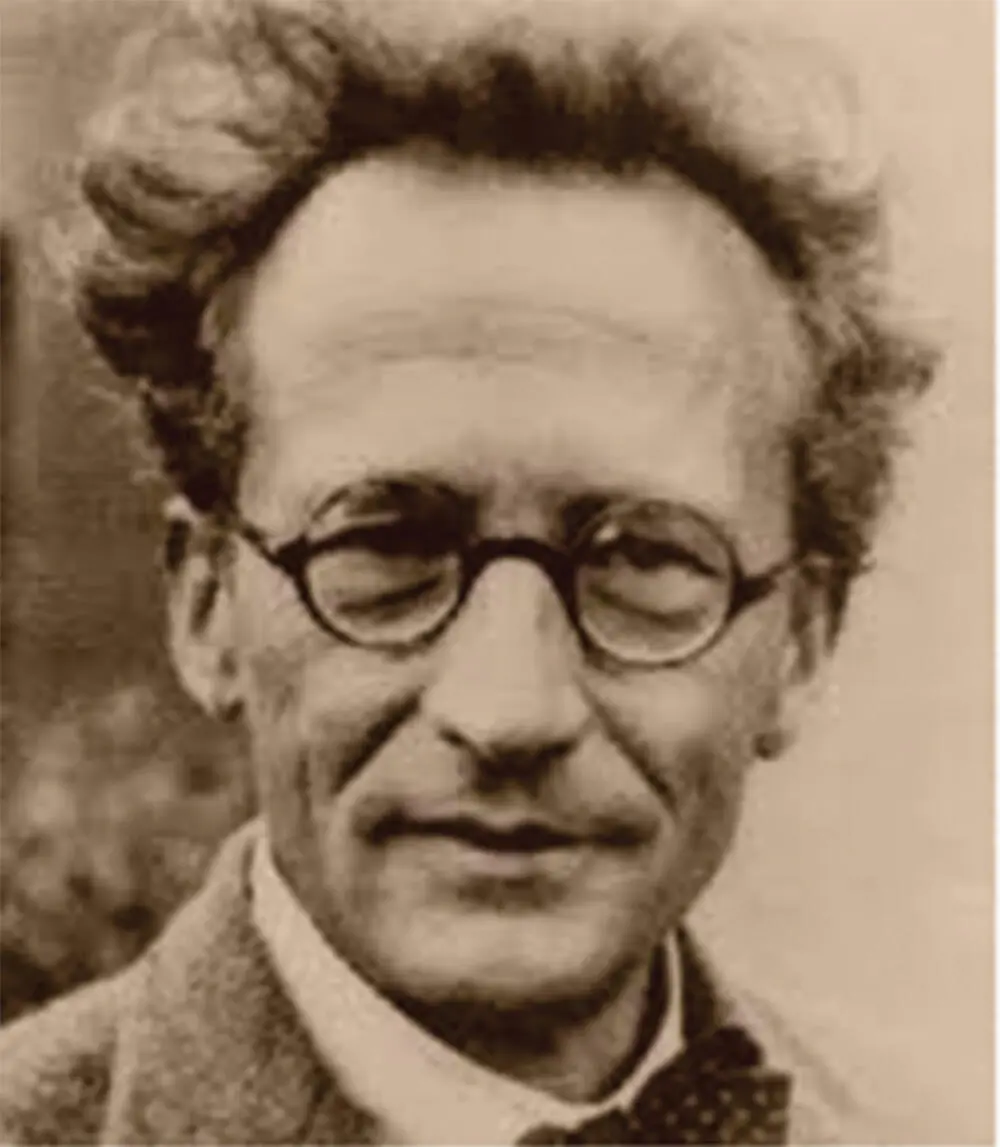
Figure 2.11 Erwin Schrödinger. He attempted to understand life from a physical perspective.
Source: Reproduced with permission of wikicommons.
Schrödinger recognized that life made “order from disorder,” and, employing the second law of thermodynamics, according to which entropy (a measure of the homogenization of energy) increases as energy is dissipated in atoms or molecules, Schrödinger explained that life evades the decay to thermodynamic equilibrium by maintaining what he termed “negative entropy,” for example by gathering energy. The phrase “negative entropy” is rather unwieldy and counter-intuitive. It should be seen more as a popular statement about his views on life rather than an attempt to define a real physical process. The notion of negative entropy is not limited to life, however. Chemical reactions such as endothermic reactions (reactions that take up energy) are in some sense extracting energy from the surrounding environment to increase order.
Schrödinger's interpretation tends to give the impression that life is “struggling” against the laws of physics – attempting to maintain order against the ineluctable forces of the Universe that tend to disperse it into disorder. The problem with this view is that it does not explain why life is so successful. If living things are constantly struggling against the laws of physics, why does life seem to have been so tenacious and ubiquitous once it got started on Earth?
2.6 Life as a Dissipative Process
Another related way to view life is to focus less on the organisms themselves and their characteristics as single entities, and more on the process that life is involved with. We can think of life as a process driving the Universe more efficiently toward disorder than non-biological processes.
To understand this idea, consider my lunch sandwiches. If I place them on a table, and assuming they are not degraded by fungi (which they will be, but this is a thought experiment), it will take a very long time for the energy in their sugar and fat molecules to be released. Indeed, the energy in the sandwiches may not be released until they end up in Earth's crust during the movements of plate tectonics, heated to great temperatures in the far future when the sugars and fats will be turned into carbon dioxide. However, if I eat the sandwiches, within about an hour or two, their contained energy will be released as heat energy in my body, with some portion of it being used to build new molecules. I have accelerated, greatly, the dissipation of the sandwiches into energy. I have enhanced the rate at which the second law of thermodynamics has had its way with the sandwiches. Living things represent extraordinary local complexity and organization, but the process they are engaged in is accelerating the dissipation of energy and the run-down of the Universe. Local complexity in organisms is an inevitable requirement for constructing the biological machines necessary for this effect to occur. As the physical universe tends to favor processes that more rapidly dissipate energy, then life is contributing to the processes resulting from the second law of thermodynamics, not fighting it. Seen from this perspective, it is easier to understand why life is successful. It might even be inevitable where organic chemistry allows for it.
As with the individual characteristics of life, however, dissipative processes are not unique to life. The Universe is full of patterns and structures that result from the dissipation of energy. An example is the convective cells in the surface of the Sun (Figure 2.12). These complex structures emerge from convective cells that become spontaneously established within the material at the Sun's surface and represent an efficient way for heat to be dissipated. You can sometimes see similar convective cells in a pan of water or milk boiling on a stove. This emerging complexity results from the dissipation of energy. There is no mysterious physics at work. Similarly, living things are thought to represent exquisite examples of dissipative structures. Although living things are more complex than convective cells, the principles of emergent complexity that result from their dissipative behaviors are nonetheless merely physics at work. The elegance of this idea is that it explains why life is successful. It is not fighting the laws of physics, but is a consequence of these laws.
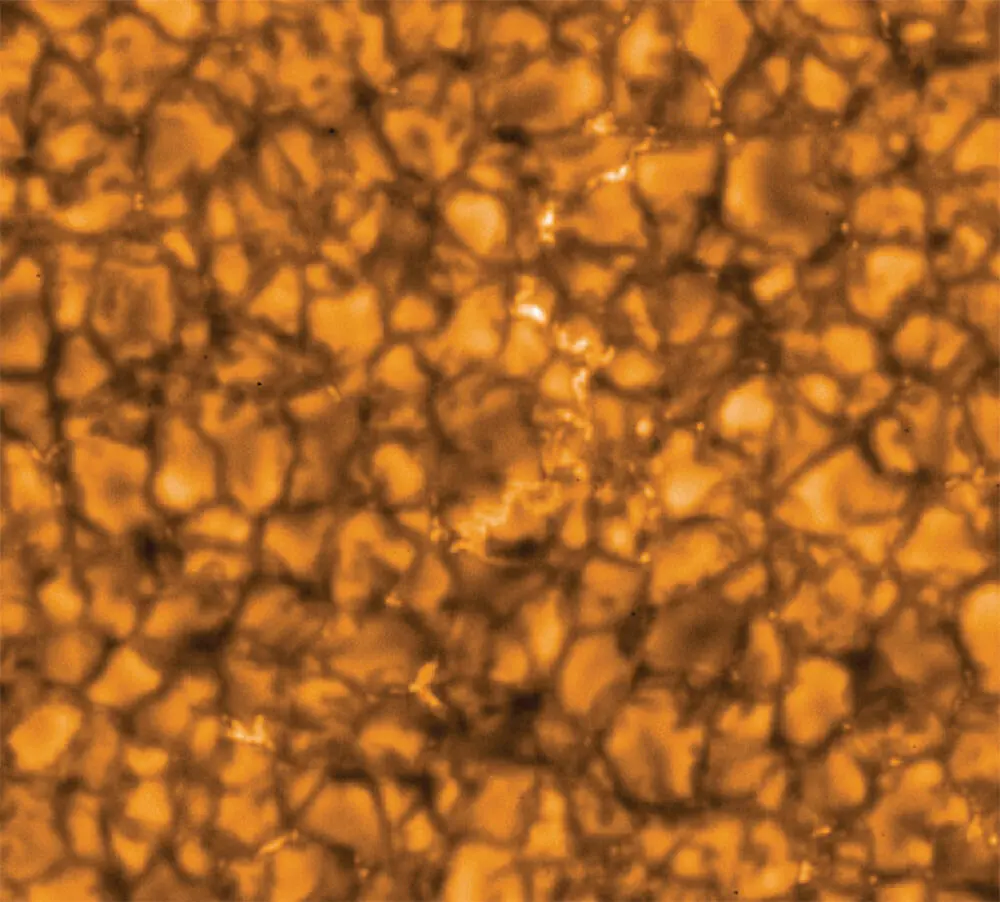
Figure 2.12 Complex structures can emerge in non-biological dissipative structures, such as these convective cells in the surface of the Sun. Each cell is about 700–1000 km across. We would not describe these dissipative structures as alive.
An obvious corollary, and implication, of these ideas is that life might be inevitable. Just as convective cells inevitably form in heated fluids and gases as a consequence of physical principles, if living things are merely dissipative structures, then the suggestion is that on any planet with liquid water, organic molecules, and appropriate environmental conditions for the assembly of replicating molecules, physical laws will essentially drive the emergence of life. You might like to discuss and debate this idea with others.
2.7 Life: Just a Human Definition?
Thus far, we have seen that it is difficult to define life. An obvious problem seems to be our inability to uniquely list or state the characteristics that sharply separate it from non-life. One answer to the problem of the definition of life is that life is simply a human word, an artificial definition created by us. It is what philosophers would call “a non-natural kind,” as opposed to a “natural kind.”
Читать дальшеИнтервал:
Закладка:
Похожие книги на «Astrobiology»
Представляем Вашему вниманию похожие книги на «Astrobiology» списком для выбора. Мы отобрали схожую по названию и смыслу литературу в надежде предоставить читателям больше вариантов отыскать новые, интересные, ещё непрочитанные произведения.







Обсуждение, отзывы о книге «Astrobiology» и просто собственные мнения читателей. Оставьте ваши комментарии, напишите, что Вы думаете о произведении, его смысле или главных героях. Укажите что конкретно понравилось, а что нет, и почему Вы так считаете.