Charles S. Cockell - Astrobiology
Здесь есть возможность читать онлайн «Charles S. Cockell - Astrobiology» — ознакомительный отрывок электронной книги совершенно бесплатно, а после прочтения отрывка купить полную версию. В некоторых случаях можно слушать аудио, скачать через торрент в формате fb2 и присутствует краткое содержание. Жанр: unrecognised, на английском языке. Описание произведения, (предисловие) а так же отзывы посетителей доступны на портале библиотеки ЛибКат.
- Название:Astrobiology
- Автор:
- Жанр:
- Год:неизвестен
- ISBN:нет данных
- Рейтинг книги:3 / 5. Голосов: 1
-
Избранное:Добавить в избранное
- Отзывы:
-
Ваша оценка:
Astrobiology: краткое содержание, описание и аннотация
Предлагаем к чтению аннотацию, описание, краткое содержание или предисловие (зависит от того, что написал сам автор книги «Astrobiology»). Если вы не нашли необходимую информацию о книге — напишите в комментариях, мы постараемся отыскать её.
offers an introductory text that explores the structure of living things, the formation of the elements required for life in the Universe, the biological and geological history of the Earth, and the habitability of other planets. Written by a noted expert on the topic, the book examines many of the major conceptual foundations in astrobiology, which cover a diversity of traditional fields including chemistry, biology, geosciences, physics, and astronomy.
The book explores many profound questions such as: How did life originate on Earth? How has life persisted on Earth for over three billion years? Is there life elsewhere in the Universe? What is the future of life on Earth?
is centered on investigating the past and future of life on Earth by looking beyond Earth to get the answers. Astrobiology links the diverse scientific fields needed to understand life on our own planet and, potentially, life beyond. This new second edition:
Expands on information about the nature of astrobiology and why it is useful Contains a new chapter “What is Life?” that explores the history of attempts to understand life Contains 20% more material on the astrobiology of Mars, icy moons, the structure of life, and the habitability of planets New ‘Discussion Boxes’ to stimulate debate and thought about key questions in astrobiology New review and reflection questions for each chapter to aid learning New boxes describing the careers of astrobiologists and how they got into the subject Offers revised and updated information throughout to reflect the latest advances in the field Written for students of life sciences, physics, astronomy and related disciplines, the updated edition of
is an essential introductory text that includes recent advances to this dynamic field.
Astrobiology — читать онлайн ознакомительный отрывок
Ниже представлен текст книги, разбитый по страницам. Система сохранения места последней прочитанной страницы, позволяет с удобством читать онлайн бесплатно книгу «Astrobiology», без необходимости каждый раз заново искать на чём Вы остановились. Поставьте закладку, и сможете в любой момент перейти на страницу, на которой закончили чтение.
Интервал:
Закладка:
It is at this stage that Frenchman Louis Pasteur (1822–1895) comes onto the stage (Figure 2.4). He had a mind of wonderful clarity when it came to planning experiments. He began to publish observations on the growth of yeast. He would later pioneer the process of pasteurization, where the rapid and short-lived heating of milk could kill off microbes without changing its taste, and so help preserve it. Among scientific challenges, there was no greater irritant to him and his fellow scientists than spontaneous generation.
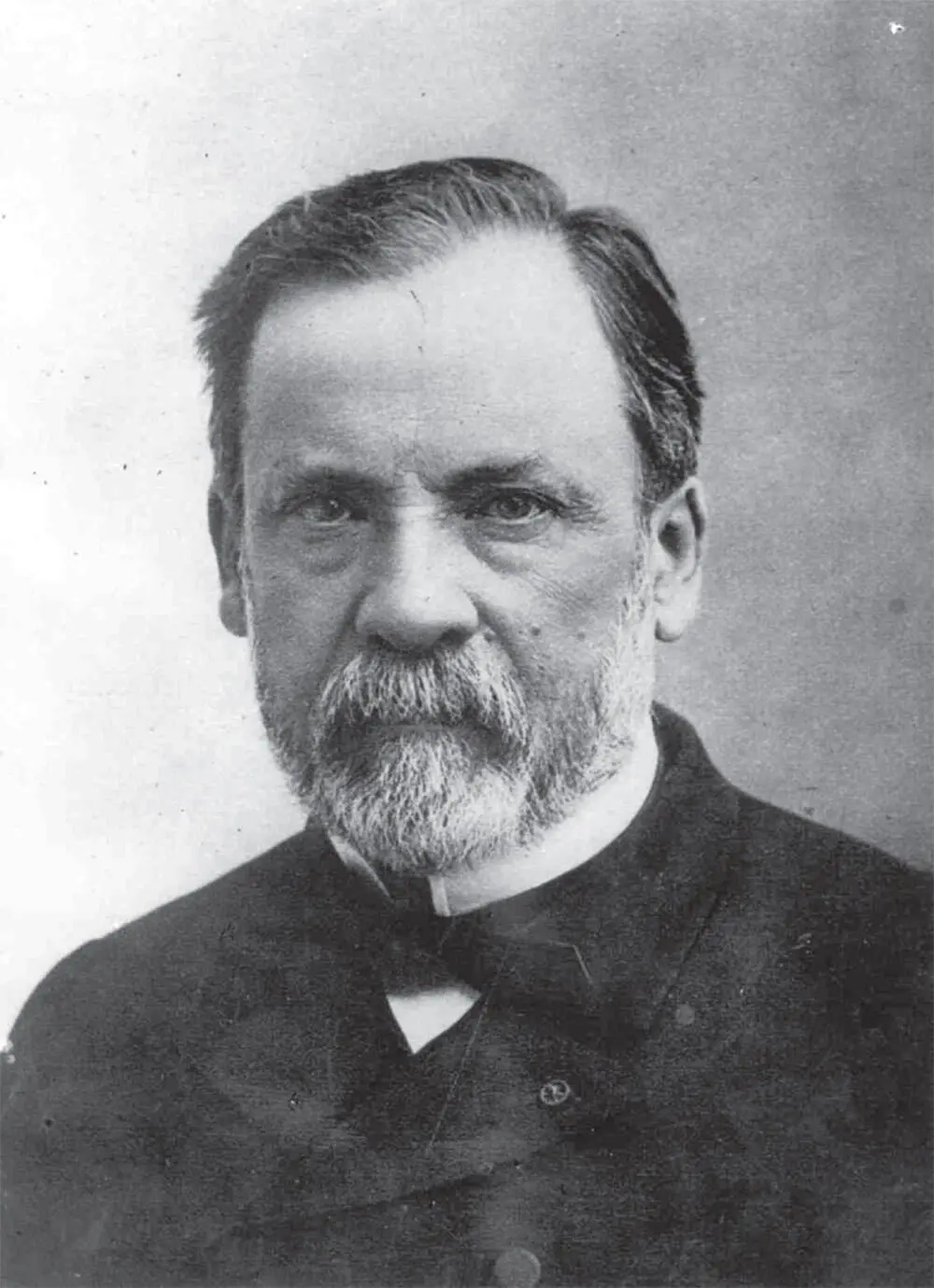
Figure 2.4 Louis Pasteur, microbiologist. He took on the idea of spontaneous generation with an ingenious experiment.
Source: Reproduced with permission of Pal Nadar, https://commons.wikimedia.org/wiki/File:Louis_Pasteur_(1822_-_1895),_microbiologist_and_chemist_Wellcome_V0026980.jpg.
His response to this centuries-old question was an experiment of ingenious simplicity. He invented his famous swan neck flasks (Figure 2.5). These flasks contained a variety of liquids including yeast extracts, pepper water, and urine. He heated them until they boiled for several minutes. Then he cooled them. The swan neck flasks were a very simple alteration to the type of flasks used by Schwann. The swan necks prevented aerially transported entities from entering the broth. In contrast, the flasks with the swan neck removed were rapidly contaminated and microbes grew. This experiment showed that broths were contaminated by organisms in the air and that life could not spontaneously be generated in a sterile medium. He concluded his remarkable paper in which he reported the results with a sentence of extraordinary clarity and importance: “There exist continually in the air organized bodies which cannot be distinguished from true germs.” With this sentence, microbiology had truly been propelled to center stage in medicine and our understanding of the environment. Pasteur's experiment was a response to a French Academy of Sciences prize in 1859 that challenged scientists to disprove spontaneous generation.
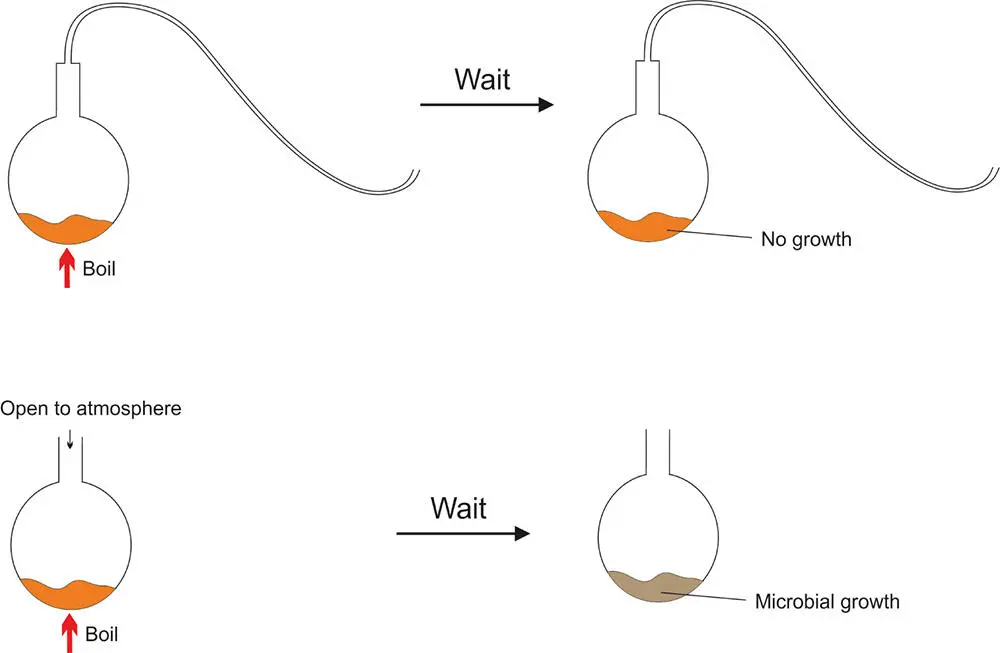
Figure 2.5 Louis Pasteur's swan neck flasks and his experiment to disprove spontaneous generation. The swan necks prevent microbes from dropping directly into the flasks after the broth has been heat-sterilized. Flasks with open necks become colonized, and microbial growth occurs.
Despite the end of spontaneous generation as an idea for the emergence of life as a continuous process on Earth, we know that it must have happened once. When life first arose, there was a transition from abiotic chemistry to the first replicating molecules and cellular life. So, the problem of spontaneous generation still has not gone away. However, to avoid confusing it with the old obsolete ideas of spontaneous generation, the origin of life is often referred to today as abiogenesis. How did simple molecules come together to form more complex ones and ultimately a self-replicating organism? We will investigate this question in Chapter 12.
Focus: Astrobiologists: Mary Beth Wilhelm
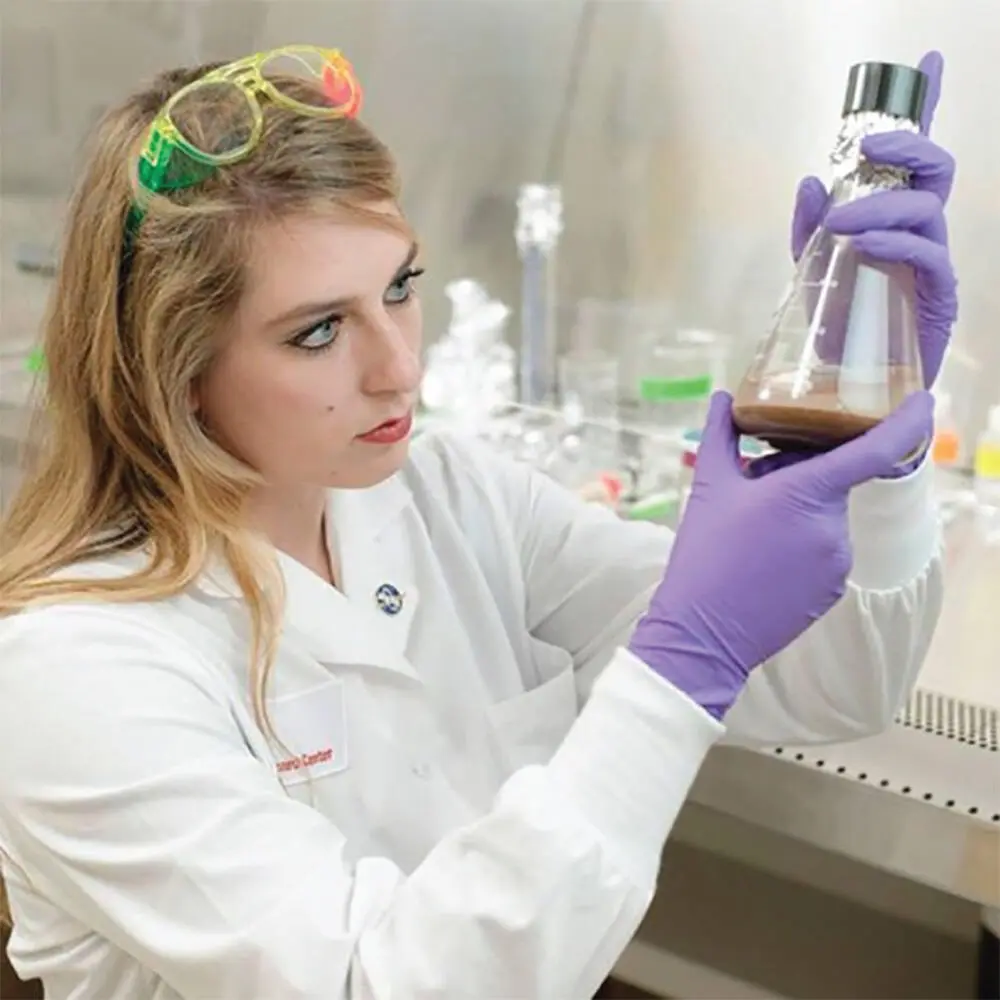
Affiliation: NASA Ames Research Center, California, USA
What was your first degree? My first degree was in Geology with a concentration in Planetary Science at Cornell University. I was lucky to go to a school with such a broad range of research opportunities, and while I was an undergraduate, I was able to do research projects in microbiology, geology, and astronomy. All three fields greatly interested me, and I feel like I found a good balance in astrobiology. By getting involved in research as a student, you really get a sense of what it is like to be a professional scientist, and a chance to increase your technical knowledge, challenge yourself to be resourceful, and think creatively.
What do you study? I primarily study the preservation of the molecular biosignatures (or biomarkers) in the fossil record on Earth, particularly places that have properties analogous to Mars. I've done a lot of work in the Atacama Desert in Chile, which is one of the driest places on Earth, and in Antarctica. My particular subfield is at the intersection of geology and biochemistry. Studying these types of environments on Earth help me and other astrobiologists to interpret data from Mars and design the next set of tools to look for life on the Red Planet.
What science questions do you address? There are a few questions that drive my research: (i) How do the molecules that make up organisms get incorporated into the geological record? (ii) How do those molecules break down over time? Which structural features or patterns diagnostic of their biogenicity remain? (iii) What physical or chemical conditions lead to increased chances of preservation of biomarkers? (iv) What are the extreme limits of life in desert environments?
How did you get involved in astrobiology research? I have loved geology, astronomy, and planetary science since I was six years old. I went to Space Camp, had a telescope, and read a lot of books as a child. I remember I first read about astrobiology when I was about 11 years old in a Dan Brown novel. I was lucky to grow up near a NASA center (NASA Ames Research Center in Silicon Valley, California), and when I turned 16 I got a summer internship at NASA. I helped my mentor analyze over 40 000 images of Mars, studying features that resemble terrestrial water-carved gullies. I was lucky to find supportive and brilliant mentors, and even all these years later I still collaborate with them! Ever since then, I have always been looking for the next interesting research question to dive in on!
2.4 More Modern Concepts
With the formulation of the Periodic Table, it was clear that living things were made of the same atomic material as all other matter. However, that did little to dispel the notion that living things were different from other matter. In religious circles, the idea of the “soul” persisted, an Aristotelian idea that continues to be held by people to the present-day.
Rather than resorting to a materialistic explanation, a common explanation for life has been to attempt to describe the collected set of characteristics that distinguish living things. This approach remains widespread. In schools, seven distinguishing characteristics of life versus non-life are taught to pupils using the acronym MRS GREN (Movement, Respiration, Sensitivity, Growth, Reproduction, Excretion and Nutrition), and this provides the explanation of what life is. Francis Crick (1916–2004), co-discoverer of the structure of deoxyribonucleic acid (DNA), suggested that self-reproduction, evolution, and metabolism were jointly sufficient for something to be described as alive. All such attempts to define life, and there are many others, are focused on circumscribing the key characteristics of living entities.
This attempt to define the characteristics of living things leads inexorably to a desire to define life itself. Indeed, if we think that life has a collected set of characteristics that establish it as unique, it follows that a definition can be written down that simply circumscribes these characteristics. It has become something of a long-term fascination for scientists and non-scientists alike to “define” life, to come up with a succinct summary of the essence of life.
Читать дальшеИнтервал:
Закладка:
Похожие книги на «Astrobiology»
Представляем Вашему вниманию похожие книги на «Astrobiology» списком для выбора. Мы отобрали схожую по названию и смыслу литературу в надежде предоставить читателям больше вариантов отыскать новые, интересные, ещё непрочитанные произведения.



Обсуждение, отзывы о книге «Astrobiology» и просто собственные мнения читателей. Оставьте ваши комментарии, напишите, что Вы думаете о произведении, его смысле или главных героях. Укажите что конкретно понравилось, а что нет, и почему Вы так считаете.