Charles S. Cockell - Astrobiology
Здесь есть возможность читать онлайн «Charles S. Cockell - Astrobiology» — ознакомительный отрывок электронной книги совершенно бесплатно, а после прочтения отрывка купить полную версию. В некоторых случаях можно слушать аудио, скачать через торрент в формате fb2 и присутствует краткое содержание. Жанр: unrecognised, на английском языке. Описание произведения, (предисловие) а так же отзывы посетителей доступны на портале библиотеки ЛибКат.
- Название:Astrobiology
- Автор:
- Жанр:
- Год:неизвестен
- ISBN:нет данных
- Рейтинг книги:3 / 5. Голосов: 1
-
Избранное:Добавить в избранное
- Отзывы:
-
Ваша оценка:
Astrobiology: краткое содержание, описание и аннотация
Предлагаем к чтению аннотацию, описание, краткое содержание или предисловие (зависит от того, что написал сам автор книги «Astrobiology»). Если вы не нашли необходимую информацию о книге — напишите в комментариях, мы постараемся отыскать её.
offers an introductory text that explores the structure of living things, the formation of the elements required for life in the Universe, the biological and geological history of the Earth, and the habitability of other planets. Written by a noted expert on the topic, the book examines many of the major conceptual foundations in astrobiology, which cover a diversity of traditional fields including chemistry, biology, geosciences, physics, and astronomy.
The book explores many profound questions such as: How did life originate on Earth? How has life persisted on Earth for over three billion years? Is there life elsewhere in the Universe? What is the future of life on Earth?
is centered on investigating the past and future of life on Earth by looking beyond Earth to get the answers. Astrobiology links the diverse scientific fields needed to understand life on our own planet and, potentially, life beyond. This new second edition:
Expands on information about the nature of astrobiology and why it is useful Contains a new chapter “What is Life?” that explores the history of attempts to understand life Contains 20% more material on the astrobiology of Mars, icy moons, the structure of life, and the habitability of planets New ‘Discussion Boxes’ to stimulate debate and thought about key questions in astrobiology New review and reflection questions for each chapter to aid learning New boxes describing the careers of astrobiologists and how they got into the subject Offers revised and updated information throughout to reflect the latest advances in the field Written for students of life sciences, physics, astronomy and related disciplines, the updated edition of
is an essential introductory text that includes recent advances to this dynamic field.
Astrobiology — читать онлайн ознакомительный отрывок
Ниже представлен текст книги, разбитый по страницам. Система сохранения места последней прочитанной страницы, позволяет с удобством читать онлайн бесплатно книгу «Astrobiology», без необходимости каждый раз заново искать на чём Вы остановились. Поставьте закладку, и сможете в любой момент перейти на страницу, на которой закончили чтение.
Интервал:
Закладка:
Attempts were made in the 1970s to transmit radio messages to other civilizations with all of its social and ethical implications. Despite the lack of response, the efforts to search for, and communicate with, extraterrestrial intelligence triggered a vigorous discussion about the intersection of astrobiology with social sciences.
The discovery of liquid water oceans in the planetary bodies orbiting in the frigid wastes beyond Mars, such as the moons of Jupiter (Europa, Ganymede) and Saturn (Enceladus) and the discovery of a complex hydrocarbon cycle on Saturn's moon Titan, has shown us that we can learn about the habitability of planetary bodies and organic chemistry in surprising places (Figure 1.14). In recent years, the discovery of planets, particularly rocky planets, around other stars (exoplanets) has led to a flourishing of astrobiology and our ability to assess the statistical chances of habitable worlds elsewhere in the Universe. These experiments and discoveries, from the mid-twentieth century and onwards, set the stage for astrobiology as the truly experimental science that we know today.
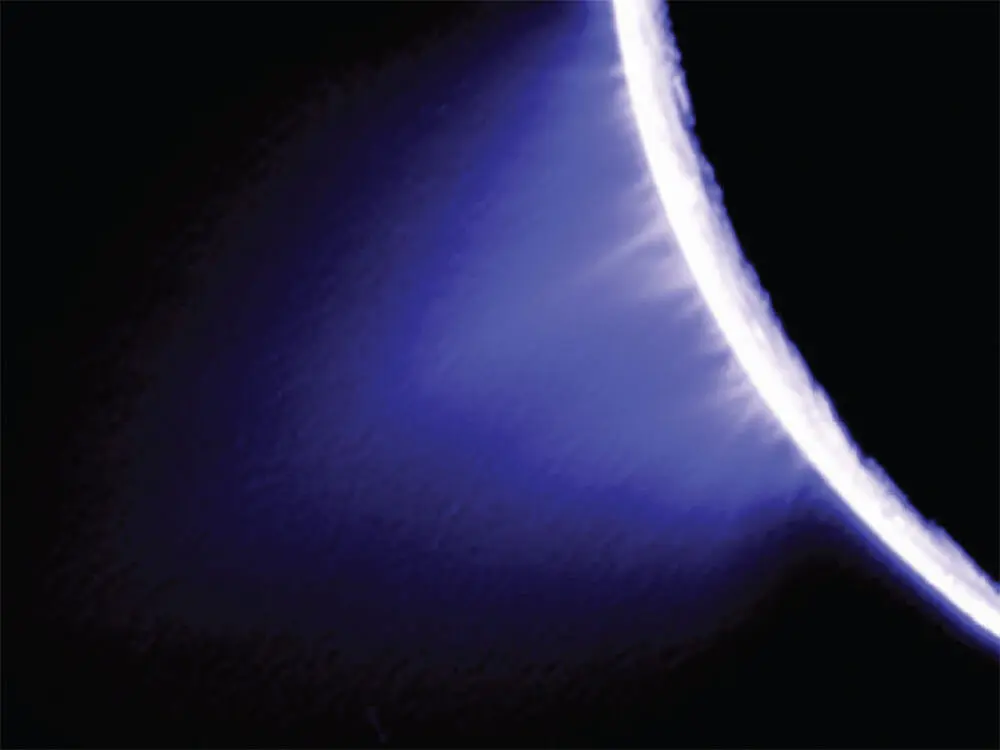
Figure 1.14 Plumes of water emanating from the south polar region of Saturn's moon Enceladus. These are just one of the many discoveries that have provided an empirical basis with which to test the hypothesis that habitable conditions exist beyond Earth.
Source: Reproduced with permission of NASA.
Throughout this history, different terms have been used to describe what we now call astrobiology, which can, if you don't take care, cause much confusion. In the mid-twentieth century, although not the first time the word was used, Astrobiology was the title of a 1953 book by Gavriil Tikhov (1875–1960; Figure 1.15). His book explored the possibility of life on other worlds. Tikhov was an interesting and in many ways, a pioneering character. He was particularly fascinated by the idea of using the absorption spectroscopyof vegetation to seek vegetation on other planets and even founded a Sector of Astrobotany allied to the Science Academy of Kazakhstan. His notions of using spectroscopy to search for life elsewhere are today at the forefront of methods to search for biosignatures on exoplanets.
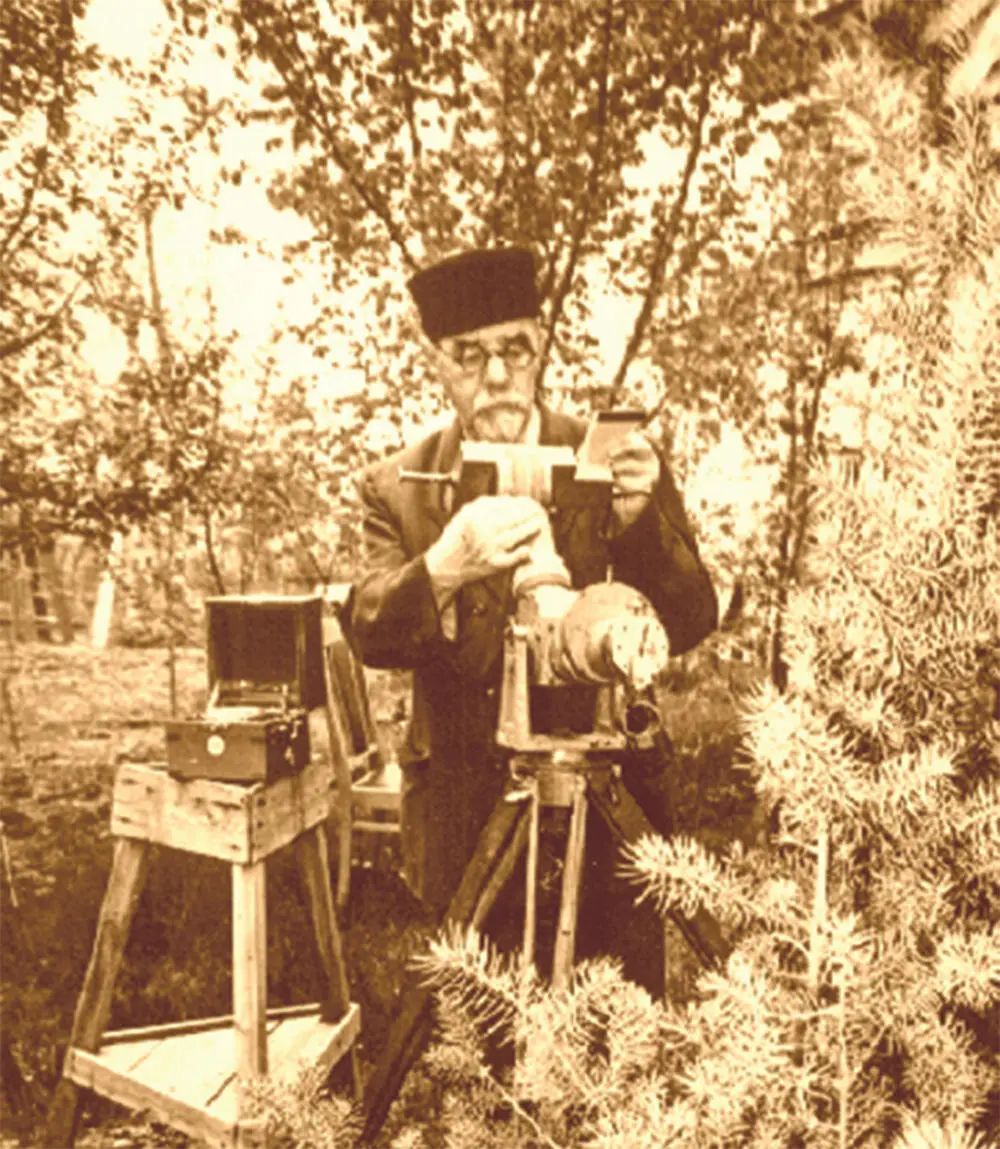
Figure 1.15 Gavriil Tikhov, who wrote an early book called Astrobiology. He took a great deal of interest in spectroscopy as a means of looking for signatures of extraterrestrial life. Here he observes the spectroscopic signatures of vegetation.
In 1960, Joshua Lederberg (1925–2008; Figure 1.16), a pioneer in bacteriology and molecular biology who won the Nobel Prize for his work on bacterial genetics, used the term exobiologyto describe the search for life beyond Earth. This term later became associated specifically with the search for life beyond Earth, which now constitutes just one word in the wider term: astrobiology. Other terms that appear in the popular and scientific literature have included cosmobiology, xenobiology, and bioastronomy, the latter used mainly by astronomers.
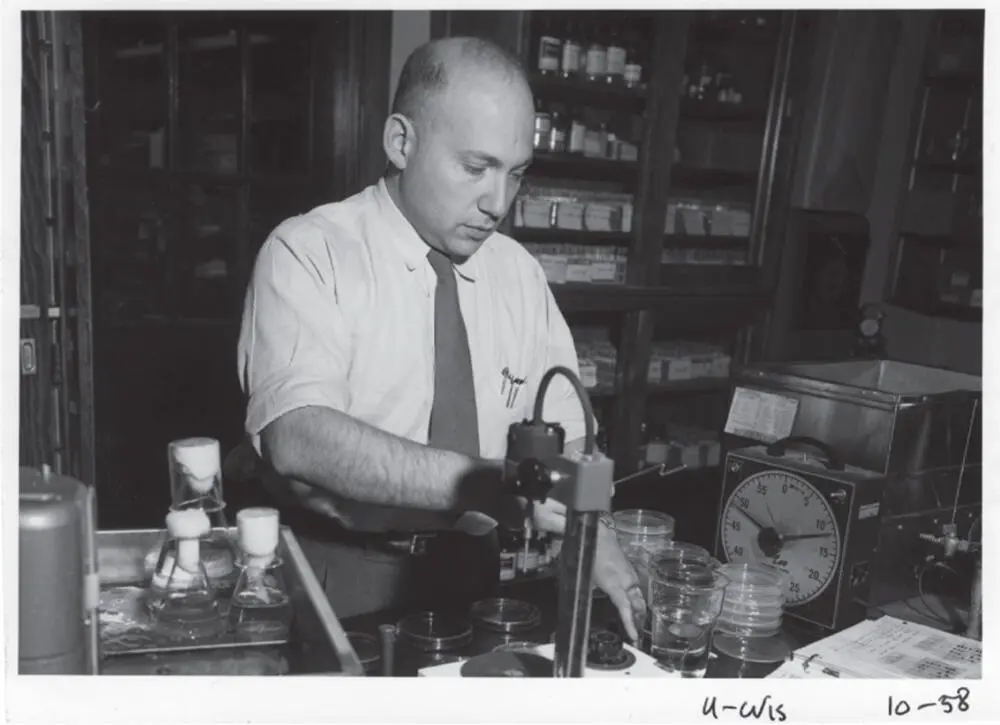
Figure 1.16 Nobel Laureate Joshua Lederberg. He was at the forefront of the United States' efforts in exobiology in the twentieth century, at his laboratory in the University of Wisconsin, October 1958.
Today, the word astrobiology is used in a wide sense to mean not just the search for life beyond Earth, but also the study of life in its cosmic context in general, including the history of life on Earth.
1.5 Conclusions
In this introductory chapter, we discussed what astrobiology is. We found it to be a useful way to consider life in its cosmic context. It addresses a set of scientific questions that include the origin of life, the possibility of life elsewhere, and the past and future of life on Earth. Many of the questions that astrobiology addresses are philosophically ancient, but it has in recent years gained the empirical knowledge to begin to address new questions about life in the Universe. This has been driven in particular by: (i) technological advances in space missions that allow us to directly investigate extraterrestrial environments, and (ii) our growing understanding about the past and future of life on Earth.
Bibliography
Books
1 Catling, D.C. (2014). A Very Short Introduction to Astrobiology. Oxford: Oxford University Press.
2 Crowe, M.J. (2003). The Extraterrestrial Life Debate 1750–1900. New York: Dover Publications.
3 Dick, S.J. (1998). Life on Other Worlds: The 20th Century Extraterrestrial Life Debate. Cambridge: Cambridge University Press.
4 Gargaud, M., López-García, P., and Martin, H. (eds.) (2011). Origins and Evolution of Life: An Astrobiological Perspective. Cambridge: Cambridge University Press.
5 Longstaff, A. (2014). Astrobiology: An Introduction. Abingdon: Taylor and Francis.
6 Rothery, D.A., Gilmour, I., and Sephton, M.A. (2018). Introduction to Astrobiology. Cambridge: Cambridge University Press.
7 Schulze-Makuch, D. and Irwin, L.N. (2018). Life in the Universe: Expectations and Constraints. Berlin: Springer.
8 Sullivan, W.T. and Baross, J.A. (eds.) (2007). Planets and Life: The Emerging Science of Astrobiology. Cambridge: Cambridge University Press.
9 Vakoch, D.A. (ed.) (2013). Astrobiology, History, and Society. Heidelberg: Springer.
10 Yamagishi, A., Kakegawa, T., and Usui, T. (eds.) (2019). Astrobiology: From the Origins of Life to the Search for Extraterrestrial Intelligence. Berlin: Springer.
Papers
1 Chela-Flores, J. (2013). From systems chemistry to systems astrobiology: life in the universe as an emergent phenomenon. International Journal of Astrobiology 12: 8–16.
2 Chyba, C.F. and Hand, K.P. (2005). Astrobiology: the study of the living Universe. Annual Review of Astronomy and Astrophysics 43: 31–74.
3 Des Marais, D.J. and Walter, M.R. (1999). Astrobiology: exploring the origins, evolution and distribution of life in the Universe. Annual Reviews of Ecology and Systematics 30: 397–420.
4 Lafleur, L.J. (1941). Astrobiology. Leaflets of the Astronomical Society of the Pacific 143: 333–340.
5 Lederberg, J. (1960). Exobiology: approaches to life beyond the Earth. Science 132: 393–400.
6 Nealson, K.H., Tsapin, A., and Storrie-Lombardi, M. (2002). Search for life in the Universe: unconventional methods for an unconventional problem. International Microbiology 5: 223–230.
2 What Is Life?
Learning Outcomes
Understand some of the history of discussions on the characteristics of life.
Understand some of the key ideas that have emerged concerning definitions of life.
Be able to explain why understanding some of the key characteristics of life is essential for astrobiology.
Describe how we can construct useful operational definitions of life.
2.1 The Concept of “Life”
Throughout this textbook, the word “life” is pervasive. You will come across discussions on “the origin of life,” “life in extremes,” “evidence of life in the fossil record,” “life on other planets,” “biosignatures of life,” and so forth. However, implicit in all these discussions is the idea that we all agree on what life is. This chapter will explore the idea of “life.”
Читать дальшеИнтервал:
Закладка:
Похожие книги на «Astrobiology»
Представляем Вашему вниманию похожие книги на «Astrobiology» списком для выбора. Мы отобрали схожую по названию и смыслу литературу в надежде предоставить читателям больше вариантов отыскать новые, интересные, ещё непрочитанные произведения.








Обсуждение, отзывы о книге «Astrobiology» и просто собственные мнения читателей. Оставьте ваши комментарии, напишите, что Вы думаете о произведении, его смысле или главных героях. Укажите что конкретно понравилось, а что нет, и почему Вы так считаете.