Siegfried Siegesmund - Monument Future
Здесь есть возможность читать онлайн «Siegfried Siegesmund - Monument Future» — ознакомительный отрывок электронной книги совершенно бесплатно, а после прочтения отрывка купить полную версию. В некоторых случаях можно слушать аудио, скачать через торрент в формате fb2 и присутствует краткое содержание. Жанр: unrecognised, на немецком языке. Описание произведения, (предисловие) а так же отзывы посетителей доступны на портале библиотеки ЛибКат.
- Название:Monument Future
- Автор:
- Жанр:
- Год:неизвестен
- ISBN:нет данных
- Рейтинг книги:4 / 5. Голосов: 1
-
Избранное:Добавить в избранное
- Отзывы:
-
Ваша оценка:
Monument Future: краткое содержание, описание и аннотация
Предлагаем к чтению аннотацию, описание, краткое содержание или предисловие (зависит от того, что написал сам автор книги «Monument Future»). Если вы не нашли необходимую информацию о книге — напишите в комментариях, мы постараемся отыскать её.
Alle vier Jahre treffen sich auf einer internationalen Tagung Experten, die sich mit den entsprechenden Sachfragen beschäftigen. Der „14th International Congress on the Deterioration and Conservation of Stone“ findet im September 2020 in Göttingen statt. Er ist die wichtigste Veranstaltung zur Verbreitung des Wissens von Praktikern und Forschern, die im Bereich der Steinkonservierung zur Erhaltung des baulichen Kulturerbes arbeiten: Geowissenschaftler, Architekten, Bauspezialisten, Ingenieure, Restauratoren, Denkmalpfleger und Bauherren.
Der Tagungsband mit über 150 wissenschaftlichen Beiträgen repräsentiert und erfasst den neuesten Stand der Technik auf diesem Gebiet.
Themen sind:
– Charakterisierung von Schadensphänomenen von Steinen und verwandten Baumaterialien (Stuck, Putz, Mörtel usw.)
– Methoden zur Untersuchung des Steinverfalls in situ und zerstörungsfreie Prüfung
– Langzeitüberwachung von Steindenkmälern und Gebäuden
– Simulation und Modellierung des Zerfalls
– Technologien und Entwicklung verbesserter Bearbeitung und Verwendung von Stein in Neubauten
– Bewertung der Langzeitwirkung von Bearbeitungstechniken
– Auswirkungen des Klimawandels auf die Steinverwitterung des Kulturerbes
– Berichte zur Steinkonservierung: Fallstudien und Projekte
– Digitalisierung und Dokumentation von Steinkonservierung
–
The 14th International Congress on the Deterioration and Conservation of Stone, entitled MONUMENT FUTURE: DECAY AND CONSERVATION OF STONE is a quadrennial event that brings together a world-wide community of geoscientists, architects, building specialists, engineers, conservators, restorators, monument curators and building owners who are concerned about the conservation of cultural stone structures and objects. Since antiquity, the weathering and deterioration of historical buildings, masonry, monuments, sculptures etc. using natural stones has been a very well-known problem.
This conference is the main gathering for the dissemination of knowledge in the field of stone deterioration issues. It represents and captures the state-of-the-art in the field of stone conservation and cultural heritage conservation with regards to the following topics:
– Characterisation of damage phenomena of stone and related building materials (plaster, rendering, mortar etc.)
– Methods for the investigation of stone decay; in-situ and non-destructive testing
– Long-term monitoring of stone monuments and buildings
– Simulation and modelling of decay
– Technology and development of improved treatments and use of stone in new buildings
– Assessment of long-term effects of treatments
– Impact of climate change on stone decay of Cultural Heritage
– Reports about stone conservation: case studies and projects
– Digitalization and documentation in stone conservation
Monument Future — читать онлайн ознакомительный отрывок
Ниже представлен текст книги, разбитый по страницам. Система сохранения места последней прочитанной страницы, позволяет с удобством читать онлайн бесплатно книгу «Monument Future», без необходимости каждый раз заново искать на чём Вы остановились. Поставьте закладку, и сможете в любой момент перейти на страницу, на которой закончили чтение.
Интервал:
Закладка:
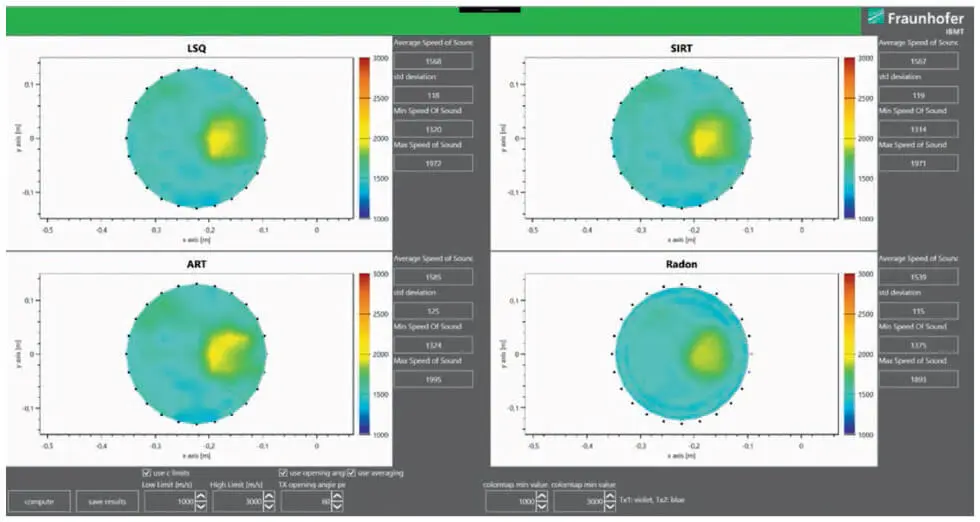
Figure 3: tomography of a water filled bucked with a POM cylinder.
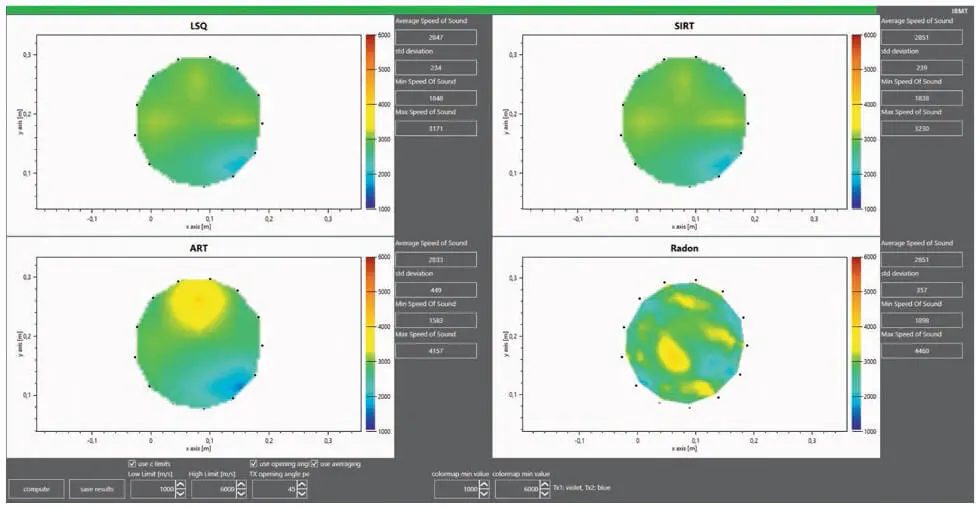
Figure 4: tompgraphy of an artifically aged marble cylinder.
243The software of the system offers the possibility to calculate tomographies by algebraic reconstruction technique (ART), simultaneous iterative reconstruction technique (SIRT), Kaczmarz method, and inverse radon transformation of the velocities calculated by converter positions and times of flight.
Measurements
The new ultrasound system was first tested in the laboratory on so-called ultrasound phantoms. The first phantom was a cylindrical bucket filled with water in which a rod (Ø = 90 mm) made of polyoxymethylene (POM) was placed. Tomography was performed with 24 ultrasound transducers.
Figure 3 shows the result of the evaluation. The rod made of POM is clearly visible as a yellow area. The sound velocity in water was calculated with approx. 1.500 m/s and the sound velocity in POM with approx. 1.900 m/s was calculated correctly. The second phantom was a cylinder made of Carrara marble which was artificially aged. The cylinder was then heated to 150 °C and thrown into cold water. Thus, the average speed of sound could be reduced to approx. 3.200 m/s. Figure 4 shows the results of the evaluation. These correspond well with the expected values.
After successful measurements in the laboratory, the system was tested on the columns (Ø = 550 mm) of the Marmorpalais in Potsdam (see Figure 2). These are heavily weathered and show cracks, some of which have been filled.
Figure 5 shows the found structure of the marble. Although signals could be received at this object, they had large interference components. An automatic detection of the signal beginnings and thus an evaluation of tomography was not possible. The performance limit of the system was reached because of the strong fissuring of the stone.
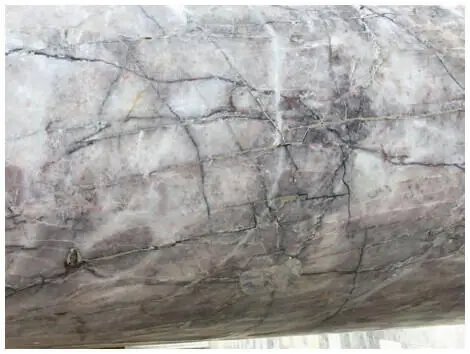
Figure 5: typical structure of the marble columns of the Marmorpalais in Potsdam.
Discussion
The measurements on the ultrasound phantoms prove the principle functionality of the new ultrasound system in the creation of tomography on stone. The positioning of the ultrasonic transducers with the holding system takes approx. 30 min. and the recording of the positions approx. 10 min. The actual measurements and the calculation of the tomography take approx. 20 min. with max. 32 transducers. The determination of a tomography is thus easily possible within one hour. The transmission voltage of 1,000 Vpp at 9 mm aperture of the transducers is not sufficient to receive evaluable signals in case of strongly weathered and fissured marble. In addition in all cases, the high transmit voltage on the multiplexer generates a coupling to the receive channels. The resulting signals allows a reliable measurement only from 150 mm marble thickness.
Conclusion
The principle feasibility and the associated time saving could be demonstrated. However, a device that can be used practically requires the revision of the multiplexer and the electronics. As mentioned before, the high transmitt voltage generates a coupling to the receive channels and therefore the begin of the signal is difficult to define and structures thinner than 150 mm cannot be examined. This problem can be solved by a new layout which carefully separates the transmit and the receive parts of the electronic and their electrical grounding.
Furthermore, the holding system of the transducers 244should be optimized to allow a strong and secure mounting of the transducers on the marble surface. The existing system software has many useful features and is easyly to handle. Together with an optimized hardware, the system could accelerate the tomography of stone made cultural heritage.
Acknowledgements
The development was supplied by the Federal Ministry of Education and Research of Germany, VIP+00291.
References
[1] Mamillan, M., ‘Méthode de classification des pierres calcaires’, in Supplément aux Annales de l’Institut technique du Bâtiment et des Travaux Publics, Mai 1958, (1958) 270–132.
[2] Chiesura, G., Mecchi, A. M., and Rota Rossi Doria, P., ‘La technique d’auscultation microsismique pour le diagnostic et l’évaluation des traitements sur matériaux pierreux’, in Methods of Evaluating Products for the Conservation of Porous Building Materials in Monuments, International Colloquium, Rome, 19–21 June 1995: Preprints, ICCROM, Rome (1995) 131–145.
[3] Siegesmund, S. & Snethlage, R. (Eds.) 2014. Stone in Architecture. Springer. 5th Ed, DOI 10.1007/978-3-642-14475-2, Sprinter-Verlag Berlin Heidelberg, 552pp.
[4] Ruedrich, J., Knell, Chr., Enseleit, J., Rieffel, Y., Siegesmund, S. 2013. Stability assessment of marble statuaries of the Schlossbrücke (Berlin, Germany) based on rock strength measurements and ultrasonic wave velocities. Environ Earth Sciences 69:1451–1470. DOI: 10.1007/s12665-013-2246-x.
[5] Köhler, W., and Simon, S., ‘The Monument to Gustav II Adolf in Göteborg – Ultrasonic investigations on the Carrara marble base’, in Eurocare-Euromarble EU 496: Proceedings of the 3rd Workshop, Göteborg, 30 September–3 October 1992, Bayerisches Landesamt für Denkmalpflege-Zentrallabor, Munich (1993) Forschungsbericht 11, 117–121.
[6] Făcăoaru, I., and Lugnani, C., ‘Contributions to the diagnosis of stone and concrete historical structures using non-destructive techniques’, in Conservation of Stone and Other Materials, Proceedings of the International RILEM/UNESCO Congress, Paris, 29 June–1 July 1993, ed. M. J. Thiel, E & FN Spon, London (1993) Vol. I, 238–251.
[7] Zezza, F., ‘Computerized analysis of stone decay in monuments’, in Proceedings of the 1st International Symposium on the Conservation of Monuments in the Mediterranean Basin, Bari, 7–10 June 1989, ed. F. Zezza, Grafo, Brescia (1990) 163–184.
[8] Siegesmund, S. & Dürrast, H. Mechanical and physical properties of rocks, 2011. In: S.Siegesmund & R.Snethlage. Stone in Architecture. 97–225. DOI: 10.1007/ß78-3-642-14475-2_3Springer-Verlag Berlin Heidelberg.
[9] Côte, P., Gautier, V., Pérez A., and Van-Hoove J. P., ‘Mise en œuvre d’auscultations tomographiques sur Ouvrages d’Art’, Bulletin de Liaison des Laboratoire des Ponts et Chaussées 178 (1992) 47–54.
245
FUENTE DE CIBELES OF MADRID AND DECAY OF MONTESCLAROS MARBLE
David Martín Freire-Lista, Luís Sousa
IN: SIEGESMUND, S. & MIDDENDORF, B. (EDS.): MONUMENT FUTURE: DECAY AND CONSERVATION OF STONE.
– PROCEEDINGS OF THE 14TH INTERNATIONAL CONGRESS ON THE DETERIORATION AND CONSERVATION OF STONE –
VOLUME I AND VOLUME II. MITTELDEUTSCHER VERLAG 2020.
UTAD – Universidade de Trás-os-Montes e Alto Douro, Quinta de Prados, 5001-801 Vila Real, Portugal
CGeo – Centro de Geociências da Universidade de Coimbra, Rua Silvino Lima, Universidade de Coimbra, Polo II, 3030-790 Coimbra, Portugal
Abstract
Интервал:
Закладка:
Похожие книги на «Monument Future»
Представляем Вашему вниманию похожие книги на «Monument Future» списком для выбора. Мы отобрали схожую по названию и смыслу литературу в надежде предоставить читателям больше вариантов отыскать новые, интересные, ещё непрочитанные произведения.







Обсуждение, отзывы о книге «Monument Future» и просто собственные мнения читателей. Оставьте ваши комментарии, напишите, что Вы думаете о произведении, его смысле или главных героях. Укажите что конкретно понравилось, а что нет, и почему Вы так считаете.