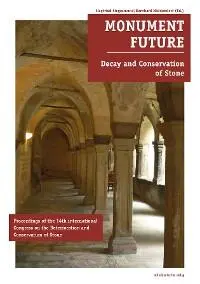
Siegfried Siegesmund - Monument Future
Здесь есть возможность читать онлайн «Siegfried Siegesmund - Monument Future» — ознакомительный отрывок электронной книги совершенно бесплатно, а после прочтения отрывка купить полную версию. В некоторых случаях можно слушать аудио, скачать через торрент в формате fb2 и присутствует краткое содержание. Жанр: unrecognised, на немецком языке. Описание произведения, (предисловие) а так же отзывы посетителей доступны на портале библиотеки ЛибКат.
- Название:Monument Future
- Автор:
- Жанр:
- Год:неизвестен
- ISBN:нет данных
- Рейтинг книги:4 / 5. Голосов: 1
-
Избранное:Добавить в избранное
- Отзывы:
-
Ваша оценка:
Monument Future: краткое содержание, описание и аннотация
Предлагаем к чтению аннотацию, описание, краткое содержание или предисловие (зависит от того, что написал сам автор книги «Monument Future»). Если вы не нашли необходимую информацию о книге — напишите в комментариях, мы постараемся отыскать её.
Alle vier Jahre treffen sich auf einer internationalen Tagung Experten, die sich mit den entsprechenden Sachfragen beschäftigen. Der „14th International Congress on the Deterioration and Conservation of Stone“ findet im September 2020 in Göttingen statt. Er ist die wichtigste Veranstaltung zur Verbreitung des Wissens von Praktikern und Forschern, die im Bereich der Steinkonservierung zur Erhaltung des baulichen Kulturerbes arbeiten: Geowissenschaftler, Architekten, Bauspezialisten, Ingenieure, Restauratoren, Denkmalpfleger und Bauherren.
Der Tagungsband mit über 150 wissenschaftlichen Beiträgen repräsentiert und erfasst den neuesten Stand der Technik auf diesem Gebiet.
Themen sind:
– Charakterisierung von Schadensphänomenen von Steinen und verwandten Baumaterialien (Stuck, Putz, Mörtel usw.)
– Methoden zur Untersuchung des Steinverfalls in situ und zerstörungsfreie Prüfung
– Langzeitüberwachung von Steindenkmälern und Gebäuden
– Simulation und Modellierung des Zerfalls
– Technologien und Entwicklung verbesserter Bearbeitung und Verwendung von Stein in Neubauten
– Bewertung der Langzeitwirkung von Bearbeitungstechniken
– Auswirkungen des Klimawandels auf die Steinverwitterung des Kulturerbes
– Berichte zur Steinkonservierung: Fallstudien und Projekte
– Digitalisierung und Dokumentation von Steinkonservierung
–
The 14th International Congress on the Deterioration and Conservation of Stone, entitled MONUMENT FUTURE: DECAY AND CONSERVATION OF STONE is a quadrennial event that brings together a world-wide community of geoscientists, architects, building specialists, engineers, conservators, restorators, monument curators and building owners who are concerned about the conservation of cultural stone structures and objects. Since antiquity, the weathering and deterioration of historical buildings, masonry, monuments, sculptures etc. using natural stones has been a very well-known problem.
This conference is the main gathering for the dissemination of knowledge in the field of stone deterioration issues. It represents and captures the state-of-the-art in the field of stone conservation and cultural heritage conservation with regards to the following topics:
– Characterisation of damage phenomena of stone and related building materials (plaster, rendering, mortar etc.)
– Methods for the investigation of stone decay; in-situ and non-destructive testing
– Long-term monitoring of stone monuments and buildings
– Simulation and modelling of decay
– Technology and development of improved treatments and use of stone in new buildings
– Assessment of long-term effects of treatments
– Impact of climate change on stone decay of Cultural Heritage
– Reports about stone conservation: case studies and projects
– Digitalization and documentation in stone conservation
Monument Future — читать онлайн ознакомительный отрывок
Ниже представлен текст книги, разбитый по страницам. Система сохранения места последней прочитанной страницы, позволяет с удобством читать онлайн бесплатно книгу «Monument Future», без необходимости каждый раз заново искать на чём Вы остановились. Поставьте закладку, и сможете в любой момент перейти на страницу, на которой закончили чтение.
Интервал:
Закладка:
The boeing potential of eleven varieties of Portuguese limestones were studied. Only one variety ( Valverde ) show evident bowing, reaching values around 9 mm/m after 91 cycles. This variety is also the only one showing hydric dilatation with values around 0.26 mm/m after 24 hours. Residual strain happens only in wet conditions, with values around 0.25 mm/m.
Petrographic observations of this variety highlight the presence of disturbed areas with parallel microstylolites. The microstylolites are of an opaque material, probably accumulations of organic material and clays. Both water and heat may cause the opening and offsetting of the microstylolites causing irreversible deformation.
Further studies are necessary to fully explain this bowing behavior. Meanwhile, this stone should not be used as a cladding material in a humid and warm environment, where bowing behavior can occur more easily.
References
Carvalho J., Lisboa V. 2018. Ornamental stone potential areas for land use planning: a case study in a limestone massif from Portugal. Environ Earth Sci 77:206. https://doi.org/10.1007/s12665-018-7382-x.
Dunham R. J. 1962. Classification of carbonate rocks according to depositional textures. In Ham, W. E. (ed.), Classification of Carbonate Rocks: American Association of Petroleum Geologists, Memoir 1, 108–121.
Flügel E. 2004. Microfacies of Carbonate Rocks. Analysis, Interpretation and Application: Germany, Springer, 976 pp.
Folk R. L. 1962. Spectral subdivision of limestones types. In Ham, W. E. (ed.), Classification of Carbonate Rocks: American Association of Petroleum Geologists, Memoir 1, 62–84.
Koch A., Siegesmund S. 2002. Bowing of marble panels: on-site damage analysis from the Oeconomicum building at Goettingen (Germany). Geological Society, London, Special Publications 205(1):299–314
Koch A., Siegesmund S. 2004. The combined effect of moisture and temperature on the anomalous expansion behaviour of marble. Environ Geol 46:350–363
150Menningen J., Siegesmund S., Lopes L., Martins, R., Sousa, L. 2018. The Estremoz marbles: an updated summary on the geological, mineralogical and rock physical characteristics. Environ Earth Sci 77: 191. https://doi.org/10.1007/s12665-018-7328-3
Shushakova V., Fuller E. R., Heidelbach F., Mainprice D., Siegesmund S. 2013. Marble decay induced by thermal strains: simulations and experiments. Environ Earth Sci 69(4):1281–1297
Siegesmund S. 2008. Neue Steine und alte Sorgen—Fassadenplatten aus Naturstein: Sicherheitsrisiken und Sanierungsstrategien. In: H. Venzmer (Hrsg.) 19. Hanseatische Sanierungstage Bauphysik und Bausanierung Heringsdorf 2008, S. 17–27, Beuth Verlag, Berlin.
Siegesmund S., Dürrast H. 2014. Physical and mechanical properties of the rocks. In: Siegesmund S, Snethlage R (eds) Stone in architecture. Properties, durability, 5th ed. Springer.
Siegesmund S., Rüdrich J., Koch A. 2008. Marble bowing: comparative studies of three different public building façades. Environ Geol 56(3–4):473–494.
Siegesmund S., Sousa L., Knell C. 2018. Thermal expansion of granitoids Environ Earth Sci 77: 41. https://doi.org/10.1007/s12665-017-7119-2.
Siegesmund S., Ullemeyer K., Weiss T., Tschegg E. K. 2000. Physical weathering of marbles caused by anisotropic thermal expansion. Int J Earth Sci 89(1):170–182
Silva Z. 2017. The Portuguese Lioz, a Monumental Limestone. Geophysical Research Abstracts. Vol. 19, EGU2017-9019.
151
THE FOUR SCULPTED COLUMNS OF THE ST. MARK BASILICA’ CIBORIUM, VENICE: MARBLES, POLYCHROMY, PAST TREATMENTS
Lorenzo Lazzarini, Elena Tesser *
IN: SIEGESMUND, S. & MIDDENDORF, B. (EDS.): MONUMENT FUTURE: DECAY AND CONSERVATION OF STONE.
– PROCEEDINGS OF THE 14TH INTERNATIONAL CONGRESS ON THE DETERIORATION AND CONSERVATION OF STONE –
VOLUME I AND VOLUME II. MITTELDEUTSCHER VERLAG 2020.
LAMA – Laboratory for Analysing Materials of Ancient origin Iuav University of Venice, San Polo 2468/B, 30125 Venice, Italy, lama@iuav.it– * etesser@iuav.it
Abstract
The famous four marble columns of the ciborium are among the most important artifacts preserved in St. Mark’s Basilica, Venice. Carved with scenes of Christ and Mary’s lives by two masters in Constantinople in the first half of the 6th century BC, they were subsequently pillaged from an unknown church by the Venetians soon after the 1204 Crusader’s sack of the city. Reworked and gilded in Venice, they were re-installed after the 1222 earthquake in the ciborium covering the sarcophagus of the evangelist and the main altar. Thought to be made of oriental alabaster, they have been subject to many treatments throughout the centuries and the subject of extensive archaeometric study with identification of their materials, previous gildings and protective treatments. Micro-samples taken from each column were analysed by minero-petrographic (XRD, OM, SEM+EDS on thin and polished cross sections) and geochemical (SIRA, microFTIR and Raman spectroscopy) techniques. The results indicate that the columns consist of Dokymaean marble originating from three different quarries.The original gold leaf gilding was applied to a yellowish preparatory layer of lead-white mixed with other pigments subsequently covered by two later gildings, the most recent of which was laid on a red minium-ground. A protective/consolidation film of dammar, now discoloured into a brown coating, was identified together with other organic media such as siccative oils and proteinaceous substances and were probably applied in the XIX century and later.
Introduction
Saint Mark’s Basilica is the most important monument of Venice. Built as the private Ducal Chapel, it became the centre of religious life in 1806 when it became the town cathedral. Since its construction, the main altar of the Basilica holds the relics of the body of the evangelist, transported in 828 AD to Venice, by two sailors, Bono of Malamocco and Rustico of Torcello. The receipt of these relics prompted the initial building of the first Basilica, which was inaugurated two years later under the doge Giovanni Parteciaco. At the end of the 11th century, this was lavishly decorated with polychrome marbles but increasingly after the Fourth Crusade (1204), and has been restored many times up to the present day, with the continuous addition of altars and sculptures. At some point in the first half of the XIII century, likely after a strong earthquake in 1222, a ciborium was erected above the main altar (Wolters 2014: 145-6) with marble spoliated after the Latin’s 1204 sack of Constantinople. The ciborium has a square plan and an 152elevation of rectangular shape forming a four-sided baldachin that stands isolated in the middle of the presbiterium (Fig. 1). The vault is cross-shaped with external walls faced with marmor thessalicum (verde antico) (Lazzarini 1997: 324; Lazzarini 2007: 223–244); the covering roof holds six small stone statues, some of which are re-used from other monuments. The whole structure is supported by four marble Corinthian-style capitals made in Venice in the XIII century imitating Roman originals of the II century A. D. These are also gilded similar to the corresponding magnificent columns (Fig. 2) that are the subject of this study. The circumferential carving covers the length of the columns with the story of Christ (in columns A, B, and D, infra) and Mary (only in column C) (Fig. 3): according to Weigel (2015) they are Byzantine masterpieces of two different sculptors of the VI century, originally installed in an important unknown basilica of Constantinople: the master chiselled the front columns B and D, and his pupils sculpted columns A and B on the back.
Читать дальшеИнтервал:
Закладка:
Похожие книги на «Monument Future»
Представляем Вашему вниманию похожие книги на «Monument Future» списком для выбора. Мы отобрали схожую по названию и смыслу литературу в надежде предоставить читателям больше вариантов отыскать новые, интересные, ещё непрочитанные произведения.







Обсуждение, отзывы о книге «Monument Future» и просто собственные мнения читателей. Оставьте ваши комментарии, напишите, что Вы думаете о произведении, его смысле или главных героях. Укажите что конкретно понравилось, а что нет, и почему Вы так считаете.