Siegfried Siegesmund - Monument Future
Здесь есть возможность читать онлайн «Siegfried Siegesmund - Monument Future» — ознакомительный отрывок электронной книги совершенно бесплатно, а после прочтения отрывка купить полную версию. В некоторых случаях можно слушать аудио, скачать через торрент в формате fb2 и присутствует краткое содержание. Жанр: unrecognised, на немецком языке. Описание произведения, (предисловие) а так же отзывы посетителей доступны на портале библиотеки ЛибКат.
- Название:Monument Future
- Автор:
- Жанр:
- Год:неизвестен
- ISBN:нет данных
- Рейтинг книги:4 / 5. Голосов: 1
-
Избранное:Добавить в избранное
- Отзывы:
-
Ваша оценка:
Monument Future: краткое содержание, описание и аннотация
Предлагаем к чтению аннотацию, описание, краткое содержание или предисловие (зависит от того, что написал сам автор книги «Monument Future»). Если вы не нашли необходимую информацию о книге — напишите в комментариях, мы постараемся отыскать её.
Alle vier Jahre treffen sich auf einer internationalen Tagung Experten, die sich mit den entsprechenden Sachfragen beschäftigen. Der „14th International Congress on the Deterioration and Conservation of Stone“ findet im September 2020 in Göttingen statt. Er ist die wichtigste Veranstaltung zur Verbreitung des Wissens von Praktikern und Forschern, die im Bereich der Steinkonservierung zur Erhaltung des baulichen Kulturerbes arbeiten: Geowissenschaftler, Architekten, Bauspezialisten, Ingenieure, Restauratoren, Denkmalpfleger und Bauherren.
Der Tagungsband mit über 150 wissenschaftlichen Beiträgen repräsentiert und erfasst den neuesten Stand der Technik auf diesem Gebiet.
Themen sind:
– Charakterisierung von Schadensphänomenen von Steinen und verwandten Baumaterialien (Stuck, Putz, Mörtel usw.)
– Methoden zur Untersuchung des Steinverfalls in situ und zerstörungsfreie Prüfung
– Langzeitüberwachung von Steindenkmälern und Gebäuden
– Simulation und Modellierung des Zerfalls
– Technologien und Entwicklung verbesserter Bearbeitung und Verwendung von Stein in Neubauten
– Bewertung der Langzeitwirkung von Bearbeitungstechniken
– Auswirkungen des Klimawandels auf die Steinverwitterung des Kulturerbes
– Berichte zur Steinkonservierung: Fallstudien und Projekte
– Digitalisierung und Dokumentation von Steinkonservierung
–
The 14th International Congress on the Deterioration and Conservation of Stone, entitled MONUMENT FUTURE: DECAY AND CONSERVATION OF STONE is a quadrennial event that brings together a world-wide community of geoscientists, architects, building specialists, engineers, conservators, restorators, monument curators and building owners who are concerned about the conservation of cultural stone structures and objects. Since antiquity, the weathering and deterioration of historical buildings, masonry, monuments, sculptures etc. using natural stones has been a very well-known problem.
This conference is the main gathering for the dissemination of knowledge in the field of stone deterioration issues. It represents and captures the state-of-the-art in the field of stone conservation and cultural heritage conservation with regards to the following topics:
– Characterisation of damage phenomena of stone and related building materials (plaster, rendering, mortar etc.)
– Methods for the investigation of stone decay; in-situ and non-destructive testing
– Long-term monitoring of stone monuments and buildings
– Simulation and modelling of decay
– Technology and development of improved treatments and use of stone in new buildings
– Assessment of long-term effects of treatments
– Impact of climate change on stone decay of Cultural Heritage
– Reports about stone conservation: case studies and projects
– Digitalization and documentation in stone conservation
Monument Future — читать онлайн ознакомительный отрывок
Ниже представлен текст книги, разбитый по страницам. Система сохранения места последней прочитанной страницы, позволяет с удобством читать онлайн бесплатно книгу «Monument Future», без необходимости каждый раз заново искать на чём Вы остановились. Поставьте закладку, и сможете в любой момент перейти на страницу, на которой закончили чтение.
Интервал:
Закладка:
This work was generously supported by the Volkswagen Foundation (AZ93919).
References
Brandi, C. (2006) Theorie der Restaurierung (trad. Schäedler-Saub, U., Jakobs, D.), Munich.
Iler, R. K. (1979) The Chemistry of Silica, Wiley (Interscience, New York.
Maroutyan, T. (1976) Avani tachary ev hamanman husharcanner [Cathedral of Avan and same monuments], 1976, Yerevan
Pötzl, Chr., Siegesmund, S., Dohrmann, R., Koning, J. M., Wedekind, W. (2018) Deterioration of volcanic tuff rocks from Armenia: constraints on salt crystallization and hydric expansion, Environmental Earth Sciences 77:660, https://doi.org/10.1007/s12665-018-7777-8.
Wedekind, W., Harutyunyan, E., Novakovic, N., Siegesmund, S. (2020) Experimental Conservation and first Investigations on the Weathering of Geghard Monastery (Armenia). In Siegesmund, S. and Middendorf, B. (Eds.), Monument future: Decay and conservation of stone, Göttingen, Kassel, Mitteldeutscher Verlag, Halle.
Wedekind, W. (2014) Schwierige Ruinen – Zur Erhaltung der Ruinen und Felsmonumente an der Unstrut. In.: Siegesmund, S., Hoppert, M., Epperlein, K. (Eds.) Natur – Stein – Kultur – Wein – 144zwischen Saale und Untrut. Mitteldeutscher Verlag, p. 293–320.
Wedekind, W., Ruedrich, J. (2006) Salt-Weathering, Conservation Techniques and Strategies to protect the rock cut Facades in Petra/Jordan. In: R. Fort, M. Álvarez de Buergo, M. Gomez-Heras & C. Vazquez-Calvo (Eds.). Heritage, Weathering and Conservation. Taylor & Francis, London, p. 261–268. terscience, New York.
Maroutyan, T. (1976) Avani tachary ev hamanman husharcanner [Cathedral of Avan and same monuments], 1976, Yerevan
145
NOTES OF A BOWING BEHAVIOR ON LIMESTONE
Luís Sousa 1,2, Johanna Menningen 3, Siegfried Siegesmund 3
IN: SIEGESMUND, S. & MIDDENDORF, B. (EDS.): MONUMENT FUTURE: DECAY AND CONSERVATION OF STONE.
– PROCEEDINGS OF THE 14TH INTERNATIONAL CONGRESS ON THE DETERIORATION AND CONSERVATION OF STONE –
VOLUME I AND VOLUME II. MITTELDEUTSCHER VERLAG 2020.
1University of Trás-os-Montes e Alto Douro, Quinta de Prados, 5001-801 Vila Real, Portugal
2Centro de Geociências da Universidade de Coimbra, Coimbra, Portugal
3Geoscience Centre of the Georg August University Göttingen, Germany
Abstract
Eleven Portuguese limestones were evaluated regarding their bowing behavior. Only one variety showed meaningful bowing values under thermohydric conditions. The slabs of this variety, named Valverde , show a constant rate of deformation and reach bowing values of about 8 mm/m. While under dry heating cooling cycles no deformation was observable, the addition of water lead to increasing deformation values. On the contrary, alternating dry and wet cycles enable the limestone samples to recover during the dry cycles. Only continuously wet conditions imprint permanent bowing.
Petrographic observations and dilatometry tests allow to identify several stylolites filled with iron oxides as a possible reason for this behavior. These irregular fractures open under thermohydric conditions. Beyond a certain opening limit, the asperities inhibit the minerals to retake the initial position and deformation will be permanent. Therefore, this stone should not be used under wet conditions combined with higher temperatures. Those conditions would cause a bowing behavior as reported in several cases.
Keywords: limestone; bowing; petrographic properties
Introduction
Bowing behavior has been described for different rock types. Nevertheless, marble is the stone mostly prone to such a permanent deformation. The specific textural characteristics of marble together with anisotropic calcite crystal properties causes thermal strain within grain to grain contacts and originates bowing (Siegesmund et al. 2000; Siegesmund et al. 2008). Although this phenomena was described for many rock types, as for example 146even weathered granites can display bowing behavior (Siegesmund et al. 2018), there are only scarce cases reported for limestones (Siegesmund 2008).
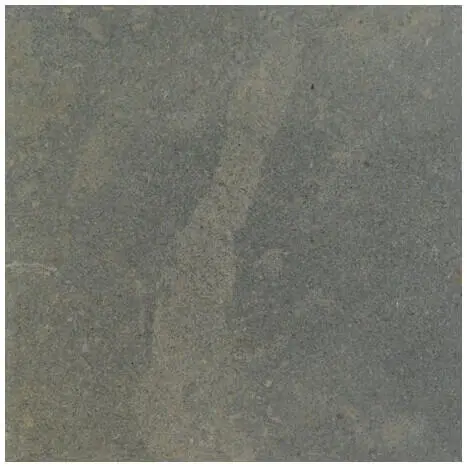
Figure 1:Macroscopic appearance of Valverde limestone (honed surface; size of the photo: 10 cm × 10 cm).
Table 1:General characteristics and classification (according Dunham (1962) and Folk (1962)) of the selected limestones. The sample VAV is the Valverde variety.
| Sample | General characteristics | Classification |
| ALP | Grey limestone composed of a micritic groundmass (95 %) and 5 % of components | Pelagic Mudstone (after Dunham, 1962) and Micrit (after Folk, 1962) |
| ATAZ | Light cream limestone with 50 % groundmass and 50 % components | Peloidal wackestone (after Dunham, 1962) and Pelmicrit (after Folk, 1962) |
| ATCR | Cream coloured limestone with 60 % groundmass and 40 % components | Peloidal wackestone and packstone (after Dunham, 1962) and Pelmicrit (after Folk, 1962) |
| CODFV | Light grey limestone composed of 60 % groundmass and 40 % components | Ooid-peloid grainstone (after Dunham, 1962) and Oopelsparit (after Folk, 1962 |
| LIOZ | Fully recrystallized limestone composed of calcite microcrystals (sparit and microsparit) | Dolosparit (after Folk, 1962) |
| MCCT | Light cream limestones composed of 50 % groundmass and 50 % components | Bioclastic grainstone (after Dunham, 1962) and Biopelsparudit (after Folk, 1962) |
| SBM | Light cream limestone composed of 40 % groundmass and 60 % components | Peloidal grainstone (after Dunham, 1962) and Pelsparit (after Folk, 1962) |
| SBR | Light cream limestone composed of 40 % groundmass and 60 % components | Ooid grainstone (after Dunham, 1962) and Oosparudit (after Folk, 1962) |
| VAV | Light to medium grey limestone composed of 70 % groundmass and 30 % components. | Bioclastic packstone/grainstone (after Dunham, 1962) and Biosparit/Biodismicrit (after Folk, 1962). |
| VPAZ | Medium grey limestone composed of a micritic groundmass (> 90 %) and less than 10 % of components | Pelagic Mudstone (after Dunham, 1962) and Micrit (after Folk, 1962) |
| VPCR | Light grey limestone composed of 60 % groundmass and 40 % components | Bioclastic floatstone (after Dunham, 1962) and Biomicrudit (after Folk, 1962). |
For a Portuguese limestone (usually named Valverde ) several stoneworkers described bowing phenomena. In order to evaluate these observations systematically, eleven limestone varities were selected and analysed: Alpinina (ALP), Ataíja Azul (ATAZ), Ataíja Creme (ATCR), Semi-rijo Codaçal (cut pararellel to the sedimentary lamination, CODFV), Lioz (LIOZ), Moca 4M (cut perpendicular to the sedimentary lamination, MCCT), Semi-rijo Branco Mais(i) (SBM), Semi-rijo Branco Real (SBR), Vidraço Azul Valverde (VAV); Vidraço Portela Azul (VPAZ); Vidraço Portela Creme (VPCR).
The limestone samples used in this study where collected in the Maciço Calcário Estremho (MCE), a Jurassic limestone massif located in the Portuguese Lusitanian Basin, with the exception of one sample (LIOZ) collected in a Cretaceous Unit near Lisbon (Silva, 2017). MCE is one of the world’s leading regions producers of limestones for ornamental purposes. The quarries develop along the hillside, with several benches, can reach depths around 50 m and are grouped in several exploitation sites. Several lithostratigraphic units are exploited and originate different ornamental varieties, from cream laminated calcarenites to grey calciclastic micritic limestones (Carvalho and Lisboa, 2018). The samples selected from MCE show this high variability.
Читать дальшеИнтервал:
Закладка:
Похожие книги на «Monument Future»
Представляем Вашему вниманию похожие книги на «Monument Future» списком для выбора. Мы отобрали схожую по названию и смыслу литературу в надежде предоставить читателям больше вариантов отыскать новые, интересные, ещё непрочитанные произведения.







Обсуждение, отзывы о книге «Monument Future» и просто собственные мнения читателей. Оставьте ваши комментарии, напишите, что Вы думаете о произведении, его смысле или главных героях. Укажите что конкретно понравилось, а что нет, и почему Вы так считаете.