Siegfried Siegesmund - Monument Future
Здесь есть возможность читать онлайн «Siegfried Siegesmund - Monument Future» — ознакомительный отрывок электронной книги совершенно бесплатно, а после прочтения отрывка купить полную версию. В некоторых случаях можно слушать аудио, скачать через торрент в формате fb2 и присутствует краткое содержание. Жанр: unrecognised, на немецком языке. Описание произведения, (предисловие) а так же отзывы посетителей доступны на портале библиотеки ЛибКат.
- Название:Monument Future
- Автор:
- Жанр:
- Год:неизвестен
- ISBN:нет данных
- Рейтинг книги:4 / 5. Голосов: 1
-
Избранное:Добавить в избранное
- Отзывы:
-
Ваша оценка:
Monument Future: краткое содержание, описание и аннотация
Предлагаем к чтению аннотацию, описание, краткое содержание или предисловие (зависит от того, что написал сам автор книги «Monument Future»). Если вы не нашли необходимую информацию о книге — напишите в комментариях, мы постараемся отыскать её.
Alle vier Jahre treffen sich auf einer internationalen Tagung Experten, die sich mit den entsprechenden Sachfragen beschäftigen. Der „14th International Congress on the Deterioration and Conservation of Stone“ findet im September 2020 in Göttingen statt. Er ist die wichtigste Veranstaltung zur Verbreitung des Wissens von Praktikern und Forschern, die im Bereich der Steinkonservierung zur Erhaltung des baulichen Kulturerbes arbeiten: Geowissenschaftler, Architekten, Bauspezialisten, Ingenieure, Restauratoren, Denkmalpfleger und Bauherren.
Der Tagungsband mit über 150 wissenschaftlichen Beiträgen repräsentiert und erfasst den neuesten Stand der Technik auf diesem Gebiet.
Themen sind:
– Charakterisierung von Schadensphänomenen von Steinen und verwandten Baumaterialien (Stuck, Putz, Mörtel usw.)
– Methoden zur Untersuchung des Steinverfalls in situ und zerstörungsfreie Prüfung
– Langzeitüberwachung von Steindenkmälern und Gebäuden
– Simulation und Modellierung des Zerfalls
– Technologien und Entwicklung verbesserter Bearbeitung und Verwendung von Stein in Neubauten
– Bewertung der Langzeitwirkung von Bearbeitungstechniken
– Auswirkungen des Klimawandels auf die Steinverwitterung des Kulturerbes
– Berichte zur Steinkonservierung: Fallstudien und Projekte
– Digitalisierung und Dokumentation von Steinkonservierung
–
The 14th International Congress on the Deterioration and Conservation of Stone, entitled MONUMENT FUTURE: DECAY AND CONSERVATION OF STONE is a quadrennial event that brings together a world-wide community of geoscientists, architects, building specialists, engineers, conservators, restorators, monument curators and building owners who are concerned about the conservation of cultural stone structures and objects. Since antiquity, the weathering and deterioration of historical buildings, masonry, monuments, sculptures etc. using natural stones has been a very well-known problem.
This conference is the main gathering for the dissemination of knowledge in the field of stone deterioration issues. It represents and captures the state-of-the-art in the field of stone conservation and cultural heritage conservation with regards to the following topics:
– Characterisation of damage phenomena of stone and related building materials (plaster, rendering, mortar etc.)
– Methods for the investigation of stone decay; in-situ and non-destructive testing
– Long-term monitoring of stone monuments and buildings
– Simulation and modelling of decay
– Technology and development of improved treatments and use of stone in new buildings
– Assessment of long-term effects of treatments
– Impact of climate change on stone decay of Cultural Heritage
– Reports about stone conservation: case studies and projects
– Digitalization and documentation in stone conservation
Monument Future — читать онлайн ознакомительный отрывок
Ниже представлен текст книги, разбитый по страницам. Система сохранения места последней прочитанной страницы, позволяет с удобством читать онлайн бесплатно книгу «Monument Future», без необходимости каждый раз заново искать на чём Вы остановились. Поставьте закладку, и сможете в любой момент перейти на страницу, на которой закончили чтение.
Интервал:
Закладка:
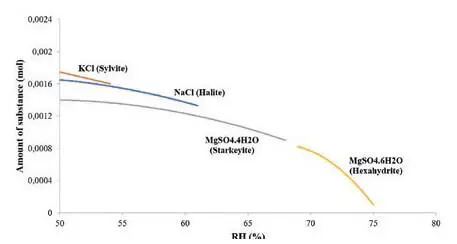
Figure 3:Structure samples Ion Chromatography results elaborated with Runsalt ®.
Salt crystallization process is not directly observed in the structure surface of the area of study, nevertheless, a careful revision of the whole structure should be done to eventually detect this type of deterioration and compare salt concentrations with generic sections of the structure and define if ion chromatograph results are effectively reliable to correctly detect the deterioration process in this case of study.
Results were further analysed with Runsalt software (V. 1.9), (Bionda 2005). It is the graphical user interface to the ECOS thermodynamic model (Price 2000). It allows to define which salts are crystallizing from a mixture depending on temperature and RH conditions. The ion contents, as determined by IC, are input for the model. As an example, sample 5 ion and cation values were introduced as a input, as well as the average temperature in Cartagena, 27.7 °C according to DIMAR (2018).
Table 3:Ion Chromatography results (%), input data of Runsalt. N.= Number of Sample.
| N | Cl– | SO4– | NO3– | Na+ | Mg+ | K+ |
| 1 | 0.044 | 0.171 | 0.048 | 0.074 | 0.025 | 0.042 |
| 2 | 0.196 | 0.15 | 0.005 | 0.25 | 0.036 | 0.003 |
| 3 | 0.861 | 0.587 | 0.016 | 0.814 | 0.11 | 0.077 |
| 4 | 0.481 | 0.162 | 0.035 | 0.431 | 0.037 | 0.064 |
| 5 | 0.115 | 0.134 | 0.008 | 0.207 | 0.04 | 0.007 |
Results are reported in Figure 3 and are similar for the whole structure samples. The mix of salts on the samples is identified and Relative Humidity of equilibrium (RH eq) is reported for each salt in the solution. It is worth to mention that Cartagena stands in a tropical area, with a Relative Humidity range between 72 % to 90 % during the year, considering minimum and maximum values of daily and seasonal variations. From these preliminary studies, Thenardite and Bloedite could crystalize having a RH eqof 75 %, although their role on the material deterioration should be further studied, for example pondering whether the number of crystallization cycles per year is relevant.
Regarding mechanical properties, SUCS varies between 1.5 MPa to 2.2 MPa which is typical of a soft pure limestone ( Table 3).
Conclusions
In the present research structure sample were analysed and the problem of salt crystallization in the structure deterioration was approached.
It was found that salts on the structure surface rarely crystalize due to high environmental RH in the area of study. Therefore, it can be inferred that probably salt plays a minor role in the stone deterioration, while the main causes of deterioration should be further studied.
129Quarry and structure stone were physical-chemical compared through X-ray and petrographical analysis. Quarry stones were found compatible for replacement of deteriorated block, although further research is needed to include more relevant physical and aesthetic variables in the analysis of stone replacement such as colour, texture and moisture transport properties.
Acknowledgements
This Project has been funded by the Universidad de Cartagena, Colombia, through the resolution number 00473 of 2016 “Octava convocatoria a proyectos de investigación, para grupos de investigación visibles (categorizados o reconocidos) en la plataforma Scienti del departamento de Ciencia, Tecnología e Innovación-Colciencias y avalados por la Universidad de Cartagena”. Furthermore, this project has been funded with the support of the European Commission (Grant agreement no. 2014-0873/001-001). This publication only reflects the view of the author, and the Commission cannot be held responsible for any use which may be made of the information contained therein - Elarch Program (project reference number: 552129-em-1-2014-1-it-era mundus-ema21). Finally, Authors would like to acknowledge the development of this work to Universidad Nacional de Colombia by funding DIB 34835.
References
Álvarez-Carrascal, J. L. (2018). Retrospectiva de la construcción del cordón amurallado de Cartagena de Indias, su presente y su futuro . Universidad de Granada.
ASTM C1721 – 15 Standard Guide for Petrographic Examination of Dimension Stone, (2015).
Baronio G, Binda L, Tedeschi C, Tiraboschi C (2003) Characterisation of the materials used in the construction of the Noto Cathedral. Construction and Building Materials 17:557-571 doi: 10.1016/j.conbuildmat.2003.08.007.
Binda, L., Baronio, G., Gavarini, C., De Benedictis, R. & Tringali, S., (1999) Investigation on Materials and Structures for the Reconstruction of the Partially Collapsed Cathedral of Noto (Sicily). In 6th Int. Conf. Structural Studies, Repairs and Maintenance of Historical Buildings, STREMAH 99, Dresden, Germany, pp. 323–332.
Binda L, Baronio G, Tedeschi C, Tiraboschi C (2003c) Experimental research for the choice of adequate materials for the reconstruction of the Cathedral of Noto. Construction and Building Materials 17:629-639. doi: 10.1016/S0950-0618(03)00059-X.
Bionda, D. (2005). A graphical user interface to the ECOS thermodynamic model for the prediction of the behaviour of salt mixtures under changing climate conditions .
Cabrera, A., Martelo, R., Martinez, A., & Martinez, R. (1995). La Ruta De Los Hornos .
UNI EN 1936:2007 Natural stone test methods – Determination of real density and apparent density, and of total and open porosity, 1 (2007).
DIMAR. (2018). Boletín Meteomarino del caribe Colombiano. No. 68 Agosto 2018 . https://issuu.com/dimarcolombia/docs/boletin201808
Dunham, R. J. (1962). Classification of carbonate rocks according to depositional texture. In W. E. Ham (Ed.), Classification of Carbonate Rocks. American Association of Petroleum Geologists Memoir (pp. 108–121).
Ferretti, D., & Bažant, Z. P. (2006). Stability of ancient masonry towers: Moisture diffusion, carbonation and size effect. Cement and Concrete Research , 36 (7), 1379–1388. https://doi.org/10.1016/j.cemconres.2006.03.013
Ghafar Ahmad, A., & Abdul Rahman, H. F. (2010). Treatment of Salt Attack and Rising Damp in Heritage Buildings in Penang, Malaysia. Journal of Construction in Developing Countries , 15 (1), 93–113.
Kameni, M., & Orosa, J. A. (2016). Building construction materials effect in tropical wet and cold climates : A case study of office buildings in Cameroon. Case Studies in Thermal Engineering , 7 , 55–65. https://doi.org/10.1016/j.csite.2016.01.007
Nasraoui, M., Nowik, W., & Lubelli, B. (2009). A comparative study of hygroscopic moisture content, electrical conductivity and ion chromatography 130for salt assessment in plasters of historical buildings. Construction and Building Materials , 23 (5), 1731–1735. https://doi.org/10.1016/j.conbuildmat.2008.09.029
Price, C. (2000). Runsalt. An expert chemical model for determining the environmental conditions needed to prevent salt damage in porous materials, European Commission Research Report No 11, (Protection and Conservation of European Cultural Heritage) . Archetype Publications.
Читать дальшеИнтервал:
Закладка:
Похожие книги на «Monument Future»
Представляем Вашему вниманию похожие книги на «Monument Future» списком для выбора. Мы отобрали схожую по названию и смыслу литературу в надежде предоставить читателям больше вариантов отыскать новые, интересные, ещё непрочитанные произведения.







Обсуждение, отзывы о книге «Monument Future» и просто собственные мнения читателей. Оставьте ваши комментарии, напишите, что Вы думаете о произведении, его смысле или главных героях. Укажите что конкретно понравилось, а что нет, и почему Вы так считаете.