Siegfried Siegesmund - Monument Future
Здесь есть возможность читать онлайн «Siegfried Siegesmund - Monument Future» — ознакомительный отрывок электронной книги совершенно бесплатно, а после прочтения отрывка купить полную версию. В некоторых случаях можно слушать аудио, скачать через торрент в формате fb2 и присутствует краткое содержание. Жанр: unrecognised, на немецком языке. Описание произведения, (предисловие) а так же отзывы посетителей доступны на портале библиотеки ЛибКат.
- Название:Monument Future
- Автор:
- Жанр:
- Год:неизвестен
- ISBN:нет данных
- Рейтинг книги:4 / 5. Голосов: 1
-
Избранное:Добавить в избранное
- Отзывы:
-
Ваша оценка:
Monument Future: краткое содержание, описание и аннотация
Предлагаем к чтению аннотацию, описание, краткое содержание или предисловие (зависит от того, что написал сам автор книги «Monument Future»). Если вы не нашли необходимую информацию о книге — напишите в комментариях, мы постараемся отыскать её.
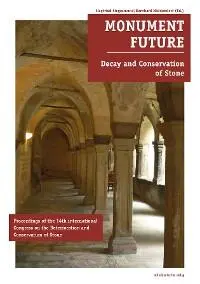
Alle vier Jahre treffen sich auf einer internationalen Tagung Experten, die sich mit den entsprechenden Sachfragen beschäftigen. Der „14th International Congress on the Deterioration and Conservation of Stone“ findet im September 2020 in Göttingen statt. Er ist die wichtigste Veranstaltung zur Verbreitung des Wissens von Praktikern und Forschern, die im Bereich der Steinkonservierung zur Erhaltung des baulichen Kulturerbes arbeiten: Geowissenschaftler, Architekten, Bauspezialisten, Ingenieure, Restauratoren, Denkmalpfleger und Bauherren.
Der Tagungsband mit über 150 wissenschaftlichen Beiträgen repräsentiert und erfasst den neuesten Stand der Technik auf diesem Gebiet.
Themen sind:
– Charakterisierung von Schadensphänomenen von Steinen und verwandten Baumaterialien (Stuck, Putz, Mörtel usw.)
– Methoden zur Untersuchung des Steinverfalls in situ und zerstörungsfreie Prüfung
– Langzeitüberwachung von Steindenkmälern und Gebäuden
– Simulation und Modellierung des Zerfalls
– Technologien und Entwicklung verbesserter Bearbeitung und Verwendung von Stein in Neubauten
– Bewertung der Langzeitwirkung von Bearbeitungstechniken
– Auswirkungen des Klimawandels auf die Steinverwitterung des Kulturerbes
– Berichte zur Steinkonservierung: Fallstudien und Projekte
– Digitalisierung und Dokumentation von Steinkonservierung
–
The 14th International Congress on the Deterioration and Conservation of Stone, entitled MONUMENT FUTURE: DECAY AND CONSERVATION OF STONE is a quadrennial event that brings together a world-wide community of geoscientists, architects, building specialists, engineers, conservators, restorators, monument curators and building owners who are concerned about the conservation of cultural stone structures and objects. Since antiquity, the weathering and deterioration of historical buildings, masonry, monuments, sculptures etc. using natural stones has been a very well-known problem.
This conference is the main gathering for the dissemination of knowledge in the field of stone deterioration issues. It represents and captures the state-of-the-art in the field of stone conservation and cultural heritage conservation with regards to the following topics:
– Characterisation of damage phenomena of stone and related building materials (plaster, rendering, mortar etc.)
– Methods for the investigation of stone decay; in-situ and non-destructive testing
– Long-term monitoring of stone monuments and buildings
– Simulation and modelling of decay
– Technology and development of improved treatments and use of stone in new buildings
– Assessment of long-term effects of treatments
– Impact of climate change on stone decay of Cultural Heritage
– Reports about stone conservation: case studies and projects
– Digitalization and documentation in stone conservation
Monument Future — читать онлайн ознакомительный отрывок
Ниже представлен текст книги, разбитый по страницам. Система сохранения места последней прочитанной страницы, позволяет с удобством читать онлайн бесплатно книгу «Monument Future», без необходимости каждый раз заново искать на чём Вы остановились. Поставьте закладку, и сможете в любой момент перейти на страницу, на которой закончили чтение.
Интервал:
Закладка:
During the process of restoration of cultural heritage buildings, it is usual to replace highly deteriorated stones and mortars with new ones. Unfortunately, often the choice of replacement materials is done without sufficient preliminary investigation of the properties of the existing materials. In order to come to a selection of replacement stones compatible with the existent ones, several material properties need to be taken into account, such as petrographic properties, mechanical strength, moisture transport behaviour, colour, texture etc., (Baronio G., et al. 2003), (Binda L. et al. 2003).
In the present research the study case of the Fortresses of Cartagena is reported. They are UNESCO Cultural heritage since 1984, nevertheless, UNESCO inspectors identified and high level of deterioration and lack of long-term maintenance plans, (UNESCO, 1984). The structure stands in front of the Caribbean Sea, in a tropical area, therefore, salt crystallization process was studied on the structure surface to define its role in the structure deterioration.
Quarry samples were taken from an ancient quarry in Cartagena (Tierrabomba Island) in the geological Formation called La Popa. La Popa Formation rests on the Bayunca Formation (of the Pliocene) and it was formed during the Upper Pleistocene. It is conformed by coral reefs formed on an underwater platform in an area with little contribution of terrigenous sediments, clear waters and temperatures between 21 °C and 25 °C. High porous limestones (> 30 %) with bulk density < 1,500 kg m –3are common in the area. Similar physical-mechanical characteristics were identified in the Cartagena’s Fortification from previous analysis, (Saba et al. 2019).
Therefore, structure and quarry samples were physical-chemical compared to assess the reliability to use them as a replacement of the deteriorated structure stones.
Materials and Methods
5 structure samples were collected from the stone surface (5 mm depth). Additionally, thin sections were done on those samples following the ASTM C1721 – 15, (2015) standard using blue epoxydic resin. Thin sections were petrographical analysed with an Olympus CX 31 microscope with magnifications ranging from x5 to x100 for assessing the presence of bioclasts, type of cement, terrigenous, distribution and quantification of primary and secondary porosity. Each thin section has a dimension of 4.5 cm × 2.6 cm. Point counting technique was used in a mesh of 300 equidistant points.
On these samples, ion analyses were carried out using Ion Chromatograph (IC). Powdered samples were dried at 60 °C until constant weight. Saline solubilisation was achieved by shaking 1 g of each dried sample in 100 ml of ultra-pure water. The 10 ml of obtained supernatants were filtered through a 0.2 µm PTFE membrane. The separation of cations Na+ , Mg+ , K+ was achieved by using a stationary-phase featuring a CS12A 250*4 mm column with a 10*4 mm guard (Dionex). As for anions Cl– , SO 4 – , NO 3 – , the stationary phase featured a AS9-HC 250 *4 mm column with a 10*4 mm guard (Dionex), (Nasraoui M. et al. 2009)the standard analytical equipment as ion chromatography (IC).
80 cubes of 5.0 × 5.0 × 5.0 cm were selected in the original quarry of the structure for the physical-mechanical 127characterization. Specimens were Characterized following the Natural Stone Test Methods (UNI EN 1936:2007 Natural stone test methods – Determination of real density and apparent density, and of total and open porosity, 2007). Real Volume V R(m 3), Open Porosity P o(%) and Apparent Density ρ b(kg m –3) were calculated, (1–3).

Where m d(g) is the Dry mass, m s(g) Saturated mass, m h(g) water immersion mass, ρ rhwater density at 20 °C, 998 kg m -3.
Stone Uniaxial Compressive Strength (SUCS) measurements were done on the quarry samples.
X-Ray analysis were done in the 5 quarry samples and in 2 structure samples.
Results and Discussion
Thin section analysis results showed in Table 1highlights that structure and quarry sample are both classified as Packestone according to Dunham (1962). They have similar ranges of Bioclasts and Sparry cement, while Primary porosity is significantly higher in the quarry samples (see Figure 1). Increasing of stone porosity often is related to decreasing of mechanical properties, which is probably the reason why this specific quarry in Tierrabomba Island was abandoned for new ones in the same area at the middle of the XVII century (Álvarez-Carrascal 2018; Cabrera et al. 1995).
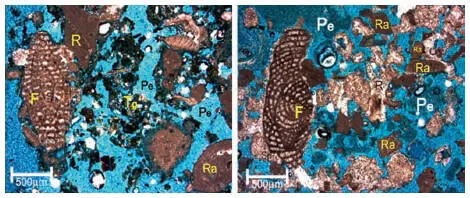
Figure 1:Thin Section structure and Quarry Stones, (Saba et al. 2019).
Table 1:Petrographycal analysis results.
| Component | Structure stone (%) | Quarry Stone (%) |
| Bioclasts (B) | 28.5±4.4 | 29.3±2.1 |
| Terrígenous (T) | 7.6±6.2 | 0.8±0.5 |
| Autigens and Others (Au) | 0.1±0.3 | 0.00±0.00 |
| Primary Porosity (P) | 34.7±5.9 | 45.3±2.1 |
| Secondary Porosity (S) | 0.0±0.0 | 0.0±0.0 |
| Micrite Cement (M) | 3.2±2.3 | 0.0±0.0 |
| Sparry Cement (Sp) | 27.2±6.4 | 21.47±1.6 |
From the quarry stone physical-mechanical characterization, can be highlighted that open porosity differs about 10 % from thin section analysis, which means that thin section measurements despite their low representativeness provide an acceptable approximation to porosity values compared with results coming from a large number of samples analysed whit gravimetrical measurements.
Structure and quarry stone are found as pure limestone from the X-ray analysis, with CaCO 3higher than 98 %, and a presence of Quartz and Halite lower than 1 %, (Figure 2).

Figure 2:Structure samples X-Ray results.
Ion chromatography analysis on structure samples show a total range of salts between 0.4 % and 2.4 % of Mass on average 1.0 % in all 5 structure samples ( Table 2). From the literature review it is difficult to assess if this is a high or low salt content because it should be compared with samples taken at the same depth.
Salts are usually found with higher concentration 128on the first millimetres of the material surface, while lower concentrations correspond to deeper sampling. In our case sampling depth has been 5 mm from the surface. Nevertheless, sampling depth in literature works usually it is not adequately reported (Ahmad & Haris Fadzilah 2010; C, Lopez-Arce et al. 2016). Hence, a comparison is risky and not appropriate (Figure 3).
Table 2:Stone Physical-mechanical Characteristics.
| Characteristic | Quarry Stone |
| V R(mm 3× 10 5) | 1.55±0.11 |
| M s(g × 10 2) | 2.75±0.12 |
| M h(g × 10 2) | 1.03±0.09 |
| M d(g × 10 2) | 1.55±0.12 |
| P 0(%) | 42.78±1.88 |
| ρ b(kg m –3) | 1411±47 |
| SUCS (MPa) | 1.86±0.36 |
V Ris Real Volume P oOpen Porosity, ρ bApparent Density, m dis the Dry mass, m sSaturated mass, m hwater immersion mass, SUCS is Stone Uniaxial Compressive strength
Читать дальшеИнтервал:
Закладка:
Похожие книги на «Monument Future»
Представляем Вашему вниманию похожие книги на «Monument Future» списком для выбора. Мы отобрали схожую по названию и смыслу литературу в надежде предоставить читателям больше вариантов отыскать новые, интересные, ещё непрочитанные произведения.










Обсуждение, отзывы о книге «Monument Future» и просто собственные мнения читателей. Оставьте ваши комментарии, напишите, что Вы думаете о произведении, его смысле или главных героях. Укажите что конкретно понравилось, а что нет, и почему Вы так считаете.