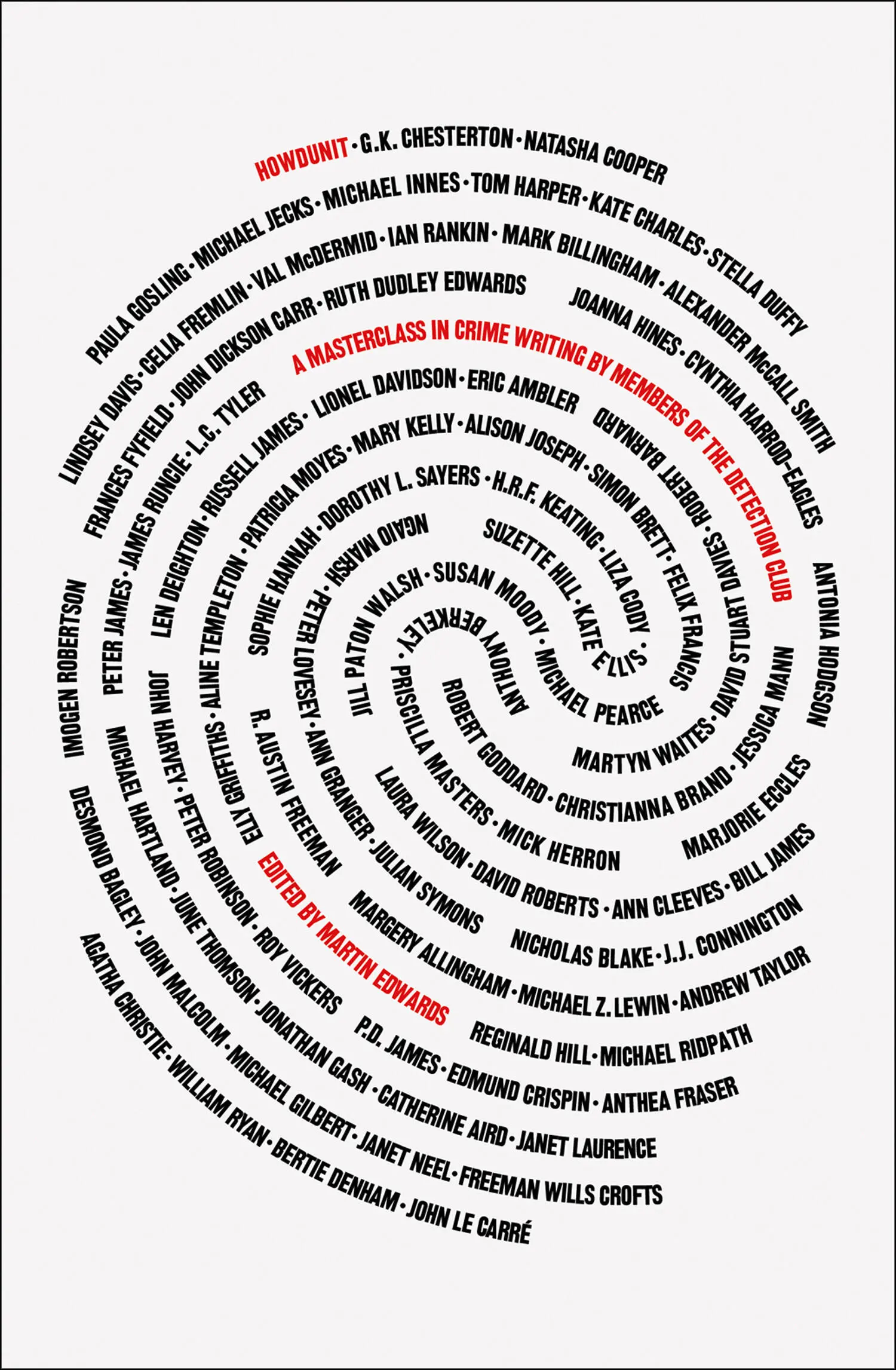
Howdunit
Здесь есть возможность читать онлайн «Howdunit» — ознакомительный отрывок электронной книги совершенно бесплатно, а после прочтения отрывка купить полную версию. В некоторых случаях можно слушать аудио, скачать через торрент в формате fb2 и присутствует краткое содержание. Жанр: unrecognised, на английском языке. Описание произведения, (предисловие) а так же отзывы посетителей доступны на портале библиотеки ЛибКат.
- Название:Howdunit
- Автор:
- Жанр:
- Год:неизвестен
- ISBN:нет данных
- Рейтинг книги:5 / 5. Голосов: 1
-
Избранное:Добавить в избранное
- Отзывы:
-
Ваша оценка:
Howdunit: краткое содержание, описание и аннотация
Предлагаем к чтению аннотацию, описание, краткое содержание или предисловие (зависит от того, что написал сам автор книги «Howdunit»). Если вы не нашли необходимую информацию о книге — напишите в комментариях, мы постараемся отыскать её.
Howdunit — читать онлайн ознакомительный отрывок
Ниже представлен текст книги, разбитый по страницам. Система сохранения места последней прочитанной страницы, позволяет с удобством читать онлайн бесплатно книгу «Howdunit», без необходимости каждый раз заново искать на чём Вы остановились. Поставьте закладку, и сможете в любой момент перейти на страницу, на которой закончили чтение.
Интервал:
Закладка:
Harpur represents the proper, nose-clean side of policing – most of the time, although he will take short cuts. Iles constantly mocks him for being too conventional and too timid. But quite often Harpur is the one who gets things put right, who actually runs the place behind Iles’s back to some extent. He neutralises Iles. And he appears to work his own way, and sometimes actually does work his own way, and succeeds where Iles’s methods might not.
Somebody asked me, in an interview in France, if I was Harpur. ‘Oh, no!’ I said. ‘I’m Panicking Ralph!’ I understand people who get scared, which he does. I understand people who have crazy kind of ambitions. He wants to turn his rather seedy club, The Monty, into something like the Athenaeum in London, which is preposterous. But, we all have those ambitions and they are in some ways poignant and in some ways comical, so that I can get a fair number of laughs out of Ralph and similarly out of the other big dealer, Mansel Shale, who pretends to a kind of social style.
The technique of the books is to give qualities to people that are a surprise in them. Harpur and Iles work, if they do work, as fiction characters because they are not sergeants and constables, they are extremely high-ranking cops who don’t always play by the book. So there is kind of a shock element in that. Of course, I’m not the first or only crime writer to show a cop (or cops) with faults. Perhaps Iles drifts closer to the outrageous, though, and he is always beautifully dressed – uniform or civvies.

A key question for authors with police officers as protagonists concerns how much attention they devote to describing police procedure realistically. John Wainwright was a serving police officer for many years before becoming a prolific and successful crime writer and, from 1983, a member of the Detection Club. His inside knowledge of the lives and work of detectives gives his books a strong flavour of authenticity.
Conversely, Colin Dexter achieved global success with his books about Inspector Morse without troubling too much about the detail of police procedure. The millions of readers who love Ruth Rendell’s books about Reg Wexford and P. D. James’s series about Adam Dalgleish are not unduly concerned about technical minutiae. The strength of the characters, settings, and plots offer more than adequate compensation.
Similarly, Marjorie Eccles’ prime focus is on telling a story about interesting people. In the course of a career lasting over thirty years, she has written a wide range of books; contemporary and historical crime series as well as stand-alones and many short stories. Like Mark Billingham, Bill James, Colin Dexter, Ruth Rendell, and P. D. James, she has seen her police detective brought to life on television.
Making Characters Believable
Marjorie Eccles
It is a truth universally acknowledged that a crime writer possessed of an idea for a novel must be in want of characters.
All right, so we have our basic idea. What has triggered it off? Where has it come from? That perennial question, often as unanswerable to writers as it is to the readers who invariably ask it. To which the response has to be, who knows? Anything could have given birth to it: an intriguing incident that’s been squirrelled away for further use and suddenly raises its head with possibilities; the unexpected recall of an atmospheric place; a niggle that’s been buzzing around in your subconscious. It may be a new, exciting snippet of news that’s sparked off possibilities for a story; it may have lain dormant for a long time; but now the seed is there, ready to germinate.
And here too are the shadowy figures in the wings, waiting to put flesh and blood on the skeleton idea. No problem, one would imagine … it’s relatively easy to put together a few random people to carry the story through, isn’t it? Maybe, but the tricky bit lies in making them come alive enough for the reader to recognize and identify with, to care enough about.to want to turn the pages and reach the end of the book. They have to be realistic, recognizable and believable in an imaginary world in which chaos, crime and violence exist, or which will certainly intrude; a world most people will hopefully never encounter.
In an ideal situation, there would be a convenient recipe handy, a formula for creating such characters, but I’ve never been able to find it. In the end, I believe it has to be largely intuitive, relying on one’s own experiences and observation of how people speak, think and act. Human nature doesn’t change. The human race continues to possess the same propensities for good or evil, intelligence or ignorance, kindness or cruelty, love or hate, the same capacities for jealousy and revenge as it always has. But how readers will see the characters you have envisaged in the way you wish needs a good deal more thought.
How much does physical appearance matter? To begin with, readers need to be given a general but not necessarily lengthy picture of the sort of character you are envisaging when they are first introduced. Appearances being notoriously deceptive, something about them, the sort of first impression we get when we meet someone for the first time, is probably a better option than a detailed description at this point. We can leave it to the reader’s imagination to do the rest, to build up their own impressions as the book progresses and more of the character’s traits are revealed through their speech and actions.
It may be advice that’s been given too often, but it’s not a bad idea to try to get under the skin of one’s characters. Look at how actors do this, stepping into the life of a role and being that person – and then look at how successfully they handle characters when they turn their hands to writing, be it novels or plays. Live, eat, breathe with these as-yet-imaginary people. Try to understand just how they will respond in any given circumstances (not least when they are under stress), learning everything about them, their idiosyncrasies, their habits, good or bad, as well as you know your own (some of which you might never have suspected you possessed). You can’t help but bring them to life.
As writers, we should know far more about the characters we’ve brought into being than ever ends up on the printed page. Like an iceberg, the ninety per cent mass below the surface supports what shows above the water. It can be self-defeating to give too much chapter and verse, slowing the pace if the story is mainly one of action; or worse, boring the reader. Better to allow for some speculation about them and their role in the puzzle that is a detective novel: why they have acted in such a way, what has motivated them. The satisfaction of working it out for themselves is after all is one of the things readers of crime novels enjoy.
Having said that, it’s worth remembering that if the book is not set in the present day. attitudes and opinions are bound to be influenced by the times in which people live. I have written crime fiction set in the past, ranging from the early Edwardian age to the 1930s, all in all a period of incredible social change. The holocaust of the First World War, beginning in 1914, turned the world upside down and afterwards, for most of the people who had lived through it, life was never the same again. Working men who had experienced the horrors of trench warfare and fought alongside those previously thought to be their betters had gained different attitudes towards social class. Women who had shown themselves capable of taking on men’s jobs during the war now sought independence and careers of their own. A million young men were amongst the countless number who lost their lives, leaving behind a spinster generation: the maiden ladies who later turned up in so much post-war fiction. Writing today, we must beware of attributing modern mores to characters who lived fifty or a hundred years ago, or vice versa. How someone thought and behaved about racism in, say, the Twenties or Thirties might not – probably wouldn’t – be how that same character would react today.
Читать дальшеИнтервал:
Закладка:
Похожие книги на «Howdunit»
Представляем Вашему вниманию похожие книги на «Howdunit» списком для выбора. Мы отобрали схожую по названию и смыслу литературу в надежде предоставить читателям больше вариантов отыскать новые, интересные, ещё непрочитанные произведения.



Обсуждение, отзывы о книге «Howdunit» и просто собственные мнения читателей. Оставьте ваши комментарии, напишите, что Вы думаете о произведении, его смысле или главных героях. Укажите что конкретно понравилось, а что нет, и почему Вы так считаете.