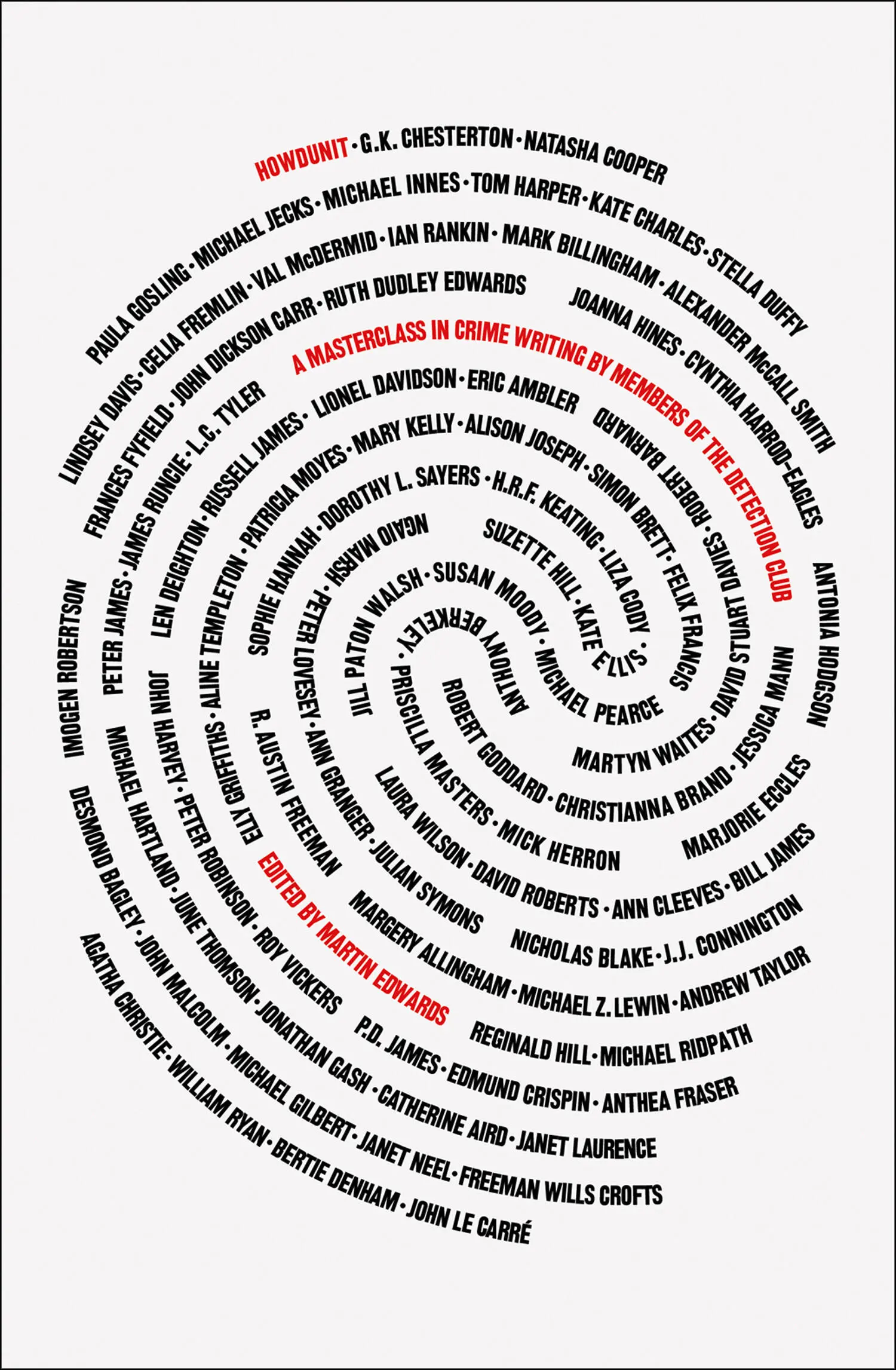
Howdunit
Здесь есть возможность читать онлайн «Howdunit» — ознакомительный отрывок электронной книги совершенно бесплатно, а после прочтения отрывка купить полную версию. В некоторых случаях можно слушать аудио, скачать через торрент в формате fb2 и присутствует краткое содержание. Жанр: unrecognised, на английском языке. Описание произведения, (предисловие) а так же отзывы посетителей доступны на портале библиотеки ЛибКат.
- Название:Howdunit
- Автор:
- Жанр:
- Год:неизвестен
- ISBN:нет данных
- Рейтинг книги:5 / 5. Голосов: 1
-
Избранное:Добавить в избранное
- Отзывы:
-
Ваша оценка:
Howdunit: краткое содержание, описание и аннотация
Предлагаем к чтению аннотацию, описание, краткое содержание или предисловие (зависит от того, что написал сам автор книги «Howdunit»). Если вы не нашли необходимую информацию о книге — напишите в комментариях, мы постараемся отыскать её.
Howdunit — читать онлайн ознакомительный отрывок
Ниже представлен текст книги, разбитый по страницам. Система сохранения места последней прочитанной страницы, позволяет с удобством читать онлайн бесплатно книгу «Howdunit», без необходимости каждый раз заново искать на чём Вы остановились. Поставьте закладку, и сможете в любой момент перейти на страницу, на которой закончили чтение.
Интервал:
Закладка:
A crime novel – by which I mean here a mystery, usually involving a murder, a police detective, private eye or talented amateur sleuth – is often more cerebral than action-filled, which can cause hook-related problems of its own. Raymond Chandler once wrote, ‘When in doubt have a man come through a door with a gun in his hand.’ He was describing the experience of writing for the pulps, but his words are often taken as advice about how to move on the action when you think the plot is in a bit of a slump and you need to re-hook the reader. It works. I know; I’ve done it! But you can only get away with it once, especially if your books are set in the UK, where guns are not so prevalent.
In a crime novel, you have a huge variety of possible hooks at your disposal, many things you can substitute for the man with the gun, either of greater or lesser intensity. Most obviously, you can place your protagonist in harm’s way. Some of the most effective lesser hooks are information, a revelation of some sort, or secrets and lies. It is always a good idea to hint early on that someone has a secret or is lying about something and to delay the revelation of what this is. You control this revelation; you can use it when you want, when you feel ‘something should happen now’.
There are numerous little questions raised in every chapter of every story, and each one of them is capable of becoming a narrative hook, so you need to exploit them to the best of your abilities and use both the question and its answer as a means of getting the most tension and best pacing out of your writing.
A good example in crime fiction is forensic information, all of which will eventually be pieced together to help form a solution to the puzzle (or a red herring, at least). First you get the crime scene sorted, the trace evidence packed away and sent off to the various lab departments. You’ve probably got fingerprints, possible DNA, hair, a footprint, a tyre track, a dodgy alibi, a mysterious stain, a witness or two to track down. The answers to all these questions can be spread out throughout your novel almost at will, and the information they provide can be used as and when you feel that ‘something should happen now’. Revelation is also a kind of action, especially if it is not the answer you have led the reader to expect.
Crime writing isn’t formulaic, as some critics would have us believe, but there are certain structural possibilities in the genre that may act as signposts along the road and help keep you travelling in the right direction. These will also offer opportunities for further narrative hooks. For a start, there will be the crime. It’s usually murder because, as P. D. James most perceptively pointed out, the taking of another life is one thing that can’t be undone. And it means the stakes are high. The victim is dead, and it’s left to society, or its representative in the form of the investigator – private or official – to find out why and, if possible, restore some sort of balance and order. This kind of situation is intrinsic to a crime novel and is a gift in terms of narrative hooks. A good writer makes the reader want to take the journey with the detective and find out who and, perhaps more important, why this victim was killed in such a way. You don’t have to do anything extra to get this hook – it’s a gift of the genre.
P. D. James also pointed out that this restoration of order can never be complete and does not always include justice. It also doesn’t preclude any of the devastation and heartbreak such a crime leaves behind in the community and the lives and psyches of those individuals involved. Catching the killer never brings back the victim; nor does it bring peace to those who, through being serious suspects at some point, may have lost their livelihoods, families and friends. Make readers care about these characters, however minor some of them may be, and you will have even more narrative hooks. It would be well to bear this is mind as you build up the characters and their relationships, along with the picture of a community under stress, as you will be setting hooks there that heighten expectations for something to happen later. Relationships will be altered, something will be lost, and perhaps something else will replace it. All these things you can prepare for by the judicious use of narrative hooks. Remember: ‘Something should happen now.’
People
A crime novel – any novel – with dull characters is destined to fail. A strong plot and a fascinating setting are important, but unlikely to compensate for a failure to create interesting people. This is not to say that the characterization needs to be exceptionally sophisticated. Agatha Christie’s murder suspects were usually drawn with a few brief strokes, and characterization was not her greatest strength; yet her people are recognizable human types, their presentation sometimes enlivened with touches of humour, for which she had an underestimated talent. This element of universality helps to explain the enduring popularity of Christie’s work with people the world over, many of whom have never visited an English country house or met a butler or an elderly female amateur detective.
Skill at characterization is highly prized by writers, publishers, and readers alike. It doesn’t matter so much if a character is not likeable or behaves badly. That’s par for the course in a crime story. Readers can still care about the character’s fate. The enduring appeal of Patricia Highsmith’s amoral Tom Ripley illustrates the point; he’s not so much a series detective as a series sociopath. But if readers aren’t bothered about what Fate may have in store for a character, the wise writer will rethink.
Mark Billingham has explained on his website how he always envisaged that his most famous character, DI Tom Thorne, would develop book by book, and would never become predictable. He took the deliberate decision not to describe Thorne physically, and made sure that his detective carried with him the events that had shaped his life; he ‘is someone who deals with violent death, with terrible grief, and it would be ludicrous, inhuman, if he remained untouched by such things’.

Character from Suspense
Mark Billingham
I have been asked many times over the years – at events or during creative writing workshops – how a crime writer goes about creating suspense. There was a period when, in answer to this question, I would talk about what I considered to be the tricks of the crime writing trade. I would bang on about the importance of the cliffhanger, the twist and the ‘reveal’. Such devices remain hugely important, but I have come to realize that the answer actually lies in something far more basic, something that should be central to the writing of any piece of fiction: the creation of character.
All the techniques mentioned above are, of course, vital weapons in the mystery writer’s armoury and, as such, components of the genre that readers of crime novels have come to expect. They are part of the package; the buttons that a writer has to push every so often. When a crime writer thinks up a delicious twist, it is certainly a good day at the office, even if the ‘office’ at that particular moment happens to be the shower, the car or the park in which you’re walking the dog. Time to relax and take the rest of the day off.
I do think that it can be overdone, however.
There is a particular strain of crime and thriller writer who believes it is his or her duty to throw as many curveballs at the reader as possible. To twist and twist again. These are what I think of as the ‘Chubby Checkers’ of crime fiction and, while I admire the craft, I have come to believe that a superfluity of such tricks and tics can actually work against the creation of genuine suspense. Put simply, I find it hard to engage with any book that is no more than a demonstration of technique. I am not invested . A character dies, but why should I give a hoot when I know this particular writer’s stock in trade means that the character in question is almost certainly not dead at all? The cop or private detective or amateur sleuth has caught the killer, but is that the end of it? No, you can bet your boots it isn’t, because there are still three chapters left and I don’t have to be Hercule Poirot to work out that they have got the wrong man.
Читать дальшеИнтервал:
Закладка:
Похожие книги на «Howdunit»
Представляем Вашему вниманию похожие книги на «Howdunit» списком для выбора. Мы отобрали схожую по названию и смыслу литературу в надежде предоставить читателям больше вариантов отыскать новые, интересные, ещё непрочитанные произведения.



Обсуждение, отзывы о книге «Howdunit» и просто собственные мнения читателей. Оставьте ваши комментарии, напишите, что Вы думаете о произведении, его смысле или главных героях. Укажите что конкретно понравилось, а что нет, и почему Вы так считаете.