Howdunit
Здесь есть возможность читать онлайн «Howdunit» — ознакомительный отрывок электронной книги совершенно бесплатно, а после прочтения отрывка купить полную версию. В некоторых случаях можно слушать аудио, скачать через торрент в формате fb2 и присутствует краткое содержание. Жанр: unrecognised, на английском языке. Описание произведения, (предисловие) а так же отзывы посетителей доступны на портале библиотеки ЛибКат.
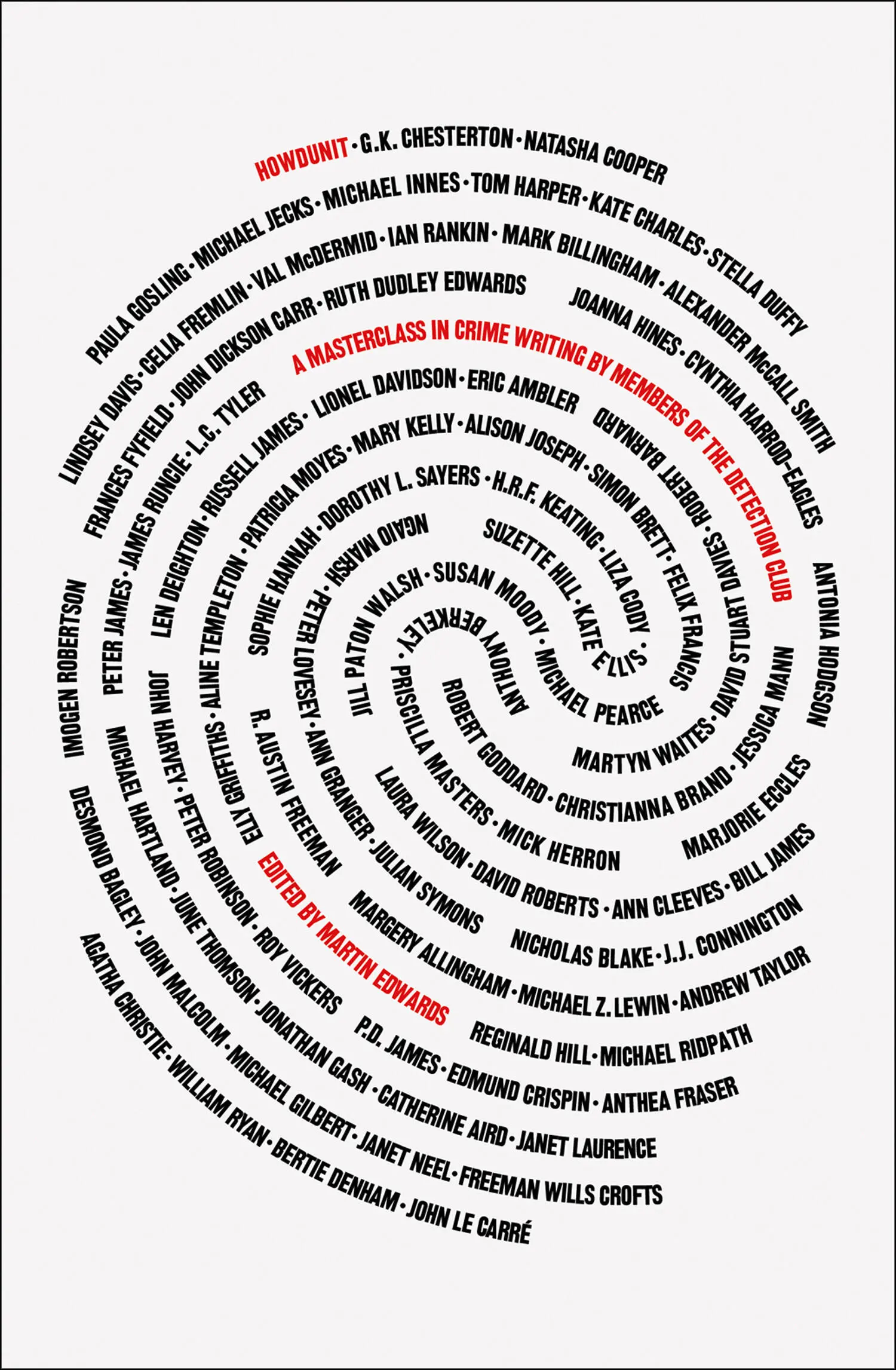
- Название:Howdunit
- Автор:
- Жанр:
- Год:неизвестен
- ISBN:нет данных
- Рейтинг книги:5 / 5. Голосов: 1
-
Избранное:Добавить в избранное
- Отзывы:
-
Ваша оценка:
Howdunit: краткое содержание, описание и аннотация
Предлагаем к чтению аннотацию, описание, краткое содержание или предисловие (зависит от того, что написал сам автор книги «Howdunit»). Если вы не нашли необходимую информацию о книге — напишите в комментариях, мы постараемся отыскать её.
Howdunit — читать онлайн ознакомительный отрывок
Ниже представлен текст книги, разбитый по страницам. Система сохранения места последней прочитанной страницы, позволяет с удобством читать онлайн бесплатно книгу «Howdunit», без необходимости каждый раз заново искать на чём Вы остановились. Поставьте закладку, и сможете в любой момент перейти на страницу, на которой закончили чтение.
Интервал:
Закладка:
I am often asked if my characters ever take over and begin to take the story in another direction. Well, if such a thing should seem to be happening, I would take a good hard look to find where I’ve gone wrong. Maybe the character doesn’t fit in and should be part of another story altogether, but it’s more likely that they have stepped out of character in some way. They are not acting consistently with how they have been presented until then. It is sometimes necessary to ask readers to suspend disbelief, but not to overlook aberrations of character. As writers, we have to hover over our creations with a coldly critical eye. Consistency is vital, and unconvincing deviations jump off the page and take away any belief in the person you have so far created. If I find one of my characters persists in acting as they shouldn’t, they have to be put firmly in their place, or summarily dispensed with.
That isn’t always so easy. These people are your creations, your darlings, and you have learnt to like if not to love them … even the baddies – vices being more interesting than virtues. Villains can be great fun to create and to read about. We may smile and admire their cheek while deploring what they’ve done. Conversely, someone who is too nice for their own good can be at best irritating or worse, dull. But in an effort not to bore the reader, it’s sometimes too easy to fall into the trap of creating grotesques, caricatures rather than characters, or another Frankenstein monster … all best avoided, unless it happens to be your deliberate intention to feature such in your novel. I suppose, if we’re being honest, most of us are rather dull in real life, but this is not to say your characters should be. Nor do they have to be larger than life, although they can be believable if you believe in them enough, and consistently show in credible ways that you do.
Of course, creating the principal character is always the main concern. When I wrote my first contemporary detective novel, I had no idea that Inspector Gil Mayo was to feature in another twelve. Crime fiction was a new venture for me and I had no way of knowing whether such a book would succeed or not. I knew from writing my previous books that my central character had to be not only someone whom the reader could recognize and identify with, care enough about to want to read to the last chapter; but also someone I strongly believed in. So, when Mayo finally became established in my mind, he was an expat Yorkshireman, living and working in the Midlands, on the edge of the Black Country. Plain-speaking, down-to-earth, shrewd, occasionally bloody-minded, but basically soft-hearted. The sort of person I was surrounded with as I grew up, and knew well.
Unless he was to be a cliché, a stage Yorkshireman, he had to have other qualities. I was naive enough at the time to have no idea that showing him as particularly unusual or quirky, even outrageous in some way, was considered a good thing. I settled for the man as he first appeared to me. He didn’t carry any emotional baggage, he wasn’t a loner though he was a widower with responsibilities for his teenage daughter. At that point his love life didn’t exist, though that was soon to be remedied when he met Alex Jones, a fellow police officer. He enjoyed walking holidays in Scotland, his favourite tipple was a single malt and his passion was music, mostly classical. He was logical, persistent and a demon for work, and I did allow him a strong streak of perceptiveness, that indispensable gift to all fictional detectives, which must happily get them there in the end.
The so-called Golden Age of crime novels, where the focus of the story lay on the amateur detective, with the police a barely acknowledged presence, had by then long been left behind. With the detection of crime becoming more and more a matter of police officers working as a team, the police novel needed more than a detective inspector and his sergeant or sidekick to get to the heart of the mystery, solve the puzzle and apprehend the murderer. Inspector (later Superintendent) Mayo had to acquire assistants.
Detective Sergeant Martin Kite was younger than Mayo, impulsive and good-natured, a locally born, married man with a young family, willing to work hard but not ambitious enough for promotion if it meant moving his family away. The temperaments of the two men were not in any way alike but they worked well together. I have found that the influences of background and environment are useful tools for adding other dimensions to a character and I think it helped in this instance that Mayo and Kite had their roots in similar backgrounds, areas of historical significance in the Industrial Revolution. The tough character and typically dry, self-deprecating humour of the people of the Black Country is something very akin to that of people living in the north of England: an inheritance in both cases from the harsh times in which their forebears were forced to exist.
The possibilities of a career for an ambitious woman in the police was something which had interested me for some time. As the only woman so far in Mayo’s team had been Jenny Platt, a young WDC, I felt the time had come for more balance. Hence the arrival of a new assistant for Mayo in the person of Sergeant Abigail Moon. Abigail was young, university-educated, a high-flyer who had been through the rapid promotion process. She was everything the rest of the team, including Mayo, was not and therefore provided a good contrast and another dimension to spark off the other members of the team. She lived alone and was highly ambitious, and achieved inspector status before long.
What all this amounts to, of course, is that characters are only formed through the filter of the writer’s mind; there can be no set rules to follow, except learning to develop an eagle eye for inconsistencies and a ruthlessness in correcting them.
Sitting alone all day, over-caffeinated, making up stories and lies about imaginary characters on a word processor in the hope that someone will have the courage to publish your efforts is a cross that writers have to bear. But if and when someone does … well, like childbirth, the agony of producing it is soon forgotten. And meanwhile, who is that new character, hovering in the wings?

Integrating characters and their relationships with the setting and storyline is a key skill for the crime writer. June Thomson’s contemporary series, set in rural Essex and featuring two police detectives, reached ‘an extraordinarily high level of achievement, standing perhaps second only to P. D. James … in the art of combining the puzzle story and the novel of character’, according to H. R. F. Keating in Whodunit? He chose To Make a Killing for his list of the hundred best crime and mystery books, making the point that Inspector Finch enters the story ‘only after more than eighty pages have gone by. June Thomson uses those pages to give us three fine character studies of people who come to seem as real as anyone we have known in the flesh.’ Although she established her reputation with novels about investigations conducted by police officers, in recent years she has become a leading exponent of the Sherlock Holmes story, while continuing to take care to integrate people, place, and plot.
Characters, Relationships, and Settings
June Thomson
Whether reading or writing it, I admit I prefer crime fiction to any other form of literature.
Crimes take many very different forms. Theft? Espionage? Fraud? Blackmail? Manslaughter? Or Murder? It’s a broad range, and that in itself is interesting, especially to us – people who on the whole are not guilty of any of these transgressions but are emotionally moved by reactions that are unfamiliar and therefore intriguing. We want to know more about these responses. In other words, their effect on us can be a new experience in itself, which we find tantalizing.
Читать дальшеИнтервал:
Закладка:
Похожие книги на «Howdunit»
Представляем Вашему вниманию похожие книги на «Howdunit» списком для выбора. Мы отобрали схожую по названию и смыслу литературу в надежде предоставить читателям больше вариантов отыскать новые, интересные, ещё непрочитанные произведения.


Обсуждение, отзывы о книге «Howdunit» и просто собственные мнения читателей. Оставьте ваши комментарии, напишите, что Вы думаете о произведении, его смысле или главных героях. Укажите что конкретно понравилось, а что нет, и почему Вы так считаете.