Howdunit
Здесь есть возможность читать онлайн «Howdunit» — ознакомительный отрывок электронной книги совершенно бесплатно, а после прочтения отрывка купить полную версию. В некоторых случаях можно слушать аудио, скачать через торрент в формате fb2 и присутствует краткое содержание. Жанр: unrecognised, на английском языке. Описание произведения, (предисловие) а так же отзывы посетителей доступны на портале библиотеки ЛибКат.
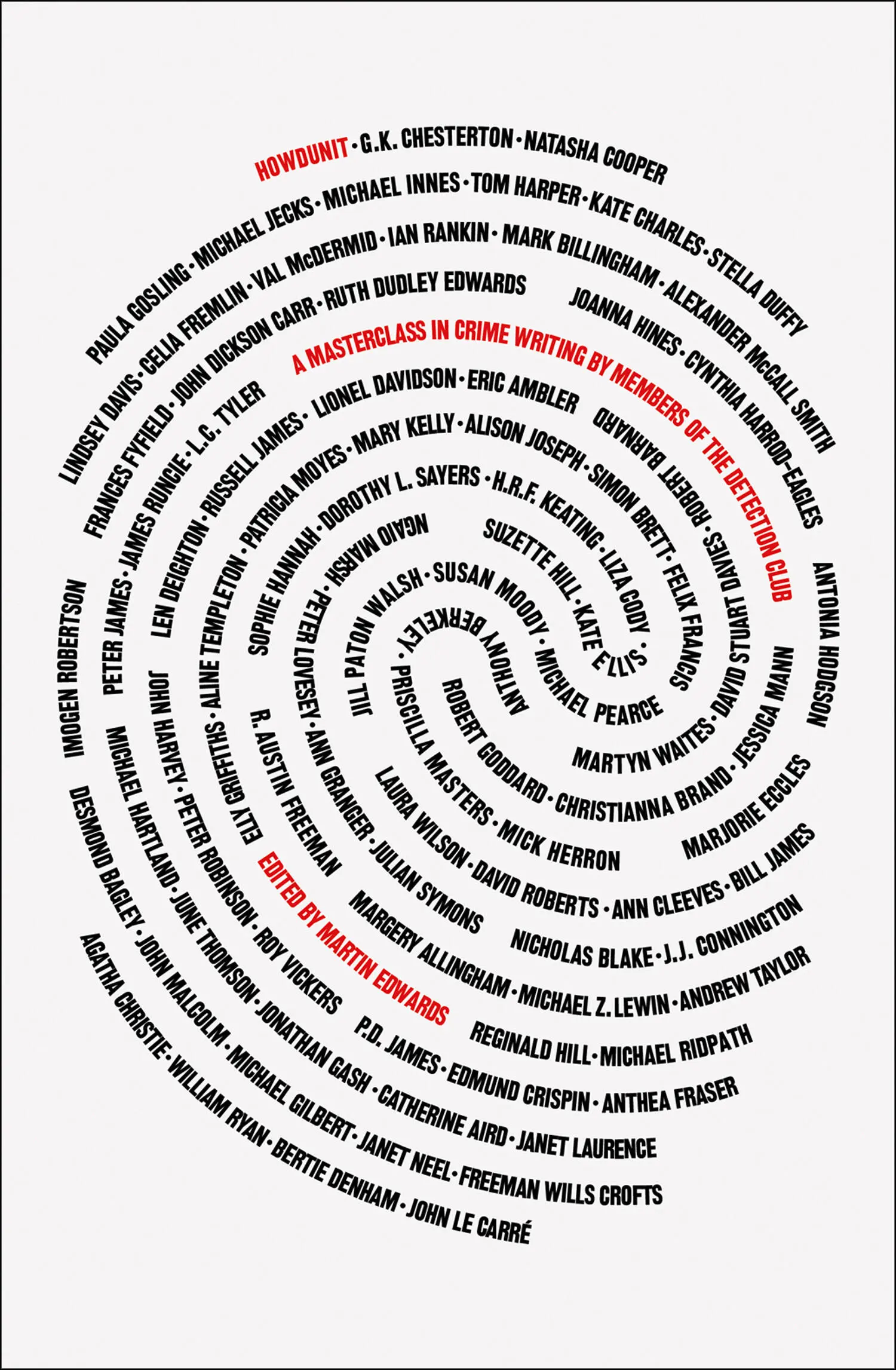
- Название:Howdunit
- Автор:
- Жанр:
- Год:неизвестен
- ISBN:нет данных
- Рейтинг книги:5 / 5. Голосов: 1
-
Избранное:Добавить в избранное
- Отзывы:
-
Ваша оценка:
Howdunit: краткое содержание, описание и аннотация
Предлагаем к чтению аннотацию, описание, краткое содержание или предисловие (зависит от того, что написал сам автор книги «Howdunit»). Если вы не нашли необходимую информацию о книге — напишите в комментариях, мы постараемся отыскать её.
Howdunit — читать онлайн ознакомительный отрывок
Ниже представлен текст книги, разбитый по страницам. Система сохранения места последней прочитанной страницы, позволяет с удобством читать онлайн бесплатно книгу «Howdunit», без необходимости каждый раз заново искать на чём Вы остановились. Поставьте закладку, и сможете в любой момент перейти на страницу, на которой закончили чтение.
Интервал:
Закладка:
This can affect our attitude to the crime novel. As ordinary, normal people we are, in short, nosey, and we want to know what happened, in reality or imaginatively. The crime novel, at its best, can supply the answers to these questions.
For me, firstly and most importantly a crime story gives the opportunity to explore a small circle of characters and the relationships between them. Statistics prove that murder is most often committed in such an intimate group or family setting. The random homicide is relatively rare despite publicity given to such cases by the media. Most killers and their victims are known to each other.
This gives the crime writer a fascinating and challenging opportunity. The permutations of relationships within such a group, and also within the even more tightly closed circle of the family, offer the chance to examine a whole cross-section of emotions and motivations. Jealousy, fear, revenge, hate and greed – all reasons for murder – are the basic stuff of human interactions, which have fired the imagination of such classic writers as Shakespeare and Dostoevsky. And in order for murder to be committed, two other factors are implied. Firstly, the relationship is usually long-standing but has reached the point of irrevocable breakdown; a far more interesting state of affairs to write about, in my opinion, than a romantic love affair where the intimacy has only just begun. Secondly, in real life – or real death – murder knows no social barriers. It is committed within all sections of the community, and this also gives the crime writer the opportunity to choose characters from widely differing social and economic backgrounds.
For the reader’s sake, the number of characters has to be limited. I usually try to keep mine to about eight at most. If there are more, I feel the reader can’t get to know them as intimately as I would like.
Mine are chosen from the ordinary men and women whom the reader might already know in real life. Murderers are not, generally speaking, depraved monsters. They are husbands and wives, sons and lovers, friends and colleagues – people who, apart from this single aberration of murder, are often decent law-abiding citizens. I like to feel the old adage ‘There but for the grace of God go I’ applies to them.
In my contemporary novels, I choose my backgrounds from those I am also familiar with – the rural Essex communities where I grew up and which can still be found in that particular south-east corner of England. In these close-knit villages and small towns, the local people know one another intimately. It’s here where tensions and jealousies can develop and where old resentments and bitternesses that have built up over the years may suddenly explode into violence.
At the end of the books, I aim to show the effect that murder can have on these communities. Even when my Detective Chief Inspector Finch (renamed Rudd in the UK to avoid any risk of confusion with Margaret Erskine’s Inspector Finch) and his sergeant, Tom Boyce, have successfully solved the case, not all the threads are neatly tied off. In real life, people’s lives are affected, sometimes shattered, by violence happening in their communities and nothing is ever the same again.
This rural background allows me describe the type of countryside which I find particularly attractive. It is not spectacular; it contains no mountains or waterfalls. It is agricultural land, worked by generations of farming families, and to the casual observer could appear unromantic. But its small woods, full of primroses and bluebells in the spring, its flat fields of wheat and sugar-beet and its wide skies give it a low-keyed beauty which has its own appeal.
As regards plotting, one important rule I always try to follow is this: the writer must be fair to his or her reading public. Although it’s permissible to lay false trails and to keep the reader guessing, I like to include in my books some small clue – sometimes only a phrase or a comment made in the course of a conversation – which can be picked up and used as a pointer to the identity of the murderer. I prefer, when the denouement is reached, that the reader doesn’t feel cheated and that the thread, which has been there the whole time, has led through the book to its conclusion.
Writing a crime story gives the author a broad choice of time and context. When did it happen? Who was involved? You can, if you wish, make it a real murder case which took place in the past, using the past as your material, making sure that such details of the people and the events are correct. This makes less of an imaginative demand upon the author. Both the events and the people have been based on reality.
An alternative approach is the story based on your choice of the when, why and who of the event. For example, do you take on the personal ‘I’ role and describe the events from that point of view? If this is your choice, you may wish to create a second person who you can share the case with. This personalises the story, but the second character needs a specific role to play.
This is a method used in many novels, the relationship between the two characters making the plot material much easier to use. It’s one I’ve used in novels such as the Finch and Boyce books. In recent years, I have moved away from this approach because although you can fill in a great deal of detail with discussion of the events, the demands of an official police inquiry can complicate the construction of the plot.
In recent years I have written stories featuring that classic relationship: Sherlock Holmes and Dr Watson. I find that this allows me greater freedom with both the characters and the plot itself.
But whatever form you prefer, it is important to have a setting and a plot that will catch the attention of your readers. Descriptions are valuable, as long as they aren’t overused. Too many adjectives can slow up the plot and spoil the excitement of the story, which should be puzzling to the characters and, most of all, to the reader. The aim is to give him or her the thrill of the final explanation – the ‘of course’ reaction which creates the perfect response to your story.
Places
Where should you set your crime story? Somewhere you know intimately? Or somewhere far distant that you know much less well but find fascinating? As usual with writing, there are few if any hard and fast rules.
The ideas for most of P. D. James’ stories sprang from particular places, often parts of her beloved East Anglia. One evening on Dunwich beach, she pictured a small dinghy drifting, oarless, and bearing a neatly dressed corpse whose hands were severed at the wrists. This striking image was the genesis of her third novel, Unnatural Causes . Even in Innocent Blood , where for once the starting point was not a location, the London Underground, the streets of the capital, and ‘the darkly numinous roof of Westminster Cathedral’ are all integral to the narrative.

On the Suffolk Coast
P. D. James
I have used East Anglia as a setting for a number of my novels, the last example being Devices and Desires . The book had its genesis when I was exploring Suffolk with an elderly long-standing friend, Joyce Flack, who drove me in her ancient Mini. I stood for a few minutes alone on a deserted stretch of shingle and looked over the cold and dangerous North Sea. I remember that there were two wooden fishing boats scrunched into the shingle and some brown nets strung between poles, drying in the wind. Closing my eyes, I could hear nothing but the tinny rattle of the shingle drawn back by the waves and the low hissing of the wind, and I thought that I could have been standing on the self-same spot a thousand years ago, hearing the same sounds, looking out over the same sea. And then I opened my eyes and, looking south, saw the silent and stark outline of Sizewell nuclear power station dominating the coastline. I thought of all the lives that have been lived on this shore, of the windmills, once providers of power, now prosperous homes; of the ruined abbeys at Leiston and South Cove, which seemed like monuments to a decaying faith; of the detritus of my generation, the great lumps of concrete half embedded in the shingle, and the concrete pillboxes, part of the defences against the expected German invasion on this coast. And immediately I knew with an almost physical surge of excitement that I had a novel. The next book would be set on a lonely stretch of East Anglian coast under the shadow of a nuclear power station. The book, at present no more than a nebulous idea born of a moment in time and a specific place, might take more than a year to research and plan and the writing even longer, but already it has life.
Читать дальшеИнтервал:
Закладка:
Похожие книги на «Howdunit»
Представляем Вашему вниманию похожие книги на «Howdunit» списком для выбора. Мы отобрали схожую по названию и смыслу литературу в надежде предоставить читателям больше вариантов отыскать новые, интересные, ещё непрочитанные произведения.


Обсуждение, отзывы о книге «Howdunit» и просто собственные мнения читателей. Оставьте ваши комментарии, напишите, что Вы думаете о произведении, его смысле или главных героях. Укажите что конкретно понравилось, а что нет, и почему Вы так считаете.