Howdunit
Здесь есть возможность читать онлайн «Howdunit» — ознакомительный отрывок электронной книги совершенно бесплатно, а после прочтения отрывка купить полную версию. В некоторых случаях можно слушать аудио, скачать через торрент в формате fb2 и присутствует краткое содержание. Жанр: unrecognised, на английском языке. Описание произведения, (предисловие) а так же отзывы посетителей доступны на портале библиотеки ЛибКат.
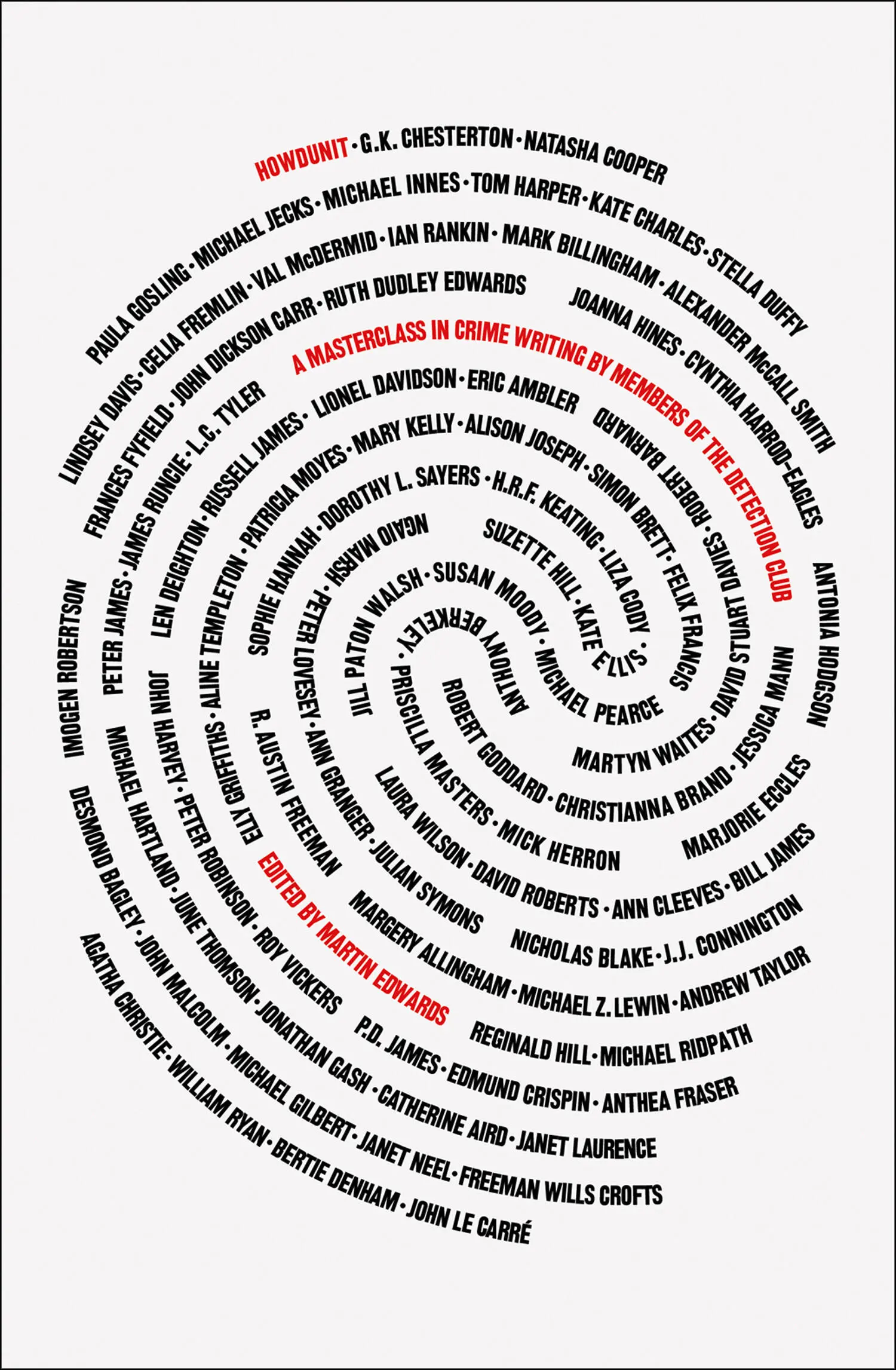
- Название:Howdunit
- Автор:
- Жанр:
- Год:неизвестен
- ISBN:нет данных
- Рейтинг книги:5 / 5. Голосов: 1
-
Избранное:Добавить в избранное
- Отзывы:
-
Ваша оценка:
Howdunit: краткое содержание, описание и аннотация
Предлагаем к чтению аннотацию, описание, краткое содержание или предисловие (зависит от того, что написал сам автор книги «Howdunit»). Если вы не нашли необходимую информацию о книге — напишите в комментариях, мы постараемся отыскать её.
Howdunit — читать онлайн ознакомительный отрывок
Ниже представлен текст книги, разбитый по страницам. Система сохранения места последней прочитанной страницы, позволяет с удобством читать онлайн бесплатно книгу «Howdunit», без необходимости каждый раз заново искать на чём Вы остановились. Поставьте закладку, и сможете в любой момент перейти на страницу, на которой закончили чтение.
Интервал:
Закладка:
Make no mistake, this kind of intricate plotting can be hugely important and the success of writers who perennially give their readers a corkscrew ride is testament to its enduring popularity. But I don’t believe that in terms of creating suspense, it is necessarily the only way to go.
The ‘reveal’ remains a very effective technique, and one with which I am very familiar from my time as a stand-up comedian. It may sound surprising, but, having made the move from stand-up comedy to crime writing, I quickly discovered that a joke and a crime novel work in very much the same way. The comedian leads their audience along the garden path. The audience allow themselves to be led, because they know what’s coming, or at least they think they do, until they get hit from a direction they were not expecting.
My grandfather died recently. He just slipped away … sitting in his chair. He went very peacefully … unlike the passengers on his bus.
Or:
My wife and I have a very spontaneous love life. The other day we just took our clothes off and did it on top of a freezer! I don’t think they’ll let us back into Sainsbury’s again.
Old gags such as these show exactly how comics reveal their punchlines. The readers of crime novels are an equally willing audience, who can just as easily be blind-sided.
The best example I can think of from the world of crime fiction is in the wonderful Thomas Harris novel, The Silence of the Lambs , the second outing for the iconic Hannibal Lecter. Towards the end of the book, a SWAT team have the killer cornered and are approaching his house. At the same time, Clarice Starling has been dispatched to a small town many miles away to tie up a few loose ends. A member of the SWAT teams ring the killer’s doorbell. We ‘cut’ to the killer’s ghastly cellar from where he hears the doorbell ring. This is the moment when the ‘dummy’ is sold and the reader buys it completely. The reader stays with the killer as he slowly climbs the stairs, butterflies flitting ominously around him in the semi-darkness. We know he has a gun … we know what he is capable of … He opens the door, and …
It’s Clarice Starling! Boom-tish! The SWAT team are at the wrong house, she is at the right house and she doesn’t know it. It’s the perfect reveal and it is sublimely timed because it happens at the precise moment that the reader turns the page. The best crime fiction is full of heart-stopping moments such as this. They, too are punchlines, pure and simple, albeit rather darker than the ones you might hear trotted out at the Comedy Store.
But the reason that Harris’s reveal works so wonderfully is not just because of its exquisite timing. It works, above all, because of the character of Clarice Starling: a young woman the reader has come to know well over the course of the novel; to care about and to empathize with.
Ultimately, this is where I believe that the key to genuine suspense is to be found.
This revelation happened a good many years ago when I was reading a novel called The Turnaround by the American writer George Pelecanos. Pelecanos is happy enough to call himself a ‘crime writer’, or ‘mystery writer’ as they are more commonly known in the US, but he is not one of those writers overly concerned with the sort of tricks already described. There is usually an episode of shocking violence and there is often an element of investigation in its aftermath, but his books are not traditional mysteries by any means. What he does do, however, as well as any writer I know, is create characters who live and breathe on the page. As I read his novel, I realized I had come to know some of these people so well that the idea something terrible was going to happen to them – and I knew it most certainly would – had become almost unbearable. I was turning each page with a sense of dread and it dawned on me that here was the best and most satisfying way to create suspense. That it had been staring me in the face all along.
These are crime novels, after all. The reader has seen the jacket, read the blurb and knows very well what they are in for. Yes, there may be redemption and resolution of a sort, but there will also be suffering and pain, grief and dreadful loss. You know it’s coming, but not when or to whom.
The tension is real and terrible, because you care .
So, by all means throw in a thrilling twist every now and again, but not so often that they lose their power to shock. Time those ‘reveals’ to perfection to give your reader a punchline they will remember for a long time.
But above all, give your readers characters they can genuinely engage with, who have the power to move them, and you will have genuine suspense from page one.

Mark Billingham’s discussion of the comedian’s ‘reveal’ leads to consideration of the skilful use of humour, which can help flesh out characters, whether or not they are on the right side of the law. Bill James’s novels illustrate the point time and again. As John Harvey has shown, James has a flair for attention-grabbing openings, and these often employ humour, as in The Lolita Man , which begins: ‘Ruth Avery used to say that making love with Harpur was like being in bed with all of E-Division’.
Cops and Criminals, Contrast and Comedy
Bill James
My criminals display good as well as bad qualities and my policemen (Detective Chief Superintendent Colin Harpur and Assistant Chief Constable Desmond Iles in particular) blur the boundaries between good and evil. This gives me more material to play around with. The contrasting qualities in character mean, I hope, that they’re more interesting. It certainly makes them more interesting to me.
I’d like to think I have a comic view of society and mankind in general and that I sometimes get this across. Yes, sometimes the humour is meant to come from the sight of people struggling towards an objective, even an ideal, and, of course, making a muck of it.
I introduced Harpur and Iles in You’d Better Believe It , which I wrote as a one-off. There were quite a few rewrites and there was some difficulty in selling it at the beginning. I wasn’t altogether confident about it. And it didn’t get many notices at first. But I wrote another book about the same characters, The Lolita Man . And that got enormous coverage and reviews. And that, I suppose, then prompted me into thinking I must stick with this for a while, at least. And so then I went on and wrote Halo Parade , and the series grew from there. It’s now been running for more than thirty novels, published at a rate of roughly one a year.
I think that it was Len Deighton who said that he likes to get something on every page that makes the reader smile or possibly laugh. It’s a continual job. You’ve got to keep on making the book amusing page by page, not overall.
I like aggressive humour. The kind that quite often comes, on the police side, from upending order. And on the crooks’ side, the humour springs from their aspirations to be businessmen: serious, sometimes even moral people. The way they talk is at variance with how really they are. The humour in that contrast usually works well and suggests what I’m always trying to suggest: that we’re on the edge of chaos all the time.
Iles is the more complicated of the two lead characters. He’s basically a good cop. But very basically. He never takes money; he’s not bent in that sense. He’s ruthless in what he does, and sometimes acts in the way the criminals act in order to catch the criminals. In some ways, he’s also weak. He’s unattractive to his wife, who has an affair both with Harpur and one of the other cops, Francis Garland. And Iles knows this and it drives him berserk.
Читать дальшеИнтервал:
Закладка:
Похожие книги на «Howdunit»
Представляем Вашему вниманию похожие книги на «Howdunit» списком для выбора. Мы отобрали схожую по названию и смыслу литературу в надежде предоставить читателям больше вариантов отыскать новые, интересные, ещё непрочитанные произведения.



Обсуждение, отзывы о книге «Howdunit» и просто собственные мнения читателей. Оставьте ваши комментарии, напишите, что Вы думаете о произведении, его смысле или главных героях. Укажите что конкретно понравилось, а что нет, и почему Вы так считаете.