Ted Klontz - Money Mammoth
Здесь есть возможность читать онлайн «Ted Klontz - Money Mammoth» — ознакомительный отрывок электронной книги совершенно бесплатно, а после прочтения отрывка купить полную версию. В некоторых случаях можно слушать аудио, скачать через торрент в формате fb2 и присутствует краткое содержание. Жанр: unrecognised, на английском языке. Описание произведения, (предисловие) а так же отзывы посетителей доступны на портале библиотеки ЛибКат.
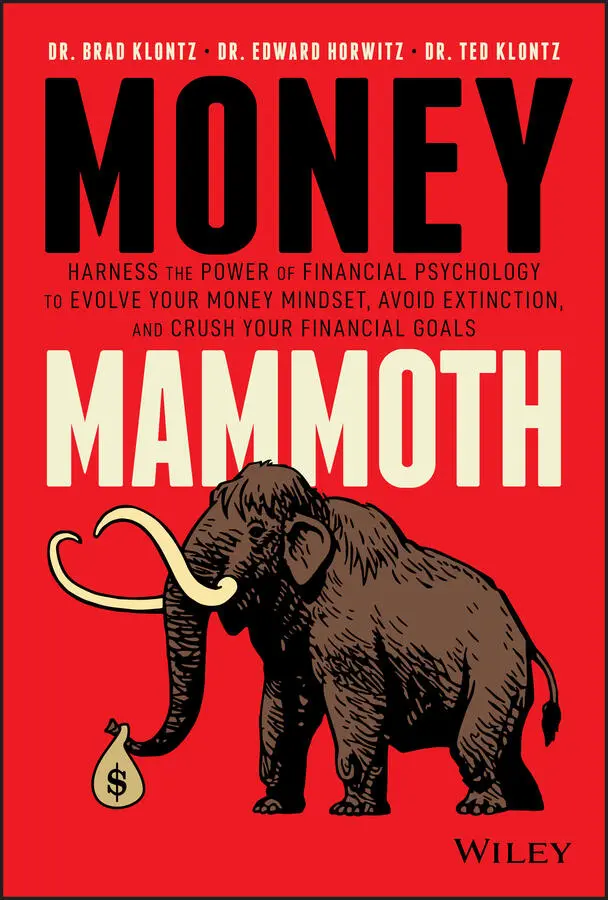
- Название:Money Mammoth
- Автор:
- Жанр:
- Год:неизвестен
- ISBN:нет данных
- Рейтинг книги:4 / 5. Голосов: 1
-
Избранное:Добавить в избранное
- Отзывы:
-
Ваша оценка:
Money Mammoth: краткое содержание, описание и аннотация
Предлагаем к чтению аннотацию, описание, краткое содержание или предисловие (зависит от того, что написал сам автор книги «Money Mammoth»). Если вы не нашли необходимую информацию о книге — напишите в комментариях, мы постараемся отыскать её.
Recent findings from the field of
could help the many Americans who know what they need to do but just can’t seem to make it happen. If you fall into this category, consider
.
This book looks at financial well-being from a psychological and evolutionary perspective. It reveals the obstacles that prevent people from taking their first critical steps towards financial wellness. It examines how our instincts and beliefs about money influence our financial behaviors. It explores money beliefs, how they develop, and how they drive our money behaviors
As the world’s leading experts in financial psychology, authors Dr. Brad Klontz, Dr. Ed Horwitz, and Dr. Ted Klontz can help you:
Discover how the experience of your ancestors are impacting your finances Understand how your friends, family members, and tribe may be holding you back Overcome mental roadblocks to wealth and success Harness the power of your emotional brain to transform your relationship with money Build confidence in your ability to take control of your financial future In
, the authors reveal the secrets to harnessing the power of your psychology to reach your financial goals.
Money Mammoth — читать онлайн ознакомительный отрывок
Ниже представлен текст книги, разбитый по страницам. Система сохранения места последней прочитанной страницы, позволяет с удобством читать онлайн бесплатно книгу «Money Mammoth», без необходимости каждый раз заново искать на чём Вы остановились. Поставьте закладку, и сможете в любой момент перейти на страницу, на которой закончили чтение.
Интервал:
Закладка:
Saving is important. In fact, a discipline around saving money is the framework that creates wealth. If you spend all you make, you will never get ahead. Saving for intermediate goals is a much-needed value and skill. So a portion of the allowance should go into a savings account. Children are encouraged to save for a desired object or experience, one which they couldn't afford with their allowance alone. They are taught the experience of delaying gratification and the thrill that accompanies being able to achieve a savings goal. As much as possible, allow children to determine when and for what the savings account is allowed to be tapped. Research has found that people save more when accounts are given inspiring names, so utilize this tool accordingly. 8As such, the savings account could be titled “Lorrie's American Girl Shopping Spree” or “Hunter's Rock-Climbing School.”
Spending
Another important lesson for children is the experience of spending. We must not forget that it is important to allow yourself to enjoy your financial resources. With the spending portion of the allowance, children are given the freedom to spend it as they wish. Money can and should be used to enhance experiences of life. What's the point of a lifetime of sacrifice if you are unable to allow yourself to enjoy your life.
Giving
Money can and should be used to make the world a better place. An allowance gives parents an opportunity to pass down their philanthropic beliefs. For example, you could choose three to five charities and have your child select from them, perhaps after a discussion or visits to the charities. Then after several months or even a year of saving, you can give your child the experience of giving to the chosen charity. It can be fun and reinforcing to take your child in person to the charity and have him or her hand over the funds. You could set up a meeting ahead of time with a staff member of the charity to make sure your child has a wonderful experience. The staff member can thank your child and share all the ways that the money will be used to help others. Your child could also help engage in the good the donated money will do, such as helping to distribute food or sort clothing that the donated money may have helped provide. In this way, your child can see and experience firsthand the joys of giving.
Investing
While opening and feeding a traditional savings account is a way of saving, the ideas of investing and the long-term effect of compounding can easily be integrated, and in our opinion, probably should. As such, we encourage the inclusion of an investing bucket. This could be called a “financial freedom” account or something of that nature. The teaching opportunity here lies in the concept of delaying immediate and intermediate gratification for a long-term goal. Ideally, this goal would be that of financial freedom, where the money is kept in an investment account in perpetuity with the eventual goal of having it spin off income so that your child could be free from the need to work for money at some time in the future. Given the research on actively managed accounts and index funds, you might want to be conscious about how you are teaching your children to invest when they become old enough to consider such information. Given that index funds outperform actively managed funds 80% of the time, unless you are a professional investor, you might want to teach your children to put their investments in a diversified index fund approach versus teaching them to pick individual stocks of companies. The articulation and reinforcement of financial best practices can go a long way to laying a solid financial foundation for your children into adulthood. Since they are going to remember and store beliefs about money, it's best to make sure those beliefs are founded in best practice.
A FAMILY ALLOWANCE
In addition to personal allowances, some families have a “family allowance.” This is a pool of money about which all family members help make decisions. Since most people end up in personal or business situations in which they need to share resources, this gives them the experience of negotiating and cooperating around money. The pool of money can be tracked and eventually used for the purchase of a family-centered household item, furnishing, entertainment, vacation, or even the decision on what type of vehicle the family will eventually purchase. The family allowance gives children another opportunity to see the benefits of delaying gratification and saving money. It can also be used to help them learn important personal financier skills such as comparison shopping and price negotiations.
TALK ABOUT MONEY (BUT NOT TOO MUCH)
A big mistake parents make is not talking to their kids about money. Talk to them about money. If they ask a question such as “How much money do you make,” tell them. Ask them what prompted them to ask. If they say something to the effect of “We're rich, aren't we?,” ask them what rich means to them, and then tell them what it means to you. If you must take some time to figure out what to say, do that, but answer their question. If you don't, someone else will. Maybe TV will; maybe a friend will; maybe a book will; or maybe they will decide for themselves what is real. Like the subject of sex, most parents want to have the chance to at least give their children their input, share their values, their dos and don'ts. That won't just happen on its own; parents must make sure it happens on their terms as much as possible.
Many parents make the mistake of not talking to their children about money. However, it is possible to make mistakes in the other direction: that of sharing too much financial information. In our research, sharing financial information that may make a parent feel better, but the child feels worse, is referred to as financial enmeshment . 9One of the incredibly injurious, but all too common, ways kids learn about money and its power to build and destroy is for parents to involve their children in money issues that are not appropriate.
If you and your partner have unresolved issues around money, especially those in which you are not in agreement, get some help and come to an agreement—the same as you would if you had differing ideas about how to raise your children. Find agreement. If you have secrets around money, either work those out with your partner or don't tell your children about them.
Raising financially healthy children starts with you. You need to understand your own financial psychology: your beliefs, your worries, your feelings, your hang-ups. Your personal insight is critical. Also, don't forget to think about the other people in your life and what they are teaching your children about money. You may need to politely ask their grandparents, for example, to hold off on teaching them about money, especially if you aren't happy with what they taught you.
Remember, your children are learning about money from you, from what you say or from your silence. Take some time to think about what you want your children to know, and then think about the messages you want to pass down to them in your discussions and, more important, by your examples.
Chapter 3: Mammoth Mindset Insights
1 It is important to be aware of emotional impulses so that we can engage our analytical brains to think through the long-term consequences of our behaviors.
2 Recognize that financial help can hurt.
3 Recognize the psychological value in the need for individuals to generate their own income stream.
4 Acknowledge the curse of unstructured free time on the mental health of the financial dependent.
5 Help the enabler develop, implement, and stick to a plan to stop the financial aid.
Читать дальшеИнтервал:
Закладка:
Похожие книги на «Money Mammoth»
Представляем Вашему вниманию похожие книги на «Money Mammoth» списком для выбора. Мы отобрали схожую по названию и смыслу литературу в надежде предоставить читателям больше вариантов отыскать новые, интересные, ещё непрочитанные произведения.











Обсуждение, отзывы о книге «Money Mammoth» и просто собственные мнения читателей. Оставьте ваши комментарии, напишите, что Вы думаете о произведении, его смысле или главных героях. Укажите что конкретно понравилось, а что нет, и почему Вы так считаете.