border and bordering
Здесь есть возможность читать онлайн «border and bordering» — ознакомительный отрывок электронной книги совершенно бесплатно, а после прочтения отрывка купить полную версию. В некоторых случаях можно слушать аудио, скачать через торрент в формате fb2 и присутствует краткое содержание. Жанр: unrecognised, на английском языке. Описание произведения, (предисловие) а так же отзывы посетителей доступны на портале библиотеки ЛибКат.
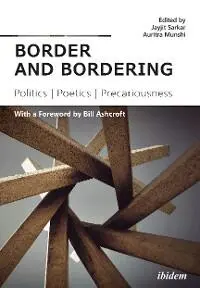
- Название:border and bordering
- Автор:
- Жанр:
- Год:неизвестен
- ISBN:нет данных
- Рейтинг книги:3 / 5. Голосов: 1
-
Избранное:Добавить в избранное
- Отзывы:
-
Ваша оценка:
border and bordering: краткое содержание, описание и аннотация
Предлагаем к чтению аннотацию, описание, краткое содержание или предисловие (зависит от того, что написал сам автор книги «border and bordering»). Если вы не нашли необходимую информацию о книге — напишите в комментариях, мы постараемся отыскать её.
border and bordering — читать онлайн ознакомительный отрывок
Ниже представлен текст книги, разбитый по страницам. Система сохранения места последней прочитанной страницы, позволяет с удобством читать онлайн бесплатно книгу «border and bordering», без необходимости каждый раз заново искать на чём Вы остановились. Поставьте закладку, и сможете в любой момент перейти на страницу, на которой закончили чтение.
Интервал:
Закладка:
The dissemination of modernity across the globe started with those initial encounters and transactions between west European countries and new found lands; stratified with the imperial powers annexing those new found lands and turning them into new territories; and consolidated with the birth of modern nation-states in those new territories. Now, in the age of late capitalism, globalization and post-nationalism, it has more or less become the dominant worldview of the world—it even dictates the way the world looks upon itself. Even in several ongoing postcolonial studies across the world with its indulgence on non-hegemonic and non-Eurocentric understandings and strategies one can easily find traces of this trope and this kind of worldview.
We would disagree with those who point out the plural nature of modernity and talk about different modernities which are absolutely discreet and different from each other. We would also, at the same time, disagree with those who suggest its singular and monolithic nature. Modernity, rather, is slightly more complicated than that. It is, we think, a complex wave of several attributes or narratives—it is neither singular nor plural in nature. It is certainly a grand narrative, consisting of much petit or micro-modernities. It is a whole: a summation of all such narratives and, more correctly, much more than the summation of those narratives. It is, for instance, white, Eurocentric, anthropocentric, capital driven, patriarchal and many others and yet, it is much more than that. These phenomena are certainly not petit or micro in their nature and function and have agencies of their own; but since they blend, add on to and eventually propel that one greater narrative called modernity, we have called these petit or micro-modernities.
A modern nation-state—an embodiment of all that modernity is and stands for—can also prove for our study a laboratory where all these phenomena could be dissected and understood in a far effective and heuristic manner. A modern nation-state with its precise and well maintained geopolitical boundaries is a reification of this grand and yet, complex narrative of modernity. The edges of the nation-state are also the edges of modernity and the space between the two edges—the space where one political block ends and another begins—is what we understand as borderland. This space, which also has its own temporality, is also the space where one set of modernities ends and another begins. But we would here negate our own thesis if we consider this space to be a vacuum; we are not saying that borderlands are free of modernity, which obviously these are not in any case. We are also not naïve enough to point out here that borderlands are spaces or zones beyond modernity—pristine, untouched and untrodden—but rather have an ambiguous, often confusing and far more complicated sort of modernity. Like that of mainland, borderland modernity is also a complex; and yet a suture of several overlapping modernities whose agencies, as opposed to the former, are feebly and not so persuasively asserted. Borderland modernity is confused and convoluted kind of modernity: borderlands are where the narrative of modernity, which works quite succinctly in and around the mainland, covers the distance from the centre to the periphery, and in the process starts to lose its might and vigor. This already ‘weak’ modernity, when at an everyday level starts encountering with the other just on the other side of the border, becomes more, as we have already mentioned, confused and convoluted. It is at this stage/state that it starts contradicting and challenging itself in a more explicit manner: it is where it becomes a paradox of/in itself. Borderland modernity is the result of some of the inherent aporias in the system of modernity, understanding of which can enable us to use it as a strategic tool—a mode of deconstructing the hitherto ‘natural’ and transcendental aspects of modernity.
In its day to day negotiation with the other and, here in case, in the physical presence of the other, modernity finds itself in a tricky position. Mainland modernity is more comfortable with homogeneity and generally thinks in terms of binaries (that is, either/or); but as soon as it hits the borderland, the ground becomes slippery. It finds itself difficult to stand on the ground which was hitherto solid and based on certain a priori principles, and now, has suddenly become unstable and unreliable. As opposed to the reliable topography of the mainland, borderland poses a lot of difficulties to the praxis of modernity. There occurs a sudden rupture between the theory and praxis of modernity which is hard to reconcile. It is at this juncture that the borderland, amidst this continuous and quite congested traffic between the self and the other, invents a sort of its own cult faintly different from that of modernity—faintly and not radical because a borderland still remains a part of the grand narrative called modernity. There is no outside here, or anywhere! This is what we can call borderland modernity, which is also in a way borderland-modernity: a continuous negotiation, an extremely volatile conflict-confluence dynamic.
The relationship between border, especially geopolitical border, and borderland is peculiar and, more than anything else, arbitrary. A geopolitical border may or may not entail borderland: the latter can exist anywhere in the system other than the centre. It is not necessary to have a physical border to be/become borderland: it is ‘free floating’ in that sense. More than the location, the factor which affects the most in this case is the locationality. And, the locationality of a borderland is very different from the location of a border; the former is more relational in nature. A borderland is where and when the system challenges itself. A border is where the system physically encounters the other; a borderland is where the system starts becoming its own other. The latter is more precisely where the system starts becoming its own other but never becomes one. A borderland, then, is a tensional space between becoming other and being other. It is associated more with an ‘opening’ as compared to a border which has a sense of ‘closing’. Borderlands are openings in the system through which the ‘other’ creeps in and starts haunting and, henceforth, create a lot of apprehension, uneasiness and nervousness within the system. Borderlands are where a system becomes more anxious to the imminent and immanent threat of dissolution and dissolving into the other.
A border “is a dividing line,” as Gloria Anzaldúa points out in her seminal Borderland/La Frontera, “a narrow strip along a steep edge. A borderland is a vague and undetermined place created by the emotional residue of an unnatural boundary” (1987: 3). As opposed to the act of border-making (the act of turning the more obscure frontiers of the empires into the rigid borders of the nation-states), which is comparatively a recent phenomenon and often a voluntary act dictated by the dominant political class of the day, borderlands are involuntary; the latter may clearly predate the border but in a different form altogether or emerge afterwards involuntarily because of the incessant negotiations and transactions across two or more edges. Border cuts anything into mita y mita—’half and half’—borderland is ontologically ‘half and half’, either-or, neither-nor, both. Like Mary Louis Pratt’s “contact zone”, borderlands also refer to social spaces where “cultures meet, clash, and grapple with each other, often in contexts of highly asymmetrical relations of power” (1992: 3); where all borderlands are contact zones but all contact zones may not necessarily transcend into and be-come a “borderland”. A borderland has its own ontology and comes with an agenda: it is more political as compared to a contact zone which is more social. Borderlands are more in the line of Edward Soja’s “thirding”, a conscious act in which “everything comes together… subjectivity and objectivity, the abstract and the concrete, the real and the imagined, the knowable and the unimaginable, the repetitive and the differential, structure and agency, mind and body, consciousness and the unconscious, the disciplined and the transdisciplinary, everyday life and unending history” (1996: 56-7).
Читать дальшеИнтервал:
Закладка:
Похожие книги на «border and bordering»
Представляем Вашему вниманию похожие книги на «border and bordering» списком для выбора. Мы отобрали схожую по названию и смыслу литературу в надежде предоставить читателям больше вариантов отыскать новые, интересные, ещё непрочитанные произведения.







Обсуждение, отзывы о книге «border and bordering» и просто собственные мнения читателей. Оставьте ваши комментарии, напишите, что Вы думаете о произведении, его смысле или главных героях. Укажите что конкретно понравилось, а что нет, и почему Вы так считаете.