Lee G. Bolman - Reframing Organizations
Здесь есть возможность читать онлайн «Lee G. Bolman - Reframing Organizations» — ознакомительный отрывок электронной книги совершенно бесплатно, а после прочтения отрывка купить полную версию. В некоторых случаях можно слушать аудио, скачать через торрент в формате fb2 и присутствует краткое содержание. Жанр: unrecognised, на английском языке. Описание произведения, (предисловие) а так же отзывы посетителей доступны на портале библиотеки ЛибКат.
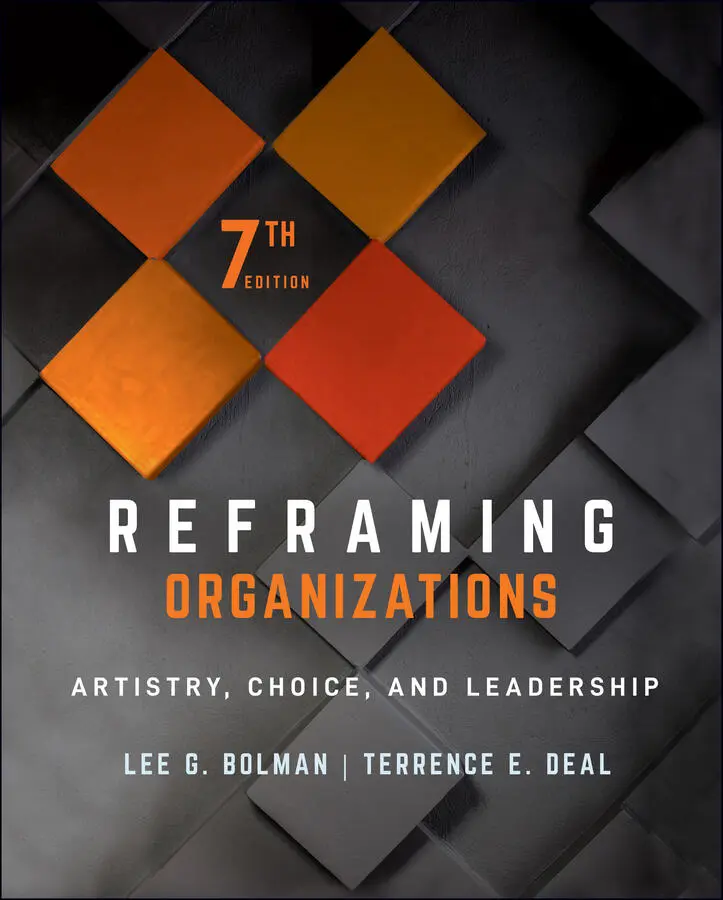
- Название:Reframing Organizations
- Автор:
- Жанр:
- Год:неизвестен
- ISBN:нет данных
- Рейтинг книги:4 / 5. Голосов: 1
-
Избранное:Добавить в избранное
- Отзывы:
-
Ваша оценка:
Reframing Organizations: краткое содержание, описание и аннотация
Предлагаем к чтению аннотацию, описание, краткое содержание или предисловие (зависит от того, что написал сам автор книги «Reframing Organizations»). Если вы не нашли необходимую информацию о книге — напишите в комментариях, мы постараемся отыскать её.
The Structural Frame The Human Resource Frame The Political Frame The Symbolic Frame The
has been updated with new information on cross-sector collaboration, generational differences, virtual environments, globalization, cross-cultural communication, and more, with an expanded Instructor’s Guide that includes summaries, mini-assessments, videos, and extra resources.
Reframing Organizations — читать онлайн ознакомительный отрывок
Ниже представлен текст книги, разбитый по страницам. Система сохранения места последней прочитанной страницы, позволяет с удобством читать онлайн бесплатно книгу «Reframing Organizations», без необходимости каждый раз заново искать на чём Вы остановились. Поставьте закладку, и сможете в любой момент перейти на страницу, на которой закончили чтение.
Интервал:
Закладка:
A standard is a benchmark to ensure that goods and services maintain a specified level of quality. Measurement against the standard makes it possible to identify and fix problems. During the 1970s and 1980s, American manufacturing standards lagged, while Japanese manufacturers were scrupulous in ensuring that high standards were widely known and universally accepted. In one case, an American company ordered ball bearings from a Japanese plant. The Americans insisted on what they saw as a daunting standard—no more than 20 defective parts per thousand. The order arrived with a separate bag of 20 defective bearings and a tongue‐in‐cheek note: “We were not sure why you wanted these, but here they are.” More recently, pressure for world‐class quality has spawned growing interest in “Six Sigma,” a statistical standard of near perfection (Pyzdek, 2003). Although Six Sigma has raised quality standards in many companies around the world, its laser focus on measurable aspects of work processes and outcomes has sometimes smothered creativity in innovative companies such as 3M (Hindo, 2007, pp. 8–12). Safe and measurable may crowd out the elusive breakthroughs a firm needs.
Standard operating procedures (SOPs) reduce variance in routine tasks that have little margin for error. Commercial airline pilots typically fly with a different crew every month. Cockpit actions are tightly intertwined, the need for coordination is high, and mistakes can kill. SOPs consequently govern much of the work of flying a plane. Pilots are trained extensively in the procedures and seldom violate them. But a significant percentage of aviation accidents occur in the rare case in which someone does. More than one airplane has crashed on takeoff after the crew missed a required checklist item.
SOPs can fall short, however, in the face of “black swans” (Taleb, 2007)—freak surprises that the SOPs were never designed to handle. In the 9/11 terrorist attacks, pilots followed standard procedures for dealing with hijackers: cooperate with their demands and try to get the plane on the ground quickly. These SOPs were based on a long history of hijackers who wanted to make a statement, not wreak destruction on a suicide mission. Passengers on United Airlines Flight 93, who had learned via cell phones that hijackers were using aircraft as bombs rather than bully pulpits, abandoned this approach. They lost their lives fighting to regain control of the plane, but theirs was the only one of four hijacked jets that failed to devastate a high‐profile building.
Planning and Control Systems
Reliance on planning and control systems—forecasting and measuring—has mushroomed since the dawn of the computer era. Retailers, for example, want to know what's selling and what isn't. Networked point‐of‐sale terminals now yield that information instantly. Data flow freely up and down the hierarchy, greatly enhancing management's ability to oversee performance and respond in real time.
Mintzberg (1979) distinguishes two major approaches to control and planning: performance control and action planning. Performance control specifies results (e.g. “increase sales by 10 percent this year”) without specifying how to achieve them. Performance control measures and motivates individual efforts, particularly when targets are reasonably clear and calculable. Locke and Latham (2002) make the case that clear and challenging goals are a powerful incentive to high performance. Performance control is less successful when goals are ambiguous, hard to measure, or of dubious relevance. A notorious example was the use of enemy body counts by the U.S. military to measure combat effectiveness in Vietnam. Field commanders became obsessed with “getting the numbers up,” and were often successful. The numbers painted a picture of progress, even as the war was being lost. Meanwhile, as an unintended consequence, American troops had an incentive to kill unarmed civilians in order to raise the count (Turse, 2013).
Action planning specifies how to do something—methods and time frames as in “increase this month's sales by using a companywide sales pitch” (Mintzberg, 1979, pp. 153–154). Action planning works best when it is easier to assess methods than outcomes. This is often true of service jobs. McDonald's has clear specifications for how counter employees are to greet customers (e.g., with a smile and a cheerful welcome). United Parcel Service has a detailed policy manual that specifies how a package should be delivered. The objective is customer satisfaction, but it is easier to monitor employees' behavior than customers' reactions. An inevitable risk in action planning is that the link between action and outcome may fail. When that happens, employees may get bad results by doing just what they're supposed to do. Unions sometimes use this as a bargaining chip by instructing employees to “work to rule”—scrupulously observing every detail in every procedure—because it is often an effective way to slow work down to a crawl.
LATERAL COORDINATION
Behavior in organizations is often remarkably overlooked and untouched by commands, rules, and systems. Lateral techniques—formal and informal meetings, task forces, coordinating roles, matrix structures, and networks—pop up to fill the gaps. Lateral forms are typically less formal and more flexible than authority‐based systems and rules. They are often simpler and quicker as well.
Meetings
Formal gatherings and informal exchanges are the cornerstone of lateral coordination. All organizations have regular meetings. Boards confer to make policy. Executive committees gather to make strategic decisions. In some government agencies, review committees (sometimes known as “murder boards”) convene to examine proposals from lower levels. Formal meetings may provide the lion's share of lateral harmonization in relatively simple, stable organizations—for example, a railroad with a predictable market, a manufacturer with a stable product, or a life insurance company selling standard policies.
But in fast‐paced, turbulent environments, more spontaneous and informal contacts and exchanges are vital to take up slack and help glue things together. Pixar, the animation studio, whose series of hits includes Incredibles (1 and 2), Toy Story (1, 2, and 3); Finding Nemo (and Dory ); Monsters, Inc .; Wall E ; and Up , relies on a constant stream of informal connections among managers, artists, and engineers in its three major groups. Technologists develop graphics tools, artists create stories and pictures, and production experts knit the pieces together in the final film. “What makes it all work is [Pixar's] insistence that these groups constantly talk to each other. So a producer of a scene can deal with the animator without having to navigate through higher‐ups” (Schlender, 2004, p. 212).
Project Teams and Task Forces
When organizations face complex and fast‐changing environments, demand for lateral communication mushrooms. Additional face‐to‐face coordination devices are needed. Task forces assemble when new problems or opportunities require collaboration of diverse specialties or functions. High‐technology firms and consulting firms rely heavily on project teams or task forces to synchronize the development of new products or services.
Coordinating Roles
Coordinating roles or groups use persuasion and negotiation to help dovetail the efforts of different units. They are boundary‐spanners with diplomatic status who are artful in dealing across specialized turfs. For example, a product manager in a consumer goods company, responsible for the performance of a laundry detergent or low‐fat snack, spends much of the day pulling together functions essential to the product's success, such as R&D, manufacturing, marketing, and sales.
Читать дальшеИнтервал:
Закладка:
Похожие книги на «Reframing Organizations»
Представляем Вашему вниманию похожие книги на «Reframing Organizations» списком для выбора. Мы отобрали схожую по названию и смыслу литературу в надежде предоставить читателям больше вариантов отыскать новые, интересные, ещё непрочитанные произведения.
![Lee Jungmin - Хвала Орку 1-128 [некоммерческий перевод с корейского]](/books/33159/lee-jungmin-hvala-orku-1-thumb.webp)









Обсуждение, отзывы о книге «Reframing Organizations» и просто собственные мнения читателей. Оставьте ваши комментарии, напишите, что Вы думаете о произведении, его смысле или главных героях. Укажите что конкретно понравилось, а что нет, и почему Вы так считаете.