Lee G. Bolman - Reframing Organizations
Здесь есть возможность читать онлайн «Lee G. Bolman - Reframing Organizations» — ознакомительный отрывок электронной книги совершенно бесплатно, а после прочтения отрывка купить полную версию. В некоторых случаях можно слушать аудио, скачать через торрент в формате fb2 и присутствует краткое содержание. Жанр: unrecognised, на английском языке. Описание произведения, (предисловие) а так же отзывы посетителей доступны на портале библиотеки ЛибКат.
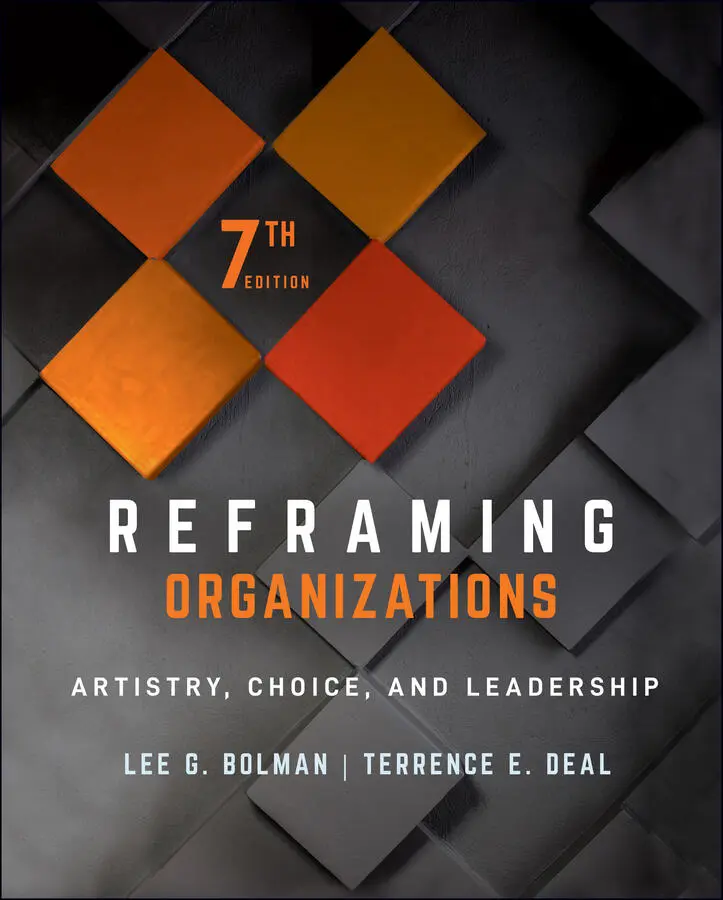
- Название:Reframing Organizations
- Автор:
- Жанр:
- Год:неизвестен
- ISBN:нет данных
- Рейтинг книги:4 / 5. Голосов: 1
-
Избранное:Добавить в избранное
- Отзывы:
-
Ваша оценка:
Reframing Organizations: краткое содержание, описание и аннотация
Предлагаем к чтению аннотацию, описание, краткое содержание или предисловие (зависит от того, что написал сам автор книги «Reframing Organizations»). Если вы не нашли необходимую информацию о книге — напишите в комментариях, мы постараемся отыскать её.
The Structural Frame The Human Resource Frame The Political Frame The Symbolic Frame The
has been updated with new information on cross-sector collaboration, generational differences, virtual environments, globalization, cross-cultural communication, and more, with an expanded Instructor’s Guide that includes summaries, mini-assessments, videos, and extra resources.
Reframing Organizations — читать онлайн ознакомительный отрывок
Ниже представлен текст книги, разбитый по страницам. Система сохранения места последней прочитанной страницы, позволяет с удобством читать онлайн бесплатно книгу «Reframing Organizations», без необходимости каждый раз заново искать на чём Вы остановились. Поставьте закладку, и сможете в любой момент перейти на страницу, на которой закончили чтение.
Интервал:
Закладка:
A swarm of items compete for managers' attention—money, markets, people, and technological competencies, to name a few. But a significant amount of time and attention must be devoted to social architecture—designing structures that help people do their best:
CEOs often opt for the ad hoc structural change, the big acquisition, or a focus on where and how to compete. They would be better off focusing on organizational design. Our research convinces us that in the digital age, there is no better use of a CEO's time and energy than making organizations work better. Most companies were designed for the industrial age of the past century, when capital was the scarce resource, interaction costs were high and hierarchical authority and vertically integrated structures were the keys to efficient operation. Today superior performance flows from the ability to fit these structures into the present century's very different sources of wealth creation. (Bryan and Joyce, 2007, p. 1)
Basic Structural Tensions
Two issues are central to structural design: how to allocate work (differentiation) and how to coordinate diverse efforts after parceling out responsibilities (integration). As we have seen, even in a group as small and intimate as a family or racing crew, it is important to settle issues concerning who does what, when the “what” gets done, and how individual efforts mesh to ensure harmony. Every family, group, and organization will find an arrangement of roles and synchronization that works—or suffer the fallout.
Division of labor—or allocating tasks—is the keystone of structure. Every living system creates specialized roles to get important work done. Consider an ant colony:
Small workers … spend most of their time in the nest feeding the larval broods; intermediate‐sized workers constitute most of the population, going out on raids as well as doing other jobs. The largest workers … have a huge head and large powerful jaws. These individuals are … soldiers; they carry no food but constantly run along the flanks of the raiding and emigration columns. (Topoff, 1972, p. 72)
Like ants, humans long ago discovered the virtues of specialization. A job (or position) channels behavior by prescribing what someone is to do—or not do—to accomplish a task. Prescriptions take the form of job descriptions, procedures, routines, protocols, or rules (Mintzberg, 1979). On one hand, these formal constraints can be burdensome, leading to apathy, absenteeism, and resistance (Argyris, 1957, 1964). On the other, they help to ensure predictability, uniformity, and reliability. If manufacturing standards, aircraft maintenance, hotel housekeeping, or prison sentences were left solely to individual discretion, problems of quality and equity would abound.
Once an organization spells out positions or roles, managers face a second set of key decisions: how to group people into working units. They have several basic options (Mintzberg, 1979):
Function: Groups based on knowledge or skill, as in the case of a university's academic departments or the classic industrial units of research, engineering, manufacturing, marketing, and finance.
Time: Units defined by when they do their work, as by shift (day, swing, or graveyard shift).
Product: Groups organized by what they produce, such as detergent versus bar soap, wide‐body versus narrow‐body aircraft.
Customer: Groups established around customers or clients, as in hospital wards created around patient type (pediatrics, intensive care, or maternity), computer sales departments organized by customer (corporate, government, education, individual), or schools targeting students in specific age groups.
Place: Groupings by geography, such as regional or international offices in corporations and government agencies or neighborhood schools in different parts of a city.
Process: Grouping by a flow of work, as with “the order fulfillment process. This process flows from initiation by a customer order, through the functions, to delivery to the customer” (Galbraith, 2001, p. 34).
Creating roles and units yields the benefits of specialization but creates challenges of coordination and control—how to ensure that diverse efforts mesh. Units tend to focus on their separate priorities and strike out on their own, as New York's police and fire departments did on 9/11. The result is suboptimization—individual units may perform splendidly in terms of their own goals, but the whole may add up to much less than the sum of the parts. This problem plagued Tom Ridge, who was named by President George W. Bush as the director of Homeland Security in the aftermath of the 9/11 terrorist attacks. His job was to resolve coordination failures among the government's many different units that dealt with security. But he was more salesman and preacher than boss, and he lacked the authority to compel compliance. Ridge's slow progress led President Bush to create a cabinet‐level Department of Homeland Security. The goal was to cluster independent security agencies under one central authority.
As often happens, the new structure created its own problems. Folding the Federal Emergency Management Agency into the mix reduced FEMA's autonomy and shifted its priorities toward security and away from its core mission of disaster relief. The same agency that had responded nimbly to hurricanes and earthquakes in the 1990s was slow and ponderous in the aftermath of Hurricane Katrina and lacked authority and budget to move without a formal okay from the new secretary of Homeland Security (Cooper and Block, 2006).
Successful organizations employ a variety of methods to coordinate individual and group efforts and to link local initiatives with system‐wide goals. They do this in two primary ways: vertically, through the formal chain of command, and laterally, through meetings, committees, coordinating roles, or network structures. We next look at each of these strategies in detail.
VERTICAL COORDINATION
With vertical coordination, higher levels coordinate and control the work of subordinates through authority, rules and policies, and planning and control systems.
Authority
The most basic and ubiquitous way to harmonize the efforts of individuals, units, or divisions is to designate a boss with formal authority. Authorities—executives, managers, and supervisors—are charged with keeping action aligned with strategy and objectives. They do this by making decisions, resolving conflicts, solving problems, evaluating performance and output, and distributing rewards and sanctions. A chain of command is a hierarchy of managerial and supervisory strata, each with legitimate power to shape and direct the behavior of those at lower levels. It works best when authority is both endorsed by subordinates and authorized by superiors (Dornbusch and Scott, 1975). In military organizations such as an aircraft carrier or a commando team, for example, the chain of command is usually clear and universally accepted. In schools and human service organizations, authority relations are often fuzzier or more contested. Another well‐known risk of hierarchy is that it may hamper the upward flow of novel information and “bad news” that subordinates fear their bosses may not welcome (Joseph and Gaba, 2020).
Rules and Policies
Rules, policies, standards, and standard operating procedures are developed to ensure that individual behavior is predictable and consistent. Rules and policies govern conditions of work and specify standard ways of completing tasks, handling personnel issues, and relating to customers and others. The goal is to ensure the handling of similar situations in comparable ways and to avoid “particularism” (Perrow, 1986)—responding to specific issues based on personal whims or political pressures. Two citizens' complaints about a tax bill are supposed to be treated similarly, even if one citizen is a prominent politician and the other a shoe clerk. The response to two residents requesting garbage pickup or a street repair should follow the same procedures regardless of economic status or race. Once a situation is defined as fitting a particular rule, the course of action is clear, straightforward and, in an ideal world, almost automatic.
Читать дальшеИнтервал:
Закладка:
Похожие книги на «Reframing Organizations»
Представляем Вашему вниманию похожие книги на «Reframing Organizations» списком для выбора. Мы отобрали схожую по названию и смыслу литературу в надежде предоставить читателям больше вариантов отыскать новые, интересные, ещё непрочитанные произведения.
![Lee Jungmin - Хвала Орку 1-128 [некоммерческий перевод с корейского]](/books/33159/lee-jungmin-hvala-orku-1-thumb.webp)










Обсуждение, отзывы о книге «Reframing Organizations» и просто собственные мнения читателей. Оставьте ваши комментарии, напишите, что Вы думаете о произведении, его смысле или главных героях. Укажите что конкретно понравилось, а что нет, и почему Вы так считаете.