Lee G. Bolman - Reframing Organizations
Здесь есть возможность читать онлайн «Lee G. Bolman - Reframing Organizations» — ознакомительный отрывок электронной книги совершенно бесплатно, а после прочтения отрывка купить полную версию. В некоторых случаях можно слушать аудио, скачать через торрент в формате fb2 и присутствует краткое содержание. Жанр: unrecognised, на английском языке. Описание произведения, (предисловие) а так же отзывы посетителей доступны на портале библиотеки ЛибКат.
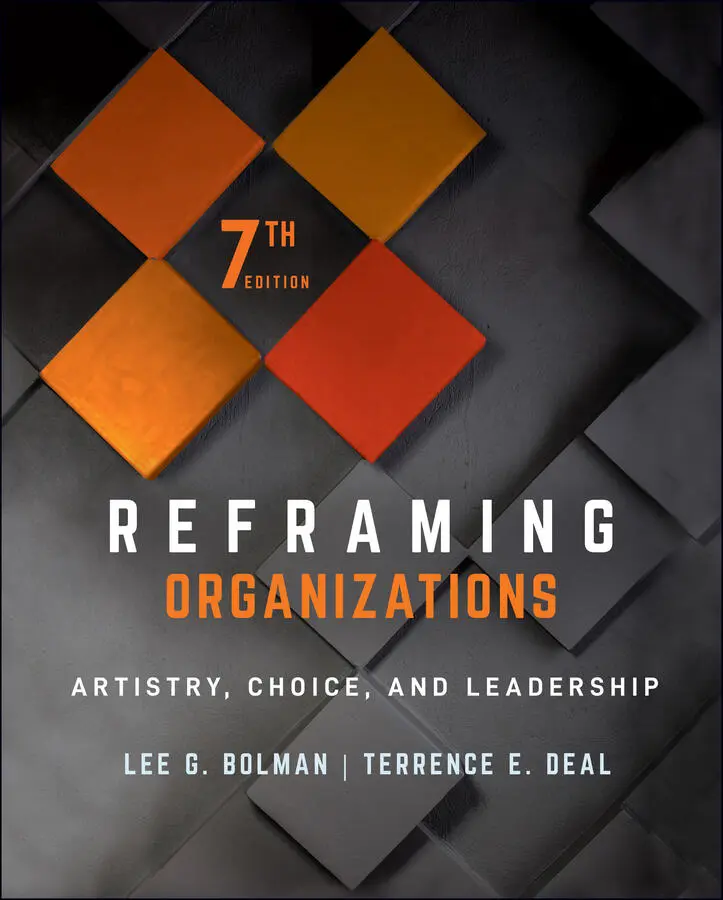
- Название:Reframing Organizations
- Автор:
- Жанр:
- Год:неизвестен
- ISBN:нет данных
- Рейтинг книги:4 / 5. Голосов: 1
-
Избранное:Добавить в избранное
- Отзывы:
-
Ваша оценка:
Reframing Organizations: краткое содержание, описание и аннотация
Предлагаем к чтению аннотацию, описание, краткое содержание или предисловие (зависит от того, что написал сам автор книги «Reframing Organizations»). Если вы не нашли необходимую информацию о книге — напишите в комментариях, мы постараемся отыскать её.
The Structural Frame The Human Resource Frame The Political Frame The Symbolic Frame The
has been updated with new information on cross-sector collaboration, generational differences, virtual environments, globalization, cross-cultural communication, and more, with an expanded Instructor’s Guide that includes summaries, mini-assessments, videos, and extra resources.
Reframing Organizations — читать онлайн ознакомительный отрывок
Ниже представлен текст книги, разбитый по страницам. Система сохранения места последней прочитанной страницы, позволяет с удобством читать онлайн бесплатно книгу «Reframing Organizations», без необходимости каждый раз заново искать на чём Вы остановились. Поставьте закладку, и сможете в любой момент перейти на страницу, на которой закончили чтение.
Интервал:
Закладка:
The breakdown of communication and coordination magnified the death toll—including 121 firefighters who died when the North Tower collapsed. The absence of a viable structure undermined the heroic efforts of highly dedicated, skilled professionals who gave their all in an unprecedented catastrophe (Dwyer, Flynn, and Fessenden, 2002).
The contrast between structures that work and those that don't highlights a core premise of the structural lens. The right mixture of strategy, roles, relationships, and coordination is essential to collective performance. This is true of all organizations: families, clubs, hospitals, military units, businesses, schools, churches, and public agencies. The right structure combats the risk that individuals, however talented, will become confused, ineffective, apathetic, or hostile. We saw earlier how confusion in Trump's White House undercut the noble efforts of some bright and capable individuals. The purpose of this chapter and the next two is to identify the basic ideas and inner workings of a perspective that is fundamental to collective human endeavors.
We begin our examination of the structural frame by highlighting its core assumptions, origins, and basic forms. The possibilities for designing an organization's social architecture are almost limitless, but any option must address three key questions: What is our overall strategy? How do we allocate responsibilities across different units and roles? And, once we've done that, how do we meld diverse efforts in pursuit of a common strategy? In this chapter, we explain these basic issues, describe the major options, and discuss imperatives to consider when designing a structure to fit the challenges of a unique situation.
STRUCTURAL ASSUMPTIONS
The central beliefs of the structural frame reflect confidence in rationality and faith that an appropriate array of roles and responsibilities will minimize distracting personal static and maximize people's focus on the job. The structural perspective advocates pointing people in the right direction, defining jobs, and stipulating how they work together. Properly designed, these provisions support and accommodate both collective goals and individual differences.
Six assumptions undergird the structural frame:
1 Organizations exist to achieve established goals and objectives and devise strategies to reach those goals.
2 Organizations increase efficiency and enhance performance through specialization and appropriate division of labor.
3 Suitable forms of coordination and control ensure that diverse efforts of individuals and units mesh.
4 Organizations work best when rationality prevails over personal agendas and extraneous pressures.
5 Effective structure fits an organization's current circumstances (including its strategy, technology, workforce, and environment).
6 When performance suffers from structural flaws, the preferred remedy is problem solving and restructuring.
Origins of the Structural Perspective
The structural view has two principal intellectual roots. The first is the work of industrial analysts bent on designing organizations for maximum efficiency. The most prominent of these, Frederick W. Taylor (1911), was the father of time‐and‐motion studies. He founded an approach that he labeled “scientific management.” Taylor broke tasks into minute parts and retrained workers to get the most from each motion and moment spent at work. Other theorists who contributed to the scientific management approach (Fayol, [1919] 1949; Gulick and Urwick, 1937; Urwick, 1937) developed principles focused on specialization, span of control, authority, and delegation of responsibility.
A second pioneer of structural ideas was the German economist and sociologist Max Weber, who wrote around the beginning of the twentieth century. At the time, formal organization was a relatively new phenomenon. Patriarchy rather than rationality was still the primary organizing principle. A father figure—who ruled with almost unlimited authority and power—dominated patriarchal organizations. He could reward, punish, promote, or fire on personal whim—akin to the approach Donald Trump brought to the presidency. Seeing an evolution of new structural models in late‐nineteenth‐century Europe, Weber described “monocratic bureaucracy” as an ideal form that maximized efficiency and norms of rationality. His model outlined several major features that were relatively novel at the time, although commonplace now:
a fixed division of labor
a hierarchy of offices
a set of rules governing performance
a separation of personal from official property and rights
the use of technical qualifications (not family ties or friendship) for selecting and promoting personnel
employment as primary occupation and long‐term career (Weber, 1947).
After World War II, Blau and Scott (1962), Perrow (1986), Thompson (1967), Lawrence and Lorsch (1967), Hall (1963), and others rediscovered Weber's ideas. Their work inspired a substantial body of theory and research amplifying the bureaucratic model. They examined relationships among the elements of structure, looked closely at why organizations develop one structure over another, and analyzed the effects of structure on morale, productivity, and effectiveness.
STRATEGY
Strategy comes from a Greek word that originally referred to the art of military leaders. It was imported into the business context in the twentieth century as a way to talk about an organization's overall approach to goals and methods. Strategy has been defined in many ways. Mintzberg (1987), for example, offers five of them, all beginning with the letter P:
1 Plan: a conscious and intentional course of action.
2 Perspective: an organization's way of framing where it wants to go and how it intends to get there.
3 Pattern: a consistent form of decisions.
4 Position: the way an organization positions itself in relationship to its environment.
5 Ploy: a plan or decision whose purpose is to provoke a reaction from competitors.
Some of Mintzberg's 5 Ps focus on thinking while others are more about action. All are elements of a coherent strategy. Roberts (2004) argues that the job of the general manager is to define a strategy that includes objectives, a statement of scope, a specification of the organization's competitive advantage, and the logic for how the organization will succeed. Structural logic dictates that an organization's success requires alignment of strategy, structure, and environment. But, as Chandler noted in 1962, “structure follows strategy.” A good strategy needs to be specific enough to provide direction but elastic enough to adapt to changing circumstances.
Eastman Kodak provides a classic case in point. Kodak developed a strategy that made it a dominant player in the film industry for a century, but stayed too long with the same approach and finally ended in bankruptcy. Kodak began in 1880, when George Eastman developed a formula for gelatin‐based dry plates, the basis for the then nascent field of photography. For the next 125 years the company's strategy sought to build on this technology by introducing products such as the Kodak Brownie camera, Kodachrome, the Kodak Instamatic camera, and gold standard motion picture film—as well as producing thousands of patents in related fields. Pursuing this strategy, the company's performance soared. At its zenith, Kodak was one of America's best‐known and most‐admired companies with over 145,000 employees and billions of dollars in sales (Brachmann, 2014).
Threats to Kodak's film‐based strategy surfaced as early as 1950 with the introduction of instant photography and the Polaroid camera. In the 1980s, Fujifilm, an upstart Japanese competitor, was able to mass‐produce film and sell it at a cheaper price to discount retailers like Walmart. Kodak couldn't compete and lost a large share of the film market (Brachmann, 2014).
Читать дальшеИнтервал:
Закладка:
Похожие книги на «Reframing Organizations»
Представляем Вашему вниманию похожие книги на «Reframing Organizations» списком для выбора. Мы отобрали схожую по названию и смыслу литературу в надежде предоставить читателям больше вариантов отыскать новые, интересные, ещё непрочитанные произведения.
![Lee Jungmin - Хвала Орку 1-128 [некоммерческий перевод с корейского]](/books/33159/lee-jungmin-hvala-orku-1-thumb.webp)







Обсуждение, отзывы о книге «Reframing Organizations» и просто собственные мнения читателей. Оставьте ваши комментарии, напишите, что Вы думаете о произведении, его смысле или главных героях. Укажите что конкретно понравилось, а что нет, и почему Вы так считаете.