Lee G. Bolman - Reframing Organizations
Здесь есть возможность читать онлайн «Lee G. Bolman - Reframing Organizations» — ознакомительный отрывок электронной книги совершенно бесплатно, а после прочтения отрывка купить полную версию. В некоторых случаях можно слушать аудио, скачать через торрент в формате fb2 и присутствует краткое содержание. Жанр: unrecognised, на английском языке. Описание произведения, (предисловие) а так же отзывы посетителей доступны на портале библиотеки ЛибКат.
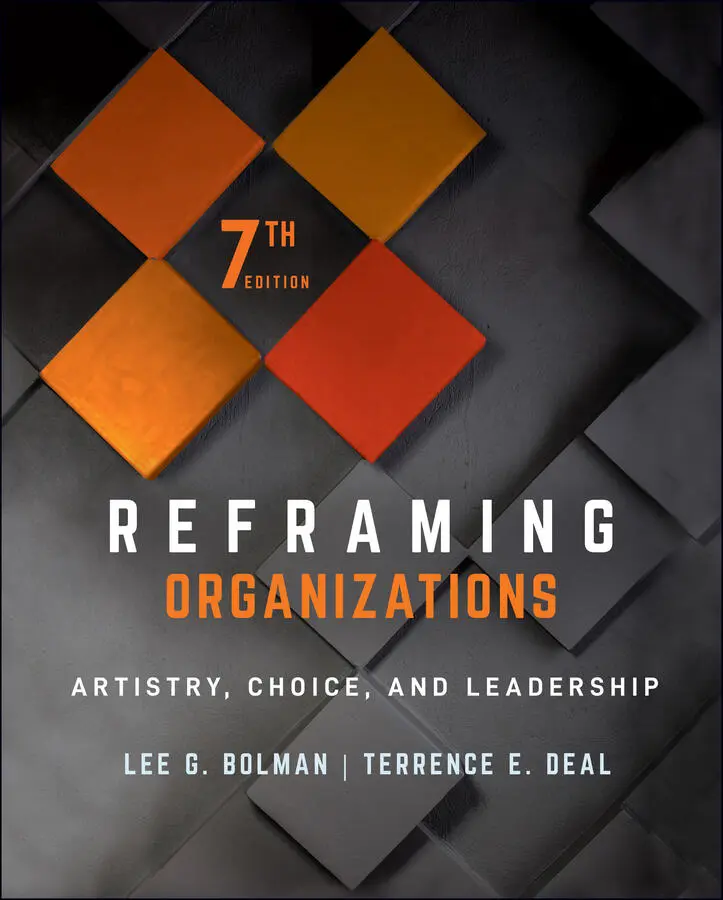
- Название:Reframing Organizations
- Автор:
- Жанр:
- Год:неизвестен
- ISBN:нет данных
- Рейтинг книги:4 / 5. Голосов: 1
-
Избранное:Добавить в избранное
- Отзывы:
-
Ваша оценка:
Reframing Organizations: краткое содержание, описание и аннотация
Предлагаем к чтению аннотацию, описание, краткое содержание или предисловие (зависит от того, что написал сам автор книги «Reframing Organizations»). Если вы не нашли необходимую информацию о книге — напишите в комментариях, мы постараемся отыскать её.
The Structural Frame The Human Resource Frame The Political Frame The Symbolic Frame The
has been updated with new information on cross-sector collaboration, generational differences, virtual environments, globalization, cross-cultural communication, and more, with an expanded Instructor’s Guide that includes summaries, mini-assessments, videos, and extra resources.
Reframing Organizations — читать онлайн ознакомительный отрывок
Ниже представлен текст книги, разбитый по страницам. Система сохранения места последней прочитанной страницы, позволяет с удобством читать онлайн бесплатно книгу «Reframing Organizations», без необходимости каждый раз заново искать на чём Вы остановились. Поставьте закладку, и сможете в любой момент перейти на страницу, на которой закончили чтение.
Интервал:
Закладка:
In November 2014, two police officers in Cleveland received a radio report of a “black male sitting on a swing pulling a gun out of his pants and pointing it at people” in a city park (Holloway, 2015). Arriving at the site, one officer spotted the suspect and saw him reach for his gun. The officer immediately shot and killed the suspect. The officer might have responded differently if the radio report had included two additional details. The caller who made the initial report had said that the suspect might be a juvenile, and the gun was probably fake. The gun was a toy replica of a Colt semiautomatic pistol. The victim, Tamir Rice, was 12 years old, but, at 195 pounds, might have looked like an adult on a quick glance. The officer who shot him was a rookie who had been hired in Cleveland after he was forced out of a suburban department which rated him as unqualified for police work (Flynn, 2016).
Perception and judgment involve matching situational cues with previously learned mental models. In this case, the perceptual data were ambiguous, and expectations were prejudiced by a key missing clue—the radio operator had never mentioned the possibility of a child with a toy. The officer was expecting a dangerous gunman, and that is what he saw.
Impact of Mental Models
Changing old patterns and mind‐sets is difficult. It is also risky; it can lead to analysis paralysis, confusion, and erosion of confidence. This dilemma is with us even if we see no flaws in our current thinking because our theories are often self‐sealing. They block us from recognizing our errors. Extensive research documents the many ways in which individuals spin reality to protect existing beliefs (see, for example, Garland, 1990; Staw and Hoang, 1995). In one corporate disaster after another, executives insist that they were not responsible but were the unfortunate victim of circumstances. After the mob invasion of the U.S. Capitol in January 2021, no one felt personally responsible and the blame game was in full swing.
Extensive research on the “framing effect” (Kahneman and Tversky, 1979) shows how powerful subtle cues can be. Relatively modest changes in how a problem or decision is framed can have a dramatic impact on how people respond (Gegerenzer, Hoffrage, and Kleinbölting, 1991; Shu and Adams, 1995). One study found that doctors responded more favorably to a treatment with “a one‐month survival rate of 90 percent” than one with “a 10 percent mortality rate in the first month,” even though the two are statistically identical (Kahneman, 2011).
Many of us sometimes recognize that our mental models or maps influence how we interpret the world. It is less widely understood that what we expect often determines what we get. Rosenthal and Jacobson (1968) studied schoolteachers who were told that certain students in their classes were “spurters”—students who were “about to bloom.” The so‐called “spurters,” who had been randomly selected, achieved above‐average gains on achievement tests. They really did spurt. Somehow, the teachers' expectations were communicated to and assimilated by the students. Medical science is still probing the placebo effect—the power of sugar pills to make people better (Hróbjartsson and Gøtzsche, 2010). When patients believe they will get better, they often do. Similar effects have been replicated in countless reorganizations, new product launches, and new approaches to performance appraisal. All these examples show how hard it is to disentangle reality from the models in our minds. 1
Japan has four major spiritual traditions, each with unique beliefs and assumptions: Buddhism, Confucianism, Shintoism, and Taoism. Though they differ greatly in history, traditions, and basic tenets, many Japanese feel no need to choose only one. They use all four, taking advantage of the strengths of each for suitable purposes or occasions. The four frames can play a similar role for managers in modern organizations. Rather than portraying the field of organizational theory as fragmented, we present it as pluralistic. Seen this way, the field offers a rich spectrum of mental models or lenses for viewing organizations. Each theoretical tradition is helpful. Each has blind spots. Each tells its own story about organizations. The ability to shift nimbly from one story to another helps redefine situations so they become understandable and manageable. The ability to reframe is one of the most powerful capacities of great artists. It can be equally powerful for managers and leaders.
CONCLUSION
Because organizations are complex, surprising, deceptive, and ambiguous, they are formidably difficult to comprehend and manage. Our preconceived theories, models, and images determine what we see, what we do, and how we judge what we accomplish. Narrow, oversimplified mental models become fallacies that cloud rather than illuminate managerial action. The world of most managers and administrators is a world of messes: complexity, ambiguity, value dilemmas, political pressures, and multiple constituencies. For managers whose images blind them to important parts of this messy reality, it is a world of frustration and failure. For those with better theories and the intuitive capacity to use them with skill and grace, it is a world of excitement and possibility. A mess can be defined as both a troublesome situation and a group of people who eat together regularly. The core challenge of leadership is to move an organization from the former to something more like the latter.
In succeeding chapters, we look at four perspectives, or frames, that have helped managers and leaders find clarity and meaning amid the confusion of organizational life. The frames are grounded in both the cool rationality of management science and the hot fire of actual practice. You can enhance your chances of success with an artful appreciation of how to use the four lenses to understand and influence what's really going on.
Note
1 1.These examples all show thinking influencing reality. A social constructivist perspective goes a step further to say that our thinking constructs social reality. In this view, an organization exists not “out there” but in the minds and actions of its constituents. This idea is illustrated in an old story about a dispute among three baseball umpires. The first says, “Some's balls, and some's strikes, and I calls ’em like they are.” The second counters, “No, you got it wrong. Some's balls, and some's strikes, and I calls ’em the way I sees them.” The third says, “You guys don't really get it. Some's balls, and some's strikes, but they ain't nothin' until I call ’em.” The first umpire is a realist who believes that what he sees is exactly what is. The second recognizes that reality is influenced by his own perception. The third is the social constructivist—his call makes them what they are. This distinction is particularly important in the symbolic frame, which we return to in Chapter 12.
PART TWO The Structural Frame
A frame is a coherent set of ideas or beliefs forming a prism or lens that enables you to see and understand more clearly what's going on in the world around you. In Part Two, we embark on the first stage of a tour that will take us to four very different ways of making sense of life, at work or elsewhere. Each frame will be presented in three chapters: one that introduces the basic concepts and two that focus on key applications and extensions. We begin with one of the oldest and most popular ways of thinking about organizations: the structural frame.
If someone asked you to describe your organization—your workplace, your school, or even your family—what image would come to mind? A likely possibility is a traditional organization chart: a series of boxes and lines depicting job responsibilities and levels. The chart might be shaped roughly like a pyramid, with a small number of bosses at the top and a much larger number of employees at the bottom. Such a chart is only one of many images that reflect the structural view. The frame is rooted in traditional rational images but goes much deeper to develop versatile and powerful ways to understand social architecture and its consequences.
Читать дальшеИнтервал:
Закладка:
Похожие книги на «Reframing Organizations»
Представляем Вашему вниманию похожие книги на «Reframing Organizations» списком для выбора. Мы отобрали схожую по названию и смыслу литературу в надежде предоставить читателям больше вариантов отыскать новые, интересные, ещё непрочитанные произведения.
![Lee Jungmin - Хвала Орку 1-128 [некоммерческий перевод с корейского]](/books/33159/lee-jungmin-hvala-orku-1-thumb.webp)










Обсуждение, отзывы о книге «Reframing Organizations» и просто собственные мнения читателей. Оставьте ваши комментарии, напишите, что Вы думаете о произведении, его смысле или главных героях. Укажите что конкретно понравилось, а что нет, и почему Вы так считаете.