Lee G. Bolman - Reframing Organizations
Здесь есть возможность читать онлайн «Lee G. Bolman - Reframing Organizations» — ознакомительный отрывок электронной книги совершенно бесплатно, а после прочтения отрывка купить полную версию. В некоторых случаях можно слушать аудио, скачать через торрент в формате fb2 и присутствует краткое содержание. Жанр: unrecognised, на английском языке. Описание произведения, (предисловие) а так же отзывы посетителей доступны на портале библиотеки ЛибКат.
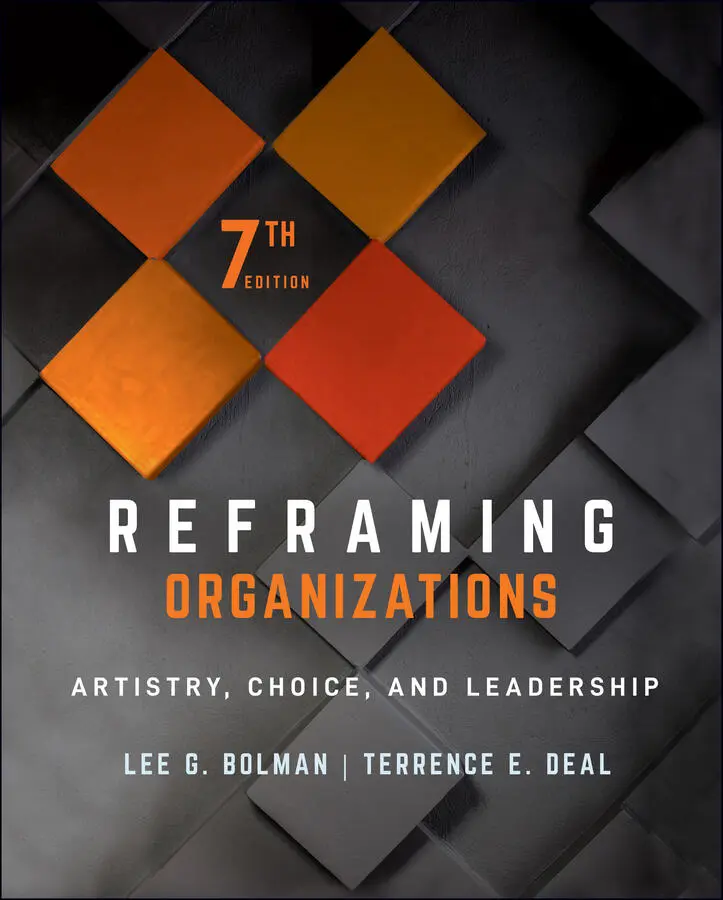
- Название:Reframing Organizations
- Автор:
- Жанр:
- Год:неизвестен
- ISBN:нет данных
- Рейтинг книги:4 / 5. Голосов: 1
-
Избранное:Добавить в избранное
- Отзывы:
-
Ваша оценка:
Reframing Organizations: краткое содержание, описание и аннотация
Предлагаем к чтению аннотацию, описание, краткое содержание или предисловие (зависит от того, что написал сам автор книги «Reframing Organizations»). Если вы не нашли необходимую информацию о книге — напишите в комментариях, мы постараемся отыскать её.
The Structural Frame The Human Resource Frame The Political Frame The Symbolic Frame The
has been updated with new information on cross-sector collaboration, generational differences, virtual environments, globalization, cross-cultural communication, and more, with an expanded Instructor’s Guide that includes summaries, mini-assessments, videos, and extra resources.
Reframing Organizations — читать онлайн ознакомительный отрывок
Ниже представлен текст книги, разбитый по страницам. Система сохранения места последней прочитанной страницы, позволяет с удобством читать онлайн бесплатно книгу «Reframing Organizations», без необходимости каждый раз заново искать на чём Вы остановились. Поставьте закладку, и сможете в любой момент перейти на страницу, на которой закончили чтение.
Интервал:
Закладка:
“How the fuck did they get on board then?” Clarke exploded.
“Hey, don't shoot the messenger. CIA forgot to tell us about them.”
In the context of its chronic battles with the CIA, the FBI was happy to throw a rival under the bus: “We could have stopped the terrorists if CIA had done their job.”
The tendency to blame what goes wrong on people, bureaucracy, or thirst for power is part of our deeply embedded mental wiring. They provide quick and easy explanations that enable us to feel we understand when we don't. There's much more to understanding a complex situation than assigning blame. Certain universal peculiarities of organizations make them especially difficult to understand or decipher.
PECULIARITIES OF ORGANIZATIONS
Human organizations can be exciting and challenging places. That's how they are often depicted in management texts, corporate annual reports, and fanciful management thinking. But, as many people find, they can also be deceptive, confusing, and demoralizing. It is a mistake to assume that organizations are either snake pits or rose gardens (Schwartz, 1986). Managers need to recognize characteristics of life at work that create opportunities for the wise as well as hidden traps for the unwary. A case from the public sector provides a typical example:
When Bosses Rush In
Helen Demarco arrived in her office to discover a news item from the local paper. The headline read, “Osborne Announces Plan.” Paul Osborne had arrived two months earlier as Amtran's new chief executive. His mandate was to “revitalize, cut costs, and improve efficiency.”
After 20 years, Demarco had achieved a senior management position at the agency. She had little contact with Osborne, but her boss reported to him. Demarco and her colleagues had been waiting to learn what the new chief had in mind. She was startled as she read the newspaper account. Osborne's plan made technical assumptions directly related to her area of expertise. “He might be a change agent,” she thought, “but he doesn't know much about our technology.” She immediately saw the new plan's fatal flaws. “If he tries to implement this, it'll be the worst management mistake since the Edsel.”
Two days later, Demarco and her colleagues received a memo instructing them to form a task force to work on the revitalization plan. When the group convened, everyone agreed the new proposal was, at best, crazy.
“What do we do?” someone asked.
“Why don't we just tell him it won't work?” said one hopeful soul.
“He's already gone public! You want to tell him his new baby is ugly?”
“Not me. Besides, I've heard, he already thinks a lot of us are deadwood. If we tell him it's no good, he'll just think we're defensive.”
“Well, we can't go ahead with it. It'll never work and we'd be throwing away money.”
“That's true,” said Demarco thoughtfully. “But what if we tell him we're conducting a study of how to implement his plan?”
Demarco's innovative suggestion produced smiles around the room and received overwhelming approval. The group informed a delighted Osborne that they were moving ahead on the “implementation study” and expected excellent results. They got a substantial budget to support their “research.” They did not mention their real purpose––to buy time and find a way to minimize the damage without alienating the boss.
Over time, the group assembled a lengthy technical report, filled with graphs, tables, and nearly impenetrable administrative jargon. The report offered two options. Option A, Osborne's original plan, was presented as technically challenging and well beyond anything Amtran could afford. Option B, billed as a “modest descaling” of the original plan, was projected as a more cost‐effective alternative.
When Osborne pressed the group on the huge dollar disparity between the two proposals, he received a barrage of complicated cost‐benefit projections and inscrutable technical terms. Hidden in a dense fog was the reality that even Option B offered few benefits at a very high price. Osborne argued and pressed for more information. But given the apparent facts, he agreed to proceed with Option B. The “Osborne plan” was announced with fanfare and widely heralded as another instance of Paul Osborne's talent for revitalizing ailing bureaucracies. Osborne had moved on to work his management magic on another organization by the time the plan came online, leaving his successor to defend the underwhelming results.
Helen Demarco came away with deep feelings of frustration and failure. The Osborne plan, in her view, was a wasteful mistake, and she had knowingly participated in a charade. But she rationalized to herself that she had no other choice. Osborne was adamant. It would have been career suicide to try to stop him.
Helen Demarco's case is not unique. Note that her story mirrors the story of the coronavirus cover‐up in Wuhan. It is also easy to find similar stories in corporations. At the Geneva International Motor Show in 2012, Volkswagen CEO Martin Winterkorn proclaimed that by 2015 the company would cut its vehicles' carbon dioxide emissions by 30 percent from 2006 levels. It was a tremendously ambitious goal that would have beat the targets set by European regulators to combat global warming. But just like Paul Osborne, Winterkorn had set the bar too high. The engineers saw no way to meet the boss's goals, but no one wanted to tell him it couldn't be done. So, they cheated instead. There was a precedent because VW had already begun cheating on diesel emissions several years earlier, and observers reported that “an ingrained fear of delivering bad news to superiors” (Ewing, 2015, p. B3) was a feature of VW's culture. VW incurred huge financial and reputational costs when the cover‐ups became a global news item.
Like Helen Demarco, Wuhan officials and VW engineers had other options but couldn't see them. Paul Osborne and Martin Winterkorn both thought they were providing bold leadership to vault their organizations forward. They were tripped up in part by human fallibility but also by how hard it can be to know what's really going on in any organization. Managerial wisdom and artistry require a well‐honed understanding of four key characteristics of organizations.
First, organizations are complex . The behavior of the people who populate them is notoriously hard to predict. Large organizations in particular sport a bewildering array of people, departments, technologies, strategies, and goals. Moreover, organizations are open systems dealing with a changing, challenging, and erratic environment. Things can get even messier across multiple organizations. The 9/11 disaster and the 2021 invasion of the U.S. Capitol resulted from a chain of events that involved several separate autonomous systems. Almost anything can affect everything else in collective activity, generating causal knots that are hard to untangle. After an exhaustive investigation, our picture of 9/11 is woven from sundry evidence, conflicting testimony, and conjecture. Historians and scientists will spend years trying to untangle who should have done what to minimize global damage from the pandemic of 2020.
Second, organizations are surprising . What you expect is often not what you get. Paul Osborne saw his plan as a bold leap forward; Helen and her group deemed it an expensive albatross. In their view, Osborne was going to make matters worse by trying to improve them. He might have achieved better results by spending more time with his family and letting his organization take care of itself. Martin Winterkorn was stunned when the hidden cheating blew up in his face, costing him his job and hitting VW with devastating financial and reputational damage.
Читать дальшеИнтервал:
Закладка:
Похожие книги на «Reframing Organizations»
Представляем Вашему вниманию похожие книги на «Reframing Organizations» списком для выбора. Мы отобрали схожую по названию и смыслу литературу в надежде предоставить читателям больше вариантов отыскать новые, интересные, ещё непрочитанные произведения.
![Lee Jungmin - Хвала Орку 1-128 [некоммерческий перевод с корейского]](/books/33159/lee-jungmin-hvala-orku-1-thumb.webp)







Обсуждение, отзывы о книге «Reframing Organizations» и просто собственные мнения читателей. Оставьте ваши комментарии, напишите, что Вы думаете о произведении, его смысле или главных героях. Укажите что конкретно понравилось, а что нет, и почему Вы так считаете.