Lee G. Bolman - Reframing Organizations
Здесь есть возможность читать онлайн «Lee G. Bolman - Reframing Organizations» — ознакомительный отрывок электронной книги совершенно бесплатно, а после прочтения отрывка купить полную версию. В некоторых случаях можно слушать аудио, скачать через торрент в формате fb2 и присутствует краткое содержание. Жанр: unrecognised, на английском языке. Описание произведения, (предисловие) а так же отзывы посетителей доступны на портале библиотеки ЛибКат.
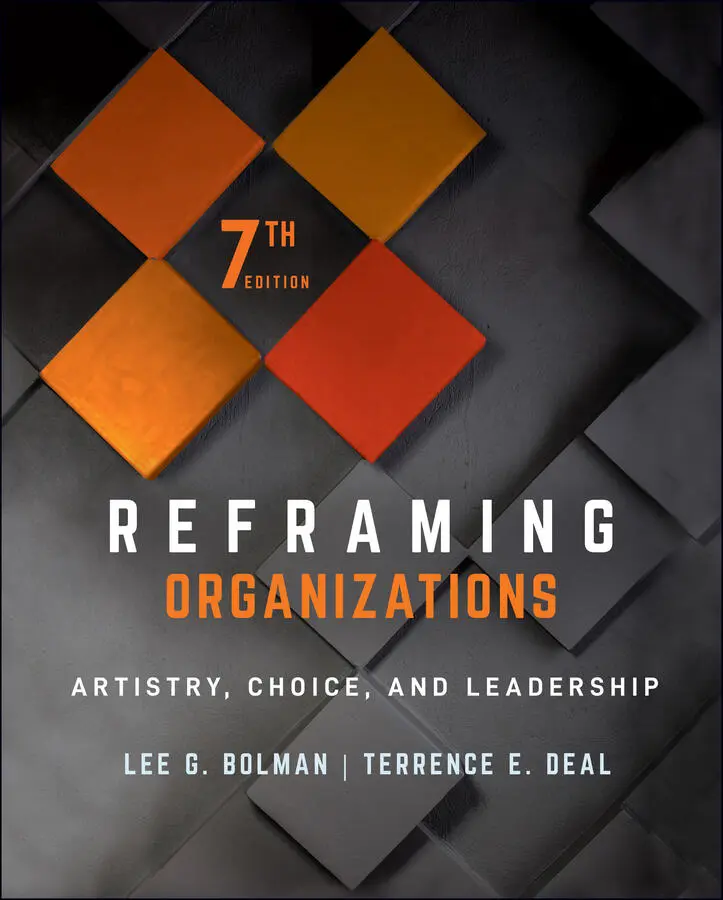
- Название:Reframing Organizations
- Автор:
- Жанр:
- Год:неизвестен
- ISBN:нет данных
- Рейтинг книги:4 / 5. Голосов: 1
-
Избранное:Добавить в избранное
- Отзывы:
-
Ваша оценка:
Reframing Organizations: краткое содержание, описание и аннотация
Предлагаем к чтению аннотацию, описание, краткое содержание или предисловие (зависит от того, что написал сам автор книги «Reframing Organizations»). Если вы не нашли необходимую информацию о книге — напишите в комментариях, мы постараемся отыскать её.
The Structural Frame The Human Resource Frame The Political Frame The Symbolic Frame The
has been updated with new information on cross-sector collaboration, generational differences, virtual environments, globalization, cross-cultural communication, and more, with an expanded Instructor’s Guide that includes summaries, mini-assessments, videos, and extra resources.
Reframing Organizations — читать онлайн ознакомительный отрывок
Ниже представлен текст книги, разбитый по страницам. Система сохранения места последней прочитанной страницы, позволяет с удобством читать онлайн бесплатно книгу «Reframing Organizations», без необходимости каждый раз заново искать на чём Вы остановились. Поставьте закладку, и сможете в любой момент перейти на страницу, на которой закончили чтение.
Интервал:
Закладка:
The solution to yesterday's problems often creates tomorrow's obstacles. A friend of ours headed a retail chain. In the firm's early years, he had a problem with two sisters who worked in the same store. To prevent this from recurring, he established a nepotism policy prohibiting members of the same family from working for the company. Years later, two talented employees met at work, fell in love, and began to live together. The president was startled when they asked if they could get married without being fired. Taking action in a cooperative venture is like shooting a wobbly cue ball into a scattered array of self‐directed billiard balls. Balls bounce in so many directions that it is impossible to know how things will eventually sort out.
Third, organizations are deceptive . They camouflage mistakes and surprises. Helen Demarco and her colleagues disguised obfuscation as technical analysis. After 9/11, America's homeland defense organizations tried to conceal their confusion and lack of preparedness for fear of revealing strategic weaknesses. Volkswagen engineers developed software whose only purpose was to cheat on emissions tests, hoping that no one would ever see through their deception. Officials in Wuhan, China, tried to cover up the seriousness of the coronavirus outbreak for a few critical weeks with devastating consequences for the world.
It is tempting to blame deceit on individual weakness. Yet Helen Demarco disliked fraud and regretted cheating—she simply believed it was her best option. Sophisticated managers know that what happened to Paul Osborne happens all the time. When a quality initiative fails or a promising product tanks, subordinates often clam up or cover up. They fear that the boss will not listen or will kill the messenger. A friend in a senior position in a large government agency put it simply: “Communications in organizations are rarely candid, open, or timely.”
Fourth, organizations are ambiguous . Complexity, unpredictability, and deception generate rampant ambiguity, a dense fog that shrouds what happens from day to day. It is hard to get the facts and even harder to know what they mean or what to do about them. Helen Demarco never knew how Paul Osborne really felt, how receptive he was to other points of view, or how open he was to compromise. She and her peers piled on more mystery by conspiring to keep him in the dark.
Ambiguity has many sources. Sometimes available information is incomplete or vague. That was a huge problem for decision makers in the early days of the Covid‐19 pandemic. Little was known about a novel virus that attacked people in complex and puzzling ways. Emergency room doctors around the world struggled to understand what they were dealing with and what to do about it.
In addition, different people may interpret the identical information in a variety of ways, depending on mind‐sets and organizational doctrines. During the pandemic in the United States, wearing masks and the value of ingesting hydrochloroquine became politicized, with supporters and opponents of President Trump interpreting available information in very different ways. At other times, ambiguity is intentionally manufactured as a smoke screen to conceal problems or avoid conflict. Much of the time, events and processes are so intricate, scattered, and uncoordinated that no one can fully understand—let alone control—the reality. Exhibit 2.1lists some of the most important sources of organizational uncertainty.
ORGANIZATIONAL LEARNING
How can valid lessons be extracted from surroundings that are complex, surprising, deceptive, and ambiguous? It isn't easy, as many who tried have found out. Decades ago, scholars debated whether the idea of organizational learning made sense: Could organizations actually learn, or was learning inherently individual? That debate lapsed as experience verified instances in which individuals learned and organizations didn't, or vice versa. Complex firms such as Amazon, Apple, and Southwest Airlines have “learned” capabilities far beyond individual knowledge. Lessons are enshrined in protocols, policies, technologies, and shared cultural codes and traditions. At the same time, individuals often learn even when systems cannot.
Perspectives on organizational learning are exemplified in the work of Argote and Miron‐Spector (2011), Peter Senge (1990), Barry Oshry (1995), and Chris Argyris and Donald Schön (1978, 1996). Argote and Miron‐Spector review the literature on organizational learning and offer a rational perspective in which as organizational members use organizational tools to perform tasks, they acquire experience that leads to knowledge which is then embedded in the organizational context, including its culture. Changes in the context feed back to influence subsequent experience, completing the causal circle. Argote and Miron‐Spector acknowledge that knowledge can be ambiguous and difficult to verify, but devote little attention to barriers to learning. Senge, on the other hand, sees a core‐learning dilemma: “We learn best from our experience, but we never directly experience the consequences of many of our decisions” (p. 23). Learning is relatively easy when the link between cause and effect is clear. But complex systems often sever that connection: causes remote from effects, solutions detached from problems, and feedback absent, delayed, or misleading (Cyert and March, 1963; Senge, 1990).
Exhibit 2.1. Sources of Ambiguity.
| We are not sure what the problem is.We are not sure what is really happening.We are not sure what we want.We do not have the resources we need.We are not sure who is supposed to do what.We are not sure how to get what we want.We are not sure how to determine if we have succeeded. |
Source: Adapted from McCaskey (1982).
Senge emphasizes the value of “system maps” that clarify how a system works. Consider the system dynamics of Covid‐19. In February, 2020, while America's attention was focused on the risk of the coronavirus invading from China, it arrived in New York among some two million travelers from Europe. The virus then spread quietly at a time when testing capacity was severely limited. Residents in a city of eight million continued to do all the things they usually did – including riding crowded subways, eating at restaurants, attending large conferences, and going to concerts and the theater. Without realizing it, they were engaging in very risky behavior. But, in the short term, they got no feedback, and saw no visible signs saying: “Warning! You have just been exposed to a deadly virus!” The lag between infection and symptoms was compounded by asymptomatic carriers and delays in testing. By the time very sick patients began to show up in emergency rooms, the virus was out of control.
Covid‐19 is one of many examples of actions or strategies that look good until long‐term costs become apparent. A corresponding systems model might look like Exhibit 2.2. The strategy might be cutting training to improve short‐term profitability, drinking martinis to relieve stress, offering rebates to entice customers, borrowing from a loan shark to cover gambling debts, or carelessly attending an unmasked “super‐spreader” event during a viral pandemic. In each case, the initial results seem fine, and the costs only emerge further down the road.
Oshry (1995) agrees that system blindness is widespread but highlights causes rooted in troubled relationships between groups that have little grasp of what's going on outside their own locality. Top managers feel overwhelmed by complexity, responsibility, and overwork. They are chronically dissatisfied with subordinates' lack of initiative and creativity. Middle managers, meanwhile, feel trapped between contradictory signals and pressures. The top tells them to take initiative but then punishes mistakes. Their subordinates expect them to intervene with the boss and improve working conditions. Top and bottom tug in opposite directions, causing those in the middle to feel pulled apart, confused, and weak. At the bottom, workers feel powerless, unacknowledged, and demoralized. “They give us bad jobs, lousy pay, and lots of orders but never tell us what's really going on. Then they wonder why we don't love our work.” Unless you can step back and see how system dynamics create these patterns, you muddle along blindly, unaware of better options.
Читать дальшеИнтервал:
Закладка:
Похожие книги на «Reframing Organizations»
Представляем Вашему вниманию похожие книги на «Reframing Organizations» списком для выбора. Мы отобрали схожую по названию и смыслу литературу в надежде предоставить читателям больше вариантов отыскать новые, интересные, ещё непрочитанные произведения.
![Lee Jungmin - Хвала Орку 1-128 [некоммерческий перевод с корейского]](/books/33159/lee-jungmin-hvala-orku-1-thumb.webp)







Обсуждение, отзывы о книге «Reframing Organizations» и просто собственные мнения читателей. Оставьте ваши комментарии, напишите, что Вы думаете о произведении, его смысле или главных героях. Укажите что конкретно понравилось, а что нет, и почему Вы так считаете.