Lee G. Bolman - Reframing Organizations
Здесь есть возможность читать онлайн «Lee G. Bolman - Reframing Organizations» — ознакомительный отрывок электронной книги совершенно бесплатно, а после прочтения отрывка купить полную версию. В некоторых случаях можно слушать аудио, скачать через торрент в формате fb2 и присутствует краткое содержание. Жанр: unrecognised, на английском языке. Описание произведения, (предисловие) а так же отзывы посетителей доступны на портале библиотеки ЛибКат.
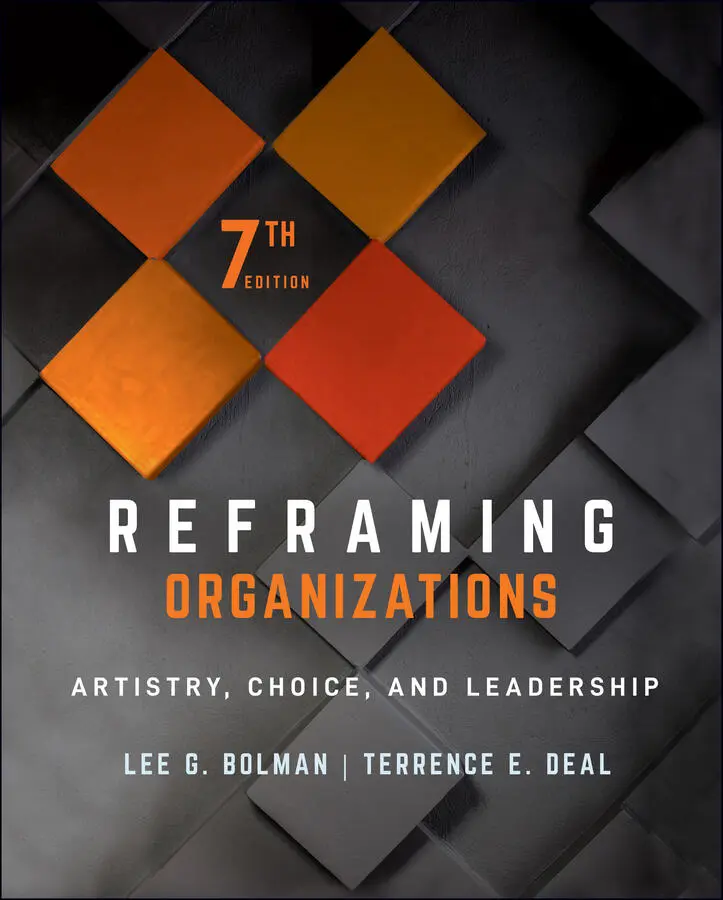
- Название:Reframing Organizations
- Автор:
- Жанр:
- Год:неизвестен
- ISBN:нет данных
- Рейтинг книги:4 / 5. Голосов: 1
-
Избранное:Добавить в избранное
- Отзывы:
-
Ваша оценка:
Reframing Organizations: краткое содержание, описание и аннотация
Предлагаем к чтению аннотацию, описание, краткое содержание или предисловие (зависит от того, что написал сам автор книги «Reframing Organizations»). Если вы не нашли необходимую информацию о книге — напишите в комментариях, мы постараемся отыскать её.
The Structural Frame The Human Resource Frame The Political Frame The Symbolic Frame The
has been updated with new information on cross-sector collaboration, generational differences, virtual environments, globalization, cross-cultural communication, and more, with an expanded Instructor’s Guide that includes summaries, mini-assessments, videos, and extra resources.
Reframing Organizations — читать онлайн ознакомительный отрывок
Ниже представлен текст книги, разбитый по страницам. Система сохранения места последней прочитанной страницы, позволяет с удобством читать онлайн бесплатно книгу «Reframing Organizations», без необходимости каждый раз заново искать на чём Вы остановились. Поставьте закладку, и сможете в любой момент перейти на страницу, на которой закончили чтение.
Интервал:
Закладка:
Size and Age
Size and age affect structural shape and character. Problems crop up if growth (or downsizing) occurs without fine‐tuning roles and relationships. A small, entrepreneurial organization typically has simple, informal architecture. Growth spawns formality and complexity (Greiner, 1972; Quinn and Cameron, 1983). If carried too far, this leads to the suffocating bureaucratic rigidity often seen in large, mature enterprises.
In the beginning, McDonald's was not the tightly controlled company it is today. It began as a single hamburger stand in San Bernardino, California, owned and managed by the McDonald brothers. They virtually invented the concept of fast food, and their stand was phenomenally successful. The two tried to expand by selling franchise rights, with little success. They were making more than enough money, disliked travel, and had no heirs. If they were richer, said one brother, “we'd be leaving it to a church or something, and we didn't go to church” (Love, 1986, p. 23).
The concept took off when Ray Kroc arrived on the scene. At the time, he was selling milk shake machines to restaurants with modest success. When many of his customers began to ask for the McDonald's milk shake mixer, he decided to visit the brothers. Seeing the original stand, Kroc realized the potential: “Unlike the homebound McDonalds, Kroc had traveled extensively, and he could envision hundreds of large and small markets where a McDonald's could be located. He understood the existing food services businesses, and understood how a McDonald's unit could be a formidable competitor” (Love, 1986, pp. 39–40). Kroc persuaded the McDonald brothers to let him take over the franchising effort. The rest is history (or Hollywood, which tells its version of the story—an unflattering portrayal of Ray Kroc—in the 2016 film, The Founder ).
Core Process
Structure forms around an organization's basic method of transforming raw materials into finished products. Every organization has at least one core technology that includes raw materials, activities that turn inputs into outputs, and underlying beliefs about the links among inputs, activities, and outcomes (Dornbusch and Scott, 1975).
Core technologies vary in clarity, predictability, and effectiveness. Assembling a Big Mac is relatively routine and programmable. The task is clear, most potential problems are known in advance, and the probability of success is high. Its relatively simple core technology allows McDonald's to rely mostly on vertical coordination.
In contrast, Harvard's two core processes—research and teaching—are far more complex and less predictable. Teaching objectives are knotty and amorphous. Unlike hamburger buns, students are active agents. Which teaching strategies best yield desired results is more a matter of faith than of fact. Even if students could be molded predictably, mystery surrounds the knowledge and skills they will need to succeed in life. This uncertain technology, greatly dependent on the skills and knowledge of highly educated professionals, is a key source of Harvard's loosely coordinated structure.
Core technologies often evolve, and significant technical innovation calls for corresponding structural alterations (Barley, 1990). In recent decades, struggles to integrate new technologies have become a fateful reality for many firms (Christensen, 1997; Henderson and Clark, 1990). Existing arrangements often get in the way. Companies are tempted to shoehorn innovative technologies into a box that fits their existing operations. As we saw with the decline and fall of Kodak, a change from film to digital photography, slide rules to calculators, or “snail mail” to email gives an advantage to new players less committed to the old ways. In his study of the disk drive industry from 1975 to 1994, Christensen (1997) found that innovation in established firms was often blocked less by technical challenges than by marketers who argued, “Our customers don't want it.” By the time the customers did want it, someone else had grabbed the market.
Some organizations are more susceptible than others to outside influences. Public schools, for example, are highly vulnerable to external pressures because they have limited capacity to claim the resources they need or to shape the results they are supposed to produce. In contrast, an institution like Harvard is insulated from such intrusions by its size, elite status, and large endowment. It can afford to offer low teaching loads, generous salaries, and substantial autonomy to its faculty. A Harvard diploma is taken as sufficient evidence that instruction is having its desired effect.
Strategy and Goals
Strategic decisions are future‐oriented, concerned with long‐term direction (Chandler, 1962; Mintzberg, 1994; Roberts, 2004). Across sectors, a major task of organizational leadership is “the determination of long‐range goals and objectives of an enterprise, and the adoption of courses of action and allocation of resources necessary for carrying out these goals” (Chandler, 1962, p. 13).
A variety of goals are embedded in strategy. In business firms, goals such as profitability, growth, and market share are relatively specific and easy to measure. Goals of educational or human services organizations are typically more diffuse: “producing educated men and women” or “improving individual well‐being.” This is another reason Harvard adopts a more decentralized, loosely integrated system of roles and relationships.
Historically, McDonald's had fewer, more quantifiable, and less controversial goals than those of Harvard. This aligned well with the centralized, top‐down McDonald's structure. But that structure has become more complex as the company's size and global reach have fostered levels of decentralization that allowed outlets in India to offer vegetarian cuisine and those in France to run ads attacking Americans and American beef (Arndt, 2007; Stires, 2002; Tagliabue, 1999).
Understanding linkages among goals, structure, and strategy requires a look beyond formal statements of purpose. Schools, for example, are often criticized if structure does not coincide with the official goal of scholastic achievement. But schools have other, less visible goals. One is character development, often espoused with little follow‐through. Another is the taboo goal of certification and selection, as schools channel students into tracks and sort them into careers. Still a third goal is custody and control—keeping kids off the streets, out from underfoot and temporarily away from the job market. When the Covid‐19 pandemic forced millions of students to stay home instead of going to school, the impact on families was often devastating. Finally, schools often herald honorific goals such as excellence. Strategy and goals shape structure, but the process is often complex and subtle (Dornbusch and Scott, 1975).
Information Technology
New technologies continue to revolutionize the amount of information available and the speed at which it travels. Information that was once accessible exclusively to top‐level or middle managers is now easy to get and widely shared. New media have made communication immediate and far‐reaching. With the press of a key, anyone can reach another person—or an entire network. All this makes it easier to move decisions closer to the action.
In the 2003 invasion of Iraq, for example, U.S. and British forces had an obvious advantage in military hardware. They also had a powerful structural advantage because their superior information technology let them deploy a much more flexible and decentralized command structure. Commanders in the field could change their plans immediately in response to new developments. Iraqi forces, meanwhile, had a much slower, more vertical structure that relied on decisions from the top. A major reason that Iraqi resistance was lighter than expected in the early weeks was that commanders had no idea what to do when they were cut off from their chain of command (Broder and Schmitt, 2003).
Читать дальшеИнтервал:
Закладка:
Похожие книги на «Reframing Organizations»
Представляем Вашему вниманию похожие книги на «Reframing Organizations» списком для выбора. Мы отобрали схожую по названию и смыслу литературу в надежде предоставить читателям больше вариантов отыскать новые, интересные, ещё непрочитанные произведения.
![Lee Jungmin - Хвала Орку 1-128 [некоммерческий перевод с корейского]](/books/33159/lee-jungmin-hvala-orku-1-thumb.webp)










Обсуждение, отзывы о книге «Reframing Organizations» и просто собственные мнения читателей. Оставьте ваши комментарии, напишите, что Вы думаете о произведении, его смысле или главных героях. Укажите что конкретно понравилось, а что нет, и почему Вы так считаете.