Lee G. Bolman - Reframing Organizations
Здесь есть возможность читать онлайн «Lee G. Bolman - Reframing Organizations» — ознакомительный отрывок электронной книги совершенно бесплатно, а после прочтения отрывка купить полную версию. В некоторых случаях можно слушать аудио, скачать через торрент в формате fb2 и присутствует краткое содержание. Жанр: unrecognised, на английском языке. Описание произведения, (предисловие) а так же отзывы посетителей доступны на портале библиотеки ЛибКат.
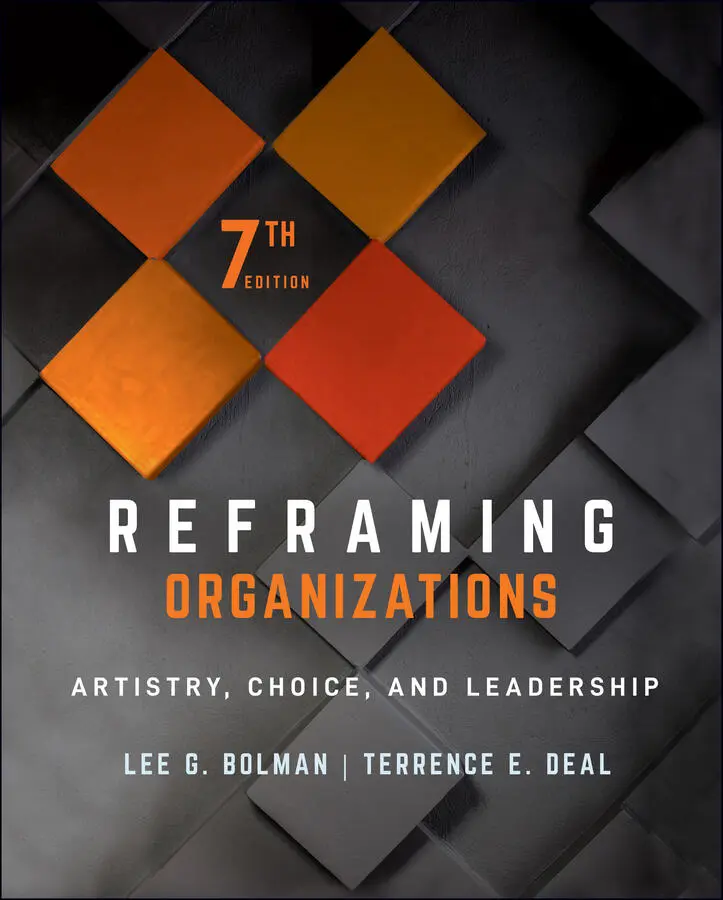
- Название:Reframing Organizations
- Автор:
- Жанр:
- Год:неизвестен
- ISBN:нет данных
- Рейтинг книги:4 / 5. Голосов: 1
-
Избранное:Добавить в избранное
- Отзывы:
-
Ваша оценка:
Reframing Organizations: краткое содержание, описание и аннотация
Предлагаем к чтению аннотацию, описание, краткое содержание или предисловие (зависит от того, что написал сам автор книги «Reframing Organizations»). Если вы не нашли необходимую информацию о книге — напишите в комментариях, мы постараемся отыскать её.
The Structural Frame The Human Resource Frame The Political Frame The Symbolic Frame The
has been updated with new information on cross-sector collaboration, generational differences, virtual environments, globalization, cross-cultural communication, and more, with an expanded Instructor’s Guide that includes summaries, mini-assessments, videos, and extra resources.
Reframing Organizations — читать онлайн ознакомительный отрывок
Ниже представлен текст книги, разбитый по страницам. Система сохранения места последней прочитанной страницы, позволяет с удобством читать онлайн бесплатно книгу «Reframing Organizations», без необходимости каждый раз заново искать на чём Вы остановились. Поставьте закладку, и сможете в любой момент перейти на страницу, на которой закончили чтение.
Интервал:
Закладка:
STRUCTURAL DILEMMAS
Finding an apt confluence of authority, roles, and relationships is a universal struggle. Managers rarely face well‐defined problems with clear‐cut solutions. Instead, they confront enduring structural dilemmas—tough trade‐offs without easy answers.
Differentiation Versus Integration
The tension between assigning work and synchronizing different efforts creates a classic dilemma. The more complex a role configuration (lots of people doing many different things), the harder it is to sustain a focused, tightly coupled enterprise. As size and complexity grow, organizations need more sophisticated—and more costly—coordination strategies. Lateral strategies are needed to supplement top‐down rules, policies, and commands.
Gap Versus Overlap
If key responsibilities are not clearly assigned, important tasks typically fall through the cracks. Conversely, roles and activities can overlap, creating conflict, wasted effort, and unintended redundancy. A patient in a prestigious teaching hospital, for example, called her husband and pleaded with him to rescue her. She couldn't sleep at night because hospital staff, especially nurses' aides and interns, kept waking her, often to repeat a procedure or administer a medication that someone else had done a short time before. Conversely, when she wanted something, pressing her nurses' call button rarely produced a timely response.
The new cabinet‐level Department of Homeland Security created in the wake of the 9/11 terrorist attacks was intended to reduce gaps and overlaps among the many agencies responsible for responding to domestic threats. Activities incorporated into the new department included immigration, border protection, emergency management, and intelligence analysis. Yet the two most prominent antiterrorism agencies, the FBI and the CIA—with their long history of mutual gaps, overlaps, and bureaucratic squabbling—remained separate and outside the new agency (Firestone, 2002).
Underuse Versus Overload
If employees have too little work, they become bored and get in other people's way. Members of the clerical staff in a physician's office were able to complete most of their tasks during the morning. After lunch, they filled their time talking to family and friends. As a result, the office telephone lines were constantly busy, making it difficult for patients to ask questions and schedule appointments. Meanwhile, clients and routine paperwork swamped the nurses, who were often brusque and curt because they were so busy. Patients complained about impersonal care. Reassigning many of the nurses' clerical duties to office staff created a better structural balance.
Lack of Clarity Versus Lack of Creativity
If employees are unclear about what they are supposed to do, they often tailor their roles to fit personal preferences instead of shaping them to meet system‐wide goals. This frequently leads to trouble. Most McDonald's customers are not seeking novelty and surprise in their burgers and fries. But when responsibilities are over‐defined, people conform to prescribed roles and protocols in “bureaupathic” ways. They rigidly follow job descriptions, regardless of how much the service or product suffers.
“You lost my bag!” an angry passenger shouted, confronting an airline manager.
The manager responded, “How was the flight?”
“I asked about my bag,” said the passenger.
“That's not my job,” the manager replied. “Check with baggage claim.”
The passenger did not come away as a satisfied customer.
Excessive Autonomy Versus Excessive Interdependence
If the efforts of individuals or groups are too independent, people often feel isolated. Schoolteachers may feel lonely and unsupported because they work in self‐contained classrooms and rarely see other adults. Forced to make a sudden shift to online teaching during the Covid pandemic, many teachers felt even more alone and burdened. One study found that more than 70 percent contemplated leaving the profession (Zalaznik, 2021). Yet efforts to create closer teamwork have repeatedly run aground because of teachers' difficulties in working together. In contrast, if too tightly connected, people in roles and units are distracted and waste time on unnecessary coordination. IBM lost an early lead in the personal computer business in part because new initiatives required so many approvals—from levels and divisions alike—that new products were overdesigned and late to market. The same problem hindered Hewlett‐Packard's ability to innovate in the late 1990s.
Too Loose Versus Too Tight
Another critical structural dilemma is how to hold an organization together without holding it back. If structure is too loose, people go astray, with little sense of what others are doing. But rigid structures stifle flexibility and encourage people to waste time trying to bolster or beat the system.
We can see some of the perils of a loose structure in the former accounting firm Andersen Worldwide, indicted in 2002 for its role in the Enron scandal. Efforts to shred documents and alter memos at Andersen's Houston office went well beyond questionable accounting procedures. At its Chicago headquarters, Andersen had an internal audit team, the Professional Standards Group, charged with reviewing the work of regional offices. Unlike other large accounting firms, Andersen let frontline partners closest to the clients overrule the internal audit team. This fostered local discretion that was a selling point to customers, including Enron, but came back to haunt the firm. As a result of the lax controls, “the rainmakers were given the power to overrule the accounting nerds” (McNamee and Borrus, 2002, p. 33). The august firm collapsed as a result.
The opposite problem is common in managed health care. Insurance companies give clerks far from the patient's bedside the authority to approve or deny treatment or to review medical decisions, often frustrating physicians and patients. Doctors lament spending time talking to insurance representatives that would be better spent seeing patients. Insurance providers sometimes deny treatments that physicians see as urgent. In one case, a hospital‐based psychologist diagnosed an adolescent as likely to commit sexual assault. The insurer questioned the diagnosis and denied hospitalization. The next day, the teenager raped a 5‐year‐old girl.
Goal‐less Versus Goal‐bound
In some situations, few people know what the goals are. In others, people cling intently to targets long after they have become irrelevant or outmoded, like the Japanese soldiers who hid on islands in the Pacific for decades after World War II, unaware that the war had been over since 1945. Conversely, the Salk vaccine virtually eradicated polio in the 1960s. This lauded medical breakthrough also brought to an end the existing strategy of the March of Dimes organization, which for years had championed finding a cure for the crippling disease. The organization rebounded by shifting its strategy to focus on preventing birth defects.
Irresponsible Versus Unresponsive
If people abdicate their responsibilities, performance suffers. However, adhering too rigidly to policies or procedures can be equally harmful. In public agencies, “street‐level bureaucrats” (Lipsky, 1980), who deal with the public, are often asked, “Could you do me this small favor?” or “Couldn't you bend the rules a little bit in this case?” Turning down every request, no matter how reasonable, alienates the public and perpetuates images of bureaucratic rigidity and red tape. But agency workers who are too accommodating create nagging problems of inconsistency and favoritism.
Читать дальшеИнтервал:
Закладка:
Похожие книги на «Reframing Organizations»
Представляем Вашему вниманию похожие книги на «Reframing Organizations» списком для выбора. Мы отобрали схожую по названию и смыслу литературу в надежде предоставить читателям больше вариантов отыскать новые, интересные, ещё непрочитанные произведения.
![Lee Jungmin - Хвала Орку 1-128 [некоммерческий перевод с корейского]](/books/33159/lee-jungmin-hvala-orku-1-thumb.webp)










Обсуждение, отзывы о книге «Reframing Organizations» и просто собственные мнения читателей. Оставьте ваши комментарии, напишите, что Вы думаете о произведении, его смысле или главных героях. Укажите что конкретно понравилось, а что нет, и почему Вы так считаете.