Lee G. Bolman - Reframing Organizations
Здесь есть возможность читать онлайн «Lee G. Bolman - Reframing Organizations» — ознакомительный отрывок электронной книги совершенно бесплатно, а после прочтения отрывка купить полную версию. В некоторых случаях можно слушать аудио, скачать через торрент в формате fb2 и присутствует краткое содержание. Жанр: unrecognised, на английском языке. Описание произведения, (предисловие) а так же отзывы посетителей доступны на портале библиотеки ЛибКат.
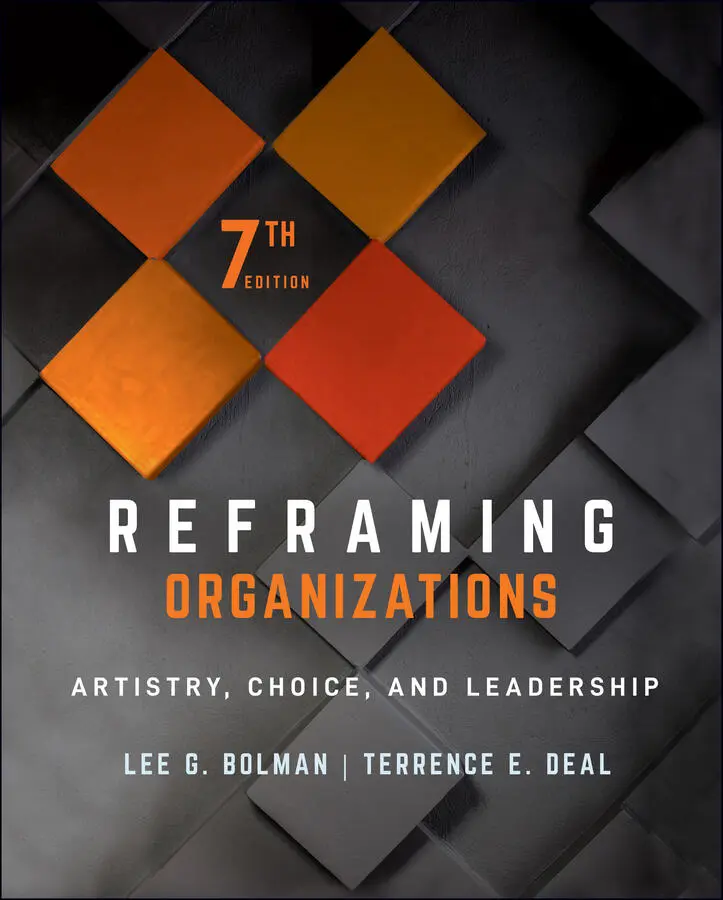
- Название:Reframing Organizations
- Автор:
- Жанр:
- Год:неизвестен
- ISBN:нет данных
- Рейтинг книги:4 / 5. Голосов: 1
-
Избранное:Добавить в избранное
- Отзывы:
-
Ваша оценка:
Reframing Organizations: краткое содержание, описание и аннотация
Предлагаем к чтению аннотацию, описание, краткое содержание или предисловие (зависит от того, что написал сам автор книги «Reframing Organizations»). Если вы не нашли необходимую информацию о книге — напишите в комментариях, мы постараемся отыскать её.
The Structural Frame The Human Resource Frame The Political Frame The Symbolic Frame The
has been updated with new information on cross-sector collaboration, generational differences, virtual environments, globalization, cross-cultural communication, and more, with an expanded Instructor’s Guide that includes summaries, mini-assessments, videos, and extra resources.
Reframing Organizations — читать онлайн ознакомительный отрывок
Ниже представлен текст книги, разбитый по страницам. Система сохранения места последней прочитанной страницы, позволяет с удобством читать онлайн бесплатно книгу «Reframing Organizations», без необходимости каждый раз заново искать на чём Вы остановились. Поставьте закладку, и сможете в любой момент перейти на страницу, на которой закончили чтение.
Интервал:
Закладка:
Later, however, the structure and technology so effective against Iraq's military had more difficulty with an emerging resistance movement that evolved into a loosely connected structure of entrepreneurial local units that could adapt quickly to U.S. tactics. New technologies like the Internet and cell phones enabled the resistance to structure itself as a network of loosely connected units, each pursuing its own agenda in response to local conditions. The absence of strong central control in such networks can be a virtue because local units can adapt quickly to new developments and the loss of any one outpost does little damage to the whole.
Nature of the Workforce
Human resource requirements have also changed dramatically in recent decades. Many lower‐level jobs now require higher levels of skill. A better‐educated workforce expects and often demands more discretion in daily work routines. Members of Gen Y and Gen Z (born between roughly 1980 and 2015) typically expect better pay and more favorable working conditions than their predecessors. Increasing specialization has professionalized many functions. Professionals typically know more than their supervisors about technical aspects of their work. They expect autonomy and prefer reporting to professional colleagues. Trying to tell a Harvard professor what to teach is an exercise in futility. In contrast, giving too much discretion to a low‐skilled McDonald's worker could become a disaster for both employee and customers.
Dramatically different structural forms are emerging as a result of changes in workforce demographics. Deal and Kennedy (1982) predicted early on the emergence of the atomized or network organization, made up of small, autonomous, often geographically dispersed work groups tied together by information systems and organizational symbols. Drucker made a similar observation in noting that businesses increasingly “move work to where the people are, rather than people to where the work is” (1989, p. 20). The Covid‐19 pandemic forced almost everyone who could to work from home, intensifying this trend.
Challenges of Global Organization
In sum, numerous forces affecting structural design create a knotty mix of challenges and tensions. It is not simply a matter of deciding whether we should be centralized like McDonald's and Amazon or decentralized like Harvard and Zappos. Many organizations find that they have to do both and somehow accommodate the competing structural tensions.
Two electronics giants, Panasonic (formerly Matsushita) in Japan and Philips in the Netherlands, have competed with one another around the globe for more than half a century. Historically, Panasonic developed a strong headquarters, while Philips was more decentralized, with strong units in different countries. The pressures of global competition pushed both to become more alike. Philips struggled to match Panasonic's efficiencies derived from selling the same products around the world. Meanwhile, Panasonic gradually discovered,
No company can operate effectively on a global scale by centralizing all key decisions and then farming them out for implementation. It doesn't work … No matter how good they are, no matter how well supported analytically, the decision‐makers at the center are too far removed from individual markets and the needs of local customers. (Ohmae, 1990, p. 87)
CONCLUSION
The structural frame looks beyond individuals to examine the social architecture of work. Though sometimes equated with red tape, mindless memos, and rigid bureaucrats, the approach is much broader and more subtle. It encompasses the freewheeling, loosely structured entrepreneurial task force as well as the more tightly controlled railway company or postal department. If structure is overlooked, an organization often misdirects energy and resources. It may, for example, waste time and money on massive training programs in a vain effort to solve problems that have more to do with social architecture than with people's skills or attitudes. It may fire managers and bring in new ones, who then fall victim to the same structural flaws that doomed their predecessors.
At the heart of organizational design are the twin issues of differentiation and integration. Organizations divide work by creating a variety of specialized roles, functions, and units. They must then use both vertical and horizontal procedures to mesh the many elements together. There is no one best way to organize. The right structure depends on prevailing circumstances and considers an organization's goals, strategies, technology, people, and environment. Understanding the complexity and variety of design possibilities can help create formal prototypes that work for, rather than against, both people and collective purposes.
Chapter 4 Structure and Restructuring
A crisis over journalistic standards ensnared the British Broadcasting Corporation (BBC) in a flurry of parliamentary hearings, resignations, and public recrimination in 2004. The controversy so tarnished the respected institution's reputation that top officials took major steps to ensure that it would never happen again. The bevy of corrective changes included a journalism board to monitor editorial policy, guidelines on journalistic procedures, forms to flag trouble spots that managers were required to complete, and a 300‐page volume of editorial guidelines. The cumulative effect of the changes was a multilayered bureaucracy that limited managerial discretion and fostered a pecking order of approve‐disapprove boxes that were passed up the chain of command as an alternative to asking probing questions at lower levels in the organization.
Some cures make the patient worse, and this newly restructured system resulted in two crises more damaging than the first. In October 2012, the BBC came under heavy fire when it broadcast a glowing tribute to a well‐known former BBC TV host, Jimmy Savile, but killed an investigative report detailing evidence that Savile had been a serial child molester.
Reorganizing, or restructuring, is a powerful but high‐risk tactic for improving organizations. Also in 2012, the BBC aired a report wrongly accusing a member of Margaret Thatcher's government of being a pedophile. Post‐mortem investigations attributed this error and the Savile one directly to the BBC's restructured, highly bureaucratized system. Major initiatives to redesign structure and processes often prove neither durable nor beneficial. Designing a structure, putting all the disparate parts in place, specifying their connections and satisfying every interested party's interests is difficult and risky. Although restructuring is one of the most popular management strategies for improving performance, and more than half of new CEOs implement a reorganization in their first two years on the job (Blenko, Mankins, and Rogers, 2010), Boston Consulting Group (2021) reports that “more than half of companies rate their reorganization initiatives as ‘mostly’ or ‘very’ unsuccessful.”
But it is also true that, over the past 100 years, management tools like strategic planning, decentralization, capital budgeting techniques, and self‐governing teams have done more than any other kind of innovation to allow companies to cross new performance thresholds (Hamel, 2006). As an example, American automakers scratched their heads for 20 years trying to figure out what made Toyota so successful. They tried all kinds of process innovations but finally reached the conclusion that Toyota had simply given their employees more authority to make decisions and solve problems (Hamel, 2006).
An organization's structure at any moment represents its unique resolution of an enduring set of basic tensions or dilemmas, which we discuss next. Then, drawing on the work of Henry Mintzberg and Sally Helgesen, we illustrate two views of options organizations may consider in aligning structure with mission and environment. We conclude with case examples illustrating both opportunities and challenges that managers encounter when attempting to create more workable and fruitful structural designs.
Читать дальшеИнтервал:
Закладка:
Похожие книги на «Reframing Organizations»
Представляем Вашему вниманию похожие книги на «Reframing Organizations» списком для выбора. Мы отобрали схожую по названию и смыслу литературу в надежде предоставить читателям больше вариантов отыскать новые, интересные, ещё непрочитанные произведения.
![Lee Jungmin - Хвала Орку 1-128 [некоммерческий перевод с корейского]](/books/33159/lee-jungmin-hvala-orku-1-thumb.webp)










Обсуждение, отзывы о книге «Reframing Organizations» и просто собственные мнения читателей. Оставьте ваши комментарии, напишите, что Вы думаете о произведении, его смысле или главных героях. Укажите что конкретно понравилось, а что нет, и почему Вы так считаете.