Rethinking Prototyping
Здесь есть возможность читать онлайн «Rethinking Prototyping» — ознакомительный отрывок электронной книги совершенно бесплатно, а после прочтения отрывка купить полную версию. В некоторых случаях можно слушать аудио, скачать через торрент в формате fb2 и присутствует краткое содержание. Жанр: unrecognised, на английском языке. Описание произведения, (предисловие) а так же отзывы посетителей доступны на портале библиотеки ЛибКат.
- Название:Rethinking Prototyping
- Автор:
- Жанр:
- Год:неизвестен
- ISBN:нет данных
- Рейтинг книги:3 / 5. Голосов: 1
-
Избранное:Добавить в избранное
- Отзывы:
-
Ваша оценка:
Rethinking Prototyping: краткое содержание, описание и аннотация
Предлагаем к чтению аннотацию, описание, краткое содержание или предисловие (зависит от того, что написал сам автор книги «Rethinking Prototyping»). Если вы не нашли необходимую информацию о книге — напишите в комментариях, мы постараемся отыскать её.
The Design Modelling Symposium Berlin 2013 would like to challenge the participants to reflect on the possibility of computational systems that bridge design phase and occupancy of buildings. This rethinking of the designed artifact beyond its physical has had profound effects on other industries already. How does it affect architecture and engineering?
At the scale of engineering and building systems new perspectives may open up by engaging built form as a continuous prototype, which can track and respond during use and serve as a real world implementation of its design model. This has been tried many times from intelligent façades to smart homes and networked grids but much of it was only technology driven and not approached from a more holistic design perspective.
Rethinking Prototyping — читать онлайн ознакомительный отрывок
Ниже представлен текст книги, разбитый по страницам. Система сохранения места последней прочитанной страницы, позволяет с удобством читать онлайн бесплатно книгу «Rethinking Prototyping», без необходимости каждый раз заново искать на чём Вы остановились. Поставьте закладку, и сможете в любой момент перейти на страницу, на которой закончили чтение.
Интервал:
Закладка:
The grid is composed of three chords: the upper chord, the middle chord and the lower chord. Every chord is composed of 40 beam elements; each contains an unstressed length of 12.88cm. The connections between the chords consist of revolute joints. Each chord has a uniform rectangular profile that exhibits a width of 80mm and a thickness of 4mm. The elasticity and shear modulus are defined as E=10 7 KN/m 2 and G=E/2 , respectively.
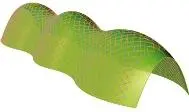
Fig.7 Comparison of the grid patterns of the irregular grid and the regular grid, which are presented by the orange colour and the purple colour respectively. Both grid patterns are smooth, but the irregular grid has less in-plane bending curvatures.
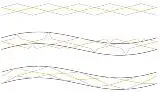
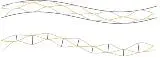
Fig. 8 (a) Initial geometry; (b) Transient state; (c) Transient state; (d) Equilibrium state under constraint; (e) Bearing structure after boundaries are removed and struts and supporting conditions are added.
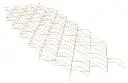



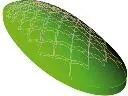

Fig.9. (a) Initial grid; (b) Transient state; (c) Transient state; (d) Equilibrium state under constraint; (e) Bearing structure after constraints are removed and struts and supporting conditions are added; (f) The enlarged part shows the nodal orientations.
The upper chord nodes that will be subsequently connected with struts after form-finding are constrained by the upper curve, only movable on the curve. Similarly, the lower chord nodes that will be subsequently connected with struts are constrained by the lower curve. The two constraint curves, which contain an interval of 0.375m between the curves, are equivalent. The constraint curve is defined by two arcs with a curvature of 4.4m.
4.5 3D Hybgrid
We also applied our scheme in the form-finding of the 3D-Hybgrid (Fig. 9). The plane grid is composed of 18 composite beams. Each composite beam has a structure that is similar to the 2D Hybgrid in the last example. In plain view, two crossing beams have a 60-degree included angle. Two types of constraint are applied: the surface constraint and the curve constraint.
For the surface constraint, the upper chord nodes that will be subsequently connected with struts after form-finding are constrained by the upper surface. Similarly, the lower chord nodes that will be subsequently connected with struts are constrained by the lower surface. The two surfaces are equivalent with an interval of 0.375m between the surfaces. The surface is defined as a surface of revolution that is generated by an arch of radius of 2.9m with a revolution of radius of 22.9 m.
For the curve constraint, we constrain four nodes, which are located on the top layer around the central crossing point, by two curves that are produced by projecting two straight crossing lines, which have a 60-degree included angle, on the upper constraint surface. This constraint helps grids to maintain the included angles in general.
5 Conclusions
We present a general scheme to solve grid patterns for elastic grid shells according to material properties and geometric constraints. Our form-finding scheme is based on the dynamic relaxation method with six DOF per node and the Euler-Bernoulli beam theory.
We can build the pre-stress of bending moments and torsions directly into structures by assigning specific initial orientations of beam-ends. This method enables us to begin the structural simulation from a strained state such that the tricky pre-stressing process of bending-active structures is prevented.
Using the projection method and the constraint force method, we can apply geometric constraints to grids. The projection method can generate grid patterns that exactly fit the geometric constraints, while the constraint force method produces grid patterns that are close to the target geometry and have less strain energy compared with the results derived from the projection method.
The profile stiffness plays as an active role in the form-finding process in our scheme. The real stiffness facilitates the form-finding of a grid pattern in accordance with the pre-determined grid lengths. The fictitious stiffness enables the grids to have a larger range of strained lengths, which facilitates the reduction of bending stresses and can be utilised to generate smoothly curved grid patterns with various grid lengths.
References
[1] Douthe C; Baverel O., 2006: Form-Finding of a Grid Shell in Composite Materials. J IASS 2006 ; 47(1), pp. 53-62.
[2] Lafuente E.; Sechelmann S., 2012: Topology Optimisation of Regular and Irregular Elastic Gridshells by Means of a Non-Linear Variational Method. Advances in Architectural Geometry . Paris.
[3] Barnes, M.R.; Adriaenssens, S.; Krupka, M.A., 2013: Novel Torsion/Bending Element for Dynamic Relaxation Modeling. Comput Struct; 119(1), pp. 60-7.
[4] Li, J.M.; Knippers, J.: Form-Finding and Analysis of Bending-Active Structures by Dynamic Relaxation Method with 6 DOF per Node. Journal of Computer Aided Design . (Under review)
[5] Lienhard, J.; Holger, A., 2012: Active Bending - A Review on Structures where Bending is Used as a Self-Formation Process. Proceedings International Conference of the IASS-APCS , Seoul.
[6] Day, A.: An Introduction to Dynamic Relaxation. The Engineer , Vol. 29, pp. 218–21.
[7] Li, J.M.; Knippers, J., 2012: Rotation Formulations for Dynamic Relaxation – With Application in 3D Framed Structures with Large Displacements and Rotations. Proceedings International Conference of the IASS-APCS , Seoul.
[8] Truco, J.; Felipe, S., 2004: HybGrid - Form Generation and Form-Finding of Adaptable Structures, Emergent Technologies and Design. Architectural Design , 74(3), pp. 62-63.
Shaping Structural Systems
Irmgard Lochner
1 Background and Motivation: Approaching Structures
During the past decades, the professional profiles of architects and engineers have been increasingly diverging - even though they initially have a common origin. Considering the complexity of building procedures and of specialist knowledge this process is comprehensible; considering the demand for holistic understanding and planning on the other hand, it is destructive.
Читать дальшеИнтервал:
Закладка:
Похожие книги на «Rethinking Prototyping»
Представляем Вашему вниманию похожие книги на «Rethinking Prototyping» списком для выбора. Мы отобрали схожую по названию и смыслу литературу в надежде предоставить читателям больше вариантов отыскать новые, интересные, ещё непрочитанные произведения.


Обсуждение, отзывы о книге «Rethinking Prototyping» и просто собственные мнения читателей. Оставьте ваши комментарии, напишите, что Вы думаете о произведении, его смысле или главных героях. Укажите что конкретно понравилось, а что нет, и почему Вы так считаете.