Rethinking Prototyping
Здесь есть возможность читать онлайн «Rethinking Prototyping» — ознакомительный отрывок электронной книги совершенно бесплатно, а после прочтения отрывка купить полную версию. В некоторых случаях можно слушать аудио, скачать через торрент в формате fb2 и присутствует краткое содержание. Жанр: unrecognised, на английском языке. Описание произведения, (предисловие) а так же отзывы посетителей доступны на портале библиотеки ЛибКат.
- Название:Rethinking Prototyping
- Автор:
- Жанр:
- Год:неизвестен
- ISBN:нет данных
- Рейтинг книги:3 / 5. Голосов: 1
-
Избранное:Добавить в избранное
- Отзывы:
-
Ваша оценка:
Rethinking Prototyping: краткое содержание, описание и аннотация
Предлагаем к чтению аннотацию, описание, краткое содержание или предисловие (зависит от того, что написал сам автор книги «Rethinking Prototyping»). Если вы не нашли необходимую информацию о книге — напишите в комментариях, мы постараемся отыскать её.
The Design Modelling Symposium Berlin 2013 would like to challenge the participants to reflect on the possibility of computational systems that bridge design phase and occupancy of buildings. This rethinking of the designed artifact beyond its physical has had profound effects on other industries already. How does it affect architecture and engineering?
At the scale of engineering and building systems new perspectives may open up by engaging built form as a continuous prototype, which can track and respond during use and serve as a real world implementation of its design model. This has been tried many times from intelligent façades to smart homes and networked grids but much of it was only technology driven and not approached from a more holistic design perspective.
Rethinking Prototyping — читать онлайн ознакомительный отрывок
Ниже представлен текст книги, разбитый по страницам. Система сохранения места последней прочитанной страницы, позволяет с удобством читать онлайн бесплатно книгу «Rethinking Prototyping», без необходимости каждый раз заново искать на чём Вы остановились. Поставьте закладку, и сможете в любой момент перейти на страницу, на которой закончили чтение.
Интервал:
Закладка:
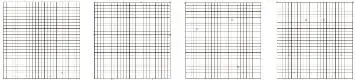

Fig. 3 Analysis models of a point supported slab with varying position of supports; deformation of the slab (with deformations superelevated)
Translating these deformations into an appropriate structure, the relation between span and deformation becomes clear. The support conditions can be transformed directly as a design driver for structural dimensions. They are of course only one singular aspect in design, since internal forces (here: predominantly bending moments and shear forces) are not a priori taken into account. However, a feasible approach to design is found.
The derivation of a structure from the deformation of a reduced model produces an aesthetic, feasable and understandable geometry, as shown in Fig. 4.
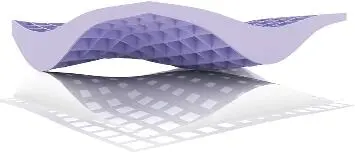
Fig. 4 Structural geometry of a point-supported waffle slab derived from its support conditions and correspondent deformations
Taking into account other aspects such as bending moments or principal moments produces different results for the same design task. Comparing the design results shows a great variety of proposals, while all of them are driven by structural constraints: With a very simple structural approach, a great variety of architectural designs can be developed.
3.2 Principles of Lightweight Structures: Efficiency, Structural Optimisation
Structural optimisation is a very useful tool for the design of cars and aircrafts, since the minimisation of dead load is an economical goal, as well as the complex geometries and loading conditions require modern computation tools. Architectural structures are not in motion and therefore it may not seem obvious to transfer these technologies into the building sector. However, when looking at the life cycle of buildings it becomes clear that from excavation, production, delivery, assembly until deconstruction, recycling or disposal, also here there is material in motion.This leads directly to the responsibility of all planners to limit material input sensibly. Furthermore, the principles of lightweight structures as design attitude open up a mind-set of design drivers that can be very useful in the development and understanding of structural geometries.
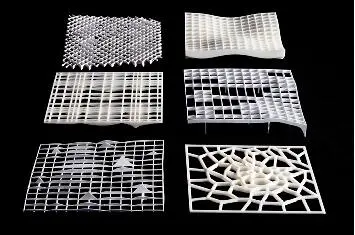
Fig. 5 Geometries derived from different structural aspects
The studies presented in this contribution use the commercial software Altair OptiStruct , which is based on the homogenization method and implies a wide range of special issues of structural optimisation. The authors would like to thank Altair Inc. for granting reduced and free licenses for academic studies.
3.3 Structural Parametric Patterns
Patterns, or ornaments, have a long history in building and can be found in all cultures. Traditionally, they are decoratively added elements. Adolf Loos’ essay „ Ornament und Verbrechen “ (Ornament and Crime) marks a turning point in contemporary architecture: The elimination of any non-functional decorative elements sets the origin of classical modern architecture.
Studies of parametric geometries base on the systematic variation of geometrical patterns: the variation reveals characteristic elements, be it subjective aesthetical or objective structural qualities. Fig. 6 shows examples of parametric studies: Parametric geometrical studies by D‘rcy Wentworth Thompson dealing with the subject on growth and form (Thompson 1961); form-finding studies with systematic variation of boundary conditions using soap films within differently curved wires carried out by Frei Otto and his team (Bach 1988); and parametric optimisation studies carried out by the author developing optimal shapes within a given volume with varying orientation of the point loads applied to the structrure.


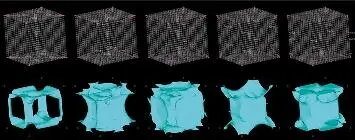


Fig. 6 Examples of parametric design studies
Today, the ornament seems to be back in architecture and parametric design is very fashionable in both architectural and structural design. New tools allow generating geometries adapting to variable boundary conditions - being structural demands, lighting conditions or formal conceptions. Fig. 7 shows examples of modern ornaments (left: exhibition stand Gasser Fassadentechnik, Swissbau 2012; right: Suedwestmetall facade, architects Allmann Wappner Sattler )with their design possibilities and manufacturing conditions directly related to new developments: repetition in patterns is other than some few decades or years ago redundant. Structural necessities as well as manufacturing constraints can be neglected. The focus is set on aesthetical logics and qualities.
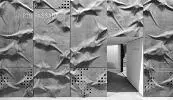
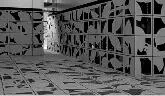
Fig. 7 Examples of modern ornamental design
The missing link between pattern and structure can be achieved through use of structural optimisation methods. As an example, the procedure in this study shown in Fig. 8 is
A given design space, here: a flat cuboid volume, with part of the space not being subject to the optimisation.
A given structural system, here: evenly distributed load on the top surface; point supports.
The optimisation formulation, here: minimum compliance as an objective, given volume fraction (15% of the design space to be filled with material) as a design constraint.
Varying of parameters, here: systematic variation of the support points of the structure.
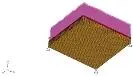
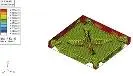
Fig. 8 The structural model as a plate with distributed loading + point supports, the optimisation result
Читать дальшеИнтервал:
Закладка:
Похожие книги на «Rethinking Prototyping»
Представляем Вашему вниманию похожие книги на «Rethinking Prototyping» списком для выбора. Мы отобрали схожую по названию и смыслу литературу в надежде предоставить читателям больше вариантов отыскать новые, интересные, ещё непрочитанные произведения.

Обсуждение, отзывы о книге «Rethinking Prototyping» и просто собственные мнения читателей. Оставьте ваши комментарии, напишите, что Вы думаете о произведении, его смысле или главных героях. Укажите что конкретно понравилось, а что нет, и почему Вы так считаете.