Rethinking Prototyping
Здесь есть возможность читать онлайн «Rethinking Prototyping» — ознакомительный отрывок электронной книги совершенно бесплатно, а после прочтения отрывка купить полную версию. В некоторых случаях можно слушать аудио, скачать через торрент в формате fb2 и присутствует краткое содержание. Жанр: unrecognised, на английском языке. Описание произведения, (предисловие) а так же отзывы посетителей доступны на портале библиотеки ЛибКат.
- Название:Rethinking Prototyping
- Автор:
- Жанр:
- Год:неизвестен
- ISBN:нет данных
- Рейтинг книги:3 / 5. Голосов: 1
-
Избранное:Добавить в избранное
- Отзывы:
-
Ваша оценка:
Rethinking Prototyping: краткое содержание, описание и аннотация
Предлагаем к чтению аннотацию, описание, краткое содержание или предисловие (зависит от того, что написал сам автор книги «Rethinking Prototyping»). Если вы не нашли необходимую информацию о книге — напишите в комментариях, мы постараемся отыскать её.
The Design Modelling Symposium Berlin 2013 would like to challenge the participants to reflect on the possibility of computational systems that bridge design phase and occupancy of buildings. This rethinking of the designed artifact beyond its physical has had profound effects on other industries already. How does it affect architecture and engineering?
At the scale of engineering and building systems new perspectives may open up by engaging built form as a continuous prototype, which can track and respond during use and serve as a real world implementation of its design model. This has been tried many times from intelligent façades to smart homes and networked grids but much of it was only technology driven and not approached from a more holistic design perspective.
Rethinking Prototyping — читать онлайн ознакомительный отрывок
Ниже представлен текст книги, разбитый по страницам. Система сохранения места последней прочитанной страницы, позволяет с удобством читать онлайн бесплатно книгу «Rethinking Prototyping», без необходимости каждый раз заново искать на чём Вы остановились. Поставьте закладку, и сможете в любой момент перейти на страницу, на которой закончили чтение.
Интервал:
Закладка:
Ernst Haeckel is until today outstanding with his demonstration of the amazing variety of shapes in microscopic structures (Haeckel 1904) - with descriptive variations of structural shapes depending on the overall geometry as well as on the loading conditions of a structure. The division into Centrales with radial geometries and Pennales with bilaterally symmetric shapes leads to an overall classification of diatom geometries (Fig. 14).


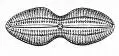
Fig. 14 Diatoms, as documented by Ernst Haeckel
When carrying out studies of structural optimisation, geometrical influences have to be taken into account - as it can be seen from a comparative optimisation study of a circular geometry compared to an elongated geometry. The design proposals produced by the optimisation algorithm refer directly to the geometrical conditions of the design space. Fig. 15 shows optimisation studies, with the analysis model composed of one quarter of the circular shell and the interpretation of the design proposal into a structural geometry for a grid shell.


Fig. 15 Development of a diatom structure based on diatom‘s principles
Further development of optimisation studies of the circular shell, based on the design proposal shown in Fig. 15, produces in fact a structure resembling diatom structures. The optimisation study simulates the evolutionary process of nature resulting in a structure optimised for its loading (distributed loading is dominating) and support conditions (constant supports along the bottom edge) and of high aesthetic quality.
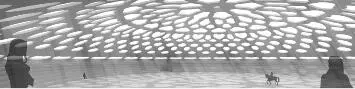
Fig. 16 Grid shell derived from the optimisation result (interior views)
Further structural studies including the spongiosa and sandwich-like systems in bone structures, the sea urchin, branching structures, seashells and dragonfly wings. They all conclude that nature is an excellent role model for the holistic design of structures, and that structural optimisation is a useful tool to grasp the inherent logic of natural structures.
4 Conclusions and Outlook
Structural optimisation is shown as a useful tool for a holistic approach to design with the profession of architects and engineers merging in a common task: the design of efficient and aesthetic structural geometries. Facing the challenges of the years to come, the requirement to provide liveable surroundings for an increasing population with limited resources; this can contribute to the beginning of a new team play of architects and engineers.
References
Bach, K., 1988: Seifenblasen - Foaming Bubbles: Eine Forschungsarbeit des Instituts für Leichte Flächentragwerke über Minimalflächen (IL 18). Stuttgart: Krämer.
Galilei, G., 1638: Discorsi e dimostrationi matematiche. Leiden.
Haeckel, E., 1904: Kunstformen der Natur - Kunstformen aus dem Meer . Re-edition 2013. Munich: Prestel.
Lochner, I.; Schumacher, A., 2014: Homogenization Method. Distribution of Material Densities. In: Adriaenssens, S. et al. (eds.): Shells for Architecture. Form Finding and Structural Optimisation. Abingdon: Routledge.
Michell, A.G.M., 1904: The Limits of Material in Frame Structures. Philos. Mag. Ser. 6, 8, pp. 589-597.
Ramm, E.; 1996: Force Follows Form oder Form Follows Force? Die Wechselwirkung von Form und Kraft bei Flächentragwerken. In: Wilke, J. et al. (eds.): Prozess und Form ‘Natürlicher Konstruktionen’ . Berlin: Der SFB 230.
Thompson, D.W., 1961: On Growth and Form. Cambridge: Cambridge University Press.
Bridging the Gap
Daniel Lordick and Caroline Spliid Høgsbro
1 Background
Bridging the Gap was a course for the development of a pedestrian bridge over a stream in the Berlin Park Großer Tiergarten held at the Technische Universität Berlin (TU Berlin) during winter term 2011/12 and summer term 2012. The course introduced parametric modelling to architecture students who had no previous programming knowledge. This paper reports about the method we used to gain highly specified bridge designs.
Parametric modelling calls for an appropriate kind of design thinking. This is evident from an on-going debate on computational design (cf. Burry 2011, Carpo 2012 et al.). Instead of a conventional result-driven approach in architecture, parametric modelling requires a process-driven approach. We pushed this concept by conducting a specific sequence of exercises and tutorials. At the same time, we established the idea of prototyping in order to link the early phases directly to the potential techniques of manufacturing (cf. Adenauer; Petruschat 2012).
The course is based on experience from previous courses held at the TU Dresden . The focus is set on designs strategies that significantly reflect the utilization of the computer beyond the common virtualization of traditional drawing techniques. This concerns generative design and as a side effect altered the way we communicated about the projects. The latter more representative aspect is captured in [Lordick 2013].
Daniel Lordick and Caroline Spliid Høgsbro
TU Berlin, Germany
2 Introduction
Parametric modelling is the integration of programming techniques into the design process. This means both, the use of specific software and the evolution of new concepts. With parametric modelling the design team can manage highly complex design tasks with high precision, generate design variations in real time, review the project with extraordinary flexibility and speed, and directly trigger the industrial production routines towards custom manufacturing. This implies that former boundaries between the technical and the creative realm lose their meaning. Software like the plug-in Grasshopper for the CAD software Rhinoceros has speeded up this evolution (Grasshopper 2013).
To stress the full potential of the approach, we take a closer look and specify the expression parametric modelling by the three terms parametric, associative and generative. Strictly speaking, the term parametric only means that design decisions are transferred into changeable values, the parameters. This is fundamental and already covered by any object-oriented architectural design software (CAAD). What parametric wants to emphasise here, is: The designer can determine the way parameters are defined and how the parameter-driven components are connected and affect each other. This functionality is more precisely referred to by the term associative and reflects that virtual models, created with this premise, can easily adapt to changing constraints. The advantage of wisely structured associative models is that they can be manipulated by only a few parameters but are still highly flexible. The third term in connection with parametric modelling is generative design. This concept goes even a step further and implies emergence and simulation (Bonacker et al. 2009, p. 463; cf. Johnson 2001). Emergence means that the result of a parametric modelled structure cannot be predicted exactly by reviewing the elements of the program. This is typical for agent-based systems (swarm behaviour) and recursive programs (Fig. 1). Simulation refers to software models of physical phenomena. Dynamic relaxation for example can yield in forms, which are rather defined in a meta-level than by direct input. In summary, parametric modelling is not only modelling the pursued design but also the design process itself. The designer now is able to control the design as a whole and to any detail desired at any stage of the development. The elaboration of the parametric model is part of the progress.
Читать дальшеИнтервал:
Закладка:
Похожие книги на «Rethinking Prototyping»
Представляем Вашему вниманию похожие книги на «Rethinking Prototyping» списком для выбора. Мы отобрали схожую по названию и смыслу литературу в надежде предоставить читателям больше вариантов отыскать новые, интересные, ещё непрочитанные произведения.

Обсуждение, отзывы о книге «Rethinking Prototyping» и просто собственные мнения читателей. Оставьте ваши комментарии, напишите, что Вы думаете о произведении, его смысле или главных героях. Укажите что конкретно понравилось, а что нет, и почему Вы так считаете.